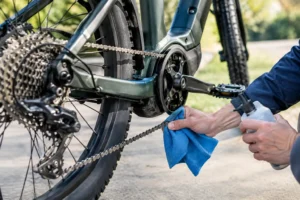
How to Prevent E-Bike Chain Rust Year-Round
Prevent e-bike chain rust by drying the drivetrain after wet rides, removing road salt, applying suitable chain lubricant, and storing your bike in a dry place.

Learn how e-bikes work and how to ride, charge, maintain, and store them safely. Our practical guides explain motors, batteries, controls, maintenance, riding techniques, troubleshooting, and everyday ownership in clear language—helping new and experienced riders avoid common mistakes and make informed decisions.
Prevent e-bike chain rust by drying the drivetrain after wet rides, removing road salt, applying suitable chain lubricant, and storing your bike in a dry place.
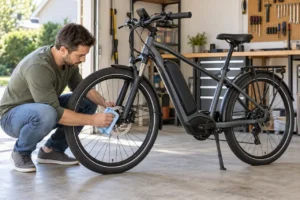
Clean e-bike disc brake rotors with a manufacturer-approved method, prevent pad contamination, and check braking before your next ride. Know when to stop.
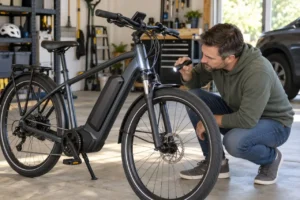
Inspect your e-bike frame before each ride for cracks, dents, loose battery mounts, and fork damage. Learn the signs that mean you should stop riding.
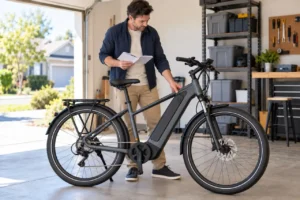
Most e-bike batteries can tolerate ordinary rain but are not made for submersion. Check the IP rating, keep charging ports dry, and stop after flooding.
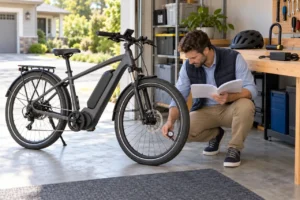
Your first year with an e-bike is easier when you build safe habits for charging, pre-ride checks, maintenance, range, storage, service, and local rules.
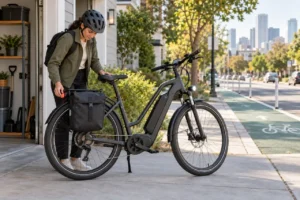
A practical e-bike commuting safety checklist for daily riders covering pre-ride checks, traffic, visibility, cargo, parking, charging, and return trips.
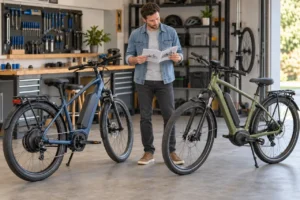
Learn how e-bike motors work, from hub and mid-drive layouts to watts, torque, sensors, hill use, maintenance, and safe troubleshooting for riders.
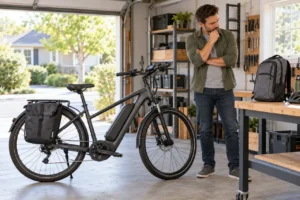
Compare e-bike panniers and backpacks for comfort, handling, rack compatibility, security, and safe loading so you can choose the right setup.
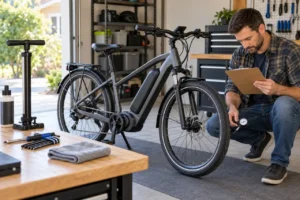
Ebike service intervals depend on mileage, time, riding conditions, and component wear. Use this practical schedule to know what to check and when.

A 500Wh e-bike battery can deliver very different range. These real-world planning examples show how assist, hills, speed, wind, and load change miles.
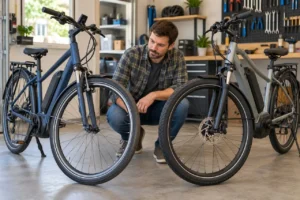
Disc brakes usually suit heavier or all-weather e-bikes, while rim brakes can work well for lighter bikes used mostly on flat, dry routes safely.
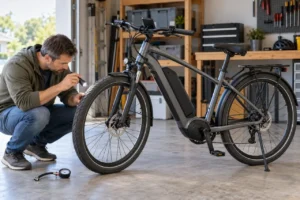
E-bike tire life varies with pressure, load, terrain, and riding style. Use mileage as a guide, but replace tires when wear or damage reaches the limit.
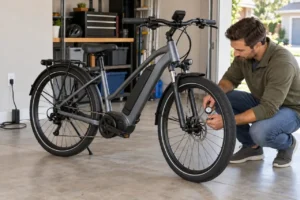
Learn how to prevent ebike battery drain with charging, storage, riding, and troubleshooting habits that protect range without risking battery safety first
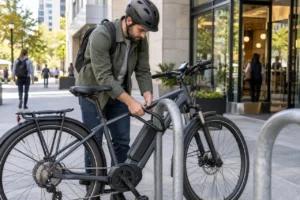
Learn how to park and lock an e-bike safely with practical security tips for choosing locations, securing frames, protecting batteries, and preventing theft.

E-bike access in parks depends on the managing agency, trail type, and bike class. Learn how to check rules before riding.
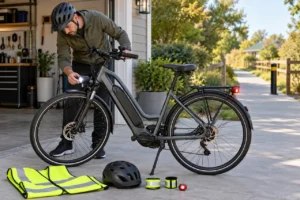
E-bike visibility depends on working lights, clean reflectors, visible clothing, and predictable riding habits. Use this checklist before every ride.
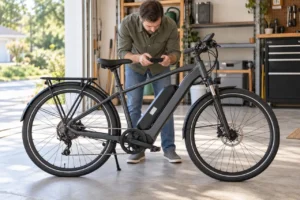
An e-bike battery label lists voltage, capacity, energy, and identification details. Learn what these ratings mean and what they cannot prove about safety.
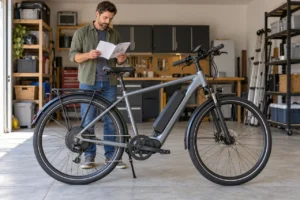
Ebike motor watt ratings need context: input or output, nominal or peak, and test conditions. Learn what the numbers can tell you about real riding.
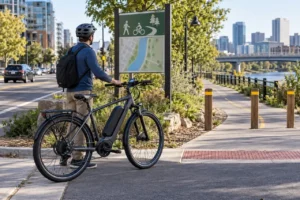
Class 3 e-bike rules vary across the U.S. Learn where these 28 mph pedal-assist bikes can ride and how to check local requirements.
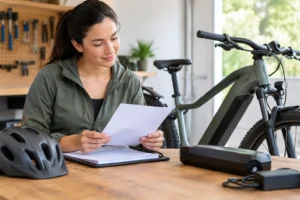
Understand e-bike warranty terms, including coverage limits, battery rules, exclusions, claim steps, and how proper records can protect your warranty.