A safer e-bike commute comes from repeating a few habits every day: start with a mechanically sound bike, leave enough stopping room for rush-hour traffic, stay visible, secure work gear, plan for the return trip, and charge only with equipment approved for your battery. The goal is not to eliminate every road hazard. It is to give yourself enough time and space to handle ordinary surprises without turning the ride into an emergency.
This guide focuses specifically on daily commuting—traffic, work cargo, parking, charging away from home, changing weather, and the ride back. For a broader whole-bike inspection, use our E-Bike Pre-Ride Safety Checklist.
Do a Fast Check Before Every Commute

A weekday check should be quick enough that you will actually repeat it. Before entering traffic, confirm the essentials:
- Tires: Look for cuts, bulges, debris, or visible pressure loss. Use a gauge when pressure is uncertain and stay within the limits specified for the tire, rim, and bike.
- Brakes: Squeeze each lever while stationary. A lever that suddenly feels soft, pulls unusually close to the grip, or lacks normal resistance needs attention before you ride.
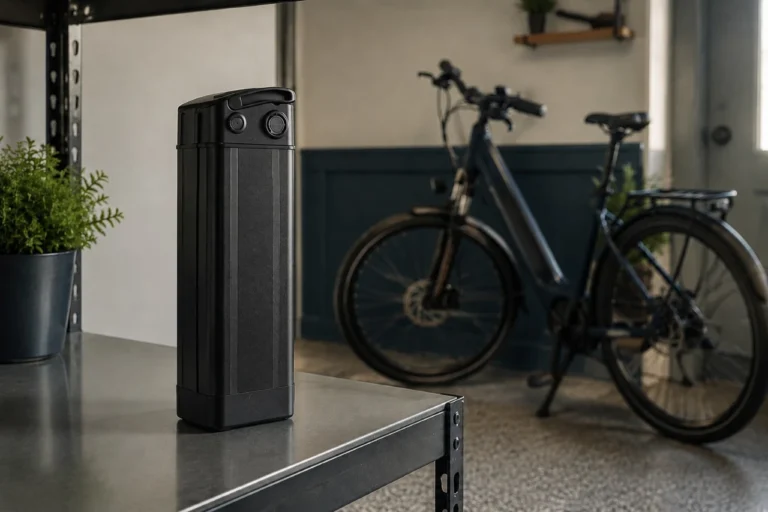
- Battery and controls: Confirm the battery is fully seated and locked as the manufacturer specifies. Turn the bike on after the basic mechanical check and look for unexplained warnings.
- Lights: Test the front and rear lights and any brake light or turn signals your bike uses.
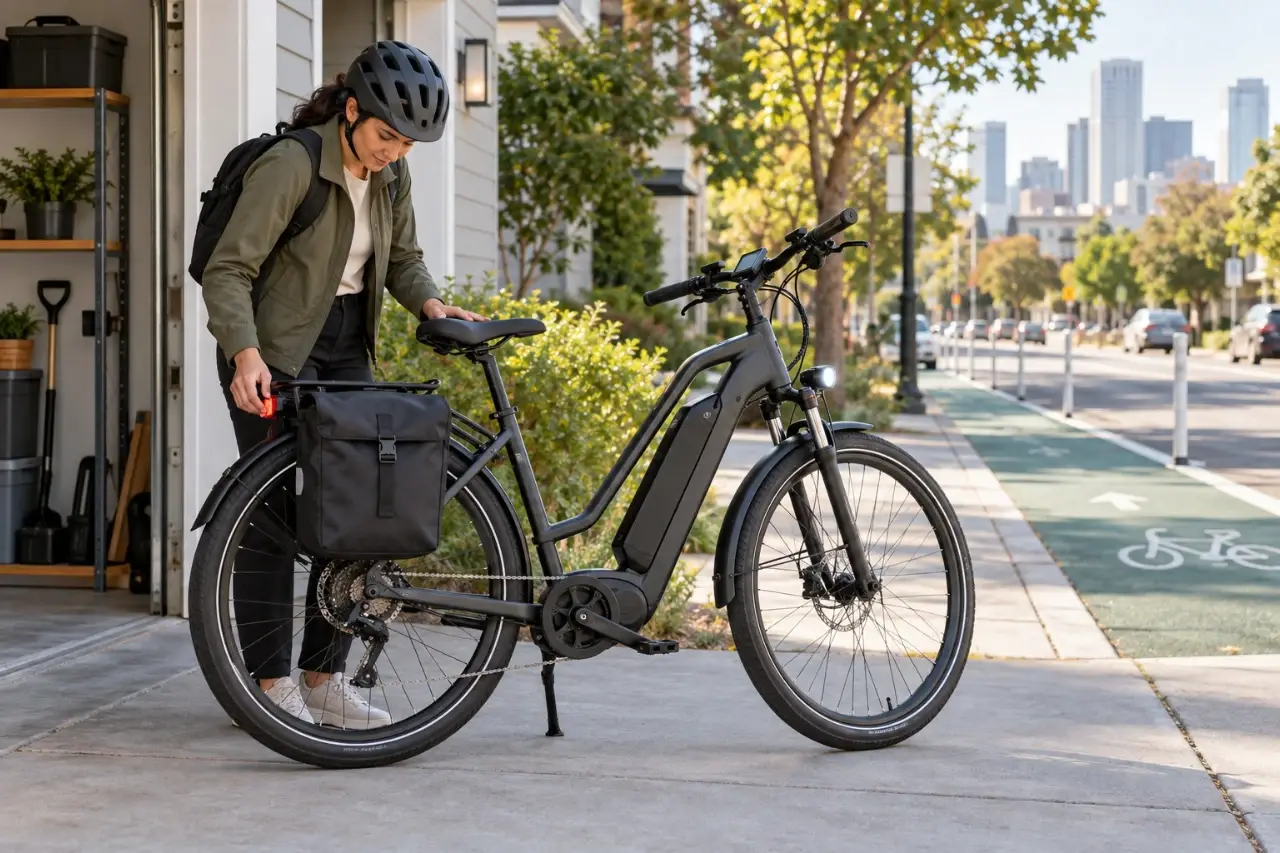
- Cargo: Make sure panniers, racks, baskets, straps, and clothing cannot move into a wheel, chain, brake, or pedal.
Finish with a short low-speed brake and steering check in a clear area when practical. If braking, steering, a wheel, or motor response feels meaningfully different from the previous ride, resolve the problem before joining traffic.
Choose a Route That Reduces Conflict
The shortest route is not automatically the best commuting route. A slightly longer trip may be easier to manage if it replaces high-speed traffic, difficult turns, poor sightlines, or repeated driveway conflicts with calmer streets or protected bicycle facilities.
Before relying on a new route during rush hour, ride it at a quieter time. Note turning conflicts, parked-car areas, bus stops, construction, railroad tracks, and sections that may be poorly lit on the ride home. NHTSA recommends choosing routes with less traffic and slower vehicle speeds when possible and riding predictably.
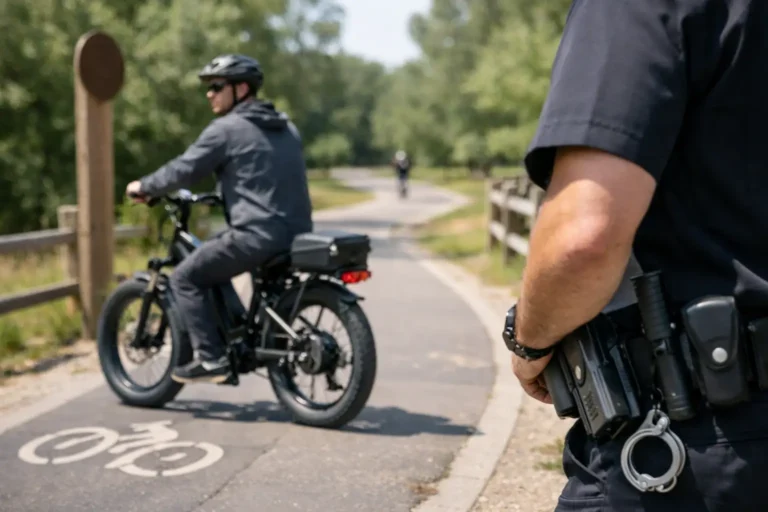
Local access rules can change by state, city, trail, bridge, park, campus, or property. Before using an unfamiliar facility, check our guide to local e-bike rules and confirm the current rule with the responsible agency or land manager.
Legal information checked: October 9, 2026. E-bike classifications and access rules are not uniform across the United States, so a class label alone does not establish where you may ride.
Leave More Stopping Room in Rush-Hour Traffic
Electric assistance can help a commuter accelerate quickly, but higher travel speed reduces the time available to react to turning cars, opening doors, pedestrians, and changing signals.
Choose a pace that lets you stop within the distance you can clearly see. Slow before driveways, crosswalks, blind corners, bus stops, and crowded path entrances rather than waiting for a conflict to appear.
Use both brakes progressively when that is the normal technique for your bike. Avoid abrupt steering or panic braking on wet paint, leaves, metal covers, gravel, or railroad tracks. Cross rails as close to a right angle as conditions safely allow.
Watch Doors, Turns, Trucks, and Buses
When lane width and local rules allow, leave enough space from parked cars that an opening door does not immediately occupy your path.
At intersections, expect that a driver may turn across your line even when you have the right of way. Turn signals and eye contact are useful clues, but neither guarantees that a driver has seen you.
Give trucks and buses extra space. Avoid riding beside a large vehicle when it may turn, merge, or pull toward a stop. If you cannot clearly tell what the driver intends to do, reduce speed and create more room.
Make Visibility Part of the Morning and Evening Routine


Commuters often leave in one lighting condition and return in another. A bright morning can become a dark, rainy, or overcast trip home.
Wear a properly fitted bicycle helmet and check that your visibility equipment is working before leaving. A white front light, red rear light, reflectors, and visible or reflective clothing can help other road users recognize you in low light. Aim lights so they help you see and be seen without unnecessarily dazzling other people.
Reflective material can add useful movement cues, but it does not replace working lights where lights are required or conditions call for them. For a more complete equipment check, see our Ebike Visibility Gear Checklist.
Secure Work Gear and Stay Within Load Limits
Work gear can add meaningful weight. Keep it secure and within the limits set for the bike and each rack, basket, child seat, or trailer. No strap should enter a wheel or drivetrain, no bag should cover a light or reflector, and a front load should not interfere with steering. Test a new cargo setup in a quiet area before dense traffic.
Plan Battery Range for the Whole Workday
Do not plan a commute around the maximum range printed in a product listing. Real range changes with assist level, rider and cargo weight, stops, hills, wind, temperature, tire pressure, and speed.
Start with enough charge for the round trip plus a reasonable reserve. That margin matters if construction forces a detour, the return trip has a headwind, or you need a longer route after dark.
If part of your commute uses a bus, train, or ferry, check the operator’s current rules before leaving. Bike dimensions, weight, peak travel periods, onboard storage, and battery policies can differ by system.
Charge at Work Only With an Approved Setup
Workplace charging can be convenient, but treat it as a safety decision rather than simply looking for an available outlet.
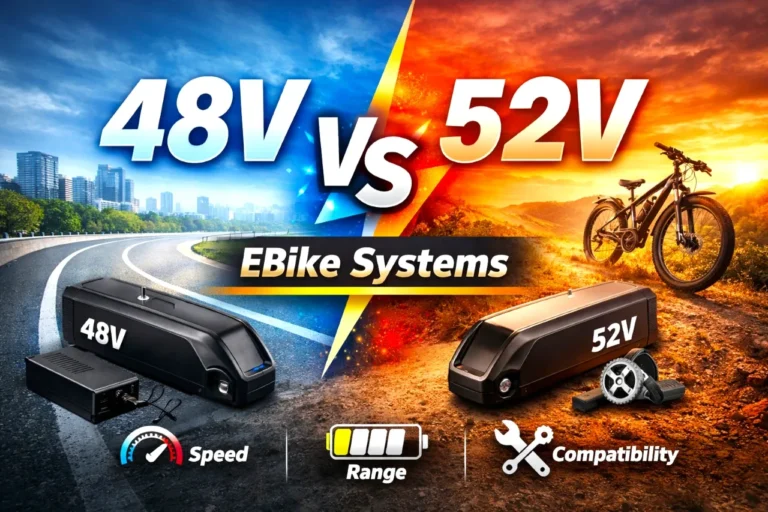
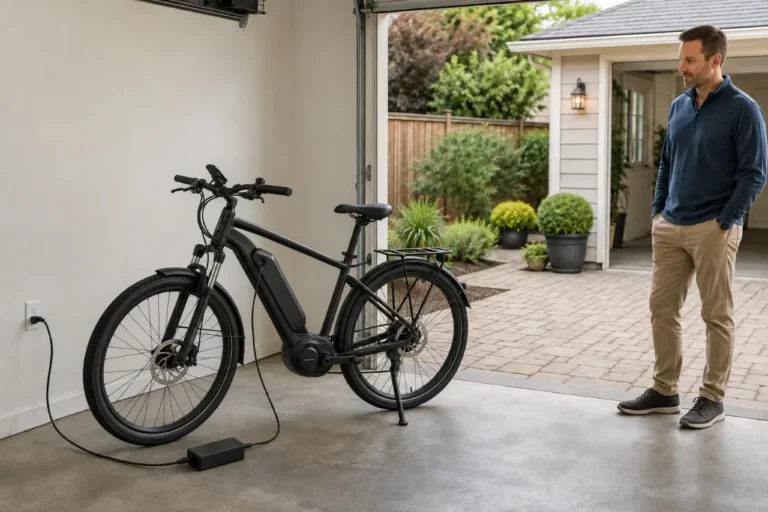
Use only the charger supplied or specifically approved by the e-bike or battery manufacturer. A connector that fits does not prove compatibility. If you are replacing or borrowing a charger, verify the required voltage, charging current, connector, polarity, and manufacturer approval; our Ebike Charger Compatibility Guide explains those checks in detail.
Follow your employer’s or building’s rules as well as the battery manufacturer’s instructions. Charge in a dry, hard, stable location away from combustible clutter and escape routes, and keep the charger and cord where they cannot be crushed or damaged.
CPSC advises micromobility owners to remain present while charging, avoid charging while sleeping or away from home, use the charger provided with or recommended by the manufacturer, and unplug when charging is complete.
Do not charge a battery that is swollen, leaking, cracked, abnormally hot, producing a strong unusual odor, or damaged after a serious impact or water exposure. Stop using it and contact the manufacturer or a qualified battery service provider.
If a battery is smoking, hissing, sparking, burning, or rapidly overheating, move yourself and others away. Do not handle, carry, unplug, or inspect a battery that may be entering thermal runaway. Call emergency services from a safe location and follow responder instructions.
Lock the Bike and Check It Again Before Riding Home

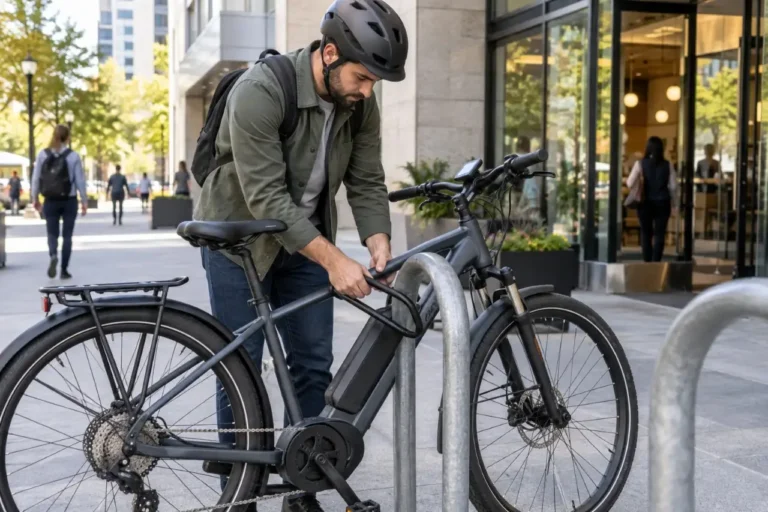
A commuter bike may sit unattended for hours. Lock the frame to a secure fixed object with a quality lock, and secure a wheel or removable component when practical for the location and risk level.
If the battery or display is designed for regular removal, follow the manufacturer’s instructions. Do not improvise removal methods for components that are not intended to come off routinely.
Our E-Bike Parking Security guide covers lock placement, parking location, and removable parts in more detail.
Before riding home, look for a loose wheel, damaged cable or hose, altered brake controls, battery-mount damage, or moved steering components. If you suspect tampering, do not assume the bike is safe because it still turns on.
Reassess the Return Trip
Before leaving work, ask three questions:
- Has the weather changed? Rain, wet leaves, wind, heat, and cold can affect grip, braking, visibility, and range.
- Will part of the ride be dark? Confirm the lights before leaving, not after visibility becomes poor.
- Are you tired or rushed? Fatigue and schedule pressure make it easier to carry too much speed into an intersection or accept a gap that is too small.
If heavy rain has soaked the bike, follow the owner’s manual for weather exposure. Water resistance does not mean the battery or electrical system can be submerged, pressure-washed, or charged while wet or damaged.
Know When Not to Ride Home
Do not continue riding with a safety-critical fault. Stop and arrange another way home if you have:
- A brake that cannot reliably slow or stop the bike
- Loose or unstable steering
- A loose wheel, major wheel wobble, or tire bulge
- Rapid pressure loss or exposed tire casing
- Frame or fork damage
- Repeated drivetrain failure that affects control
- Unexplained electrical warnings with abnormal assist behavior
- Battery heat, swelling, leaking, smoke, hissing, or other serious damage signs
Have the bike inspected by a qualified bicycle or e-bike technician. Do not open a battery, controller, motor, or charger to diagnose an internal electrical fault yourself.
Daily E-Bike Commuting Safety Checklist
Before traffic, confirm that the bike stops, steers, and rolls normally; the battery is secure; lights work; cargo is stable; and the route still suits the weather and time of day. During the ride, keep enough room to stop and stay predictable around intersections and parked cars.
At your destination, lock the bike securely and charge only with approved equipment in an appropriate location. Before riding home, check for tampering, darkness, changing weather, and new mechanical or battery warning signs. Repeating these decisions is what turns safety into a commuting routine.
GoEBikeLife publishes independent e-bike reviews, comparisons, and practical buying guides. Some links on this page are affiliate links. If you make a purchase through an eligible link, we may earn a commission at no additional cost to you.