Electric bikes have improved significantly over the past few years, and 2026 brings a wider range of options than ever. Choosing the right one depends far less on raw specs and far more on how and where you actually ride. A folding commuter, a fat-tire mountain bike, and an electric trike serve very different needs, and picking the wrong category means leaving real value on the table.
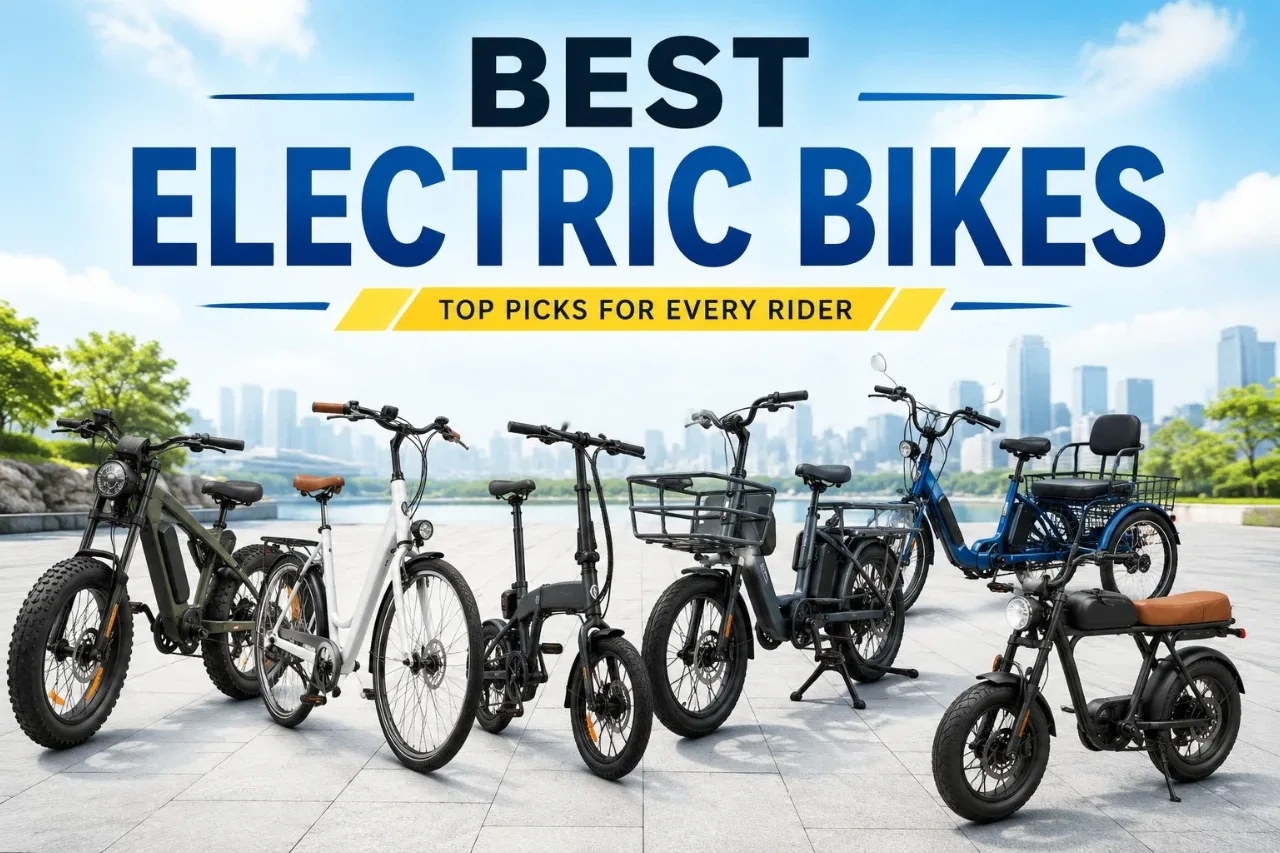
This guide compares eight electric bikes by use case, matching each model to a specific rider type based on motor power, battery capacity, range, tire size, weight, suspension, and braking system. The goal is to help you decide quickly and confidently, not to rank bikes by spec sheets alone.
GoEBikeLife selected these eight models by evaluating the categories most relevant to U.S. riders in 2026: urban commuting, folding portability, off-road performance, cargo utility, long-range touring, trike stability, moped-style power, and budget value. Each pick reflects a trade-off between real-world usability and price.
Best for adventure and trail riding: PUCKIPUPPY Labrador Pro
Best for city commuting: Gotrax Dolphin
Best for high-power off-road riding: PUJH PU3
Best for folding portability: Gotrax R1
Best for errands and cargo: EUY CityRang 4.0
Best for stability and accessibility: NARRAK S180
Best for moped-style performance: YVY K20
Best for budget buyers: QNUT Victor
1. Best Overall: PUCKIPUPPY Labrador Pro

Best for: Riders who want a capable all-terrain e-bike that handles both trail adventures and daily commutes.
| Spec | Detail |
|---|---|
| Motor | 1350W peak, brushless rear hub |
| Battery | 48V 20Ah (removable) |
| Range | 40-80 miles (varies by mode) |
| Top Speed | 28 MPH (pedal-assist), 20 MPH (throttle) |
| Tires | 26″ x 4″ fat tires |
| Suspension | Full (front fork + transverse rear) |
| Brakes | Dual hydraulic disc (180mm) |
| Speeds | 8-speed |
| Frame | 6061 aluminum alloy |
The Labrador Pro earns its spot as the top pick because it balances power, range, and comfort across terrain types. The torque sensor reads your pedaling force in real time and delivers assist proportionally, which feels more natural than cadence-only systems. Claimed knee load reduction of 50% is specific to the brand’s testing, but the torque-sensing assist does genuinely smooth out climbs.
| Preview | Product | Price | |
|---|---|---|---|

| PUCKIPUPPY Electric Bike for Adults 1350W Max, 28 MPH, 48V 20AH Battery Ebike, 26″x4″ Fat… | $1,398.99 $1,139.98 | View on Amazon |
What we like:
- Full suspension with a unique lateral (transverse) rear design absorbs side-to-side bumps
- 85 Nm of torque handles steep climbs up to 40 degrees
- Removable battery with a fast 54V 2A charger (6-8 hours)
- Includes a strong accessory kit: rack, fenders, pump, lock, mirrors, phone mount
What to consider:
- Range varies widely (40-80 miles) depending on rider weight, terrain, and assist level
- Heavier build due to full suspension and fat tires
Who should buy it: Riders who want one bike for weekend trails and weekday commutes. The combination of fat tires, full suspension, and torque-sensor assist makes it well-suited for mixed terrain.
Who should skip it: Riders who only commute on flat pavement and want a lighter, easier-to-carry bike.
2. Best Commuter E-Bike: Gotrax Dolphin

Best for: Adults who commute in the city and want a comfortable, easy-to-ride step-through e-bike.
| Spec | Detail |
|---|---|
| Motor | 350W continuous (500W peak) |
| Battery | 48V (280.8Wh, removable) |
| Range | Up to 30 miles (PAS), 15.5 miles (pure electric) |
| Top Speed | 20 MPH |
| Tires | 26″ standard |
| Suspension | Front fork only |
| Brakes | Dual disc |
| Speeds | 7-speed Shimano |
| Certification | UL 2849 |
The Dolphin is well-suited for urban riders who prioritize ease of use over raw power. The step-through frame keeps mounting and dismounting simple, especially for riders in work clothes. A boost mode (hold button 2-3 seconds) provides a short speed push, which helps at intersections or on slight inclines.
Buyer reviews consistently mention solid build quality and a battery that holds up through extended daily use, including year-round riding. Assembly takes under 30 minutes for most users.
| Preview | Product | Price | |
|---|---|---|---|

| Gotrax Dolphin 26″ Step -Thru Electric Bike for Adults, Max 30 Mile & 20Mph | 500W Peak… | $549.99 | View on Amazon |
What we like:
- Step-through frame suits a wide range of riders
- Shimano 7-speed drivetrain offers reliable shifting
- 365-day parts support is longer than many competitors
- UL 2849 certified for electrical safety
What to consider:
- 30-mile range is at PAS level 1; real-world range at higher assist levels will be shorter
- Not suited for off-road or hilly terrain
Who should buy it: City commuters, errand runners, and casual riders who want a low-maintenance, reliable daily e-bike.
Who should skip it: Riders who need more than 20 MPH, live in hilly areas, or want off-road capability.
3. Best Mountain / Power Pick: PUJH PU3

Best for: Riders who need serious motor output for steep terrain, heavy loads, or demanding off-road conditions.
| Spec | Detail |
|---|---|
| Motor | 6000W peak dual motor |
| Battery | 60V 1200Wh (removable) |
| Range | 35-110 miles (varies by mode) |
| Top Speed | Up to 45 MPH |
| Tires | 24″ x 4.0″ fat tires |
| Suspension | Full (front fork + rear shock + seat springs) |
| Brakes | Dual hydraulic disc |
| Speeds | 7-speed |
| Max Payload | 330 lbs |
The PUJH PU3 is the highest-output bike in this roundup. Dual motors and a 60V system provide strong torque for steep climbs and heavy-load riding. The 1200Wh battery is one of the largest available in this price range, supporting longer trips without mid-ride charging.
Note that 45 MPH speeds place this bike outside Class 3 e-bike regulations in most U.S. states. Riders should verify local laws before riding at full throttle speed on public roads. Only 34 ratings are currently available, so long-term reliability data is limited.
| Preview | Product | Price | |
|---|---|---|---|

| PUJH 8000W 60V Dual Motor Electric Bike Up to 100Mi 24″ Fat Tire for Adults | Type-C… | $1,379.00 | View on Amazon |
What we like:
- Dual-motor setup handles grades and cargo that single-motor bikes cannot
- Six riding modes, including walking assist and cruise control
- Large payload capacity suits heavier riders or loaded cargo use
- 7-level suspension system for maximum comfort on rough ground
What to consider:
- 45 MPH top speed may not be street-legal in many U.S. jurisdictions
- Heavy bike (82+ lbs) makes transport and storage difficult
- Limited owner reviews mean less long-term reliability data
Who should buy it: Off-road riders, rural commuters on rough terrain, or anyone who needs maximum power and range in a single package.
Who should skip it: Urban commuters, apartment dwellers, or anyone who needs to transport or lift the bike regularly.
4. Best Folding E-Bike: Gotrax R1

Best for: Commuters who combine e-bike riding with public transit, store bikes in small spaces, or carry their bike in a car trunk.
| Spec | Detail |
|---|---|
| Motor | 350W continuous (500W peak) |
| Battery | 48V 7.8Ah (374.4Wh) |
| Range | Up to 25 miles (PAS), 15.5 miles (pure electric) |
| Top Speed | 20 MPH |
| Tires | 20″ x 2.6″ |
| Suspension | None (rigid frame) |
| Brakes | Dual disc |
| Speeds | 5-speed |
| Folded Size | 37.4″ x 17.7″ x 27.5″ |
| Weight | 45 lbs |
The R1 folds down to a compact size that fits in most car trunks and fits alongside you on transit. At 45 lbs, it is manageable but not light. Riders over 5’6″ have reported comfortable fit; those under 5’3″ should check the minimum height recommendation.
Owner reviews note that the build feels solid for a folding design, and the battery holds charge well through regular use. The rigid frame means bumps transfer directly to the rider, so smooth pavement is preferred.
| Preview | Product | Price | |
|---|---|---|---|

| Gotrax R1 20″ Folding Electric Bike with 40 Miles Range by 48V Battery, 20Mph Power by… |
$659.99 | View on Amazon |
What we like:
- Compact folded dimensions for multi-modal commuting
- UL 2849 certified
- 365-day parts support
- LCD display with key ride data
What to consider:
- No suspension means a rougher ride on cracked or uneven pavement
- 5-speed gearing limits climbing options compared to 7- or 8-speed bikes
Who should buy it: Commuters who take trains or buses, drivers who want to store a bike in their vehicle, or apartment residents with limited storage space.
Who should skip it: Riders who cover hilly or unpaved routes, or anyone who needs longer range than 25 miles per charge.
5. Best Cargo / Errands: EUY CityRang 4.0

Best for: Riders who carry groceries, gear, or supplies and want a step-through fat-tire design with a rear basket included.
| Spec | Detail |
|---|---|
| Motor | 1500W peak |
| Battery | 48V 20Ah (removable) |
| Range | Up to 70 miles |
| Tires | 20″ x 4.0″ fat tires |
| Suspension | Front only |
| Brakes | Disc |
| Speeds | 7-speed |
| Frame | Carbon steel |
| Included | Rear basket |
The CityRang 4.0’s step-through frame and included rear basket make it a practical choice for utility riding. Fat tires provide stability when loaded, and the 48V 20Ah battery supports longer cargo runs without needing a recharge mid-trip.
Product data for this model is limited compared to others in this guide. The carbon steel frame is heavier than aluminum options (the bike weighs 71 lbs), which is worth noting for riders who need to lift or carry it. The well-rated score across a solid number of reviews suggests buyer satisfaction is reasonably consistent.
| Preview | Product | Price | |
|---|---|---|---|

| EUY Electric Bike for Adults for Black with Rear Basket | 1500W Peak Motor, 70 Mile… | $899.99 $799.99 | View on Amazon |
What we like:
- Rear basket included in the box
- Step-through frame suits riders of varied mobility
- Fat tires add stability when carrying loads
- Large battery supports longer cargo trips
What to consider:
- Carbon steel frame makes this one of the heavier options here
- Limited published spec detail compared to competing models
Who should buy it: Errand riders, light cargo haulers, and anyone who wants a basket-ready step-through with fat tires and a generous range.
Who should skip it: Riders who prioritize light weight, need full suspension, or want detailed spec transparency before buying.
6. Best Electric Trike: NARRAK S180

Best for: Riders who want three-wheel stability, including seniors, riders with balance concerns, or anyone who carries heavy loads on varied terrain.
| Spec | Detail |
|---|---|
| Motor | 750W continuous (1350W peak) |
| Battery | 48V 13Ah (624Wh), UL certified |
| Range | Up to 50 miles (PAS mode) |
| Tires | 20″ x 4″ fat tires |
| Suspension | Dual |
| Brakes | Hydraulic disc (3 rotors) |
| Speeds | 7-speed |
| Max Payload | 290 lbs |
| Frame | Aluminum, foldable |
The S180 is the only three-wheel option in this guide. The differential rear axle system allows the rear wheels to turn at different speeds through corners, which improves stability and reduces the tipping risk common in less refined trike designs. The step-through frame and fold capability add everyday practicality.
Hydraulic brakes on three rotors provide stronger stopping than mechanical alternatives, which matters when carrying loads or riding downhill. The front and rear baskets suit grocery runs and errand trips well.
| Preview | Product | Price | |
|---|---|---|---|

| NARRAK Electric Tricycle for Adults Seniors, 750W Fat Tire 3 Wheel E-Trike, 48V 13Ah UL… | View on Amazon |
What we like:
- Three-wheel design eliminates balance requirements
- Differential system improves cornering behavior
- Hydraulic parking brake for hill stops
- UL certified battery
- U.S.-based customer support line
What to consider:
- Three wheels make storage and transport more complex than a standard bike
- 290 lb payload limit is lower than some two-wheel cargo options
Who should buy it: Older adults, riders with balance or mobility limitations, or anyone who regularly carries heavy loads and wants a stable, upright riding position.
Who should skip it: Riders in tight storage spaces, speed-focused riders, or those who need to transport their bike frequently.
7. Best Moped-Style: YVY K20
Best for: Riders who want aggressive power, full suspension, and a moped-inspired feel for mixed terrain and hill climbing.
| Spec | Detail |
|---|---|
| Motor | 1500W peak |
| Battery | 48V 20Ah (960Wh, removable) |
| Range | Up to 100 miles (PAS), 40 miles (pure electric) |
| Top Speed | 35 MPH |
| Tires | 20″ x 4.0″ fat tires |
| Suspension | Full (5-level system) |
| Brakes | Dual hydraulic with EABS |
| Speeds | 7-speed |
| Certification | UL 2849 / UL 2271 / UL 1512 |
| Frame | High-carbon steel |
The K20 stands out for its triple UL certification, which covers the full electrical system, battery pack, and charger. That level of certified safety is uncommon at this price point. The hydraulic brakes include an electronic anti-lock braking system (EABS), which reduces skid risk on steep or wet descents.
At 35 MPH, the K20 exceeds Class 3 limits (28 MPH) in the U.S., so riders should confirm where and how they can legally operate it at full speed. The moped-style design and power output suit riders who want a more aggressive machine than a standard commuter.
| Preview | Product | Price | |
|---|---|---|---|

| YVY Adult Electric Bike, 1500W Peak Motor Moped Style E-Bike, 48V15.6Ah Removable Battery… | $579.00 $549.00 | View on Amazon |
What we like:
- Triple UL certification covers bike, battery, and charger
- EABS adds an extra layer of braking safety
- Full suspension with seat-level shock absorption
- Strong range estimate for PAS-assisted riding
What to consider:
- 35 MPH top speed requires awareness of local e-bike speed laws
- High-carbon steel frame adds weight
- Relatively new brand with fewer long-term owner reviews
Who should buy it: Riders who want moped-level performance, certified safety, and full suspension for mixed terrain, hill climbing, or longer recreational rides.
Who should skip it: Riders who stay on bike paths with speed limits, need a lightweight bike, or prefer an established brand with a large review base.
8. Best Budget / Best Value: QNUT Victor

Best for: First-time e-bike buyers, teens, and budget-focused riders who want a capable 26″ commuter or light trail bike.
| Spec | Detail |
|---|---|
| Motor | 350W continuous (1000W peak) |
| Battery | 36V 10.4Ah (374.4Wh, removable) |
| Range | Up to 45 miles (PAS), 25 miles (throttle) |
| Top Speed | 28 MPH (PAS) |
| Tires | 26″ x 1.95″ |
| Suspension | Front fork |
| Brakes | Dual mechanical disc |
| Speeds | 21-speed |
| Frame | Steel |
| Certification | UL 2849 |
The QNUT Victor’s biggest strength is its 21-speed Shimano-style drivetrain, which is rare at this price tier. More gears mean better climbing efficiency and more control on varied terrain. The UL 2849 certification and removable battery add safety and charging convenience.
The steel frame adds durability but also weight (61.7 lbs), and mechanical disc brakes deliver less stopping precision than hydraulic alternatives. Still, for a competitively priced entry-level mountain e-bike, the Victor covers the fundamentals well.
| Preview | Product | Price | |
|---|---|---|---|

| QNUT Electric Bike for Adults, Peak 1000W, 26″ Electric Mountain Bike | 21-Speed Long… | $399.99 $339.99 | View on Amazon |
What we like:
- 21-speed gearing is a strong value differentiator
- UL 2849 certified
- IP54 water resistance for light rain
- 90% pre-assembled with tools included
What to consider:
- Steel frame is heavier than aluminum alternatives
- Mechanical disc brakes are less consistent in wet conditions than hydraulic
- Narrower tires limit off-road grip compared to fat-tire models
Who should buy it: Budget-conscious buyers, beginners, teens, and commuters who want reliable gearing and certified safety without a high price tag.
Who should skip it: Riders who need fat tires, full suspension, or high sustained power for demanding trails or heavy cargo.
Buying Guide
Understanding E-Bike Classes and Speed Laws
In the U.S., e-bikes fall into three classes. Class 1 is pedal-assist only, up to 20 MPH. Class 2 adds a throttle, also capped at 20 MPH. Class 3 allows pedal-assist up to 28 MPH.
Bikes in this guide that list top speeds above 28 MPH (such as the PUJH PU3 at 45 MPH and the YVY K20 at 35 MPH) exceed Class 3 limits and may not be street-legal on bike paths or public roads in many states. Always check your local regulations before riding.
Motor Power: Nominal vs. Peak
Motor wattage determines how well a bike handles hills, cargo weight, and headwinds. Here is a general breakdown:
| Motor Power | Best For |
|---|---|
| 500W to 750W | Flat commuting, casual riding, lighter riders |
| 1000W to 1500W | Mixed terrain, hills, heavier riders |
| 2000W+ | Off-road trails, steep grades, heavy loads |
Most e-bikes advertise peak motor power (brief burst output), not continuous rated power. A “1500W peak” motor may run at 500-750W continuously.
For climbing steep hills regularly or carrying cargo, look for higher continuous ratings or a torque spec above 60-80 Nm.
Torque-sensor assist systems (like the PUCKIPUPPY Labrador Pro uses) also tend to feel smoother and more efficient than cadence-only systems.
Battery Capacity and Real-World Range
Watt-hours (Wh) are the most reliable way to compare battery capacity. Divide voltage by amps to calculate: a 48V 20Ah battery equals 960Wh. More Wh means more potential range.
Manufacturer range claims typically reflect best-case conditions (light rider, flat terrain, PAS level 1). Expect 40-60% of peak range under normal mixed conditions.
| Battery Size | Realistic Range (mixed use) |
|---|---|
| Under 400Wh | 15-25 miles |
| 400-600Wh | 25-40 miles |
| 600-1000Wh | 35-60 miles |
| 1000Wh+ | 60-100+ miles |
Tire Size and Terrain Fit
Fat tires (3.5″ to 4.0″ wide) provide better traction on sand, gravel, and snow but add rolling resistance on paved roads. Standard tires (1.95″ to 2.6″) are faster on pavement and lighter overall. For mixed commuting with occasional light trails, a 2.5″-2.6″ tire is often the practical middle ground.
Suspension Types
A rigid frame is lighter and lower maintenance but transfers all road vibration to the rider. Front suspension reduces arm and wrist fatigue on rough pavement. Full suspension (front and rear) adds comfort on trails and technical terrain but increases weight and cost. For purely urban commuting, front suspension is usually sufficient.
Braking: Hydraulic vs. Mechanical Disc
Hydraulic disc brakes self-adjust, require less hand force, and perform more consistently in wet conditions. Mechanical disc brakes are easier to adjust at home and cost less to maintain, but they require more lever force and can feel less precise at speed. For bikes over 25 MPH or used on hills, hydraulic is the more reliable choice.
Certifications to Look For
UL 2849 covers the full e-bike electrical system. UL 2271 covers lithium battery packs specifically. These certifications indicate independent third-party safety testing, not just manufacturer claims. Some listings in this guide carry one or both; the YVY K20 carries all three relevant UL marks. TUV certification (used by some European-compliant models) applies a similar standard. Prioritize certified models if you plan to charge indoors.
Weight and Portability
E-bike weight ranges from around 45 lbs for compact folders to over 80 lbs for full-power dual-motor bikes. If you need to carry your bike up stairs, load it into a vehicle, or fold it for transit, weight matters more than any spec. Factor in how you will store and transport the bike before choosing a category.
Weight Capacity
Standard e-bikes cap out at 264 to 330 pounds. Heavier riders should specifically look for bikes rated at 330 pounds or above, ideally 400 to 450 pounds, to ensure safe and comfortable riding.
Warranty and Support
A one-year warranty is the standard. Some brands offer only 180 days, which is meaningfully less coverage. Look for brands with a US-based or responsive support team, especially if you are buying online without the ability to test first.
Frequently Asked Questions
Which electric bikes are most reliable for adult commuters in 2026?
The Gotrax Dolphin and Gotrax R1 are strong commuter choices based on their UL 2849 certification, 365-day parts support, and consistent owner feedback around build quality and battery longevity.
For commuters who need more range or carry loads, the EUY CityRang 4.0 or PUCKIPUPPY Labrador Pro offer larger batteries with practical cargo or mixed-terrain capability.
What should beginners look for when choosing their first electric bike?
Start with motor class (Class 1 or 2 for simplicity), a removable battery for easy indoor charging, and a UL-certified electrical system.
A 7-speed or higher drivetrain helps on hills, and front suspension adds comfort on city streets.
The QNUT Victor is a practical entry-level option; the Gotrax Dolphin suits beginners who prioritize a step-through frame and easy handling.
How do I compare motor power, torque, and battery range across electric bikes?
Focus on continuous motor wattage and Newton-meters (Nm) of torque rather than peak wattage alone, since peak figures reflect brief bursts.
For battery range, use watt-hours (Wh) as your benchmark and expect 40-60% of the manufacturer’s stated maximum under normal riding conditions.
Torque-sensor systems (which measure how hard you pedal) generally deliver better range efficiency than cadence-only systems.
Which electric bikes offer the best value for the price right now?
The QNUT Victor delivers strong value with its 21-speed drivetrain, UL certification, and removable battery at an accessible price. The Gotrax Dolphin also rates well for value given its solid build quality and longer warranty period. For riders who want more power, the PUCKIPUPPY Labrador Pro offers a torque-sensor system and full suspension that would cost considerably more from established brands.
What are the key differences between hub-drive and mid-drive electric bikes?
Hub-drive motors sit in the wheel hub (usually rear) and are simpler, more affordable, and easier to maintain.
Mid-drive motors sit at the crank and use the bike’s gears for more efficient climbing and better weight distribution.
All bikes in this guide use hub-drive systems. Mid-drive options generally cost more but perform better on steep or technical terrain.
Which electric bikes are best suited for hunting and off-road terrain?
The PUJH PU3 offers the most raw capability for off-road use with its dual-motor setup, full suspension, fat tires, and 330 lb payload capacity.
The PUCKIPUPPY Labrador Pro is a more balanced option for riders who want trail capability without sacrificing commuter usability.
For hunting specifically, look for a bike with a high payload rating, fat tires for soft ground, and a throttle mode for low-speed maneuvering with gear.
GoEBikeLife publishes independent e-bike reviews, comparisons, and practical buying guides. Some links on this page are affiliate links. If you make a purchase through an eligible link, we may earn a commission at no additional cost to you.