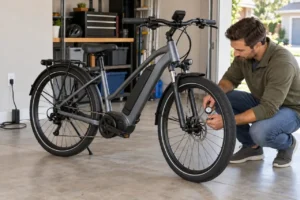
How to Prevent E-Bike Battery Drain While Riding or Parked
Learn how to prevent ebike battery drain with charging, storage, riding, and troubleshooting habits that protect range without risking battery safety first

Learn how e-bike batteries work, what affects riding range, and how to charge and store them safely. Our guides cover battery capacity, charging habits, winter storage, lifespan, troubleshooting, and compatible replacements—helping you protect battery health, reduce premature wear, and handle common battery concerns with confidence.
Learn how to prevent ebike battery drain with charging, storage, riding, and troubleshooting habits that protect range without risking battery safety first
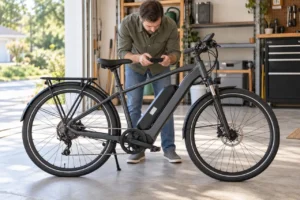
An e-bike battery label lists voltage, capacity, energy, and identification details. Learn what these ratings mean and what they cannot prove about safety.
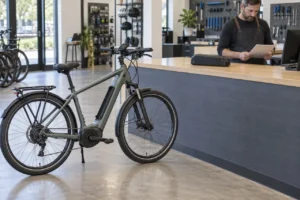
Recycle an old e-bike battery through a confirmed collection program. Check brand eligibility and battery condition before arranging safe drop-off or disposal.
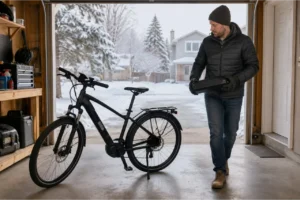
E-bike batteries can tolerate brief freezing exposure, but charging a cold-soaked pack can be unsafe. Warm it naturally and follow the maker’s limits.
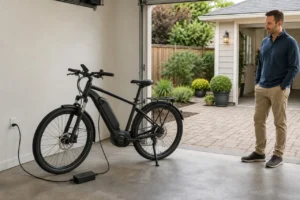
You can charge an e-bike outside only when the manual permits it and the charger, battery, outlet, and weather support a dry, supervised setup.
If your e-bike battery is swollen, stop riding and charging. Learn the immediate warning signs, safe response steps, and proper disposal options.
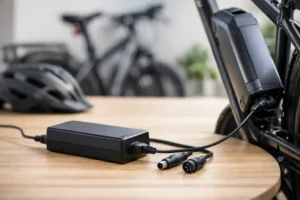
A compatible e-bike charger must match the battery’s required output voltage, approved current, connector, polarity, and manufacturer specifications.
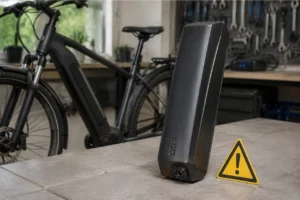
Learn the battery damage warning signs e-bike riders should never ignore, what to do next, and when to stop charging or riding for safety right away.
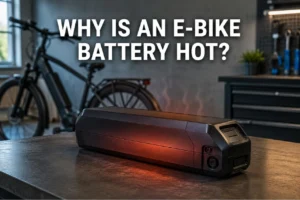
Why is ebike battery hot? Learn when warmth is normal, when it signals trouble, and the safe charging, storage, and service steps to take now safely.
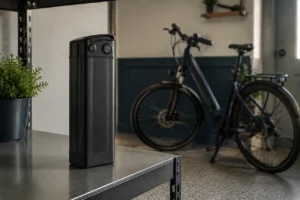
Store an e-bike battery at about 40% to 60% charge in a dry indoor area near 50°F to 77°F, and inspect it every 30 to 90 days during storage.
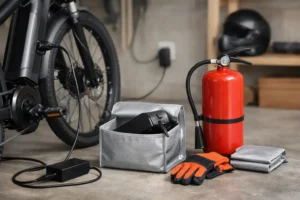
Electric bike fire safety starts with safe charging, storage, and inspection. Learn practical steps to protect your home, battery, and routine each day.
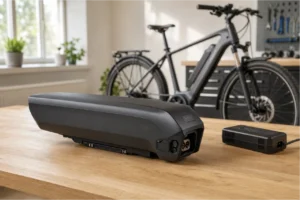
Ebike battery technology trends are improving range, charging, and safety. Learn what changes matter for care, storage, and everyday riding with care.
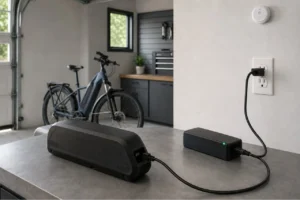
Learn how to charge an ebike battery safely with simple steps for the right charger, location, timing, storage, and warning signs to never ignore at home.
How long does ebike battery last? Learn range per charge, expected service life, and charging and storage habits to protect your battery health over time.
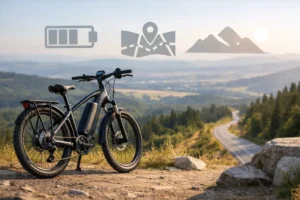
A 672Wh e-bike battery may cover about 45 miles at 15 Wh per mile or 28 miles at 24 Wh per mile, before allowing for a practical riding reserve.

Why your e-bike range drops is mostly about usable power, not just battery size. Cold raises resistance, voltage sags on hills, and the BMS may cut power early.
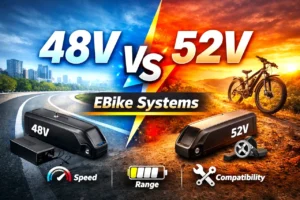
48V and 52V e-bike systems feel closer than most people expect. Here’s what changes on hills and speed, what doesn’t, and how to choose safely.
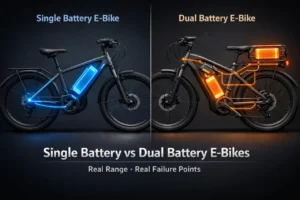
Single vs dual battery e-bikes isn’t just about miles. Learn real range expectations, weight trade-offs, and the failure points that affect ownership.

E-bike range often drops faster in cold weather. Learn how temperature, riding habits, and terrain affect battery life — and how to fix it.
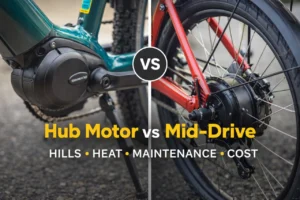
Hub motor vs mid-drive isn’t about hype—it’s about hills, heat, maintenance, and long-term cost. Here’s what you’ll feel in real riding, fast.