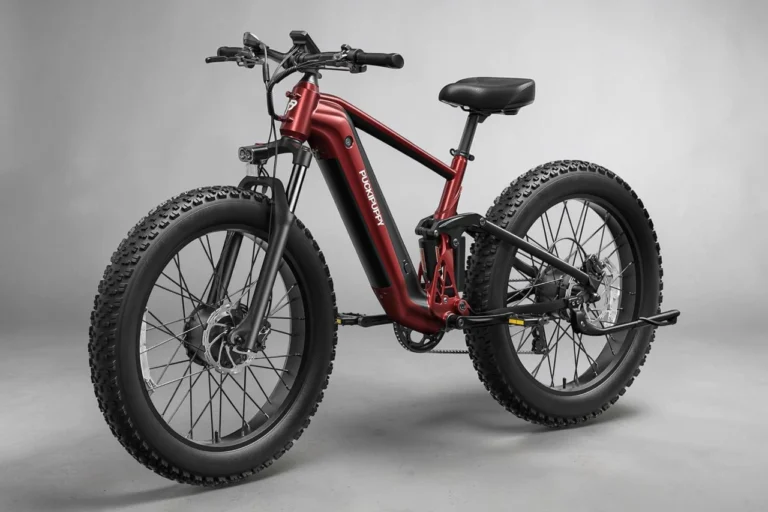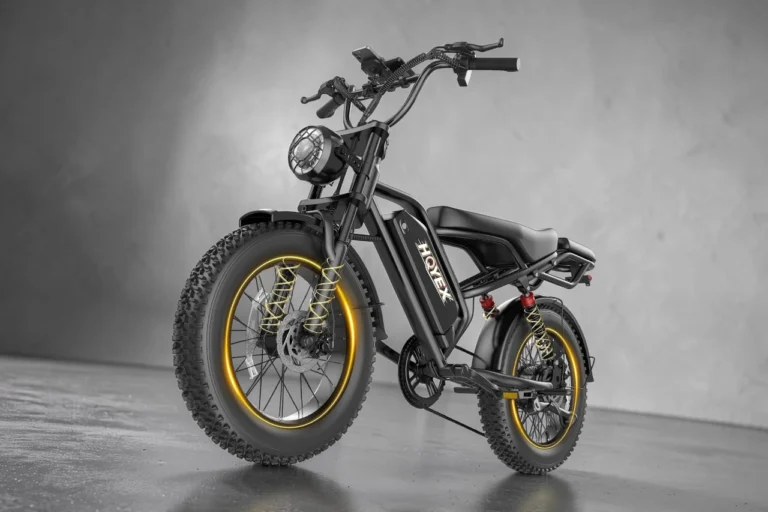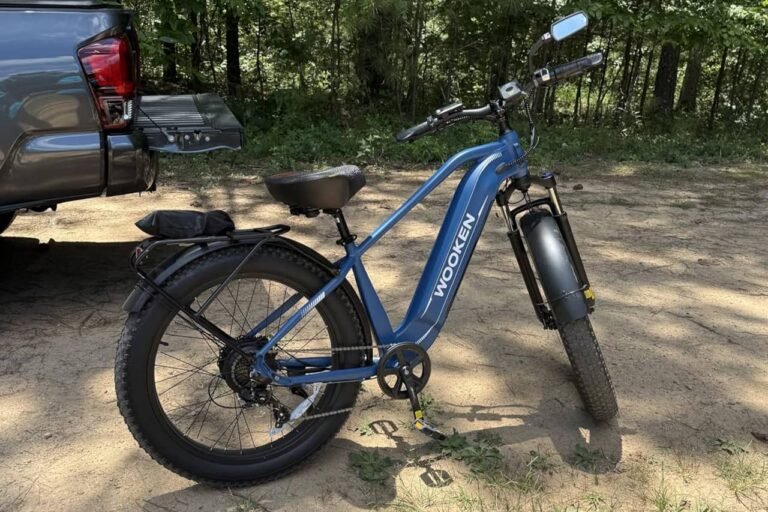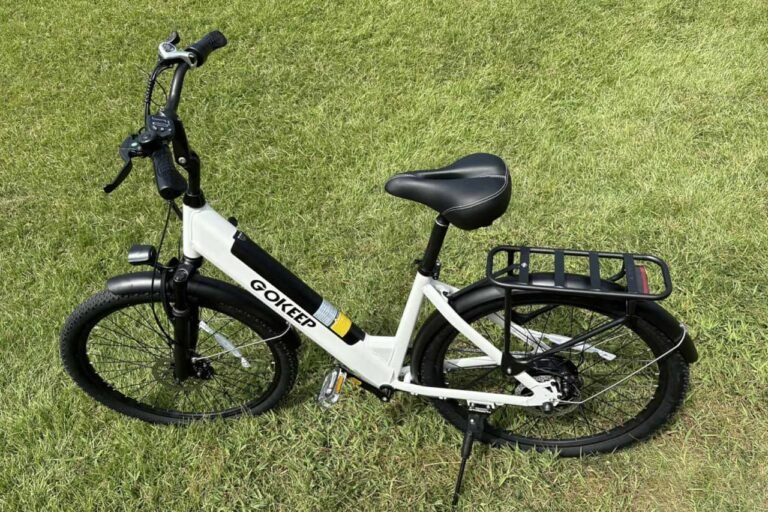
Fat tire electric bikes have moved well past niche status. Whether you’re navigating wet city streets, packed gravel trails, loose sand, or light snow, the wide contact patch of a 4-inch tire delivers grip and stability that narrow tires simply can’t match. If you’re a commuter, a heavier rider, a recreational cyclist, or someone tackling mixed terrain, a fat tire e-bike is one of the most practical choices on the market right now.
This guide covers eight fat tire e-bikes currently available on Amazon, ranging from budget-friendly entry points to high-powered long-range machines. We’ve matched each model to a specific type of rider based on motor output, battery capacity, real-world range expectations, payload limits, frame design, and safety certifications. Our goal is to cut through the spec sheet noise and help you make a confident decision without overspending or buying more bike than you need.
A quick note on range claims: manufacturers list maximum range under ideal conditions, usually light assist, flat terrain, and a lighter rider. In practice, expect 40 to 60 percent of the advertised maximum under real-world conditions (heavier rider, moderate assist, mixed terrain). We flag realistic ranges throughout.
Best for long-range adventure riding: Jasion Thunder Electric Bike
Best for value-focused trail riding: Jasion EB5 MAX Electric Bike
Best for heavier riders needing full suspension: Aipas M1 Pro Electric Bike
Best for big riders on a budget: Aipas M2 Pro Electric Bike
Best moped-style dirt bike: DTTZH F6 Electric Bike
Best budget commuter with safety certification: Funhang EB-S1 Electric Bike
Best compact city and trail bike for teens and adults: URLIFE E20 Electric Bike
Best folding step-thru for commuters and seniors: Heybike Ranger 2.0 Electric Bike
1. Jasion Thunder Electric Bike

Best for: Long-range adventure riders and heavier commuters who need serious range and payload.
The Jasion Thunder is the high-output option in this roundup. The base Thunder model runs a 1800W peak motor with 85 Nm of torque and a 48V 18Ah (864 Wh) battery. The PRO and ST variants step up to 2000W peak and a 1040 Wh battery for claimed ranges approaching 90 miles.
Realistically, expect 40 to 55 miles under moderate assist on mixed terrain with an average-weight rider. The 26×4-inch fat tires handle sand, snow, and pavement. Dual hydraulic disc brakes and a front suspension fork are standard. Payload reaches 400 lbs on the Thunder and 500 lbs on upper variants, making this one of the stronger capacity options here.
One important flag: at speeds above 28 mph, this bike likely falls outside Class 1-3 definitions in many U.S. states and could be treated as a moped or motorcycle. One verified buyer noted exactly this issue in Wisconsin. Check your local laws before purchasing the higher-speed variants.
The bike arrives largely pre-assembled and carries a 24-month warranty on motor, battery, and controller. It holds a UL certification, which is a genuine safety plus.
| Spec | Thunder |
|---|---|
| Peak Motor | 1800W |
| Battery | 864 Wh |
| Claimed Range | 80 miles |
| Realistic Range | 40-50 miles |
| Payload | 400 lbs |
| Tire Size | 26×4 in |
| Suspension | Front |
| Brakes | Hydraulic Disc |
| Preview | Product | Price | |
|---|---|---|---|

| Jasion Thunder Electric Bike for Adults,1800W Peak,26”x 4”Fat Tire E Bikes,80 Miles with… | $749.99 | View on Amazon |
Pros:
- High payload capacity
- Hydraulic disc brakes with 2-second stop claim
- Long warranty coverage
- Shimano 7-speed drivetrain
Cons:
- Heavier bike at 82 lbs
- Top speed models may not be street-legal in all states
- PRO/ST upgrades add cost with modest feature differences per reviewer feedback
Who should avoid it: Riders who need a lightweight, portable bike or who live in states with strict Class 3 speed limits.
2. Jasion EB5 MAX Electric Bike

Best for: Riders who want strong power at a competitive price without stepping into legal gray zones.
The EB5 MAX offers a 2000W peak hub motor on a 720 Wh (48V 15Ah) battery. Claimed range is 65 miles on assist and 35 miles throttle-only. Realistically, figure 30 to 45 miles under average conditions. Top speed is listed at 28+ mph, keeping it closer to Class 3 territory.
The 26×4-inch fat tires sit on a carbon steel frame with a lockable front suspension fork. Dual 180mm disc brakes provide solid stopping. The removable, lockable battery and built-in cruise control are practical additions for daily commuters.
It ranks highly among adult electric bicycles on Amazon and has accumulated a solid reviewer base. Buyers report easy assembly and sturdy build quality, though one reviewer flagged a front tire defect out of the box, which is worth inspecting immediately upon delivery.
| Spec | EB5 MAX |
|---|---|
| Peak Motor | 2000W |
| Battery | 720 Wh |
| Claimed Range | 65 miles (assist) |
| Realistic Range | 30-45 miles |
| Payload | Not listed |
| Tire Size | 26×4 in |
| Suspension | Front (lockable) |
| Brakes | 180mm Disc |
| Preview | Product | Price | |
|---|---|---|---|

| Jasion EB5 MAX Electric Bike for Adults 2000W Peak Motor, 48V 15Ah Battery | 720Wh Battery… | $799.99 | View on Amazon |
Pros:
- Well-ranked among Amazon adult e-bikes
- Cruise control included
- Password-protected display
- Competitive price for 2000W peak
Cons:
- Carbon steel frame (heavier than aluminum)
- Shorter battery than the Thunder
- Isolated reports of tire quality issues
Who should avoid it: Riders needing maximum range or dual suspension for rough off-road use.
3. Aipas M1 Pro Electric Bike

Best for: Heavier riders, seniors, and mixed-terrain commuters who need dual suspension and a high payload.
The M1 Pro delivers 1800W peak power and 110 Nm of torque from a brushless rear hub motor. The 48V 17.5Ah battery offers 832 Wh of capacity, with claimed range of 25 to 85 miles depending on mode. Under real-world conditions with moderate assist on mixed terrain, 40 to 55 miles is a reasonable target.
The standout feature is dual suspension, with both a lockable front fork and a rear shock absorber. Paired with 26×4-inch fat tires and 180mm mechanical disc brakes, the M1 Pro handles rough surfaces better than front-suspension-only competitors. The step-thru frame suits riders who find high top tubes difficult to manage.
Payload is rated at 500 lbs, among the highest in this guide. A USB charging port on the controller is a small but practical addition for commuters. The green military-style variant ships with front and rear baskets.
| Spec | M1 Pro |
|---|---|
| Peak Motor | 1800W |
| Battery | 832 Wh |
| Claimed Range | 85 miles |
| Realistic Range | 40-55 miles |
| Payload | 500 lbs |
| Tire Size | 26×4 in |
| Suspension | Dual |
| Brakes | 180mm Disc |
| Preview | Product | Price | |
|---|---|---|---|

| Aipas M1 Pro Electric Bike for Adults, 26 x 4 Fat Tires, 48V 17.5Ah Battery | $987.99 | View on Amazon |
Pros:
- Dual suspension system
- 500 lb payload capacity
- Step-thru frame option
- USB charging port on controller
Cons:
- High carbon steel frame adds weight
- Mechanical rather than hydraulic disc brakes
- Speed may be limited vs. advertised (per reviewer notes)
Who should avoid it: Riders who prioritize lightweight portability or who only ride smooth pavement.
4. Aipas M2 Pro Electric Bike

Best for: Big riders on a budget who need dual suspension and a 500 lb payload without premium pricing.
The M2 Pro shares much of its spec DNA with the Aipas M1 Pro: 1800W peak motor, 110 Nm torque, 48V 17.5Ah (832 Wh) battery, and a 500 lb payload limit. The aluminum frame is a notable upgrade over the high carbon steel found on competing models at this price point.
Dual suspension with a lockable front fork and 180mm disc brakes handle off-road terrain and city potholes. The 26×4-inch tires add traction on loose surfaces. The LCD display shows ride data, and five riding modes cover throttle, pedal assist, cruise, normal, and walk mode. Assembly takes roughly two hours and requires some tools, as the unit ships at about 95% pre-assembled.
Buyer feedback is largely positive, with some shipping and packaging concerns noted. One reviewer reported a difficult return experience, so weigh that before purchasing.
| Spec | M2 Pro |
|---|---|
| Peak Motor | 1800W |
| Battery | 832 Wh |
| Claimed Range | 85 miles |
| Realistic Range | 40-55 miles |
| Payload | 500 lbs |
| Tire Size | 26×4 in |
| Suspension | Dual |
| Brakes | 180mm Disc |
| Preview | Product | Price | |
|---|---|---|---|

| LEONX M2 Pro Electric Bike for Adults, 1800W Peak Motor, 85-Mile Long Range | $987.99 | View on Amazon |
Pros:
- Aluminum frame (lighter, more durable)
- 500 lb payload
- Dual suspension at competitive price
- USB charging port
Cons:
- Fewer reviews than comparable models
- Return policy flagged as restrictive by one buyer
- Twist grip shifter (less precise than trigger shifters)
Who should avoid it: Buyers who may need to return the bike or who want a well-established reviewer base to draw from.
5. DTTZH F6 Electric Bike
Best for: Riders who want a moped-style dirt bike experience with NFC security and high-power options.
The DTTZH F6 is the most motorcycle-adjacent model in this guide. The base F6 variant (listed here) runs a 750W nominal, 1500W peak motor on a 48V 15.6Ah (720 Wh) battery. Upper variants (F6S and F6PRO) push to 2000W and 4000W peak respectively, with 60V 30Ah batteries and ranges approaching 100 miles.
The 20×4-inch fat tires and full dual suspension (hydraulic front, rear shock) give it genuine off-road confidence. NFC card unlock and a 4-digit password system are practical security features you won’t find on most bikes at this price. The color LCD display is easy to read in sunlight.
The 330 lb payload limit is lower than the fat-tire 26-inch models here. At higher power variants, legal classification as a motor vehicle in many U.S. states is a real concern. The base F6 at 1500W peak is more likely to stay within Class 3 territory at managed speeds.
| Spec | F6 |
|---|---|
| Peak Motor | 1500W |
| Battery | 720 Wh |
| Claimed Range | 60 miles (PAS) |
| Realistic Range | 25-40 miles |
| Payload | 330 lbs |
| Tire Size | 20×4 in |
| Suspension | Dual (hydraulic front) |
| Brakes | Disc |
| Preview | Product | Price | |
|---|---|---|---|

| Adult Electric Bike, Fast E Bike for Adults Electric Fat Tire Ebike | $493.99 $439.98 | View on Amazon |
Pros:
- NFC + password security
- Full dual suspension
- UL 2849 and GCC certified
- Strong Amazon sales rank (currently #1 in Electric Fat Bikes)
Cons:
- Smaller 20-inch wheels (less efficient on flat pavement vs. 26-inch)
- Lower payload than 26-inch competitors
- High-power variants likely exceed Class 3 in most states
- Speedometer accuracy questioned by one reviewer
Who should avoid it: Heavier riders above 330 lbs, or those who primarily commute on flat pavement where 26-inch wheels are more efficient.
6. Funhang EB-S1 Electric Bike

Best for: Budget-conscious commuters and first-time e-bike buyers who want a certified, dependable ride.
The Funhang EB-S1 is the most entry-level option in this guide and one of the few with both UL 2271 (battery) and UL 2849 (whole system) certifications verified by independent labs (SGS and TUV respectively). That’s meaningful for buyers who charge the bike indoors.
The 500W nominal motor (1000W peak) tops out at 20 mph. Battery capacity is 48V 13Ah (624 Wh), with claimed range of 55 to 60 miles on pedal assist and 30 to 35 miles on full throttle. Realistically, 30 to 45 miles in mixed use is achievable. The 70 lb weight is lighter than most competitors here.
Front suspension, dual 180mm disc brakes, a rear cargo rack, and turn signals round out a practical commuter package. The 330 lb payload and 20 mph cap keep it firmly in Class 2 territory in most U.S. states.
| Spec | EB-S1 |
|---|---|
| Peak Motor | 1000W |
| Battery | 624 Wh |
| Claimed Range | 60 miles (PAS) |
| Realistic Range | 30-45 miles |
| Payload | 330 lbs |
| Tire Size | 26×4 in |
| Suspension | Front |
| Brakes | 180mm Disc |
| Preview | Product | Price | |
|---|---|---|---|

| Funhang Electric Bike for Adults, 1000W Peak Ebike, 20MPH 60Miles Electric Mountain Bike… | View on Amazon |
Pros:
- Dual UL safety certification (SGS + TUV verified)
- Lighter at 70 lbs
- Turn signals included
- 365-day warranty plus lifetime technical support
Cons:
- Lower motor power than most competitors here
- 20 mph cap not suitable for riders who want speed
- Front suspension only
Who should avoid it: Riders who need more than 20 mph, carry heavy loads regularly, or plan to tackle steep hills frequently.
7. URLIFE E20 Electric Bike

Best for: Adults and teens who want a compact, nimble fat tire bike for city streets, beach paths, and light trails.
The URLIFE E20 uses 20×3-inch tires rather than the 4-inch tires found on most other bikes here. That makes it slightly less capable on very loose terrain but more maneuverable and lighter in handling. The 48V 13Ah (624 Wh) battery claims an 80-mile range, which is optimistic; 35 to 50 miles in average conditions is more realistic.
Top speed is 20 mph, keeping it in Class 2 territory. The front fork suspension handles city bumps and packed trails. An IP54-rated LCD display and front/rear lights add safety for low-light riding. The extra-large rear rack can carry up to 265 lbs of cargo, which is genuinely useful for grocery runs.
The 265 lb total rider weight limit is the lowest in this guide and a critical consideration for heavier buyers. Reviewer feedback is mixed, with one report of a post-ride breakdown and a return cost dispute. Quality consistency appears uneven at this price point.
| Spec | E20 |
|---|---|
| Peak Motor | Not listed (20 mph cap) |
| Battery | 624 Wh |
| Claimed Range | 80 miles |
| Realistic Range | 35-50 miles |
| Payload | 265 lbs |
| Tire Size | 20×3 in |
| Suspension | Front |
| Brakes | Dual Disc |
| Preview | Product | Price | |
|---|---|---|---|

| URLIFE 20″ Fat Tire Electric Bike for Adult, 80-Mile Range, 48V 13AH, 7-Speed, Front… | $359.99 | View on Amazon |
Pros:
- UL 2849 certified
- Nimble 20-inch format
- Large cargo rack
- Suitable for teens and shorter adults
Cons:
- Lowest payload capacity in this guide
- 3-inch tires offer less off-road traction than 4-inch
- Mixed reliability reports
- Return policy concerns flagged by a reviewer
Who should avoid it: Heavier riders, anyone who needs serious off-road capability, or buyers who prioritize a proven reliability track record.
8. Heybike Ranger 2.0 Electric Bike

Best for: Commuters, seniors, and riders with mobility limitations who want a foldable step-thru fat tire e-bike.
The Heybike Ranger 2.0 combines a step-thru frame, foldable design, and 20×4-inch fat tires in a package aimed squarely at urban commuters and riders who need easy mounting and dismounting. The 1400W peak motor on a 600 Wh (48V 15Ah) battery claims up to 65 miles of range. Realistically, expect 30 to 45 miles on mixed use with moderate assist.
Top speed is 28+ mph, which may push it into Class 3 or higher depending on state law. Front suspension handles light roughness, and the bike ships mostly pre-assembled. Integrated front and rear lights, a sturdy rear rack, and puncture-resistant fat tires round out the commuter-focused feature set.
The reviewer base is smaller than most other models here, though early feedback is strongly positive. The foldable design makes apartment storage and public transit transfers genuinely practical.
| Spec | Ranger 2.0 |
|---|---|
| Peak Motor | 1400W |
| Battery | 600 Wh |
| Claimed Range | 65 miles |
| Realistic Range | 30-45 miles |
| Payload | Not listed |
| Tire Size | 20×4 in |
| Suspension | Front |
| Brakes | Disc |
| Preview | Product | Price | |
|---|---|---|---|

| Heybike Ranger 2.0 Electric Bike for Adults, 1400W Peak Motor Ebike, 20” Fat Tire… | $799.99 | View on Amazon |
Pros:
- Foldable and step-thru for easy storage and access
- Fat tires on a compact 20-inch platform
- Highly rated by early buyers
- Practical for seniors and riders with joint limitations
Cons:
- Smaller reviewer base than competitors
- 600 Wh battery is the smallest in this guide
- Payload not specified by manufacturer
- Axle covers reported to come loose easily
Who should avoid it: Riders who need maximum range, carry very heavy loads, or want a larger 26-inch wheel platform for better efficiency on long flat routes.
Buying Guide
How We Evaluated These Bikes
We compared each bike on motor peak wattage and torque, battery capacity in Wh (volts x amp-hours), realistic range estimates, tire size, suspension type, braking system, frame material, payload capacity, safety certifications, and frame style. We also factored in real buyer feedback to flag recurring issues.
Motor Power: Peak vs. Nominal
Every listing here advertises peak wattage (the maximum burst output), not the sustained nominal rating. A 2000W peak motor typically runs at 750W to 1000W continuously. Peak numbers matter for hills and acceleration; nominal rating matters for cruise efficiency. For most commuters and trail riders, 750W to 1000W nominal (1500W to 2000W peak) is more than sufficient.
Battery Capacity and Realistic Range
Multiply volts by amp-hours to get watt-hours (Wh), the true measure of energy stored. A 48V 15Ah battery holds 720 Wh. Under real-world conditions, figure roughly 20 to 25 Wh per mile on moderate assist, which means a 720 Wh battery yields about 29 to 36 miles of realistic range in mixed use. Manufacturer claims often assume the lowest assist level on flat terrain.
| Battery Size | Realistic Range (Moderate Assist) |
|---|---|
| 600 Wh | 24-30 miles |
| 720 Wh | 29-36 miles |
| 832-864 Wh | 33-43 miles |
| 1040 Wh | 42-52 miles |
Tire Width: 3-Inch vs. 4-Inch
Most bikes here use 26×4-inch or 20×4-inch tires, which is the fat tire standard. The URLIFE E20 uses a 3-inch tire, offering a middle ground between standard and fat. Wider tires grip better on sand, snow, and loose gravel but add rolling resistance on pavement.
Legal Classification
Speed and power determine legal class in the U.S.:
- Class 1: Pedal assist only, max 20 mph
- Class 2: Throttle allowed, max 20 mph
- Class 3: Pedal assist, max 28 mph
- Above Class 3: May require registration, insurance, or a license
Several bikes in this guide can exceed Class 3 limits at higher settings. Check your state’s regulations before purchasing a bike with a top speed above 28 mph.
Safety Certifications
UL 2849 (whole system) and UL 2271 (battery) certifications mean independent labs have verified basic electrical safety standards. The Funhang EB-S1 holds both. The DTTZH F6 holds UL 2849 and GCC. The Jasion Thunder holds UL certification. For indoor charging, certification matters.
Frame Material
- Aluminum: Lighter, more corrosion-resistant, stiffer
- High carbon steel: Heavier, more impact-absorbent, more affordable
- Carbon steel: Similar to high carbon steel, common at lower price points
Key Specs at a Glance
| Model | Peak Motor | Battery (Wh) | Payload | Suspension | UL Cert |
|---|---|---|---|---|---|
| Jasion Thunder | 1800W | 864 | 400 lbs | Front | Yes |
| Jasion EB5 MAX | 2000W | 720 | 400 lbs | Front | No |
| Aipas M1 Pro | 1800W | 832 | 500 lbs | Dual | No |
| Aipas M2 Pro | 1800W | 832 | 500 lbs | Dual | No |
| DTTZH F6 | 1500W | 720 | 330 lbs | Dual | UL 2849 |
| Funhang EB-S1 | 1000W | 624 | 330 lbs | Front | UL 2849 |
| URLIFE E20 | 1000W | 624 | 265 lbs | Front | UL 2849 |
| Heybike Ranger 2.0 | 1400W | 600 | 330 lbs | Front | No |
Frequently Asked Questions
Are fat tire electric bikes worth it?
For riders who deal with loose, slippery, or uneven terrain, fat tire e-bikes offer meaningfully better traction and stability than standard narrow-tire bikes.
If you only ride smooth pavement, a fat tire adds rolling resistance without much benefit.
For mixed terrain, commuting on imperfect roads, or recreational use on beach paths and gravel, the trade-off is well worth it.
Are fat tire e-bikes harder to pedal?
Without motor assist, fat tire bikes are harder to pedal than standard bikes because the wider tires create more rolling resistance and the bikes are heavier.
With pedal assist active, most riders find this difference negligible in practice.
The motor compensates for the extra effort, and most fat tire e-bikes in this guide use at least 5 assist levels to manage effort.
What is the best tire size for a fat tire e-bike?
Most fat tire e-bikes use 26×4-inch or 20×4-inch tires. The 26-inch wheel is more efficient on flat pavement and better for longer commutes.
The 20-inch wheel is more maneuverable and compact, suiting urban riders and those who need to store or transport the bike.
A 4-inch width is the standard fat tire size; 3-inch is a lighter, narrower option that performs well on pavement but less so in deep sand or snow.
Are fat tire e-bikes good for commuting?
Yes, especially for commuters who deal with potholes, gravel, wet roads, or seasonal conditions like light snow.
The wide tires absorb road imperfections and provide better grip in wet conditions.
The main trade-off is weight; most fat tire e-bikes weigh between 65 and 90 lbs, which can make parking, carrying up stairs, or loading onto transit more difficult.
How much motor power does a fat tire e-bike need?
For flat city commuting and light trail use, a 500W to 750W nominal motor (1000W to 1500W peak) is adequate.
For heavier riders, hilly terrain, or off-road use, a 750W to 1000W nominal motor (1500W to 2000W peak) provides noticeably better performance.
Above 2000W peak, you’re entering legal gray zones in most U.S. states, and the extra power is rarely necessary for everyday riding.
How much motor power do I need for hills and sand?
Torque matters more than peak wattage for hill climbing and loose terrain. Look for motors with at least 80 Nm of torque for moderate hills; 110 Nm handles steep grades and soft surfaces much better.
Most 1800W peak motors in this guide produce 85 to 110 Nm, which is sufficient for 15 to 30 degree inclines under typical rider weights.
Sand and snow also benefit from a lower tire pressure (around 10 to 15 psi) to maximize contact area, regardless of motor power.
GoEBikeLife publishes independent e-bike reviews, comparisons, and practical buying guides. Some links on this page are affiliate links. If you make a purchase through an eligible link, we may earn a commission at no additional cost to you.