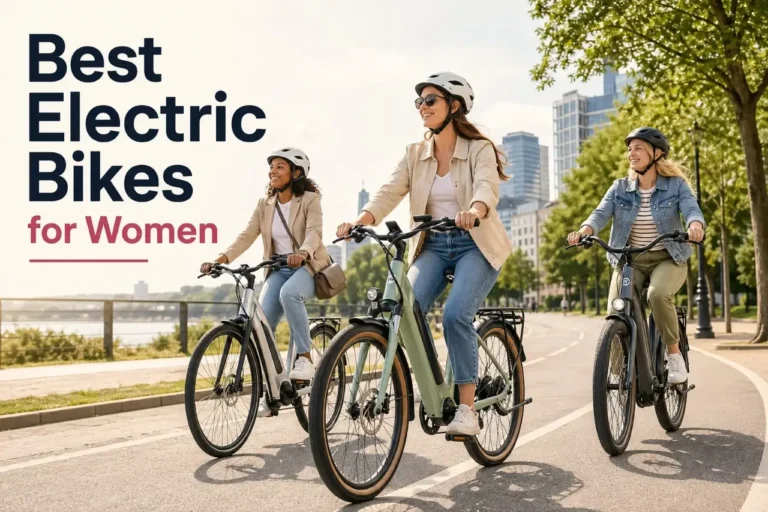
Choosing the right commuter e-bike comes down to a few practical questions: How far do you ride each day? Do you need to store the bike indoors or on transit? Are your streets rough, hilly, or wet? The best commuter e-bike balances real-world range, comfortable geometry, dependable braking, and accessories like lights, fenders, and racks that make daily use actually convenient. Speed and peak motor wattage matter far less than whether the bike fits your routine.
The single most important buying advice for commuters: match the bike’s realistic range and accessories to your actual daily distance and storage situation, not to the best-case figures on the spec sheet.
A 10-mile round-trip commute on flat city streets calls for a very different bike than a 30-mile mixed-terrain ride with a loaded rack. Folding matters if you take transit. Fat tires help on potholed urban streets but add weight. Hydraulic disc brakes outperform mechanical ones in wet conditions. GoEBikeLife prioritizes those real-world factors in every pick below.
Best for city commuting on a budget: Gotrax Dolphin 26″ Electric Bike
Best for mixed transit and compact storage: Gotrax R1 Folding Electric Bike
Best for longer all-terrain commutes: Funhang EB-C1 Commuter E-Bike
Best for comfort-focused urban riding: Heybike Cityscape 2.0
Best for rugged city streets with cargo needs: Jasion EB5 MAX Fat Tire E-Bike
Best step-through for shorter daily errands: Hoverfly OUREA Commuter E-Bike
Best value fat-tire for rough urban roads: TST Electric Fat Tire E-Bike
Best high-capacity option for longer range commuters: YVY All-Terrain E-Bike
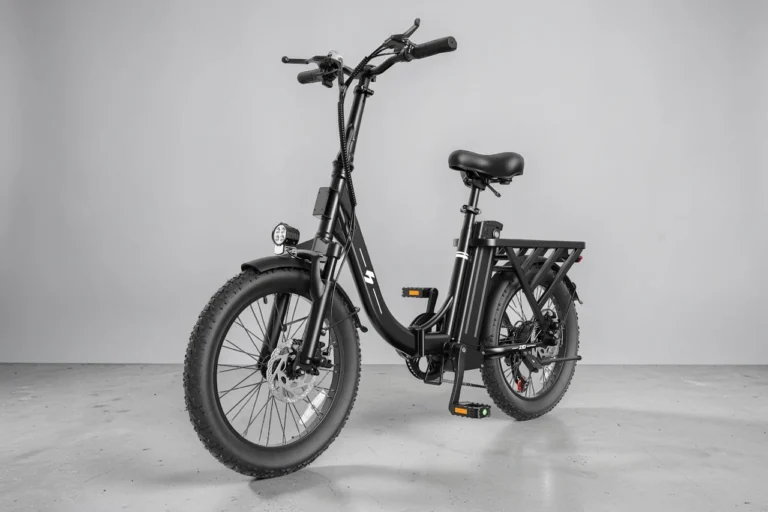
1. Gotrax Dolphin 26″ Electric Bike

Best for: City commuting on a budget with a step-through frame
Key commuter specs:
| Spec | Detail |
|---|---|
| Motor | 350W nominal, 500W peak |
| Battery | 280.8 Wh |
| Claimed range | Up to 30 miles (pedal assist), ~15 miles pure electric |
| Wheel size | 26 inches |
| Weight | ~49 lbs |
| Brakes | Dual disc |
| Speeds | 7 (Shimano) |
| Suspension | Front fork |
| Certification | UL2849 |
Why it works for commuting: The step-through frame makes mounting and dismounting easy in traffic or at lights. The Shimano 7-speed drivetrain is a genuine advantage over cheaper single-gear setups, letting riders gear down on hills without leaning on the motor constantly. GoEBikeLife notes that the boost mode (hold button for 2-3 seconds for a slow-speed push) is genuinely useful for crowded intersections.
| Preview | Product | Price | |
|---|---|---|---|

| Gotrax Dolphin 26″ Step -Thru Electric Bike for Adults, Max 30 Mile & 20Mph | 500W Peak… | $549.99 | View on Amazon |
Main strengths:
- Shimano shifting is more reliable long-term than generic derailleurs
- Step-through frame suits riders of varied heights and clothing
- Well-rated by verified buyers for battery longevity after a year of daily use
- Competitively priced for a UL-certified city bike
Main trade-offs:
- 280.8 Wh battery is small; realistically delivers 18-22 miles at moderate assist on mixed terrain
- 264 lb weight limit excludes heavier riders
- No rear rack or fenders included; add-ons increase cost and setup time
- No throttle mode in standard operation; boost mode is limited to very low speeds
Who should buy it: Riders with a 10-15 mile round-trip commute on relatively flat city streets who want a lightweight, UL-certified step-through at an accessible price.
Who should avoid it: Anyone commuting more than 15 miles one way, riders over 240 lbs, or those needing cargo capacity out of the box.
2. Gotrax R1 Folding Electric Bike

Best for: Mixed-transit commuters who need to fold and carry the bike
Key commuter specs:
| Spec | Detail |
|---|---|
| Motor | 350W nominal, 500W peak |
| Battery | 48V / 7.8Ah (374.4 Wh) |
| Claimed range | Up to 25 miles (PAS), ~15 miles pure electric |
| Wheel size | 20 inches |
| Weight | 45 lbs |
| Brakes | Disc |
| Speeds | 5 |
| Suspension | Rigid (none) |
| Folded size | 37.4 x 17.7 x 27.5 inches |
Why it works for commuting: The folding frame is the main selling point. At 45 lbs it fits in a car trunk or can be brought onto transit where permitted. Riders report it folds quickly. The 48V battery charges in about 5.5 hours, which works for overnight charging at home or a full day at an office.
| Preview | Product | Price | |
|---|---|---|---|

| Gotrax R1 20″ Folding Electric Bike with 40 Miles (Pedal-assist1) by 48V Battery, 20Mph… |
$659.99 | View on Amazon |
Main strengths:
- Genuinely foldable and car-trunk compatible
- 48V system provides better torque response than comparable 36V folders
- UL2849 certified
- Competitively priced for a folding e-bike with 365-day parts support
Main trade-offs:
- No suspension at all; 20-inch wheels on rough pavement feel every crack
- Only 5 speeds, which limits efficiency on longer or hillier routes
- 264 lb weight limit
- Realistic range at city speeds with a heavier rider is closer to 18-22 miles in PAS mode, not the claimed 40 miles
Who should buy it: Commuters who combine biking with transit, park in small spaces, or store the bike inside an apartment or office.
Who should avoid it: Riders on rough urban streets, those needing a suspension system, or anyone whose commute exceeds 20 miles round-trip regularly.
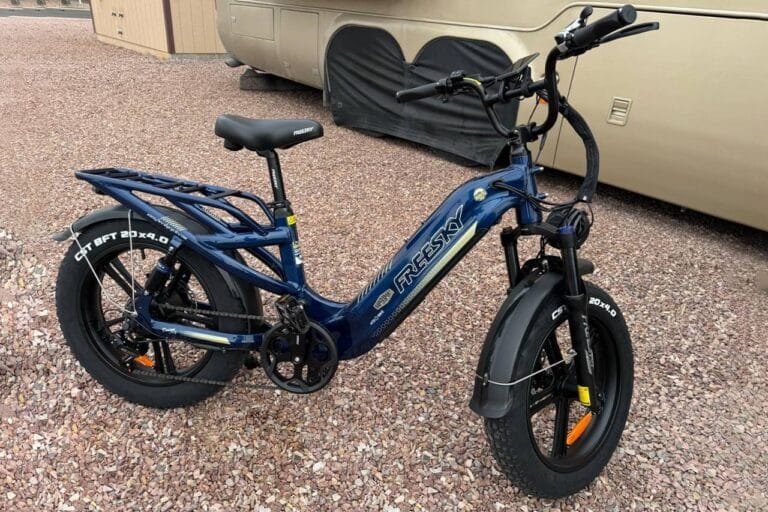
3. Funhang EB-C1 Commuter E-Bike

Best for: Longer step-through commutes with cargo and a women-friendly fit
Key commuter specs:
| Spec | Detail |
|---|---|
| Motor | 500W nominal, 1000W peak |
| Battery | 48V / 374.4 Wh (IPX5 waterproof) |
| Claimed range | 40-50 miles (PAS), 25-30 miles pure electric |
| Wheel size | 26 inches |
| Weight | 61.5 lbs |
| Brakes | Disc |
| Speeds | 7 |
| Suspension | Front only |
| Certification | UL2849 (TUV), UL2271 (SGS) |
Why it works for commuting: The step-through frame, adjustable stem, and adjustable seat make fit straightforward for riders between 5’3″ and 6’1″. A rear rack comes included, which is a genuine convenience for grocery runs or bags. The IPX5-rated removable battery handles light rain without worry.
| Preview | Product | Price | |
|---|---|---|---|

| Funhang Electric Bike for Adults, 26″ City Cruiser Ebike with 1000W Peak Motor, 20MPH… | $369.99 | View on Amazon |
Main strengths:
- Rear rack and fenders included from the factory
- Dual safety certifications (UL2849 + UL2271) from independent labs
- Five riding modes including cruise control
- 365-day warranty is longer than most at this price
Main trade-offs:
- At 61.5 lbs, it is heavy to carry up stairs or lift onto a rack
- 300 lb weight limit is modest for this category
- Some buyers note the front brakes need adjustment out of the box
- Seat comfort draws mixed feedback from riders with wider hips
Who should buy it: Commuters who want a step-through with cargo capacity, decent range, and solid safety credentials, particularly riders in the 5’3″-6’1″ height range.
Who should avoid it: Heavier riders (over 280 lbs), anyone who needs to carry the bike frequently, or riders expecting a rack-and-fender-free setup to shave weight.
4. Heybike Cityscape 2.0

Best for: Comfort-focused urban commuters who want a polished city bike feel
Key commuter specs:
| Spec | Detail |
|---|---|
| Motor | 500W nominal, 1200W peak |
| Battery | 468 Wh (IPX6 waterproof) |
| Claimed range | 35-50 miles (PAS), 30-35 miles throttle |
| Wheel size | 26 inches |
| Brakes | Dual disc |
| Speeds | 7 |
| Suspension | Front only |
| Certification | UL certified |
| Assembly required | No (arrives mostly assembled) |
Why it works for commuting: The 468 Wh battery is larger than most bikes at this price, and IPX6 waterproofing means it handles genuine rainy commutes without concern. Arriving mostly assembled saves setup time. GoEBikeLife notes the 26″ x 1.95″ puncture-resistant tires are well-matched to city streets; they roll faster than fat tires without sacrificing too much durability.
| Preview | Product | Price | |
|---|---|---|---|

| Heybike Cityscape 2.0 Electric Commuter Bike for Adults – 468Wh Removable Battery… | $479.00 | View on Amazon |
Main strengths:
- Larger battery capacity translates to realistic 30-40 mile city range
- IPX6 water resistance is above average for this category
- Minimal assembly required; arrives nearly ready to ride
- Well-rated across a substantial number of verified reviews
Main trade-offs:
- Some buyers received units with damaged display mounts; quality control is inconsistent
- After-sales support has drawn critical feedback from some buyers
- No rear rack included
- Front suspension only; rougher roads will transmit more vibration
Who should buy it: Urban commuters who want a city-oriented bike with a larger battery, minimal assembly, and a polished look, and whose commute is 15-30 miles round-trip.
Who should avoid it: Riders who need strong post-purchase support, or those who need cargo-carrying accessories included from day one.
5. TST Fat Tire Electric Bike
Best for: Rough urban streets where tire grip and suspension comfort matter
Key commuter specs:
| Spec | Detail |
|---|---|
| Motor | 750W nominal, 1500W peak |
| Battery | 48V / 15Ah (removable, UL2849) |
| Claimed range | 40-60 miles (PAS), 40 miles throttle |
| Wheel size | 20″ x 4″ fat tire |
| Weight | 66 lbs |
| Max load | 450 lbs |
| Brakes | Mechanical disc |
| Speeds | 7 |
| Suspension | Full (front + rear) |
Why it works for commuting: Full suspension and 4-inch fat tires absorb potholes, curb cuts, and rough pavement that punish rigid-frame bikes. The 450 lb weight limit is among the highest in this roundup, making it a strong choice for heavier riders. The UL2849-certified removable battery can be charged separately indoors.
| Preview | Product | Price | |
|---|---|---|---|

| TST Electric Bike for Adults, 48V 15/25 Ah Battery, 60/100 Mile Range | 20*4 Fat Tire… | $599.95 $529.99 | View on Amazon |
Main strengths:
- Full suspension is rare at this price point
- 450 lb load capacity accommodates a wide range of riders
- Fat tires handle wet, gravelly, or broken city pavement confidently
- Removable battery with legitimate safety certification
Main trade-offs:
- At 66 lbs, carrying this bike up stairs is not practical
- Customer support has received critical feedback from at least one buyer
- Mechanical disc brakes are adequate but hydraulic would be better for wet stops
- 20-inch wheel diameter limits top-end efficiency compared to 26-inch models
Who should buy it: Heavier riders or those on particularly rough city streets who need suspension and grip over speed and portability.
Who should avoid it: Riders who need to carry the bike frequently, those on smooth roads who don’t need fat tires, or anyone who expects strong post-sale support.
6. YVY All-Terrain E-Bike
Best for: Longer-range commuters who want maximum battery capacity
Key commuter specs:
| Spec | Detail |
|---|---|
| Motor | 1500W peak |
| Battery | 48V / 20Ah (960 Wh) |
| Claimed range | 100+ miles (PAS), 40 miles pure electric |
| Wheel size | 20″ x 4.0″ fat tire |
| Max load | 330 lbs |
| Brakes | Hydraulic disc + EABS |
| Speeds | 7 |
| Suspension | Full (front fork + seat) |
| Certification | UL2849, UL2271, UL1512 |
Why it works for commuting: The 20Ah battery is genuinely large. For a 20-mile daily commute, that could mean riding three or more days between charges at moderate assist levels. Hydraulic disc brakes with an electronic anti-lock system give it a meaningful safety advantage in wet conditions over mechanical disc alternatives.
| Preview | Product | Price | |
|---|---|---|---|

| YVY Adult Electric Bike, 1500W Peak Motor Moped Style E-Bike, 48V15.6Ah Removable Battery… | $579.00 | View on Amazon |
Main strengths:
- Largest battery in this roundup by a significant margin
- Hydraulic disc brakes with EABS are best-in-class for wet urban stops
- Triple UL certifications
- Full suspension handles rough terrain with less rider fatigue
Main trade-offs:
- One reviewer flagged a safety concern related to the battery and a prior brand name (Ridstar); GoEBikeLife recommends verifying current certification status before purchase
- 330 lb weight limit is lower than expected given the bike’s size
- Small review sample makes reliability harder to assess confidently
- 20-inch wheels are less efficient at speed than 26-inch options
Who should buy it: Long-distance commuters (20-40 miles daily) who want to charge infrequently and need strong wet-weather braking.
Who should avoid it: Budget-constrained buyers, riders over 300 lbs, or anyone with unresolved concerns about the brand’s history.
7. Hoverfly OUREA Commuter E-Bike

Best for: Entry-level commuters looking for an accessible 26-inch city bike
Key commuter specs:
| Spec | Detail |
|---|---|
| Motor | 750W peak |
| Battery | 374.4 Wh (removable) |
| Claimed range | 20-40 miles (PAS), 20 miles pure electric |
| Wheel size | 26 inches |
| Weight | 53.4 lbs |
| Max load | 264 lbs |
| Brakes | Mechanical disc |
| Speeds | 7 |
| Suspension | Front only |
| Certification | UL2849 |
Why it works for commuting: The included frame storage bag, rearview mirrors, and LED headlight are practical accessories for daily riding. At 53.4 lbs it is lighter than the fat-tire models in this roundup, making it easier to maneuver. The 365-day warranty is a genuine positive for new e-bike buyers.
| Preview | Product | Price | |
|---|---|---|---|

| Hoverfly OUREA 26″ Electric Bike for Adults, Max 40 Miles Range&20Mph Speed | 750W Peak… |
$499.99 | View on Amazon |
Main strengths:
- Rearview mirrors and frame bag included standard
- Lighter than most comparable models
- UL2849 certified
- 365-day warranty for parts
Main trade-offs:
- Multiple reviewers report tire failures within the first few months; this is a notable reliability concern GoEBikeLife flags seriously
- 264 lb weight limit is low
- Mechanical disc brakes underperform in wet conditions compared to hydraulic
- Small review base makes it difficult to fully assess long-term durability
Who should buy it: Casual commuters on smooth city streets who want an affordable, accessory-equipped 26-inch e-bike and are under 240 lbs.
Who should avoid it: Riders expecting durable tires for daily commuting, heavier riders, or anyone riding in frequently wet or rough conditions.
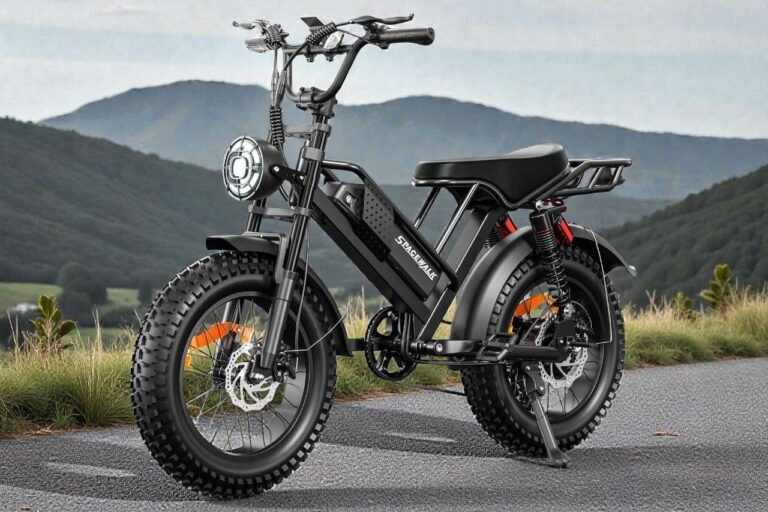
8. Jasion EB5 MAX Fat Tire E-Bike

Best for: Commuters who want high-power performance and cargo utility on rough streets
Key commuter specs:
| Spec | Detail |
|---|---|
| Motor | 2000W peak |
| Battery | 48V / 15Ah (720 Wh, removable) |
| Claimed range | Up to 65 miles (PAS), 35 miles throttle |
| Wheel size | 26″ x 4″ fat tire |
| Brakes | 180mm dual disc |
| Speeds | 7 |
| Suspension | Front lockable fork |
| Features | Cruise control, password display, rear rack, fenders |
Why it works for commuting: The rear rack and pre-installed fenders make this a functional commuter from day one without extra purchases. Cruise control is a practical feature on longer flat stretches. The 720 Wh battery realistically supports 30-45 miles of city riding at moderate assist, which covers most suburban commutes without daily charging.
| Preview | Product | Price | |
|---|---|---|---|

| Jasion EB5 MAX Electric Bike for Adults 2000W Peak Motor, 48V 15Ah Battery | 720Wh Battery… | $859.99 | View on Amazon |
Main strengths:
- Rear rack and fenders included from the factory
- Cruise control for longer flat-road segments
- Large battery supports multi-day commuting between charges
- Password-protected display adds basic anti-theft deterrence
Main trade-offs:
- One buyer reported a seat post clamp issue mid-ride; verify all hardware before riding
- Color fulfillment errors noted by at least one buyer
- Heavy build limits portability
- Front suspension only despite fat tires on the rear
Who should buy it: Suburban commuters with 15-30 mile round trips who want cargo capacity, fenders, and enough battery to skip daily charging.
Who should avoid it: Riders who need a lightweight, easy-to-carry bike, or those prioritizing full suspension for rough urban terrain.
Buying Guide
What to Look for in a Commuter E-Bike
Choosing a commuter e-bike is less about raw power and more about how the bike fits your daily routine. GoEBikeLife focuses on six key factors when evaluating any commuter model.
Range vs. your actual commute
Manufacturer range figures are measured under ideal conditions: light rider, flat ground, low assist. For a 180 lb rider on mixed city terrain at 15 mph using moderate assist, expect 60-70% of the claimed PAS range. A bike claiming 50 miles realistically delivers 30-35 miles. Match that to your round-trip distance plus a buffer.
Battery size and charging frequency
| Daily Round Trip | Minimum Battery to Consider | Charging Frequency |
|---|---|---|
| Under 10 miles | 280-374 Wh | Every 2-3 days |
| 10-20 miles | 374-468 Wh | Every 1-2 days |
| 20-35 miles | 468-720 Wh | Daily or every other day |
| 35+ miles | 720 Wh+ | Daily |
Brakes matter more than motor power
Disc brakes are the minimum for commuting. Mechanical disc brakes work well in dry conditions but fade in rain. Hydraulic disc brakes offer more consistent stopping in wet urban conditions and require less hand effort. For riders in rainy climates, hydraulic is worth prioritizing.
Frame geometry and weight
Step-through frames are easier to mount in work clothes. Folding frames suit transit riders. Fat-tire bikes handle rough pavement but weigh 10-20 lbs more. Weight matters most if you carry the bike up stairs or onto transit.
Accessories that matter daily
Look for: fenders (essential for wet roads), a rear rack (for bags and cargo), bright front and rear lights, and a lockable removable battery. These are often missing and add cost if purchased separately.
Safety certifications
UL2849 covers the full e-bike system. UL2271 covers the battery specifically. Both matter. Avoid bikes with no listed certification, especially given ongoing recalls in the budget e-bike category.
Frequently Asked Questions
Which electric bikes are most reliable for daily commuting?
Bikes from established brands with verifiable UL safety certifications and transparent warranty terms tend to perform more reliably over time.
GoEBikeLife notes that brands offering at least a 365-day warranty and responsive customer service give commuters more protection when problems arise.
Checking verified buyer reviews for mentions of long-term use (six months or more) is a better reliability signal than short-term impressions.
What features matter most when choosing an electric bike for adult commuters?
For daily commuting, practical accessories matter more than peak motor wattage.
Fenders, integrated lights, a rear rack, and a removable battery that can be charged indoors make the biggest difference in day-to-day convenience.
Reliable disc brakes, a comfortable frame geometry, and a battery sized to your actual commute distance are equally important.
Which e-bike brands have the best reputation for quality and support?
Gotrax has a strong track record in the budget segment with consistent UL certifications and 365-day parts support backed by an established U.S. presence.
Heybike and Funhang have growing reputations with solid certifications, though post-sale support experiences vary by buyer.
Newer or rebranded labels with limited reviews deserve more caution regardless of their spec sheets.
What is the best motor and battery setup for longer commutes?
For commutes over 20 miles round-trip, look for a battery of at least 468 Wh and a nominal motor of 500W or higher.
A 48V system generally provides better torque at lower speeds than a 36V system, which helps on hills under load.
The battery capacity matters more than peak motor wattage for most city commuters.
How much should you expect to spend for a solid commuter electric bike?
In the current U.S. market, a reliable UL-certified commuter e-bike with a useful range, decent brakes, and basic accessories typically falls in the mid-range of the budget e-bike segment.
Spending more generally gets you a larger battery, hydraulic brakes, and better component quality.
Spending at the very low end often means compromises in battery certification, brake quality, or after-sales support that matter over months of daily use.
How do different e-bike classes affect where you can ride and how fast you can go?
In the United States, Class 1 e-bikes provide pedal assist up to 20 mph and are permitted on most bike paths and trails.
Class 2 adds a throttle also capped at 20 mph. Class 3 bikes provide pedal assist up to 28 mph but are restricted from many multi-use trails and require more attention to local regulations.
Most of the bikes in this roundup operate in Class 2 territory; always check your local rules before riding on shared paths or roads.
What battery range is realistic for a round-trip commute, and how should it be measured?
Multiply your one-way distance by two, then add a 20 to 30 percent buffer to account for stops, hills, headwind, and higher assist use.
Manufacturers’ claimed ranges assume ideal conditions. A bike rated for 50 miles in PAS mode may deliver 28 to 35 miles on a real urban commute with a 180 lb rider at moderate assist.
What maintenance and running costs should commuters plan for with an electric bike?
Plan for tire inflation and inspection weekly, brake pad replacement every 500 to 1,000 miles depending on use, and chain lubrication every few weeks.
Battery charging costs are minimal, typically a few cents per full charge. A tune-up at a local bike shop once or twice a year costs $50 to $100 and catches mechanical issues before they become safety problems.
GoEBikeLife publishes independent e-bike reviews, comparisons, and practical buying guides. Some links on this page are affiliate links. If you make a purchase through an eligible link, we may earn a commission at no additional cost to you.