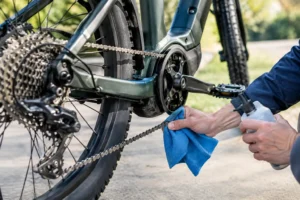
How to Prevent E-Bike Chain Rust Year-Round
Prevent e-bike chain rust by drying the drivetrain after wet rides, removing road salt, applying suitable chain lubricant, and storing your bike in a dry place.

Keep your e-bike running safely and smoothly with practical maintenance and troubleshooting guides. Learn how to care for brakes, chains, tires, drivetrains, bolts, and electrical components, diagnose common noises and shifting problems, and complete routine checks. Clear instructions help reduce wear, prevent avoidable problems, and extend the useful life of your bike.
Prevent e-bike chain rust by drying the drivetrain after wet rides, removing road salt, applying suitable chain lubricant, and storing your bike in a dry place.
Clean e-bike disc brake rotors with a manufacturer-approved method, prevent pad contamination, and check braking before your next ride. Know when to stop.
Inspect your e-bike frame before each ride for cracks, dents, loose battery mounts, and fork damage. Learn the signs that mean you should stop riding.
Ebike service intervals depend on mileage, time, riding conditions, and component wear. Use this practical schedule to know what to check and when.
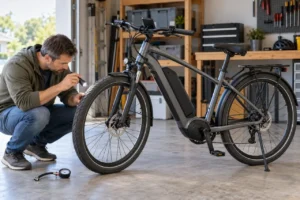
E-bike tire life varies with pressure, load, terrain, and riding style. Use mileage as a guide, but replace tires when wear or damage reaches the limit.

Understand e-bike warranty terms, including coverage limits, battery rules, exclusions, claim steps, and how proper records can protect your warranty.
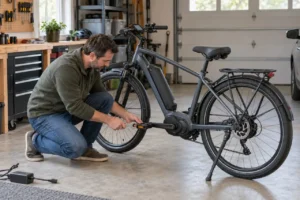
A loose e-bike pedal can damage your crank arm if ignored. Learn how to find the cause, tighten safely, and know when repairs require a mechanic.
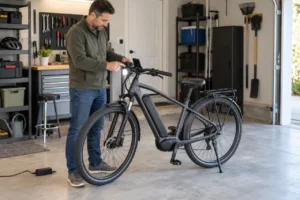
A flickering e-bike light may come from battery conditions, loose connections, moisture, or settings. Learn safe checks before your next ride.
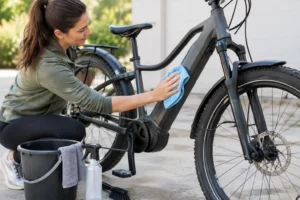
Learn the most common e-bike cleaning mistakes, from pressure washing to brake contamination, and how to clean your electric bike safely.
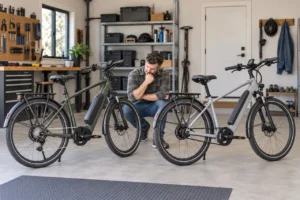
Belt-drive e-bikes offer cleaner, lower-maintenance riding, while chain drives offer flexible gearing and easier repairs. Learn the practical trade-offs.
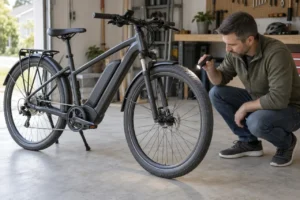
Worn e-bike tires can show exposed casing, deep cracks, bulges, or fading wear indicators. Stop riding with structural damage and replace the affected tire.
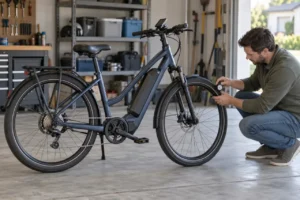
E-bike pedals can feel hard because of high gearing, reduced motor assistance, low tire pressure, or mechanical drag. Check safety before a short test ride.
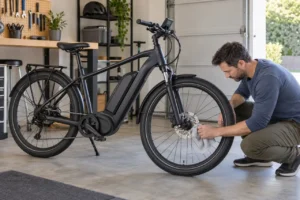
Ebike brakes usually squeal because of vibration, contamination, moisture, or worn parts. Learn how to find the cause and restore quiet, reliable braking.
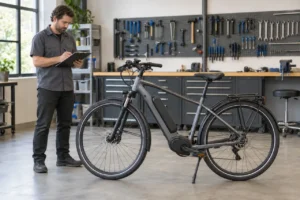
An annual e-bike safety review checks wear, brakes, wheels, battery condition, and overdue service. Record findings and resolve safety faults before riding.
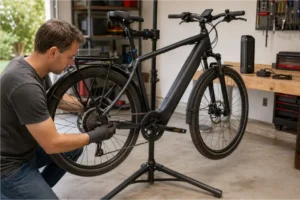
An e-bike chain that skips under load may indicate chain wear, damaged sprockets, poor indexing, or a bent derailleur. Learn how to diagnose it safely.
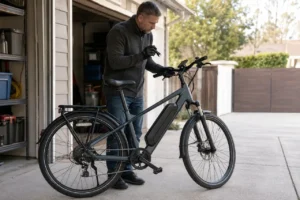
If your ebike display is not working, start with battery seating, the correct startup sequence, and safe external checks before arranging service.
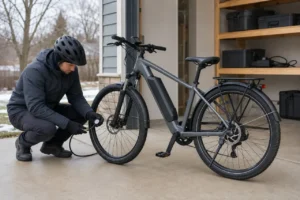
This winter e-bike maintenance checklist covers battery care, tire pressure, brakes, salt removal, drivetrain cleaning, and safe seasonal storage.
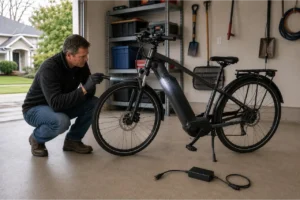
After e-bike water exposure, identify the severity, keep wet electrical parts off and unplugged, and know when the bike needs professional inspection.
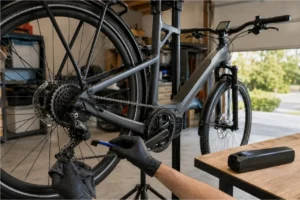
Clean an e-bike drivetrain safely with minimal water, careful degreasing, thorough drying, and precise chain lubrication that protects the brakes.
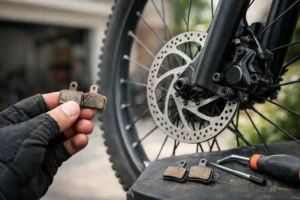
Replace e-bike brake pads at the maker’s wear limit or sooner if they are contaminated, damaged, grinding, or no longer provide reliable stopping power.