If an e-bike was submerged, exposed to floodwater, pressure-washed around electrical parts, or now shows electrical problems after getting wet, stop riding it and do not charge it.
Do not repeatedly switch it on to “see if it recovered.” For an ordinary rain ride with no warning signs, power the bike off, dry the exterior, let the charging area air-dry, and inspect the bike before using it again.
The owner’s manual and manufacturer’s instructions take priority because water protection varies by model and component.
First, identify the level of water exposure
Rain, a pressure washer, and floodwater do not create the same risk. Water pressure, exposure time, depth, contamination, damaged seals, and the location of exposed connectors all affect what happens next.
| Exposure | Immediate response | Ride or charge? |
|---|---|---|
| Ordinary rain or road spray, with no damage or unusual behavior | Power off, wipe the bike down, inspect it, and let wet areas air-dry | Only after the bike and charging components are dry and all systems operate normally |
| High-pressure spray near the battery, display, motor, controller, or connectors | Power off and arrange manufacturer-guided or professional assessment if water may have entered a component | Do not ride or charge while moisture or symptoms are present |
| Visible water in a port, display, battery compartment, or connector | Leave the charger disconnected and stop using the electrical system | Do not ride or charge until the manufacturer or a qualified e-bike service provider clears it |
| Submersion or floodwater exposure | Do not turn on, charge, open, or repeatedly handle electrical components | Keep the bike out of service and obtain professional guidance |
| Heat, swelling, smoke, hissing, leaking, or a strong chemical or burning odor | Move people away, avoid touching or moving the battery, and call 911 if there is smoke, fire, or immediate danger | Do not use or charge under any circumstances |
If you only want to know whether a sound e-bike can be ridden in ordinary rain, see our separate guide to riding an electric bike in the rain. This article addresses suspected damage after water exposure.
Why water damage may appear later
Moisture that passes a damaged seal or remains around a connector can cause corrosion or intermittent electrical faults. Road salt, sediment, and flood contaminants can make the problem worse. A bike may appear normal immediately after exposure but develop flickering, error codes, charging problems, or power loss later.
An IP rating does not make an e-bike universally waterproof. The rating may apply to one component rather than the whole bicycle, and it reflects specific test conditions. Trek, for example, describes an IP55 battery on certain models as resistant to low-pressure splashes but not submersion. Shimano also warns against deliberate immersion and high-pressure washing. Check the rating and wet-weather limits for your exact bike, battery, display, and drive system.
The CPSC has issued model-specific recalls or warnings where water penetration or water-and-debris exposure contributed to an e-bike battery hazard. These notices do not apply to every e-bike, but they show why a submerged battery should not be tested casually.
Five common e-bike water-damage scenarios
1. Repeated rainy commutes followed by corrosion
A commuter repeatedly parks the bike while it is still wet. The chain becomes noisy, fasteners corrode, or the electrical system begins cutting out. Damp storage, road spray, and de-icing salt can accelerate corrosion. After wet or salty rides, follow the manufacturer’s guidance, dry the bike, and lubricate the chain without contaminating brakes or tires. Our guide to cleaning an e-bike safely explains the low-pressure approach.
2. A pressure washer forces water past a seal
A rider aims a pressure washer at the motor area, display, battery mount, or cable connections. The display later goes blank, the motor hesitates, or moisture appears behind a screen. High-pressure water can pass barriers that tolerate rain and may drive grit into bearings. Power the bike off, leave the charger disconnected, and seek professional guidance if moisture or symptoms appear.
3. Water reaches the charging port or battery contacts
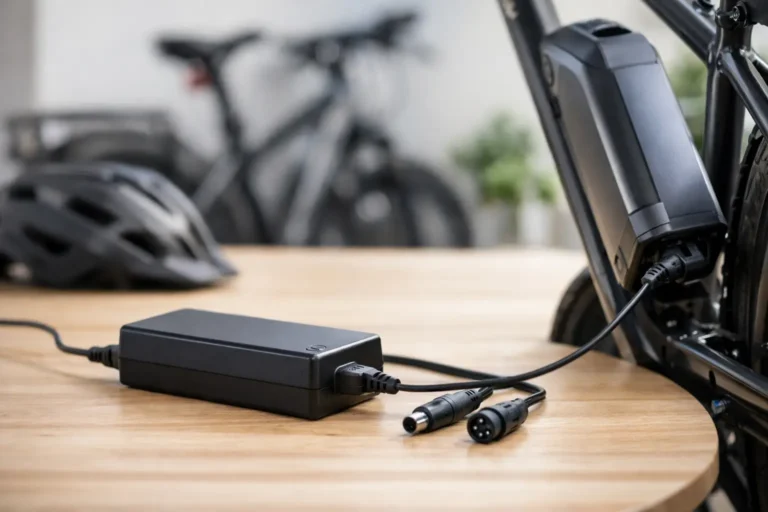
A loose port cover or wet outdoor storage can leave water around the charging socket, cradle, or contacts. Do not connect the charger, probe the contacts, apply sprays, or use compressed air. Follow the manual for a cool, intact, user-removable battery, but do not remove or reinstall it while its contacts are wet. If you cannot confirm that the area is dry and undamaged, ask the manufacturer before charging. Review the broader battery damage warning signs before reuse.
4. Highway transport exposes the bike to driven rain
An e-bike on a rear vehicle rack can receive wind-driven rain, tire spray, grime, and salt for hours. Follow the bike, battery, rack, and vehicle instructions. Remove the battery only when permitted and when it can be secured inside the vehicle. Do not assume a cover is safe at highway speed; it can add wind load or conflict with rack instructions. Inspect and dry the bike after arrival.
5. Floodwater or full submersion reaches electrical parts
Floodwater may contain salt, sewage, fuel, sediment, and other contaminants. Do not ride, turn on, or charge a submerged e-bike, and do not open electrical components to dry them. Avoid unnecessary handling, especially if the battery is damaged, hot, leaking, noisy, or producing an odor. Seek manufacturer-guided assessment. If disposal is required, contact your local household hazardous-waste program first; the EPA says flooded lithium batteries should not go in household trash or curbside recycling.
Warning signs that mean stop using the bike
Keep the e-bike powered off and the charger disconnected if you notice any of the following after water exposure:
- The battery was submerged or exposed to floodwater.
- The battery is swollen, cracked, leaking, unusually hot, smoking, hissing, or producing a chemical or burning odor.
- The bike switches on or off by itself, provides unexpected motor assistance, or repeatedly loses power.
- A new or persistent e-bike error code appears.
- The display flickers, remains blank, or has visible moisture behind its lens.
- Water or corrosion is visible in the charging port, battery mount, connectors, controller area, or another electrical housing.
- Charging fails to begin normally, stops unexpectedly, or causes unusual heat or odor.
- The brakes, steering, wheels, or drivetrain do not operate normally after the wet exposure.
Smoke, fire, rapid heating, popping, or hissing can signal an immediate battery emergency. Move away, keep other people clear, and call 911. Do not touch or try to carry the battery. For the next steps after an actual incident, follow our guide on what to do after an e-bike fire.
What to do after an ordinary wet ride
Use these steps only when the bike encountered normal rain or road spray, was not submerged or pressure-washed, and has no warning signs.
- Park under cover and power the bike off. Keep the charger disconnected. Let hot components cool naturally.
- Dry the exterior. Use a clean towel on the frame, display, battery case, port cover, and visible cable connections. Do not open sealed electrical parts.
- Inspect the bicycle components. Check both brakes, tires, wheels, chain, derailleur, and visible fasteners. Do not ride if braking, steering, or wheel operation feels abnormal.
- Let wet areas air-dry. Keep the bike in a dry, ventilated place. There is no universal number of hours that works for every design or exposure. Follow the manual if it specifies a drying procedure.
- Inspect before charging. The battery case, charging port, plug, charger, contacts, and surrounding area must be dry and undamaged. If you see water, corrosion, heat damage, or a loose seal, do not charge.
- Perform a cautious function check. Only after the bike is dry and no warning signs are present, test the display, lights, controls, pedal assist, and brakes at low speed in a safe area. Stop immediately if operation is inconsistent.
What not to do
- Do not use a hair dryer, heat gun, oven, direct heater, or open flame to dry a battery or electrical component.
- Do not use compressed air around ports or connectors; it may force moisture farther inside.
- Do not put the battery in rice. Rice cannot remove contamination or corrosion inside a sealed pack.
- Do not repeatedly connect the charger or switch the bike on as a diagnostic test.
- Do not open, puncture, disassemble, or attempt to repair the battery, charger, controller, motor, or sealed display.
- Do not spray contact cleaner, lubricant, or another chemical into electrical connections unless the manufacturer explicitly authorizes it for that exact component.
- Do not place a damaged or flooded lithium-ion battery in household trash or curbside recycling.
When professional inspection is the right next step
Arrange manufacturer-guided or professional assessment after submersion, flood exposure, suspected water entry into an electrical housing, high-pressure washing near electrical components, or any recurring electrical symptom. The same applies if braking, steering, wheels, frame, or fork operation changed after the incident.
A qualified provider can inspect accessible connectors, seals, wiring, bearings, and mechanical parts using model-specific procedures. A rider cannot determine the internal condition of a sealed battery from its appearance alone. Ask whether the shop is trained for your drive system; some shops service mechanical parts but do not diagnose batteries or controllers.
How to reduce future water exposure
Keep charging-port covers closed, repair damaged covers or seals promptly, and use fenders when supported to reduce road spray. Store the bike in a dry, ventilated place, and remove salt and grime with the cleaning method allowed by the manufacturer.
For vehicle transport, follow the rack and bike manuals rather than relying on a universal cover or battery-removal rule. Most importantly, never charge outdoors in rain or connect a charger to a wet battery, plug, port, or contact.
Sources
- CPSC Micromobility Information Center
- CPSC recall: water penetration in certain Specialized e-bike battery packs
- CPSC warning: water-and-debris exposure involving specific Rad Power Bikes batteries
- Trek Verve+ 2 Gen 3 battery water-resistance guidance
- Shimano safety guidance on immersion and high-pressure washing
- EPA guidance for flooded lithium batteries