E-bike pedals can feel hard because the gear is too high, motor assistance is reduced or absent, or tires, brakes, and drivetrain parts are adding resistance. Start with a damage check while the bike is powered off. If it is mechanically sound, check the gear, assist mode, battery, and display before a short, controlled test ride.
A pedal that jams or a wheel that binds needs attention before you ride. Grinding, weak braking, unpredictable power loss, or battery warning signs are reasons to stop, not increase the assistance.
First, identify when pedaling feels harder
Compare the problem with how your bike normally feels on the same route, in the same gear, and with a similar load.
| What you notice | What to check first |
|---|---|
| Hard starts or climbing, but normal riding once moving | Gear selection, assist level, hill steepness, and cargo |
| Assistance fades near the same higher speed | The model’s documented assisted-speed cutoff |
| The bike is unusually difficult to push with the power off | Tire pressure, brake drag, and anything touching a tire or wheel |
| Pedaling catches or grinds at a particular point | Chain, pedals, crank, or bearings; stop and arrange inspection |
| Assistance disappears with warnings or unexpected shutdowns | The exact error message and manufacturer guidance |
These observations help narrow the checks. They do not identify a failed component by themselves.
Use an easier gear for starts and hills
A high gear requires more force per pedal stroke. On a typical derailleur drivetrain, a larger rear cog gives an easier gear; a smaller rear cog gives a harder one.
Shift into an easier gear while you are still moving and pedaling lightly, before a stop or climb. Ease pedal pressure during the shift. Changing the shifter while a derailleur bike is stationary does not move the chain into its new gear. Do not force a shift by stamping on the pedals. Trek’s shifting guidance explains why selecting a gear early helps.
Choose a comfortable, steady rhythm instead of a universal cadence target. Internal gear hubs, continuously variable transmissions, and automatic systems have different shifting requirements; follow their manuals.
An easier bicycle gear reduces your pedaling effort. On a conventional mid-drive, it also changes the gearing through which the motor drives the wheel. On a hub-motor bike, shifting the bicycle’s gears does not change the motor’s internal gearing.
Check what assistance the bike is actually providing
Assist mode and sensor response
A lit display does not guarantee that assistance is enabled. Check the selected mode and any battery switch or startup steps in the owner’s manual.
Eco generally means reduced assistance, not no assistance. Off or Level 0 often disables pedal assistance, but labels and behavior vary. For example, Bosch lists Eco and Off as different riding modes.
A cadence sensor detects crank rotation, so assistance may take some pedal movement to begin. A torque sensor measures the force you apply through the pedals, and assistance generally responds to that effort. Controller programming also affects the response. Neither system guarantees effortless starts in a high gear; see our explanation of cadence and torque sensing.
Speed cutoff and brake switches
Assistance normally reduces or stops at the model’s programmed assisted-speed limit. If the change happens predictably near that documented speed, it may be normal operation. A sudden loss well below it, especially with an error, needs investigation. The assistance cutoff is not a statement about the speed allowed on a particular road or path.
Some e-bikes have brake switches that interrupt motor power. A lever that does not return properly, or a brake-switch fault, can prevent assistance. Check lever return with the power off; do not disconnect or bypass the safety switch. The RadRunner 2 owner’s manual documents this feature for that model; other bikes differ.
Check battery charge and temperature
Low charge can reduce performance or eventually stop assistance, depending on the system. A charge indicator alone cannot establish whether the battery is healthy, and a temporary change in its reading under load is not proof of permanent damage.
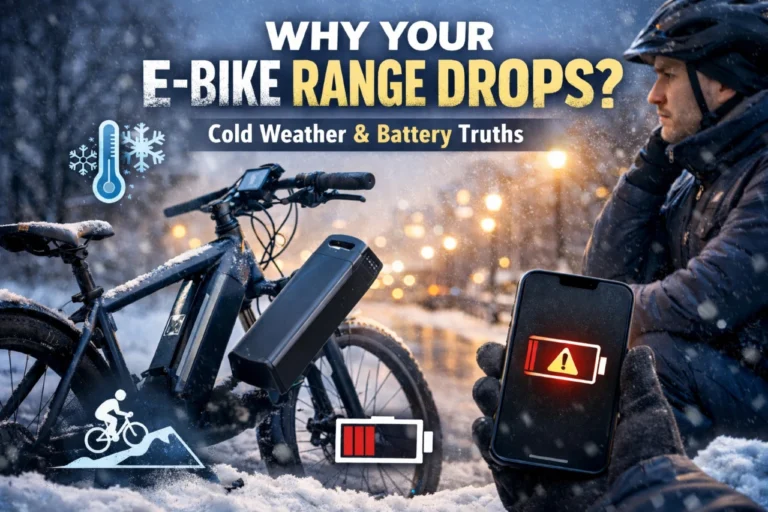
Cold weather can reduce usable battery capacity. Follow the manufacturer’s operating and charging temperature limits. For a normal, undamaged removable battery, the manual may recommend indoor storage and reinstalling it shortly before riding, as described in Bosch’s winter guidance.
Before charging, let a cold battery reach the manufacturer’s permitted charging temperature naturally and ensure the battery and connections are dry. Use only the manufacturer-approved charger. Do not use a heater or hair dryer, and do not bring a damaged or overheating battery indoors to warm it.
Record persistent warnings and follow the model’s instructions. Our guide to responding to e-bike error codes explains what to record before contacting support. Repeatedly restarting the system is not a repair.
Check for resistance with the power off
Switch off the bike and disconnect the charger before inspection. For hands-on drivetrain work, remove a normal, undamaged user-removable battery if the manual instructs you to. Never use the motor, throttle, or walk mode to move parts during maintenance.
Tire pressure and wheel clearance
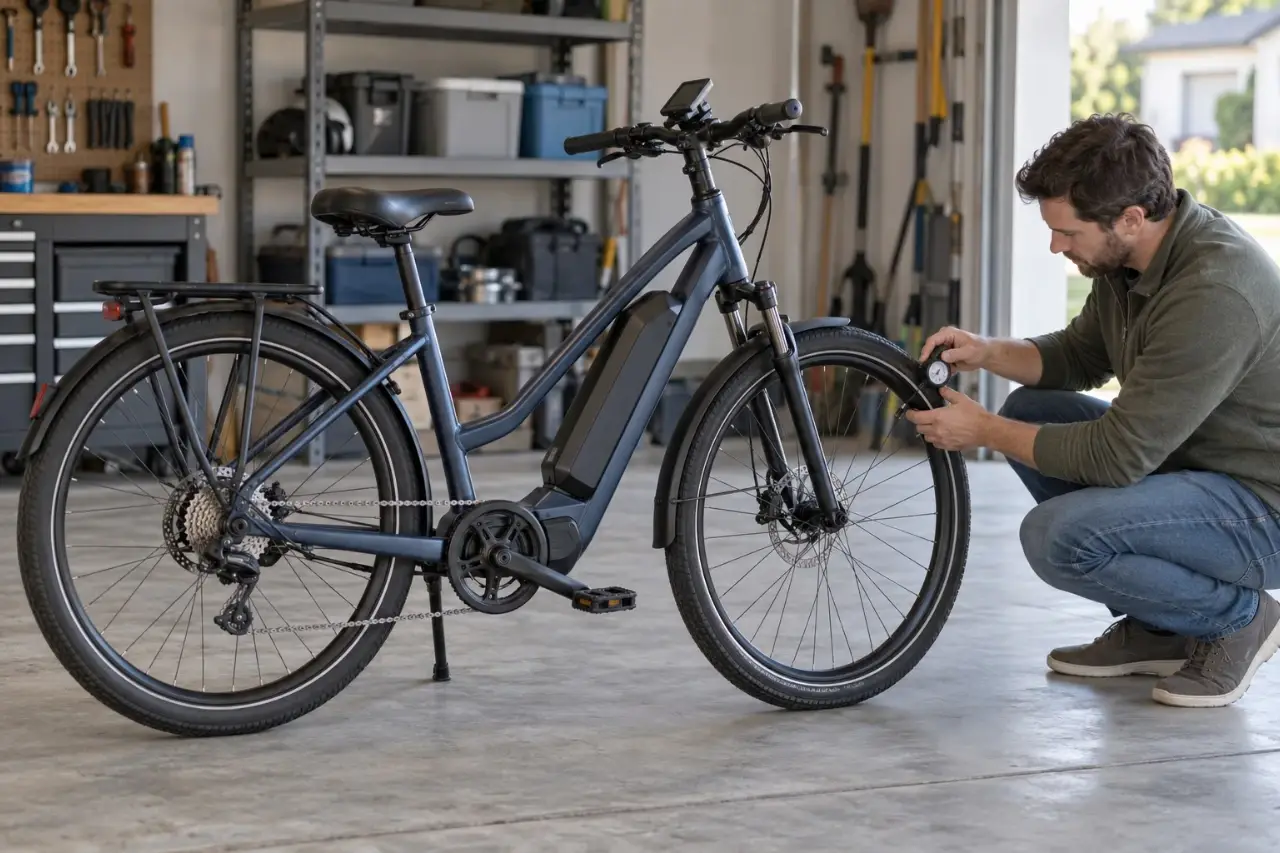
Pressure that is too low for the tire, load, and surface can make the bike feel sluggish and increase the risk of tire or rim damage. Check cool tires with a gauge rather than squeezing them by hand.

- ADVANCED TRUEGAUGE SCREEN: This battery tire inflator includes updated sensor technology, capable of collecting pressure…
- EASY TO USE: You can choose 4+N smart modes (car, motorcycle, bicycle, ball, and custom) and 4 pressure units (PSI, Bar…
- COMPACT, FASTER INFLATION: Weighing less than 1 pound, this portable tire inflator is easy to carry and store in any…
- LONG RUNTIME & AUTO-OFF: After fully charging, the built-in 4000mAh large-capacity battery allows the car tire pump to…
- VERSATILE EMERGENCY TOOL: The bike pump can be used as more than an air pump, it is also a multifunctional emergency…
Use the bicycle and tire makers’ recommendations for your wheel setup, and respect both tire and rim limits. The lower applicable maximum is the ceiling, not a target. Do not go below an applicable minimum or resolve conflicting specifications by guessing. Schwalbe’s pressure guidance explains why rider load and the tire setup matter.
Higher pressure is not always better on rough ground. Our e-bike tire pressure guide explains how load, width, and terrain affect the choice.
Look for a fender, bag strap, or other object touching a tire or wheel. Do not ride with a flat tire, bulging sidewall, insecure wheel, or loose accessory that could enter the spokes.
Brake drag
If the wheels and tires show no damage, gently push the powered-off bike on level ground with both brakes released. Unusual drag or scraping deserves inspection.
Only lift and turn a wheel by hand if you can support the bike securely using an appropriate method. A repair stand must suit the bike’s weight and approved clamping points. If you cannot support it safely, leave that check to a shop. Keep fingers and clothing clear of spokes and rotors, and let hot brakes cool.
There is no universal wheel spin-time test for brake rub. Motor design, bearings, and seals affect how quickly a wheel stops. A faint brushing sound alone does not prove significant drag; persistent scraping, binding, or abnormal brake action needs attention.
Use our brake inspection guide for external checks. Have a mechanic address faults you cannot safely identify and correct.
Chain, pedals, and crank
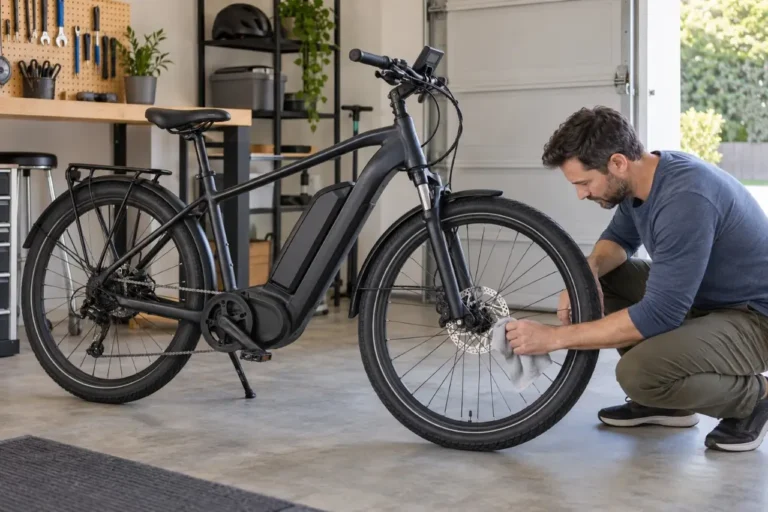
A dirty or dry chain can make pedaling rough and inefficient. Look for rust, stiff links, visible damage, or a bent derailleur. Clean and lubricate a serviceable chain using bicycle-specific products, then wipe off excess. Keep lubricant and cleaner off brake pads, rotors, and rim braking surfaces.

- ULTRA-DURABLE: Muc-Off Bio Dry Lube is an ultra-durable bike chain lube that penetrates deep to provide long-lasting…
- REDUCES FRICTION: Advanced formula reduces friction and energy consumption to ensure silky-smooth gear shifts.
- IDEAL FOR DRY WEATHER: Our Bio Dry Chain Lube uses a wax-based formula to protect against contaminants in dry and dusty…
- BIODEGRADABLE: Fully biodegradable chain lubricant that is just as friendly on the environment as it is on your ride.
- SUITABLE FOR ALL BIKES: Whether you prefer to hit the road or shred the trails on your MTB, Muc-Off Bio Dry Lube is the…
Follow the steps for cleaning an e-bike drivetrain. A belt drive needs its own care instructions; do not apply chain oil to the belt.
If a pedal feels seized, the crank is loose, or turning it produces grinding, stop riding. Pedal or bottom-bracket bearings may need service. Trek’s owner’s manual directs riders to a bike shop for these bearing issues. Chain skipping or a jam also needs diagnosis; adding lubricant does not fix worn or damaged parts.
When extra effort can be normal
With assistance off, you supply the power to move the bike. Its extra weight is particularly noticeable during starts and climbs. Headwinds, soft surfaces, and cargo also increase the effort required.
Unpowered motor resistance varies. Many geared hub motors have a freewheeling mechanism, while direct-drive hubs can produce noticeable drag. Mid-drive resistance also varies by design. Grin Technologies explains the hub-motor differences. Familiar resistance may be normal; new grinding or binding is not.
Make one controlled check, then decide
Only test ride after the tires, brakes, wheels, steering, and drivetrain pass inspection and no battery warning signs are present.
- Check battery security and charge, then follow the normal startup procedure.
- Wear a helmet and choose a dry, level area away from traffic, people, and obstacles.
- Use an easy gear. Start with low assistance and pedal smoothly, allowing for the sensor’s normal response.
- If control is predictable, compare a slightly higher assist setting. Do not jump straight to maximum assistance.
- Stop if drag, grinding, warnings, or unexpected power loss continues. Record the conditions and contact the manufacturer or a qualified e-bike mechanic.
Do not reproduce the problem through hard hill starts or high-speed runs. If safe handling or reliable braking is uncertain, arrange transport instead of trying to pedal home.
Battery warning signs need a different response
Stop using and charging a battery that is swollen, leaking, unusually hot, damaged by impact or immersion, or producing an unusual odor or noise. These signs require professional guidance, not another test ride. The U.S. Fire Administration identifies key battery warning signs.
If there is smoke, fire, rapid heating, or immediate danger, move yourself and others away, evacuate if indoors, and call 911 from a safe location. Do not touch, remove, carry, or attempt to extinguish the battery. Follow emergency responders’ instructions. For damage without active emergency signs, keep it out of use and contact the manufacturer or local fire department for safe next steps.
GoEBikeLife publishes independent e-bike reviews, comparisons, and practical buying guides. Some links on this page are affiliate links. If you make a purchase through an eligible link, we may earn a commission at no additional cost to you.