A cadence sensor detects that the cranks are turning—and, on some systems, how quickly they are turning. A torque sensor measures how much twisting force you apply through the pedals.
Torque sensing usually feels smoother and more closely tied to your effort, while cadence sensing can provide strong assistance even when you pedal lightly.
Neither is automatically better. The controller programming, motor, gearing, assist level, and bike fit can matter as much as the sensor label.
How an e-bike uses pedal-assist sensors
The sensor does not power the bike by itself. It sends information to the controller, which decides how much motor assistance to provide under the selected assist level. The system may also consider wheel speed, motor speed, battery limits, and other inputs. That is why two e-bikes with the same sensor type can respond very differently.
Some e-bikes combine torque and cadence data. Controller mapping and the power assigned to each assist level also vary by model.
Pedal assist is also different from a throttle. A throttle requests motor power through a hand control, while pedal assist responds to pedaling. If a bike includes both, learn how its pedal assist and throttle controls interact before riding in traffic or around pedestrians.
What a cadence sensor measures
A cadence sensor monitors crank rotation. Many systems use magnets and a sensor near the crank, although integrated designs are also available. Some primarily detect that you are pedaling; others also track how quickly the cranks are turning.
Once the controller recognizes pedaling, it delivers assistance according to its programming and your chosen assist level. You may be able to turn the pedals with light pressure and still receive substantial help—useful for riders who prefer low-effort cruising.
The trade-off can be less direct control through pedal pressure. Some systems wait for part of a crank rotation and then provide a noticeable push; others start promptly and ramp power smoothly. The sensor type alone does not guarantee delayed or abrupt assistance.
How cadence sensing usually feels
Cadence assist can feel predictable once you establish a rhythm. At low speed, pedaling through a tight turn, crowded entrance, or loose surface may activate more help than expected. Lower assistance before entering a confined or low-traction area.
What a torque sensor measures
A torque sensor measures the twisting force created by your pedal input. The controller generally uses that signal to scale assistance: light pressure requests less support, while firmer pressure requests more.
This proportional response often feels like the motor is amplifying your legs. Assistance can build as a hill steepens and ease when you reduce pressure, making a well-tuned system feel natural and easy to modulate.
Torque sensing does not necessarily mean a strenuous ride. A higher assist setting can turn modest pedal input into substantial support, while a low setting may require more rider effort. The actual relationship depends on the programming.
How torque sensing usually feels
Torque sensing often works well for frequent speed changes, rolling terrain, and riders who want a conventional bicycle feel. Pressing harder on a hill can request more help without first changing the assist level. You still need suitable gearing, traction, and a motor that can handle the grade; see our guide to climbing steep hills safely.
From a stop, some torque-sensing bikes ask for a more deliberate first pedal stroke. Shift into an easier gear before stopping when possible, keep the bike pointed straight, and begin in a low or moderate assist level until you know how the system responds.
Cadence sensor vs. torque sensor at a glance
| Feature | Cadence sensing | Torque sensing |
|---|---|---|
| Primary input | Crank rotation or cadence | Pedal torque |
| Typical assistance | Set mainly by assist level once pedaling is detected | Scales with pedal pressure and assist level |
| Light pedaling | Can produce substantial assistance | Usually produces lighter assistance, depending on the mode |
| Ride feel | Often more motor-forward | Often more bicycle-like |
| Low-speed control | May have a delay or step in power; tuning varies | Often easier to modulate; high settings can still feel strong |
| Hills | Can provide strong help with light pedal pressure | Responds as the rider pushes harder |
| Range | No built-in advantage; use depends on tuning and assist choice | No guaranteed advantage; use depends on tuning and assist choice |
These are tendencies, not promises. Motor type, controller response, gearing, total weight, tires, and the selected assistance can outweigh the sensor difference.
Does a torque sensor improve e-bike range?
Not automatically. A torque-sensing system may reduce motor output when you pedal gently, which can help conserve energy in some riding situations. But it can also provide high assistance when you push hard in a high support mode. A cadence-sensing bike may use steady motor power at a given level, yet an efficiently programmed system ridden in a low setting can still deliver good range.
Battery condition and capacity, speed, hills, wind, temperature, tire pressure, load, motor efficiency, and throttle use all affect distance. Treat the sensor as one influence—not proof that one bike will travel farther. See our guide to real-world e-bike range.
Which sensor should you choose?
A cadence sensor may suit you if:
- You want substantial help without pressing hard on the pedals.
- Most rides involve steady cruising rather than frequent speed changes.
- You prefer the assist level to determine most of the motor response.
- You are comfortable lowering assistance for turns and confined spaces.
A torque sensor may suit you if:
- You want assistance to track changes in your effort.
- Smooth low-speed modulation is a priority.
- You regularly encounter rolling terrain or stop-and-go riding.
- You want a ride that feels closer to a conventional bicycle.
Do not substitute these lists for fit and a test ride. If reducing knee or leg strain is important, sensor type alone is not enough; frame fit, saddle height, gearing, position, and assist calibration also matter.
What to check during a test ride
Use an open, paved area. Wear a fitted helmet, check the brakes, and begin with low assistance.
- Start in an easy gear. Point the bike straight, pedal gently, and notice how much crank movement occurs before the motor engages.
- Compare assist levels. Increase assistance one level at a time. Does power build gradually or arrive in a step?
- Vary your input. On a torque bike, compare light and firm strokes. On a cadence bike, check whether changing cadence alters the response.
- Ease off before turning. Stop requesting power before a tight turn or obstacle, then brake smoothly. Do not rely on pausing your pedaling alone to slow down.
- Try a modest hill if conditions allow. Use an easier gear and steady input. Judge control and comfort rather than maximum speed.
Use the three-minute pre-ride safety checklist first. If a listing says “torque-like” or “advanced PAS” without naming the sensor, ask the manufacturer whether the bike has a physical torque sensor.
Learn your bike’s response safely
Allow time to learn the specific bike. Use low assistance around pedestrians, bike racks, gates, sharp turns, and slippery surfaces. Smooth input is especially important when the driven wheel has limited traction.
Some e-bikes have motor cutoffs built into one or both brake levers; others do not. Check the owner’s manual instead of assuming this feature is present. A brake cutoff is not a substitute for controlling speed early and using properly functioning brakes.
Do not test acceleration on wet leaves, sand, ice, loose gravel, beside a drop-off, or in traffic. Use walk assist only as described in the owner’s manual.
When the assist response may indicate a problem
A brief engagement delay can be normal on some cadence systems, but a new or worsening change deserves attention. Stop riding if the motor accelerates unexpectedly, continues providing noticeable power after you stop pedaling, cuts in and out unpredictably, or does not stop as designed when a brake cutoff is activated. Turn the system off when it is safe to do so and contact the manufacturer or a qualified e-bike technician.
If a torque-sensing bike suddenly feels weak or inconsistent, check the battery charge and selected assist level. Follow the owner’s manual for any model-specific startup or calibration procedure. Do not open the sensor, controller, motor, or wiring to diagnose the problem.
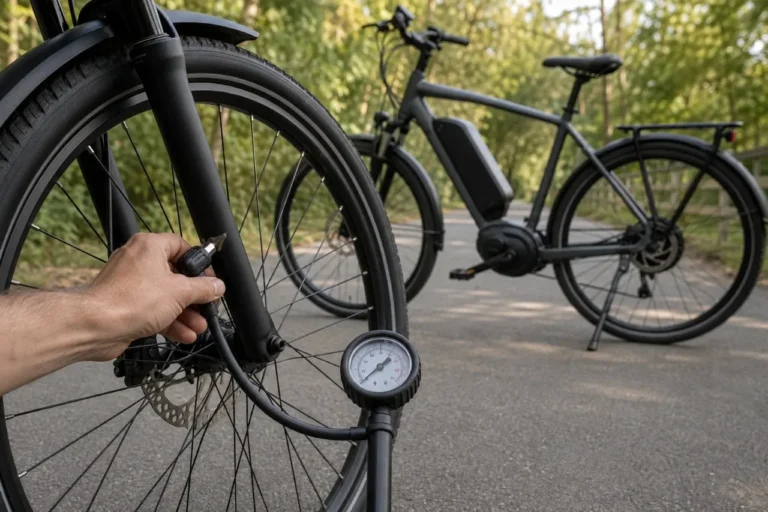
Mechanical drag can imitate an assist-system fault. Brake rubbing, low tire pressure, a dry or skipping chain, and poor shifting can all change how the bike feels. Use our overview of common e-bike issues and safe checks to separate basic owner checks from problems that need professional service.
The bottom line
Torque sensing generally offers the more natural and precisely modulated ride. Cadence sensing generally offers easier motor help with light pedal pressure. Neither description tells you whether a particular e-bike is well tuned, comfortable, or suitable for your route.
Confirm the sensor type, test low-speed control, compare assist levels, and consider the entire bike: fit, brakes, gearing, motor behavior, and manufacturer support. Choose the system that gives you predictable assistance and comfortable control.