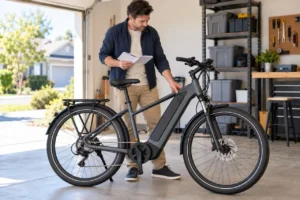
Are Ebike Batteries Waterproof? Rain Riding Facts
Most e-bike batteries can tolerate ordinary rain but are not made for submersion. Check the IP rating, keep charging ports dry, and stop after flooding.

Understand the essential features to compare before buying an e-bike. Our guides explain motors, batteries, sensors, brakes, e-bike classes, sizing, and safety in clear language—helping you evaluate specifications, choose features that match your riding needs, and make a more informed purchase.
Most e-bike batteries can tolerate ordinary rain but are not made for submersion. Check the IP rating, keep charging ports dry, and stop after flooding.
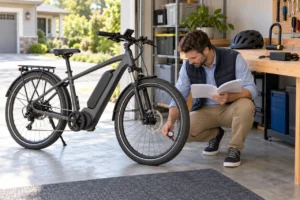
Your first year with an e-bike is easier when you build safe habits for charging, pre-ride checks, maintenance, range, storage, service, and local rules.
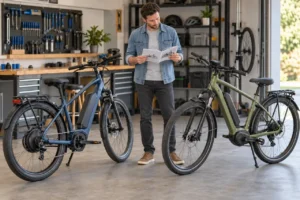
Learn how e-bike motors work, from hub and mid-drive layouts to watts, torque, sensors, hill use, maintenance, and safe troubleshooting for riders.
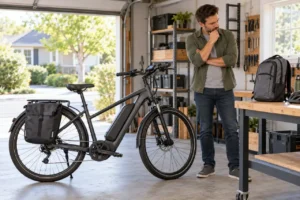
Compare e-bike panniers and backpacks for comfort, handling, rack compatibility, security, and safe loading so you can choose the right setup.

A 500Wh e-bike battery can deliver very different range. These real-world planning examples show how assist, hills, speed, wind, and load change miles.
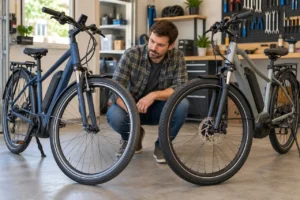
Disc brakes usually suit heavier or all-weather e-bikes, while rim brakes can work well for lighter bikes used mostly on flat, dry routes safely.
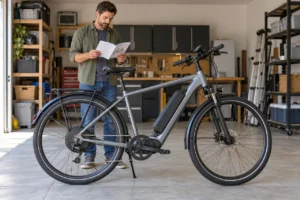
Ebike motor watt ratings need context: input or output, nominal or peak, and test conditions. Learn what the numbers can tell you about real riding.
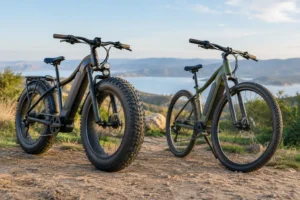
Fat and narrow e-bike tires offer different advantages. Learn how tire width affects comfort, traction, handling, efficiency, and everyday riding.
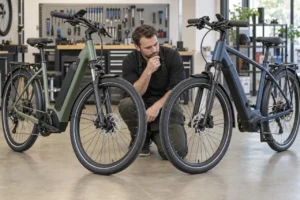
Hydraulic e-bike brakes usually offer lighter lever action and finer control, while mechanical brakes cost less and are easier to service on the road.
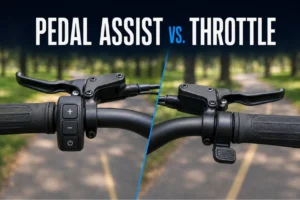
Learn how pedal assist throttle controls differ, when to use each safely, and how settings affect starts, range, handling, and local e-bike access rules.
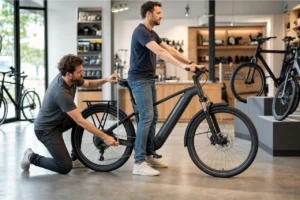
What size electric bike do I need? Learn how height, inseam, frame geometry, standover, reach, and riding style shape a comfortable, safe fit on each ride.
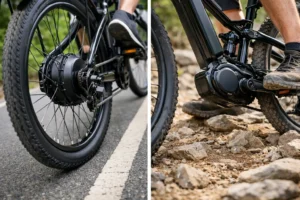
Hub motor vs mid drive ebike systems feel different on hills, in traffic, and during service. Learn the real maintenance and riding trade-offs safely.

Step-thru and step-over e-bikes serve different commuting needs. This guide explains the trade-offs in comfort, access, stability, and daily practicality.

Choosing between 500W, 750W, and 1000W peak e-bikes isn’t about big numbers. Learn what really affects hills, starts, and everyday riding.
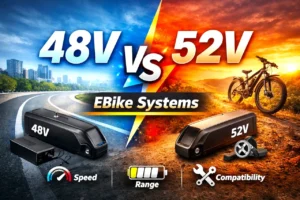
48V and 52V e-bike systems feel closer than most people expect. Here’s what changes on hills and speed, what doesn’t, and how to choose safely.
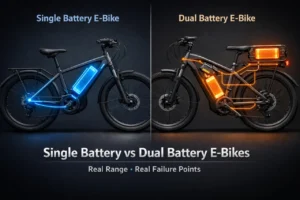
Single vs dual battery e-bikes isn’t just about miles. Learn real range expectations, weight trade-offs, and the failure points that affect ownership.

Full suspension isn’t always better. Compare full suspension vs hardtail e-bikes for comfort, traction, range, weight, and maintenance—then choose confidently.

Suspension fork vs no suspension e-bike—this guide explains when suspension improves comfort and control, when it wastes energy, and who should skip it.

Step-through vs step-over isn’t about looks—it’s about daily confidence. Compare stability, fit, and cargo handling to choose the frame you won’t regret.

Class 2 vs class 3 e-bikes, explained for USA riders: real speed benefits, safety trade-offs, legal reality, common mistakes, and a decision checklist.