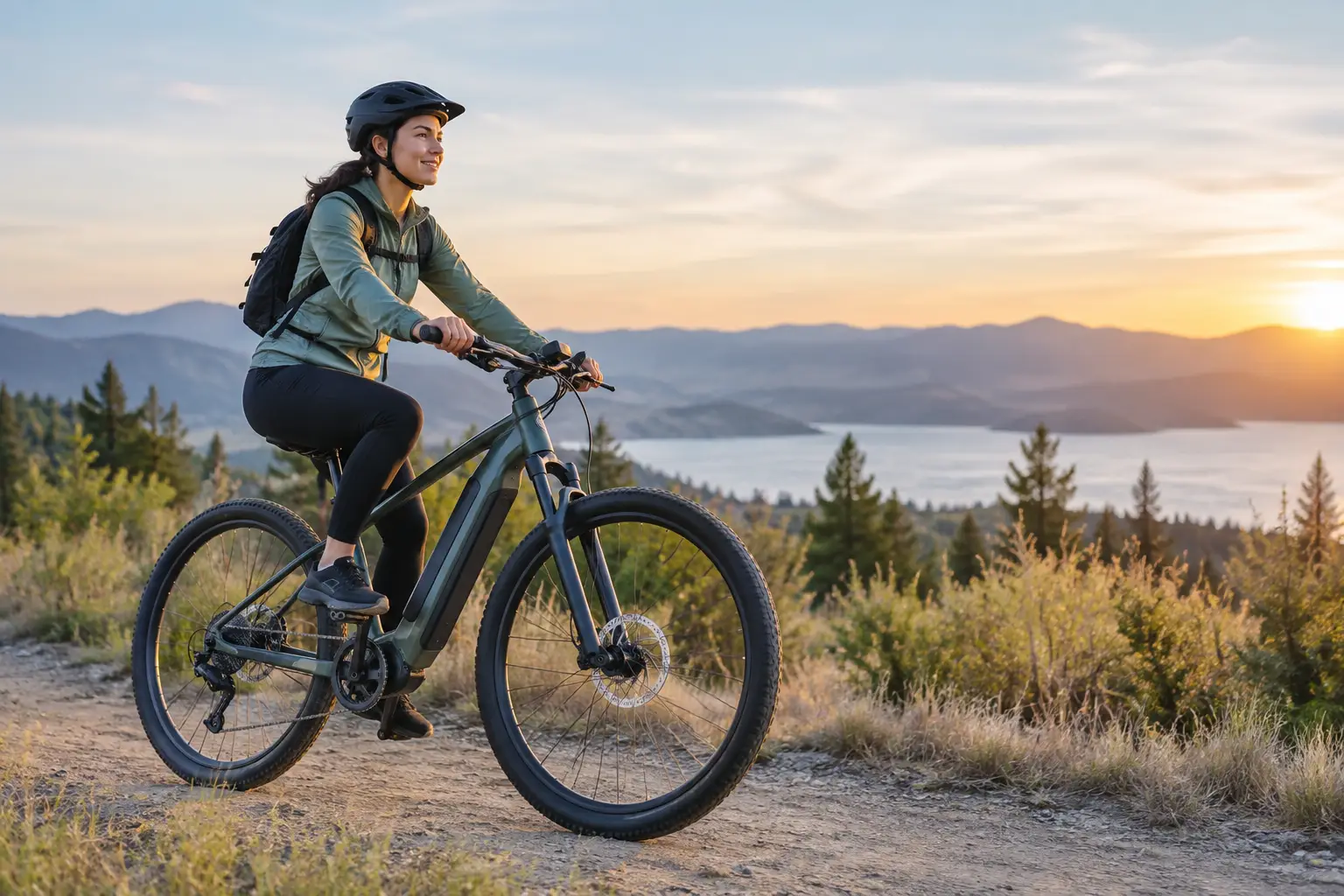
A 500Wh e-bike battery can deliver very different mileage from one ride to another. On an easy, low-assist route, it may support 50 miles or more; on steep hills, with heavy cargo or frequent throttle use, the same battery may deliver closer to 15–25 miles. Battery size matters, but so do assist level, speed, terrain, wind, rider input, total weight, tire pressure, temperature, and battery condition.
The examples below are planning examples, not guaranteed ranges. Use them to understand how watt-hours (Wh) and energy use per mile work, then compare them with your own rides.
E-Bike Range Examples for Common Rides
An e-bike battery’s energy capacity is measured in watt-hours. In simple terms, a 500Wh battery stores about 500 watt-hours of rated energy when new. Your actual usable energy can be lower because battery age, temperature, the battery-management system, and other system limits affect what is available during a ride.
One practical way to think about range is watt-hours used per mile (Wh/mi):
Estimated range = battery watt-hours ÷ watt-hours used per mile
For example, if a 500Wh battery is being used at an average rate of 20Wh/mi, the simple theoretical result is about 25 miles. Real-world riding rarely stays at one exact consumption rate, so treat the result as a planning window rather than a promise.
The table below uses illustrative energy-use assumptions to show how conditions can change the result.
| Ride situation | Illustrative energy use | Approximate range from 500Wh |
|---|---|---|
| Smooth, mostly flat route; low assist; steady pedaling | 8–10 Wh/mi | 50–62 miles |
| Mostly flat commute; moderate assist; regular stops | 12–16 Wh/mi | 31–42 miles |
| Rolling route; moderate-to-high assist | 16–20 Wh/mi | 25–31 miles |
| Hilly route or strong headwind; high assist | 20–28 Wh/mi | 18–25 miles |
| Heavy cargo, loose surfaces, or frequent throttle use | 25–35 Wh/mi | 14–20 miles |
These numbers are not universal benchmarks. Different motors, controllers, tires, wheel sizes, riding speeds, and battery systems can produce different results even when two bikes have the same rated battery capacity.
If you want a broader estimate that accounts for rider weight, terrain, assist level, speed, weather, and cargo, use the GoEBikeLife E-Bike Range Calculator.
Example 1: A 12-Mile Round-Trip Commute
Suppose your commute is 6 miles each way on mostly paved streets with a few hills and traffic lights.
If your ride averages roughly 12–16Wh/mi, a 12-mile round trip would use about:
- 144Wh at 12Wh/mi
- 192Wh at 16Wh/mi
On a healthy 500Wh battery, that leaves a substantial theoretical reserve. But the return trip may consume more energy if you face a headwind, colder temperatures, heavier traffic, or higher assist use.
For commuting, it is safer to plan around your ordinary worst-case ride rather than the most efficient ride you have ever recorded.
Example 2: A 25-Mile Recreational Ride
For a relaxed 25-mile paved ride, assume an average of about 8–15Wh/mi. That would equal roughly 200–375Wh of battery use.
A 500Wh battery may therefore be enough, but the reserve can shrink quickly if the route includes repeated climbs, strong wind, stop-and-go riding, or sustained high speeds.
On an unfamiliar route, do not wait until the final battery bar to adjust. Check your remaining charge after the first 5–10 miles. If consumption is higher than expected, reduce assist where practical, pedal steadily, and allow extra margin for the return trip.
Example 3: An 18-Mile Hilly Errand Route
A short hilly ride can use more energy than a much longer flat ride.
At 20Wh/mi, an 18-mile route uses about 360Wh. At 25Wh/mi, the same distance would require about 450Wh. That leaves very little reserve from a nominal 500Wh battery.
Repeated climbing, cargo weight, low-speed high-assist riding, and strong headwinds can all increase consumption. Downhill sections reduce motor demand, but you should not plan on descents restoring enough battery energy to offset the climbing work.
How to Estimate Your Own E-Bike Range
Your own repeatable route is more useful than a generic mileage claim. After several normal rides, you can build a realistic range window for your bike and riding style.
1. Find the Battery’s Watt-Hour Rating
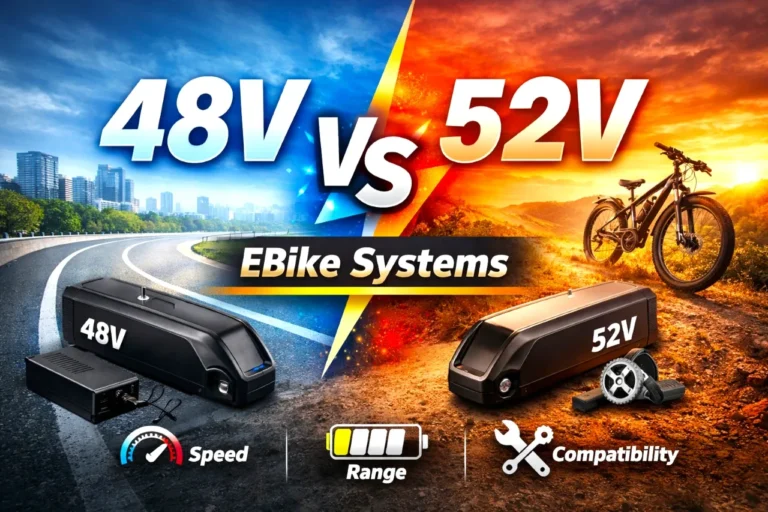
Check the battery label or owner’s manual. If watt-hours are not listed, you can estimate rated energy from nominal voltage and amp-hours:
Nominal volts × amp-hours ≈ watt-hours
For example:
48V × 10Ah ≈ 480Wh
This is a rated-energy estimate, not a measurement of how much usable energy an older battery can still deliver. If you are unsure what the markings mean, see our guide to reading an e-bike battery label.
2. Ride a Familiar Route Normally
Start with a charged battery and ride a route you know. Use the assist setting, speed, cargo, and tire pressure you would normally use.
Record:
- Distance ridden
- Assist level
- Terrain and wind
- Approximate battery percentage remaining, if available
- Any unusual conditions such as cold weather or heavy cargo
Battery percentage displays are estimates, and bar-style indicators can be especially coarse. Do not assume that every displayed 10% represents exactly 10% of the battery’s rated watt-hours.
3. Estimate Energy Use Per Mile
If your display gives a reasonably stable percentage estimate, you can make a rough calculation.
Example: a 500Wh battery drops from 100% to about 50% after 15 miles. As a simplified estimate, that suggests roughly 250Wh was used:
250Wh ÷ 15 miles ≈ 17Wh/mi
Because battery displays, usable capacity, and reserve behavior vary, treat this as an approximation rather than a laboratory measurement.
4. Build a Range Window, Not a Single Number
At 17Wh/mi, dividing 500Wh by 17 gives a theoretical result of about 29 miles. For trip planning, however, a range such as 24–28 miles with reserve is more useful than assuming you can always ride exactly 29 miles.
If you want to test your bike more systematically, follow our e-bike range test guide.
What Changes E-Bike Range the Most?
Assist Level and Throttle Use
Higher assist generally increases battery use because the motor contributes more of the work. Frequent throttle use can also reduce range when it replaces rider pedaling with motor output.
You do not need to stay in the lowest assist mode all day. A practical approach is to use lower assistance on easy sections and save higher assistance for hills, headwinds, heavy starts, or fatigue.
Hills, Wind, and Speed
Climbing requires additional energy to move the rider, bike, and cargo uphill. Headwinds increase aerodynamic resistance, and higher speed requires disproportionately more power as aerodynamic drag rises.
That is why a route that feels efficient at 14mph (23km/h) may use noticeably more battery when ridden closer to 20mph (32km/h).
When your e-bike has gears, shift to an easier gear before a climb and keep a comfortable cadence rather than relying on very high motor assistance at low pedaling speed.
Rider, Bike, and Cargo Weight
More total mass increases the energy needed for acceleration and climbing. The effect is especially noticeable on cargo bikes, with child seats, trailers, panniers, or delivery loads.
On flat ground at a steady speed, however, wind resistance, speed, tire setup, and assist level can matter as much as — or more than — a modest difference in rider weight.
Tires and Mechanical Condition
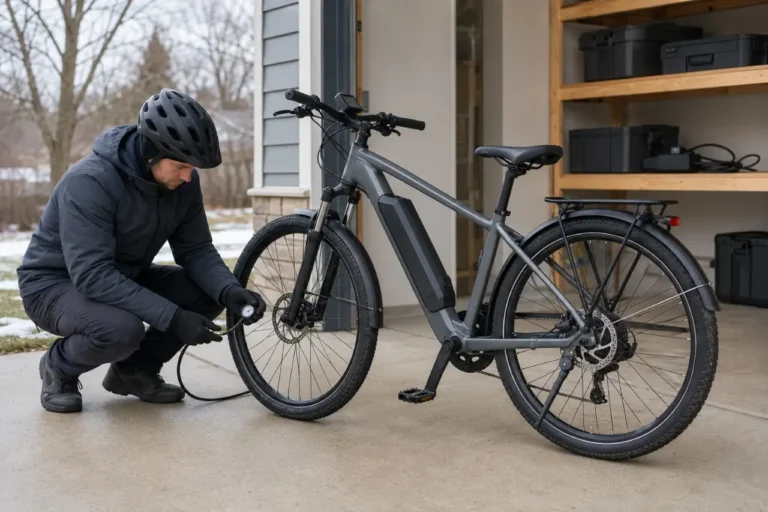
Low tire pressure increases rolling resistance and can make the bike less efficient. Check pressure with a gauge and follow the safe limits from the tire, rim, and e-bike manufacturer rather than relying on one universal PSI number. See our e-bike tire pressure guide for the full process.
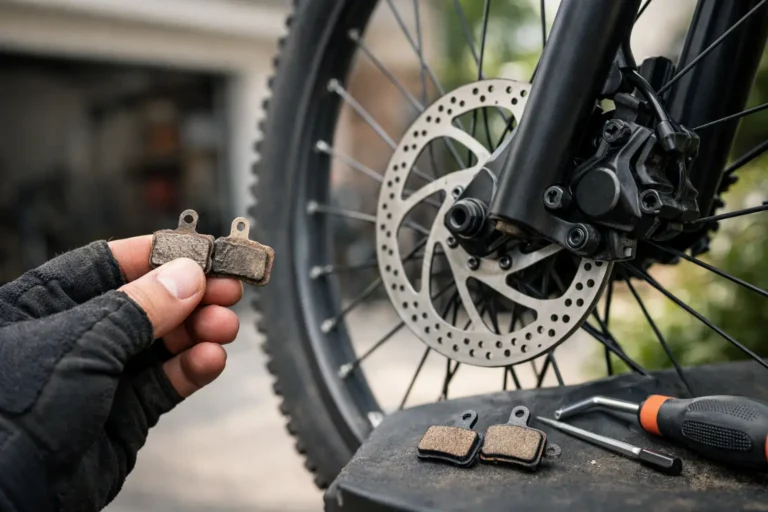
Brake rub, drivetrain problems, damaged bearings, or other mechanical issues can also increase resistance. If your bike suddenly needs much more assist than usual on a familiar route, inspect basic items that are safe for an owner to check and have a qualified e-bike shop diagnose anything you cannot identify confidently.


Temperature and Battery Age
Cold temperatures can temporarily reduce available battery performance. Manufacturers such as Bosch note that battery performance and normal range can fall as temperature decreases because electrical resistance increases.
Battery capacity also declines gradually with age and use. If your range is changing, compare similar rides rather than judging from one trip. Our guide to why e-bike range drops covers cold weather, voltage sag, riding load, and other causes in more detail.
A sudden major change deserves attention. Stop using the battery and follow the manufacturer’s instructions if it is swollen, leaking, unusually hot, physically damaged, emitting an unusual odor, or behaving abnormally. Do not open or attempt to repair the battery pack yourself.
Plan Every Longer Ride With a Reserve
For transportation rides where getting home matters, avoid planning to use every displayed percent or the final battery bar. Remaining-range displays are estimates, and they can change with hills, load, temperature, and riding conditions.
Before a longer trip, check:
- Route distance and elevation
- Expected wind and temperature
- Surface type
- Cargo load
- Your recent Wh/mi pattern on similar rides
- A reasonable reserve for detours or harder-than-expected conditions
If you plan to recharge away from home, confirm that charging is permitted and use only the charger supplied or specifically recommended by the e-bike or battery manufacturer. Charge in a dry location while you are present, and follow the manufacturer’s charging instructions.
The most useful range number is not the biggest figure on a product page. It is the repeatable range you get on your own routes with your normal assist level, speed, load, and conditions. Track a few rides, keep the bike in good mechanical condition, and use your own Wh/mi pattern to plan with a reserve.
GoEBikeLife publishes independent e-bike reviews, comparisons, and practical buying guides. Some links on this page are affiliate links. If you make a purchase through an eligible link, we may earn a commission at no additional cost to you.