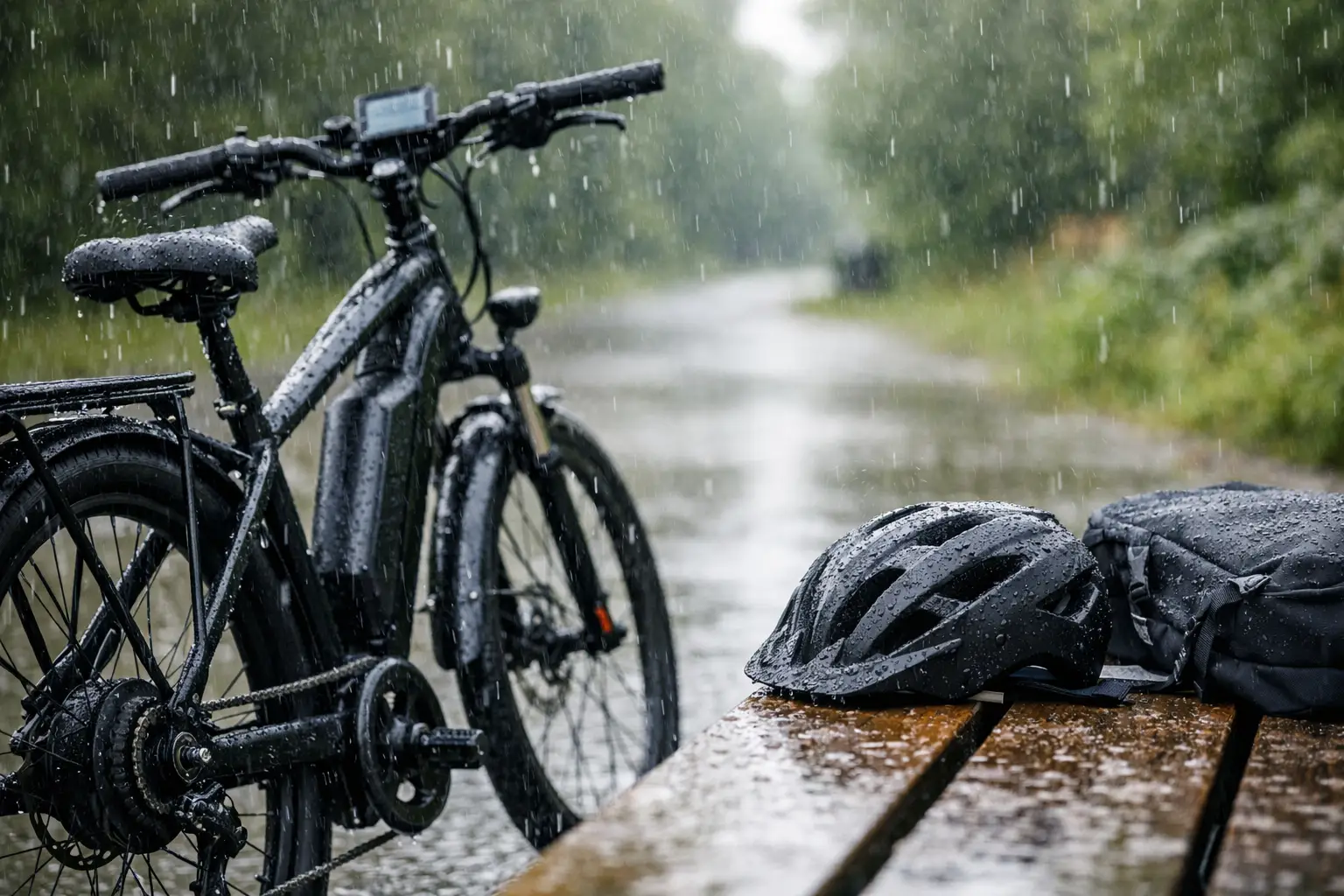
Do electric bikes work in rain? Yes, most modern e-bikes can handle ordinary rain if they are in good condition and used as intended. However, rain changes the riding conditions. Tires lose grip, braking distances increase, visibility drops, and water can cause problems if it reaches damaged wiring, loose connectors, or charging ports.
Think of rain resistance as protection for a wet commute or an unexpected shower, not permission to submerge the bike, pressure-wash it, or ride through floodwater. Your owner’s manual is the final word on your particular battery, display, motor, and charging system.
Do electric bikes work in rain? Usually, with limits
E-bikes have electrical parts that are commonly sealed or protected against normal road spray. These include the battery case, motor housing, controller, display, and wiring connections. That protection is useful, but it is not identical across every model.
Some manufacturers publish an IP rating, short for Ingress Protection rating. The first number refers to protection from solids such as dust, and the second refers to water. A higher water-resistance number generally indicates better protection against water exposure, but it still does not mean the bike is safe to immerse. A rating may also apply only to one component, such as the display, rather than the whole e-bike.
A bike with no published rating is not automatically unsafe in light rain. It does mean you should be especially careful to follow the manufacturer’s guidance. If the manual says to avoid wet conditions, remove the battery before transport, or cover a particular display or charging port, follow those instructions.
The bigger concern is often not rain falling from above. It is water forced upward by tires, sprayed from vehicles, or driven into openings by a hose. Deep puddles can hide potholes, curbs, debris, and water deep enough to reach electrical components.
What rain changes on the road
Rain does not usually stop an e-bike from working, but it reduces the margin for error. E-bikes can accelerate quickly, and that extra assistance can break rear-wheel traction if you start too hard on slick pavement, painted lane markings, metal utility covers, leaves, or railroad tracks.
Brakes also need more distance to slow the bike. Rim brakes may feel weak briefly after getting wet because water sits on the rim surface. Disc brakes generally perform more consistently in rain, but their stopping distance still increases when tires have less grip. Either system can make noise after a wet ride, especially if grit has collected on the braking surfaces.
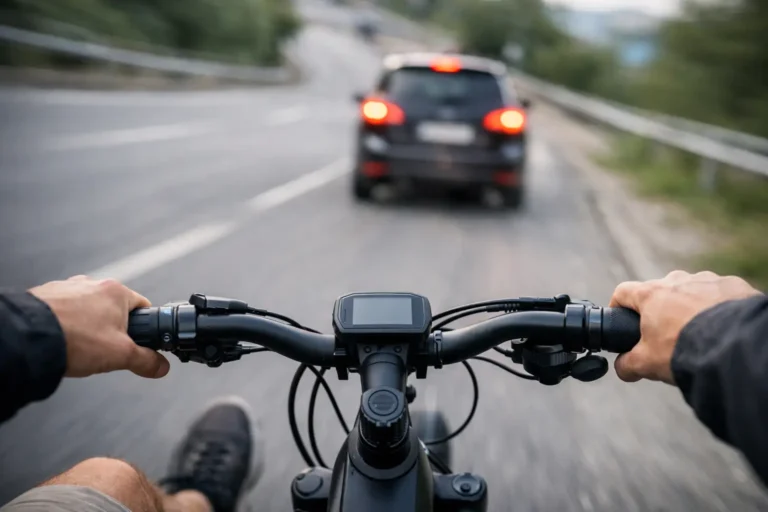
Visibility is another real trade-off. Rain on glasses, helmet visors, vehicle windows, and mirrors makes it harder for everyone to see. Wet-weather riding calls for more space, lower speed, and earlier decisions.
Adjust your riding technique
Use lower assist than you would on a dry ride when traction is uncertain. A gentler assist setting makes starts and low-speed turns easier to control. Pedal smoothly instead of stomping on the pedals, and roll on the throttle gradually if your e-bike has one.
Brake earlier and progressively. Keep the bike as upright as possible while braking or turning, since a leaned-over tire has less traction available. Slow down before a corner rather than braking hard in the corner.
Avoid sudden steering movements. Cross metal grates, painted markings, and railroad tracks as straight and slowly as conditions allow. If a route includes a flooded underpass or a puddle whose depth you cannot judge, turn around or choose another route. Water deeper than the bottom of the motor, battery mount, or electrical connections is not a risk worth taking.
Do not ride during lightning, flash-flood conditions, or storms where wind makes control difficult. An e-bike’s electrical system is not the main danger in those situations. Reduced visibility, falling branches, moving water, and traffic are.
Prepare your e-bike before a wet ride
A quick pre-ride check helps you catch the problems that rain can expose. You do not need advanced mechanical skills for this.
- Check tire condition and pressure. Tires with worn tread, cracks, embedded debris, or very low pressure are less dependable on wet pavement. Use the tire-pressure range printed on the tire sidewall and stay within the bike manufacturer’s recommendations. Do not lower pressure below the approved range just to gain wet grip.
- Test both brakes in a safe area before entering traffic. The levers should not pull all the way to the handlebar, and the bike should stop predictably. If braking feels weak, uneven, or unusually noisy, have a qualified bicycle mechanic inspect it.
- Confirm the battery is locked into its mount and the charging-port cover is closed. Look for loose rubber covers, cracked housings, frayed cables, or connectors that do not sit securely.
- Turn on the headlight and taillight, even during daytime rain. Use reflective clothing or accessories when practical, but do not assume they replace lights in low visibility.
- Fit fenders if your e-bike is designed to accept them. Fenders reduce road spray reaching you and the bike’s lower electrical areas. They do not make the bike waterproof, but they can make wet commuting more manageable.
If you use a rear rack bag, pannier, or basket, make sure its contents cannot shift into the rear wheel and that water-sensitive items are protected. Wet clothing and cargo can also add weight and affect handling.
Battery and charging rules after rain
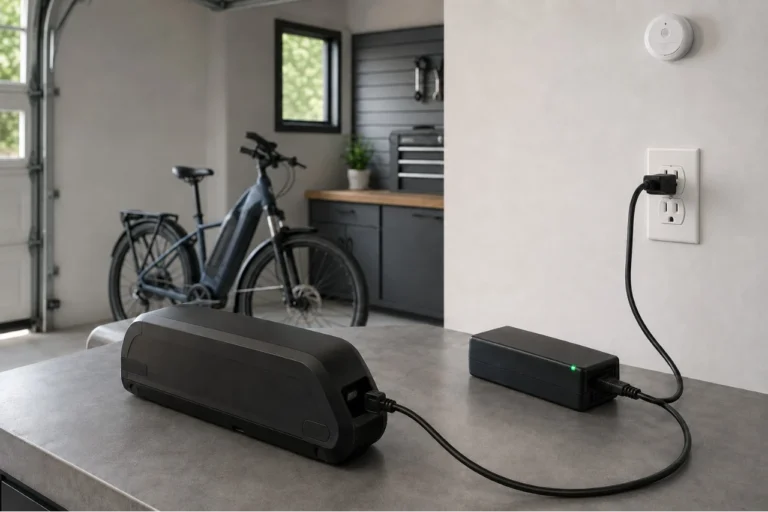
The safest rule is simple: never charge a wet battery, charger, charging port, or electrical connector. Rainwater itself may not immediately damage a properly sealed battery, but charging equipment and exposed contacts should be dry before use.
After arriving, turn the e-bike off. Park it under cover if possible and wipe away obvious moisture with a clean, dry cloth. Open the charging-port cover only after the outside of the area is dry. If water is visible in or around the port, leave it open in a dry, ventilated place until it has fully air-dried. Do not use a heat gun, hair dryer, compressed air, or anything that can force moisture farther inside.
Remove the battery only if your manufacturer permits normal user removal. Hold it securely, keep its contacts dry, and bring it indoors if the bike will remain outside in wet or cold weather. Store the battery away from direct heat, exits, flammable materials, and children or pets.
Use only the charger specified or approved by the manufacturer. Before connecting it, inspect the charger, cable, plug, battery contacts, and charging port. If any part is wet, damaged, hot, corroded, or has a burned smell, do not charge the battery. Contact the manufacturer or a qualified e-bike service provider for guidance.
Clean the bike without forcing water inside
Rain leaves road grit, oil, and salt residue on an e-bike. That residue can wear down the chain, gears, brake parts, and fasteners over time, so a basic cleanup is worthwhile after especially wet or dirty rides.
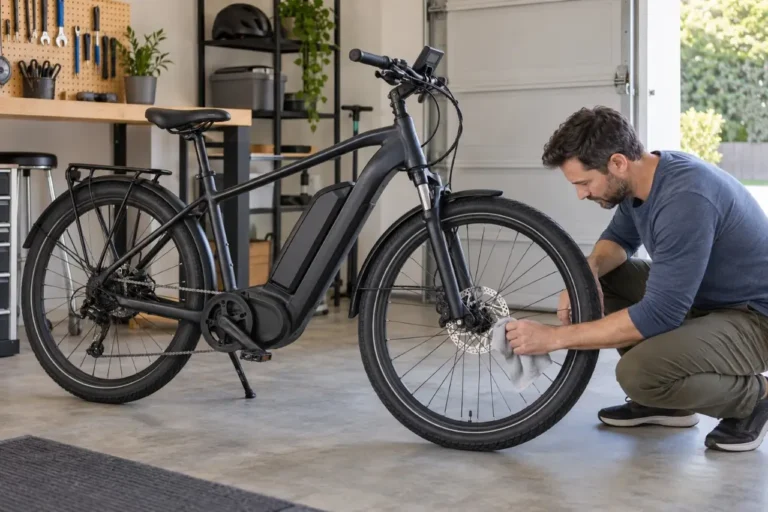
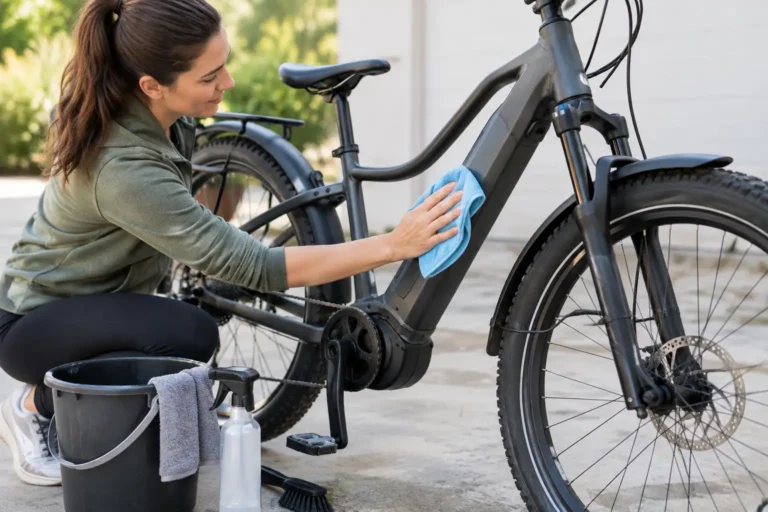
Start by turning the bike off and removing the battery only if the manual allows it. Wipe the frame, battery exterior, display, and cables with a damp cloth, then use a separate dry cloth around the battery mount, charging port, and connectors. A soft brush can remove mud from the tires, frame, and fenders.
Use a gentle stream of water only when the manufacturer permits it, and keep it away from bearings, the motor, display, battery compartment, charging port, and wire connections. Never use a pressure washer. High-pressure water can push past seals that easily handle ordinary rain.
Dry the chain and apply a bicycle chain lubricant appropriate for wet conditions, following the lubricant directions. Keep lubricant off brake rotors, brake pads, wheel rims, and tires. If you accidentally contaminate braking surfaces, or the brakes continue to squeal or perform poorly, have a mechanic inspect and clean them.
Signs the bike needs professional attention
Stop riding and do not charge the battery if the e-bike loses power unexpectedly, shows a new error code, has flickering lights or display behavior, makes unusual electrical noises, or has visible corrosion or water inside a component. A battery that is swollen, cracked, leaking, unusually hot, or producing an odor needs immediate attention according to the manufacturer’s safety instructions. Move away from it if there is immediate danger and contact emergency services when appropriate.
For less urgent issues, such as recurring brake noise, a loose connection, damaged cable insulation, or water that repeatedly appears under a display, schedule service with a qualified bicycle mechanic or manufacturer-authorized technician. Do not open the battery, motor, controller, or sealed electrical housings yourself.
A wet ride does not have to end your e-bike routine. Give yourself more stopping room, treat puddles as unknown hazards, dry the charging area before plugging in, and clean off road grime before it becomes a maintenance problem. Those habits let you ride confidently when the forecast is inconvenient, not necessarily unsafe.
Frequently Asked Questions
Can you ride an electric bike in the rain?
Most electric bikes can be ridden in ordinary rain if their electrical components are intact and the manufacturer permits wet-weather use. Reduce your speed, brake earlier, and avoid deep puddles or flooded roads.
Are electric bikes waterproof?
Electric bikes are generally water-resistant, not waterproof. Their batteries, motors, displays, and connectors may tolerate rain and road spray, but they should not be submerged or exposed to high-pressure water.
What IP rating should an e-bike have for rain?
An IP rating with a higher second digit generally indicates greater water resistance. However, the rating may apply to only one component rather than the entire bike, so check the owner’s manual for model-specific limits.
How long should an e-bike dry before charging?
There is no universal waiting period. Do not connect the charger until the battery, charging port, plug, contacts, and surrounding area are completely dry. Allow them to air-dry naturally in a ventilated location.
Should you remove an e-bike battery after riding in rain?
Remove the battery only if the manufacturer permits normal user removal. Keep its contacts dry and bring it indoors if the bike will remain outside in wet or cold conditions. Never remove or reinstall a battery with wet contacts.
Can you wash an electric bike with a hose or pressure washer?
Do not use a pressure washer on an electric bike. High-pressure water can pass through seals and reach bearings or electrical connections. Use a damp cloth, soft brush, or gentle water flow only when the manufacturer allows it.
What should you do if an e-bike stops working after getting wet?
Stop riding, turn the bike off, and do not charge the battery. Allow the bike to dry in a covered, ventilated area. If error codes, flickering lights, corrosion, unusual heat, or power loss continue, contact the manufacturer or a qualified e-bike technician.