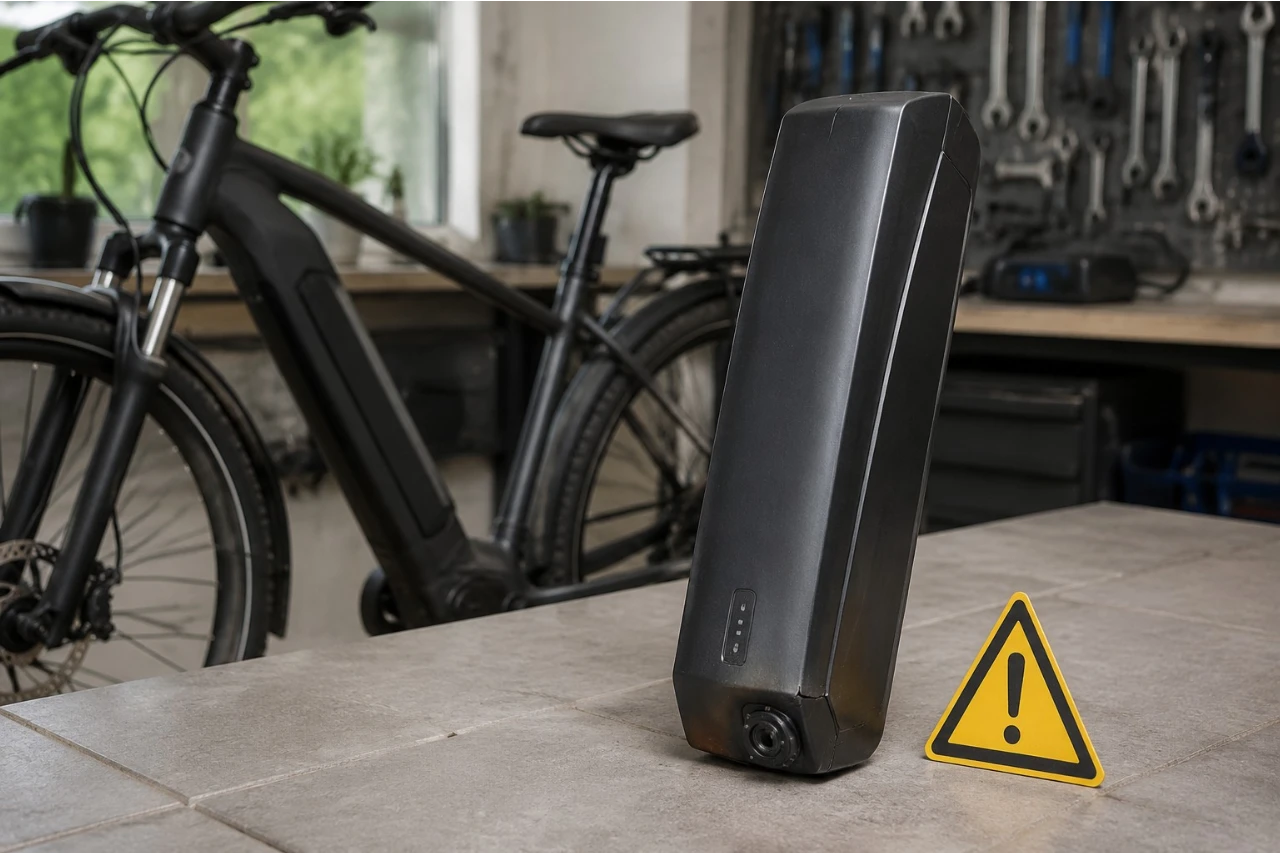
A battery that looks, smells, or behaves differently after a drop, wet ride, or charge cycle deserves attention before your next trip. Battery damage warning signs can range from a cracked case to unexpected heat or a sudden loss of power. The safest response is simple: stop using a battery that seems damaged, disconnect it from the bike or charger if doing so is safe, and follow the manufacturer’s instructions for inspection or service.
E-bike batteries store a substantial amount of energy in a compact case. Most use lithium-ion cells controlled by a battery management system, often called a BMS. That system helps manage charging, temperature, and power output, but it cannot make a physically damaged or water-contaminated battery safe to use. A prompt, calm response can prevent a small issue from becoming a serious one.
Battery Damage Warning Signs You Should Not Ignore
Some changes are cosmetic. A light scuff on a hard plastic shell may not affect function. Others suggest damage inside the pack, where owners cannot safely inspect or repair it. Treat the following signs as reasons to stop riding and charging until the battery has been assessed.
Swelling, bulging, or a case that no longer fits
A battery case should sit flat in its mounting rail and latch firmly. Bulging sides, a bowed seam, a lifted label, or a battery that suddenly will not slide into its cradle normally can indicate internal cell swelling. Do not force it into the bike, press the case flat, or try to drain the battery by riding.
Swelling is not a normal result of age. Place the battery in a dry, nonflammable area away from people, pets, direct sun, and combustible materials, if you can do so without handling a hot, smoking, or leaking pack. Contact the manufacturer or a qualified battery service provider for next steps.
Cracks, deep dents, loose parts, or damaged terminals
Inspect the case after a crash, a fall from a rack, or a battery that was dropped during removal. A crack near a seam, charging port, latch, or mounting point can let moisture reach internal components. Deep dents can also damage cells even when the shell has not split.
Check the exposed electrical contacts on the battery and bike mount without touching them with metal tools. Bent, burned, corroded, loose, or blackened terminals are not a do-it-yourself electrical repair. Do not insert the battery, tape over the damage, or attempt to straighten contacts. Have the bike and battery evaluated by the manufacturer or a qualified e-bike technician.
Unusual heat while charging, riding, or sitting idle
A battery can feel mildly warm after a long hill, hot weather riding, or charging. It should not become too hot to comfortably touch, produce a hot-plastic smell, or remain unusually hot long after the charger is unplugged.
Stop charging if the battery or charger becomes unusually hot. Unplug the charger from the wall first if that can be done safely, then leave the battery alone to cool in a clear area. Do not cool it with water, put it in a freezer, cover it, or place it in a sealed container.
Odor, leaking fluid, smoke, hissing, or popping
A sharp chemical smell, sweet or solvent-like odor, visible fluid, smoke, hissing, or popping are urgent warning signs. Keep people and pets away. Do not touch, carry, charge, or ride the battery.
If there is smoke, fire, or an immediate threat to people or property, move away and call 911. Tell responders that an e-bike lithium-ion battery is involved. Do not try to open the battery case or manage an active battery fire yourself.
Sudden power changes and unexplained charging behavior
A battery that shuts off under normal riding load, drops from several bars to empty, refuses to charge, or charges far more quickly than usual may have a fault. A single short range day does not automatically mean damage. Cold weather, steep routes, high assist settings, tire pressure, rider and cargo weight, and strong wind can all reduce range.
The difference is repeatability and context. If the same unusual behavior continues in moderate conditions, especially after an impact or water exposure, stop using the battery until the manufacturer or qualified technician can inspect it. Do not assume the problem is harmless because the display turns back on later.
What to Do When You Find a Problem
Owners can safely observe, document, and protect the area around a questionable battery. They should not open the housing, test internal cells, replace a BMS, reconnect damaged wires, or use an unapproved charger.
- Stop riding and charging. Turn off the e-bike. If the battery is cool, intact, and easy to remove normally, remove it according to the owner’s manual. If it is hot, swollen, leaking, smoking, or difficult to release, do not force it.
- Move people away from the area. Keep the battery away from paper, fuel, paint, household chemicals, dry leaves, and other combustibles. A concrete or bare tile surface is preferable to carpet or a wood workbench.
- Document what you see. Take clear photos of case damage, the charge port, terminals, warning lights, and the battery label from a safe distance. Record the date, what happened, and whether the battery was charging, riding, stored, or exposed to water.
- Contact the right service source. Start with the e-bike or battery manufacturer. For physical damage, electrical faults, or uncertain compatibility, use a qualified e-bike technician or battery service provider authorized by the manufacturer when available.
Manufacturer instructions take priority over general guidance, particularly for removal, transport, warranty evaluation, and disposal. A battery may have model-specific handling requirements.
Damage After Water Exposure or a Crash
Rain riding does not necessarily damage an e-bike battery. Many systems are designed to tolerate normal wet-road conditions when installed correctly, but water resistance is not the same as waterproofing. Submersion, pressure washing, flooded streets, saltwater exposure, or water entering an open charge port are different situations.
After significant water exposure, turn the bike off and do not charge the battery until it is fully dry and the manufacturer’s instructions have been followed. Wipe the exterior with a clean, dry cloth. Do not use a hair dryer, compressed air, or direct heat to force moisture out of the battery or connectors. Corrosion can develop later, so watch for charging errors, intermittent power, or discolored contacts over the following rides.
After a crash, inspect the battery before riding home, even if the bike still works. Look for a shifted battery mount, latch damage, cracks, scraping through the case, and any gap between case sections. If the battery took the impact, arrange transportation for the bike rather than continuing to ride on a questionable pack.
Avoid These Common Responses
Do not keep charging a suspect battery just to see whether it reaches 100%. Do not wrap a cracked case with tape, store a damaged pack in a car trunk, or place it in household trash or curbside recycling. Do not use a charger with a frayed cord, bent plug, damaged casing, or unexplained error behavior.
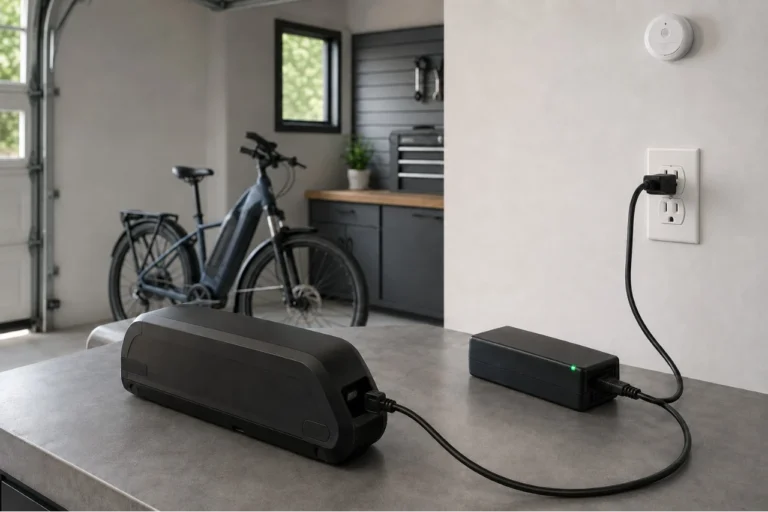
It is also wise to avoid charging immediately after a demanding ride on a very hot day. Let the battery return to a normal indoor temperature first. Use the charger supplied or approved by the battery manufacturer, on a stable hard surface with the area clear of combustible materials.
When the Battery May Be Normal
Not every concern means the battery is damaged. Reduced range in temperatures below about 50°F (10°C), a warm case after a sustained climb, or a display estimate that changes with assist level can be normal. A little dust around the battery rail can also affect the connection.
Clean only the exterior and accessible contacts as directed by the owner’s manual, using the bike powered off and the battery removed when the manual permits. If basic cleaning does not restore normal operation, do not keep troubleshooting by repeated charging or riding. Intermittent faults are worth professional attention.
A battery is one of the most reliable parts of an e-bike when it is handled carefully, charged with the correct equipment, and taken out of service when something changes. Trust visible damage, unusual heat, odors, and erratic behavior as useful signals, not inconveniences to work around. A missed ride is easier to solve than a damaged battery used one more time.
Frequently Asked Questions
What are the most common signs of a damaged e-bike battery?
Common warning signs include swelling, cracks, deep dents, leaking fluid, unusual heat, strange odors, damaged terminals, and sudden power or charging problems. Stop using the battery if any of these changes appear.
Is it normal for an e-bike battery to get warm?
An e-bike battery may feel mildly warm after charging, climbing hills, or riding in hot weather. It is not normal for the battery to become too hot to touch, smell like hot plastic, or remain unusually hot after being unplugged.
Can I use an e-bike battery after dropping it?
Inspect the battery carefully before using or charging it again. Do not use it if you find cracks, dents, loose parts, damaged terminals, swelling, heat, or unusual charging behavior. A battery that took a hard impact should be evaluated by the manufacturer or a qualified technician.
What should I do if my e-bike battery is swollen?
Stop riding and charging immediately. Do not squeeze, puncture, open, or force the battery into its mount. Keep people and combustible materials away, and contact the manufacturer or a qualified battery service provider for instructions.
Can rain or water exposure damage an e-bike battery?
Normal rain may not damage a correctly installed water-resistant battery, but e-bike batteries are not necessarily waterproof. Submersion, pressure washing, flooding, saltwater, or water entering an open charging port can cause damage and delayed corrosion.
Why does my e-bike battery suddenly lose power or range?
Cold weather, steep hills, high assist levels, low tire pressure, wind, and heavy loads can temporarily reduce range. Repeated shutdowns, sudden battery-level drops, or charging irregularities—especially after an impact or water exposure—may indicate a fault.
Is it safe to charge a battery that looks damaged?
No. Do not charge a battery that is swollen, cracked, leaking, unusually hot, producing an odor, or showing damaged terminals. Keep it disconnected and follow the manufacturer’s instructions for inspection, transport, and disposal.