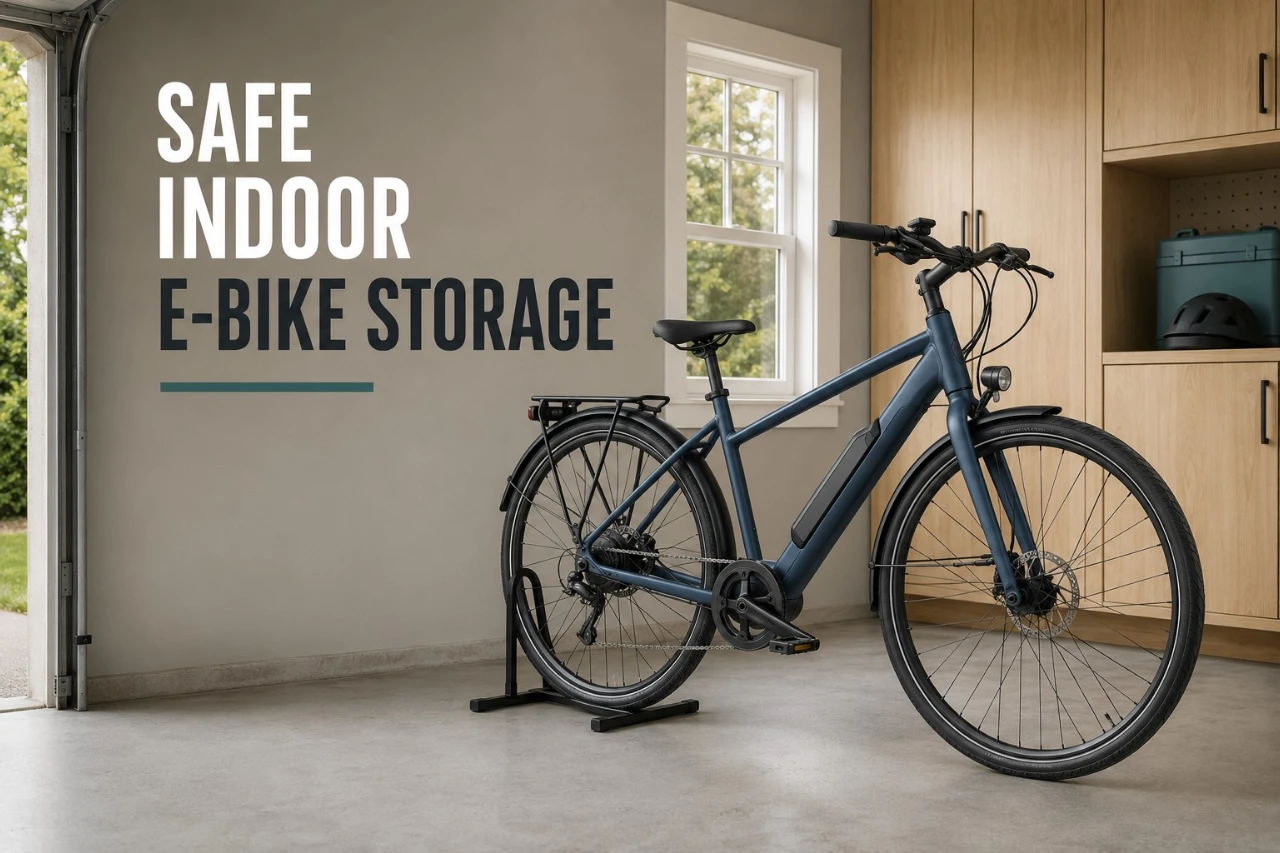
Safe indoor ebike storage means keeping the bike dry, stable, away from exits and heat sources, and managed according to the battery maker’s instructions. A garage, ground-floor utility area, or dedicated corner of a living space can work well when it is organized for both everyday convenience and basic fire safety.
The right setup is not about treating every e-bike as an emergency. It is about reducing avoidable problems: a bike falling over, a battery being damaged, a charger overheating, or a hallway becoming blocked when someone needs to leave quickly. Your owner’s manual always takes priority, especially for battery removal, charging, temperature limits, and long-term storage.
Choose a safe indoor ebike storage location
Start by looking at how people move through your home. An e-bike should not sit in a doorway, stairwell, shared corridor, or in front of an electrical panel. Those areas can create a trip hazard and may interfere with an exit during an emergency. In apartments and condos, building rules may also limit where e-bikes or lithium-ion batteries can be stored or charged.
A good location has a level floor, enough room to roll the bike in and out without scraping walls, and protection from rain, snow, direct sun, and major temperature swings. A dry garage is often practical, but an unheated garage may be too hot or too cold for battery storage at certain times of year. Check the battery manual for its permitted storage temperature range.
Keep the e-bike away from space heaters, furnaces, fireplaces, water heaters, and other heat sources. Do not place it beside paint, gasoline, propane cylinders, solvents, or other flammable materials. The goal is to give the bike its own clear area rather than treating it like general garage clutter.
Keep the bike stable and easy to inspect
A heavy e-bike can cause real injury or property damage if it tips. Use its kickstand only on a hard, level surface, and make sure the stand is fully deployed before letting go. If the bike has a center stand, it may provide more stability, but follow the manufacturer’s instructions for use.
Wall storage can save floor space, but it has trade-offs. Many e-bikes are too heavy for casual lifting, and some racks are not designed for the bike’s total weight or tire width. Before hanging a bike, confirm that the rack, wall mounting, and hardware are rated for the complete e-bike, including accessories. Secure racks to appropriate structural support, not just drywall. If lifting the bike feels awkward, floor storage is usually the safer choice.
For day-to-day storage, straighten the handlebars, remove loose bags, and keep pedals from protruding into a walkway. If you store more than one bike, leave enough space to move each one without dragging handlebars or batteries against another bike.
A simple pre-storage check
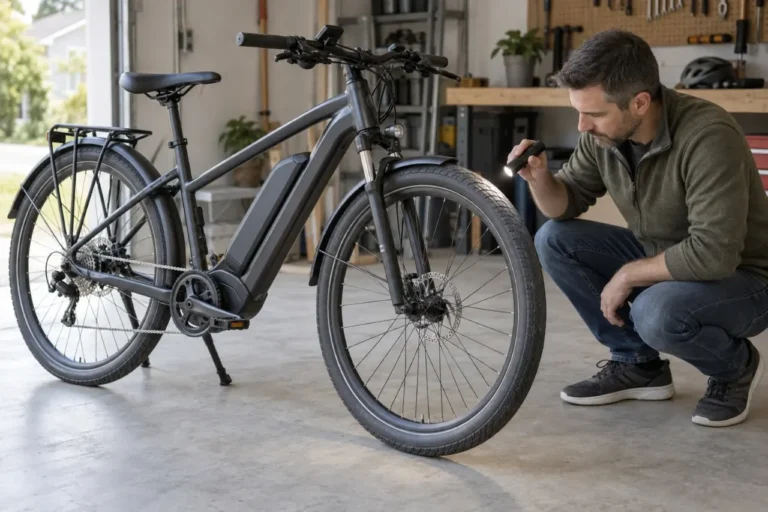
Before putting the bike away, look for obvious damage from the ride. Check that the battery case has no cracks, swelling, leaks, unusual odor, or signs of overheating. Look at the charging port and cable connection for moisture, dirt, or bent contacts.
If the battery was dropped, struck in a crash, exposed to flooding, or behaving unusually, do not charge it or keep using it as normal. Move people away from the immediate area if there are signs of heat, smoke, hissing, leaking, or strong odor, and follow the manufacturer’s emergency guidance. Contact the manufacturer or a qualified battery service provider for next steps. Do not open the battery case or attempt a cell-level repair.
Separate storage from charging when possible
Storage and charging are related, but they are not the same task. An e-bike can be stored indoors without being charged indoors every night. If your routine allows it, charge only when you can monitor the process and return the bike to its storage spot once charging is complete.
When charging is permitted by the manufacturer and your building, use the charger supplied or specifically approved for that battery. Plug it directly into a suitable wall outlet rather than relying on a damaged extension cord, overloaded power strip, or loose adapter. Keep the charger and battery on a hard, dry, nonflammable surface with open air around them. Do not cover either item with clothing, blankets, or bags.
Avoid charging in an exit path, in a bedroom while you sleep, or where children and pets can pull on cords. Do not charge a battery immediately after a hard ride if it feels warm. Let it return to room temperature first, then follow the manual’s charging directions.
Many removable batteries make indoor handling easier. If you bring the battery inside separately, carry it carefully with both hands or by its designed handle. Set it where it cannot fall, be stepped on, or be exposed to liquids. Keep keys, tools, coins, and other metal objects away from battery terminals and charging connectors.
Manage the battery for daily and seasonal storage
For a bike you ride often, the practical approach is simple: keep the battery clean, dry, protected from extreme temperatures, and charged according to the manufacturer instructions. Avoid leaving a fully depleted battery unattended for long periods, since deep discharge can make recovery difficult or impossible on some battery systems.
Long-term storage needs more attention. If you will not ride for several weeks or months, consult the manual for the recommended charge level and inspection schedule. Many manufacturers advise storing lithium-ion batteries at a partial charge rather than completely full or empty, but the target percentage varies. Do not assume one brand’s instructions apply to another.
Check a stored battery periodically for visible damage, moisture, or unusual changes. Recharge only as directed by the manufacturer. If winter storage is in a cold garage, moving the removable battery to a dry, temperature-controlled indoor location may be appropriate if the manual allows it. Let a cold battery warm to the approved charging temperature before connecting a charger.
Protect the room, not just the bike
Good safe indoor ebike storage also considers the surrounding space. Install and maintain smoke alarms as required for your home, and make sure everyone in the household knows the planned exit routes. An e-bike should never block those routes.
Keep the storage area tidy. Cardboard, laundry, paper, and yard supplies can turn a small issue into a larger one and make it harder to spot a damaged cable or leaking tire sealant. A clean floor also makes it easier to see loose screws, broken glass, or water that could affect the bike.
Theft protection still matters indoors. A locked garage is not always secure, and shared storage rooms can have frequent access. Lock the frame to a fixed anchor when practical, and record the bike’s serial number, battery serial number if available, and purchase information in a safe place. This does not change fire safety, but it can reduce a different kind of loss.
When to get professional help
Routine tasks such as wiping down the frame, checking tire pressure, parking the bike securely, and following normal charging instructions are appropriate for most owners. Electrical diagnosis is different. Have a qualified bicycle mechanic or manufacturer-authorized service provider inspect recurring charger errors, damaged connectors, a battery that will not latch securely, unexplained loss of range, or repeated shutdowns.
Call emergency services if there is an active fire or immediate danger. Do not try to open, dismantle, cool, or repair a damaged lithium-ion battery yourself. Once the immediate situation is resolved, the manufacturer can advise on handling, transport, and disposal.
A well-chosen storage spot makes e-bike ownership easier every day. Give the bike a stable place, keep the battery within its approved conditions, and leave your home’s exits clear. Those few habits protect your equipment while keeping the space comfortable for everyone who shares it.
Frequently Asked Questions
Is it safe to store an e-bike inside the house?
Yes, an e-bike can be stored indoors when the manufacturer and building rules permit it. Keep the bike dry and stable, away from heat and flammable materials, and never place it in a doorway, stairwell, or exit path.
What is the safest place to store an e-bike indoors?
Choose a dry area with a level floor, moderate temperatures, and enough space to move around the bike safely. A garage, utility area, or dedicated corner may work if it is away from heaters, direct sunlight, and combustible materials.
Can I store my e-bike in an unheated garage?
An unheated garage may be suitable for the bike, but extreme heat or cold can affect the battery. Check the battery manufacturer’s approved storage-temperature range and move a removable battery to a temperature-controlled location when necessary.
Should I remove the battery when storing my e-bike indoors?
Battery removal is not always required, so follow the instructions in the owner’s manual. If you remove it, store it in a dry, stable location where it cannot fall, get wet, or contact keys, tools, coins, or other metal objects.
Is it safe to charge an e-bike battery overnight?
Charging while you are asleep is not recommended because you cannot monitor the battery and charger. Charge the battery when you are awake and nearby, using the supplied or manufacturer-approved charger on a hard, dry, nonflammable surface.
Can a heavy e-bike be stored on a wall rack?
Yes, but only if the rack, anchors, wall structure, and mounting hardware are rated for the e-bike’s full weight and tire size. If lifting the bike is difficult or unstable, floor storage is generally the safer option.
How should I store an e-bike battery for several months?
Follow the battery manufacturer’s recommended charge level, temperature range, and inspection schedule. Many batteries are stored at a partial charge, but there is no universal percentage that applies to every e-bike battery.
What should I do if an e-bike battery looks damaged?
Do not charge or continue using a battery that is cracked, swollen, leaking, unusually hot, or producing smoke, hissing, or a strong odor. Keep people away, follow the manufacturer’s emergency instructions, and contact emergency services if there is an active fire or immediate danger.