Audience: Riders using 36V/48V/52V lithium packs (NMC/NCA etc.) and LiFePO4 kits
Goal: Maximize lifespan, reduce range fade, and charge more safely
Key Takeaways:
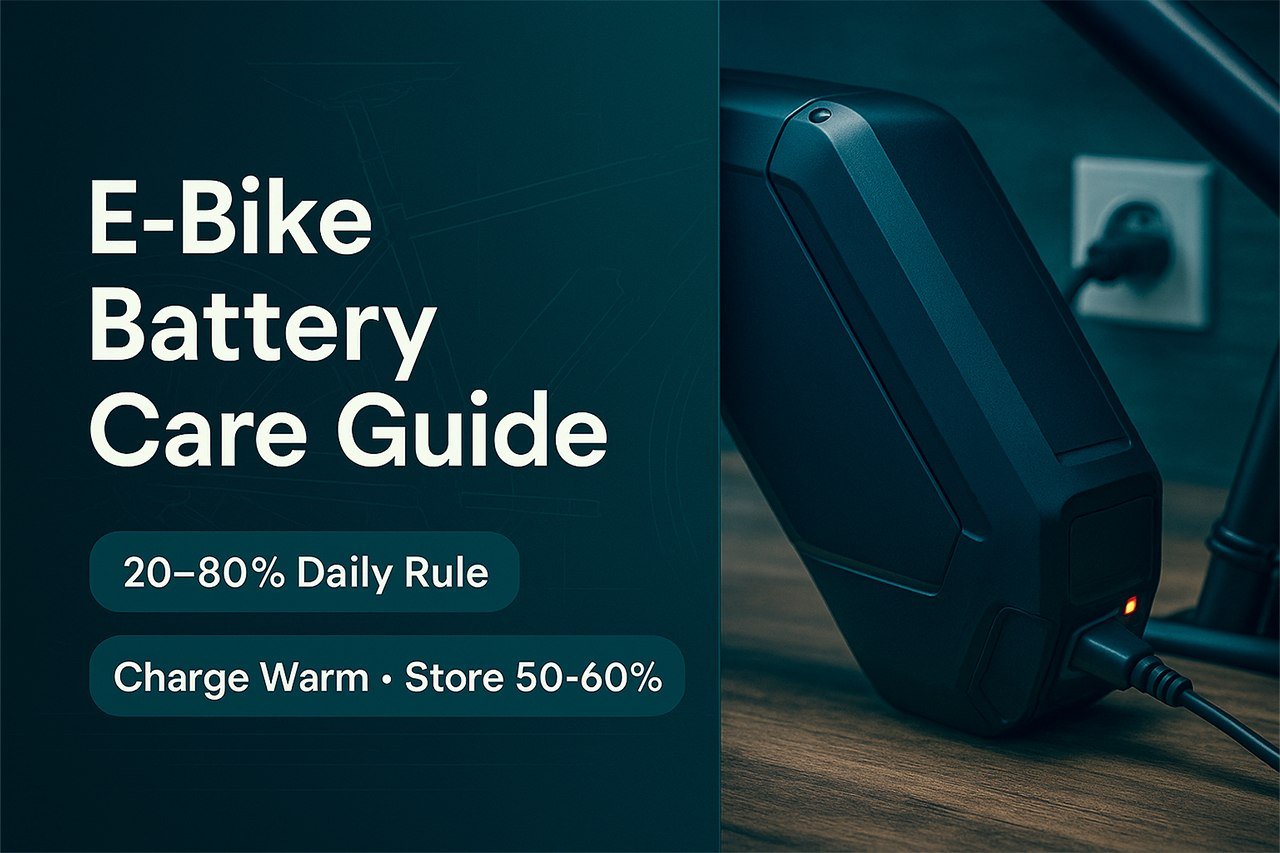
- Daily charge window: keep 20–80%. Do a full charge every 2–4 weeks to allow BMS balancing—avoid leaving it at 100% for days.
- Temperature: best around 10–25 °C (50–77 °F). Warm the pack to room temp before charging in winter; avoid heat and sun exposure in summer.
- Long‑term storage: 50–60% state of charge, cool & dry. Check every 1–2 months and top up back to 50–60% if needed.
- Charging safety: certified charger, dedicated outlet, fire‑safe bag/box, timer/smart plug, supervised charging, and keep away from combustibles.
- Routine care: weekly/monthly/seasonal checklist prevents small issues from growing into big ones.
1) Battery & BMS 101
E‑bike packs are series cell groups + a Battery Management System (BMS).
- Nominal packs & full‑charge voltages:
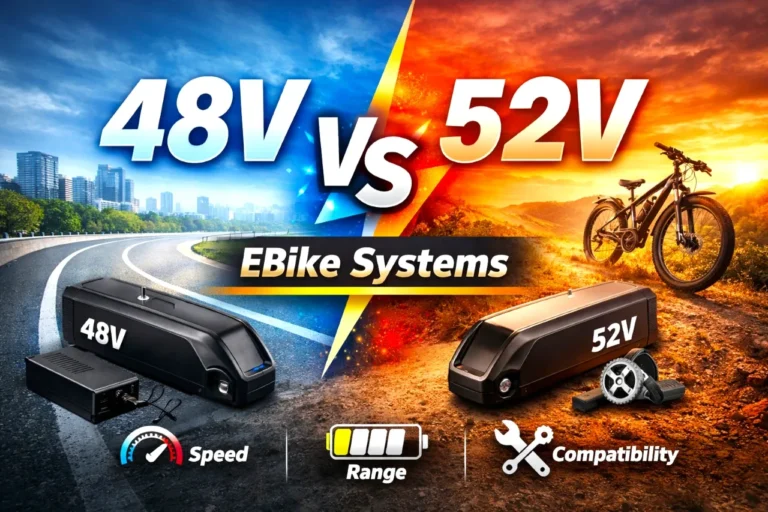
- 48V (13S) → full at 54.6 V
- 52V (14S) → full at 58.8 V
- 36V (10S) → full at 42.0 V
- LiFePO4 note: full is 3.65 V × series count. Always match your charger to the chemistry and the series count on the nameplate.
- Why occasional 100%? Balancing. The BMS equalizes cell groups near full—keep it on the charger for ~30–60 min after hitting 100% to let balancing finish, then ride soon or discharge a little.
Tip: A “100%” display on your screen doesn’t guarantee balancing completed; holding near full briefly helps the BMS finish the job.
2) Daily Charging Strategy: Gentler = Longer Life
A. Ride‑to‑Charge routine
- After a ride, allow 30–60 minutes for the pack to cool to room temperature, then start charging.
- Use a timer/smart plug to avoid sitting at 100% for long hours.
- If you need full range tomorrow, top to 100% right before the ride, then resume the 20–80% habit afterward.
B. Balancing cadence
- Every 2–4 weeks: charge to 100% and hold 30–60 minutes for BMS balancing.
- Don’t leave it parked at 100% for days—ride it or discharge a little soon after.
C. Picking the right charger current
- Voltage must match the pack (e.g., 48V → 54.6 V charger) and the plug/polarity.
- Current (2A / 3A / 5A): higher current = more heat & stress. 2–3A is a sweet spot for daily use; 5A is best kept for urgent top‑ups.
- Features to prefer: CC/CV, reliable auto cut‑off, temperature‑aware design, reputable safety certifications (UL/CE), and the correct connector.
E-Bike Charger Adjustable:

3) Long‑Term Storage & Seasonal Use
Storage level & cadence
- Park at 50–60%. Avoid storing at 0% or 100%.
- Every 1–2 months, check and top back to 50–60% if needed.
Environment & moisture control
- Cool, dry, ventilated; no direct sun. Consider desiccant or a sealed dry box if your climate is humid.
Sleep protection & wake‑up
- Deep self‑discharge during long storage may trigger BMS protection (sleep).
- Do not crack the pack open or use random “activators.” First try the matched‑voltage charger at low current. If it won’t recover, contact the vendor/service center.
4) Temperature Management: Winter & Summer
Winter (cold)
- Cold raises internal resistance and cuts available capacity—range will drop.
- Keep the battery warm indoors; insert it right before heading out. Start with low assist for 5–10 minutes to warm the pack.
- Charge only at room temperature—do not charge a cold pack.
- Helpful add‑ons: insulation sleeves, bar mitts/winter gloves, winter/studded tires, proper tire pressure.
E-Bike Battery Insulation Cover:


Studded Bike Tires 26:


Bar Mitts E-Bike:


Bike Light 2000 Lumen:


Summer (heat)
- Charge and store out of the sun; ventilate during charging.
- Avoid long, continuous max‑assist climbs in hot weather; watch for motor/controller temp alarms.
5) Charging Safety Checklist (Print & Post Near Your Charging Spot)
- ✅ Certified charger that matches voltage/connector/polarity.
- ✅ Dedicated wall outlet—don’t share a cheap power strip with other high‑draw devices.
- ✅ Keep away from combustibles; stable surface; ventilation.
- ✅ Supervise charging; use a timer/smart plug to prevent hours sitting at 100%.
- ✅ Add fire‑safe bags/boxes and a smoke detector.
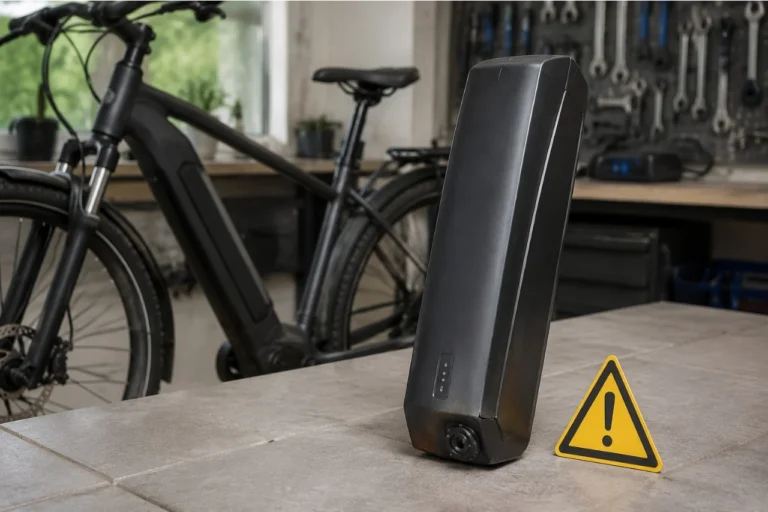
- ✅ If you detect bulging, odors, unusual heat, or after a drop/water ingress—stop using and contact service.
Lipo Fireproof Bag Large:


Smart Plug Timer:


Smoke Detector:


6) Quick Wins for More Range
- Proper tire pressure based on total load; rear slightly higher than front.
- No brake rub: true the rotor and re‑center the caliper.
- Clean drivetrain: cassette/chain/jockey wheels clean; choose lube by conditions (wet/dry/wax).
- Shift early & keep cadence: on climbs, downshift to keep motor current moderate.
- Reduce drag & weight: streamline cargo/panniers and minimize wind area.
- Assist strategy: cruise on low/medium assist, only bump up when needed.
- Suspension setup: correct sag/preload to avoid energy‑wasting bob.
Bike Pump with Gauge:


Bike Chain Wax Lube:


7) Troubleshooting
A. Rapid range loss / big voltage sag
- Check ambient temp, tire pressure, brake rub, dirty drivetrain, and always‑high assist habits.
- Aging signs: normal full‑charge voltage but big sag under load and shorter range. Log ride data for comparison.
B. Won’t charge / SOC reading is odd
- Inspect connector seating, charger fan/LEDs, and output voltage with a multimeter.
- If long storage triggered BMS protection, try a matched‑voltage, low‑current wake‑up. If it fails, contact support.
Digital Multimeter:


Plug Power Mete:


C. Water ingress or drop impact
- Do not open or continue using. Isolate the pack from combustibles and seek professional inspection.
8) Periodic Maintenance Plan (Print‑Friendly)
| Frequency | Tasks | Notes |
|---|---|---|
| Weekly | Tire pressure; check for brake rub; wipe chain | Commuters strongly advised |
| Monthly | Deep‑clean & lube drivetrain; torque check on critical bolts | Use a torque wrench per spec |
| Every 2–4 weeks | One full charge for BMS balancing | Hold at full 30–60 min |
| Quarterly | Charging‑area safety audit; harness/connector inspection | Use heat‑shrink/zip ties if needed |
| Seasonal | Adjust tires/pressures; update cold/heat strategies | Based on climate and mileage |
| Before storage | Charge to 50–60%, clean & dry, remove pack for storage | Re‑check every 1–2 months |
Torque Wrench Bicycle:


Heat Shrink Tubing Waterproof:


9) Common Mistakes (Avoid These)
- Parking at 100% for weeks: accelerates aging; if you top off, ride soon.
- Storing near empty: deep self‑discharge → BMS protection or cell damage.
- Charging a cold pack: let it warm to room temperature first.
- Mismatched chargers or DIY wiring: high risk of damage or hazard.
- Ignoring heat/odors: stop and investigate at once.
10) FAQ
Q1: Do I need to charge to 100% every time?
A: No. Keep daily use in the 20–80% window. Do a full charge every 2–4 weeks to help the BMS balance.
Q2: Is overnight charging okay?
A: Use a timer/smart plug for an on‑demand cut‑off, keep the area ventilated and clear of combustibles, supervise the session, and use a certified charger.
Q3: What SOC for long‑term storage?
A: 50–60%, then re‑check every 1–2 months and top back to the same range.
Q4: Is winter range loss normal?
A: Yes. Cold raises internal resistance and reduces available capacity. Keep the pack warm and charge only at room temperature.
Q5: Special notes for LiFePO4?
A: Match the charger to 3.65 V × series count, follow the battery’s nameplate and manual, and respect the tighter temperature limits.
Safety & Responsibility Notice
- Always follow your battery and bike manufacturer manuals. If you observe bulging, odors, unusual heat, or after a drop/water ingress, stop using and contact service immediately.
- This guide shares general best practices. Chemistries, BMS behavior, and charger features vary—the nameplate/manual takes priority.
GoEBikeLife publishes independent e-bike reviews, comparisons, and practical buying guides. Some links on this page are affiliate links. If you make a purchase through an eligible link, we may earn a commission at no additional cost to you.