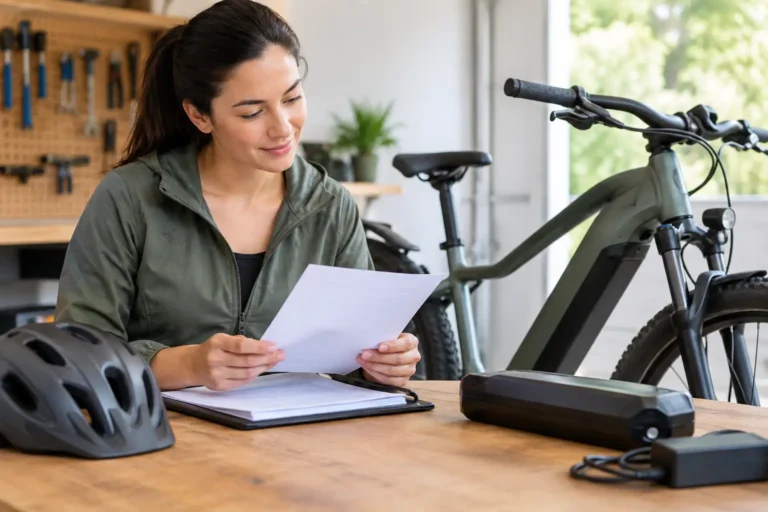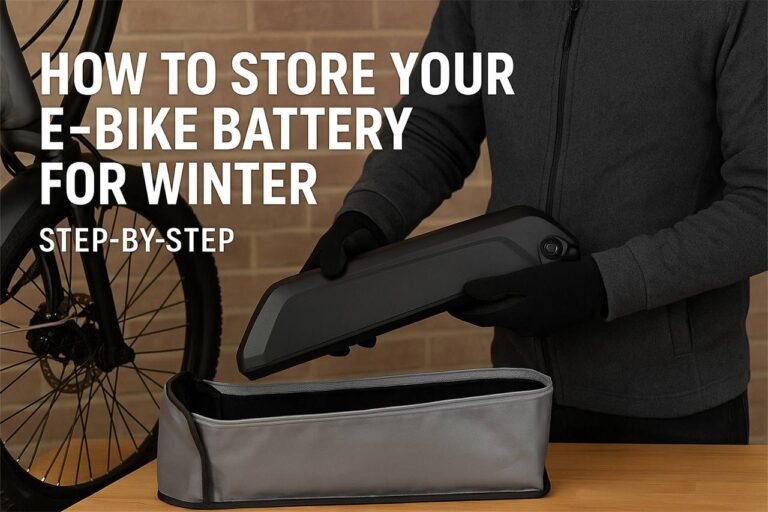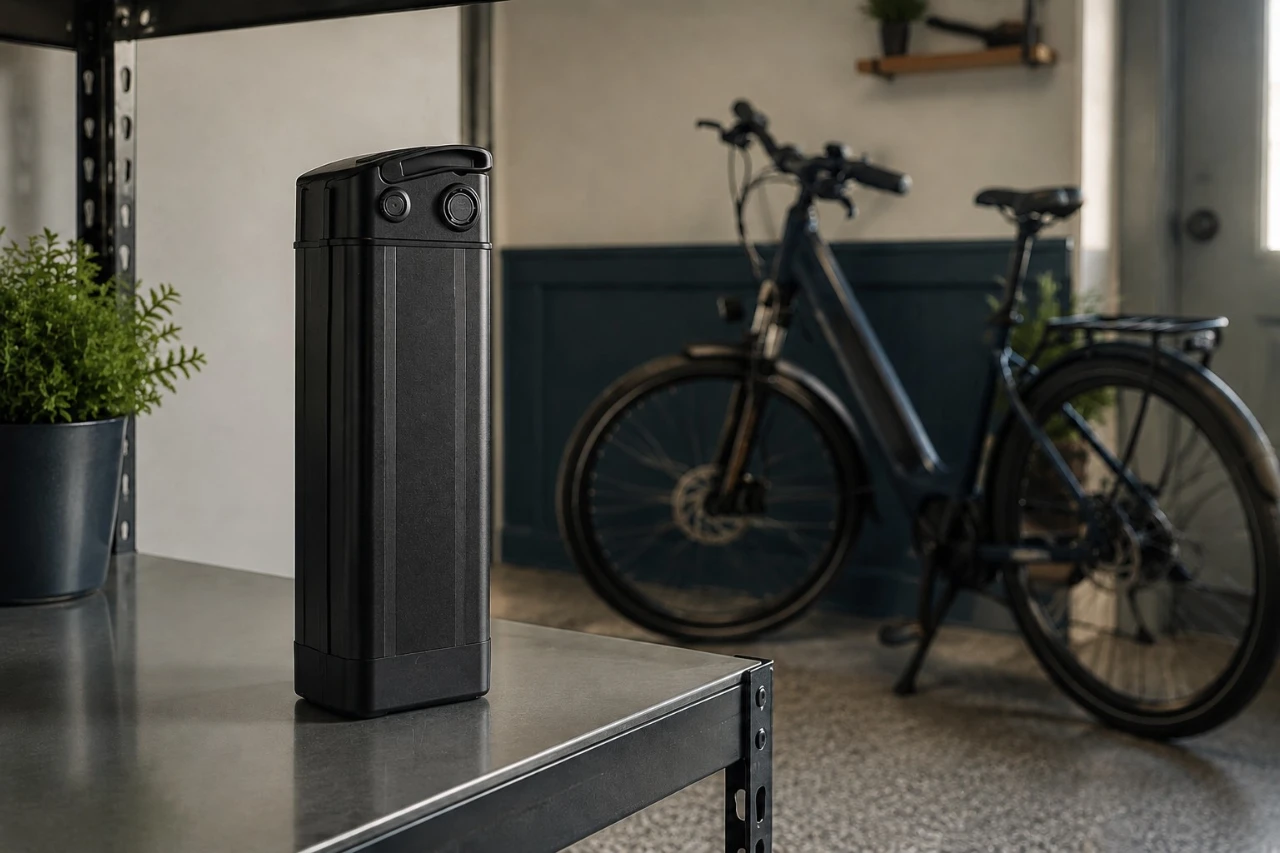
The short answer to how to store ebike battery safely is to remove it from the bike when practical, leave it partly charged, and keep it indoors in a dry, temperature-controlled spot. For most lithium-ion e-bike batteries, a charge level around 40% to 60% is a sensible target for storage unless your owner’s manual specifies something different.
A battery that sits fully charged for months can lose capacity faster. One left empty can fall into a deeply discharged state and may no longer accept a charge. Good storage is less about creating a perfect setup and more about avoiding the conditions that cause the most trouble: heat, freezing temperatures, moisture, physical damage, and long periods without checking the battery.
How to Store an Ebike Battery for Weeks or Months
Follow the battery and charger instructions from your e-bike manufacturer first. Battery designs, charging systems, and warranty requirements vary. When the manual does not give a specific storage procedure, these steps are appropriate for many removable lithium-ion e-bike batteries.
- Charge the battery to roughly 40% to 60%. If your display shows bars rather than a percentage, aim for about half full. Do not deliberately run the battery down to empty before putting it away, and do not leave it at 100% for a long off-season unless the manufacturer directs you to do so.
- Turn the battery off and remove it, if designed to be removable. Take out the key, cover the terminal area if the manufacturer supplied a cover, and carry the battery with two hands. A battery is heavy enough to be damaged if dropped, especially onto concrete.
- Bring it indoors. A closet, finished basement, utility room, or other dry part of the home is usually more suitable than an unheated garage, shed, carport, or vehicle. The goal is a stable environment, not a special battery room.
- Set it on a stable, clear surface. Keep it away from paper, gasoline, paint, cleaning chemicals, sawdust, pet bedding, and other easily ignited materials. Do not place it where it can be knocked over, crushed, exposed to dripping water, or block a doorway, stairway, or exit route.
- Check it periodically. For storage longer than a month, inspect the battery about every 30 to 90 days. Confirm that it is dry, undamaged, and still partly charged. If the charge has dropped substantially, use the original or manufacturer-approved charger to bring it back toward the recommended storage level, then unplug it.
That last step matters because many e-bike batteries slowly lose charge while stored. The battery management system, or BMS, is the internal electronics that helps control charging and discharging. It may draw a small amount of power even when the e-bike is not being ridden.
Choose the Right Temperature and Location
Temperature is one of the biggest factors in e-bike battery storage. A practical target is about 50°F to 77°F (10°C to 25°C), with normal indoor room temperatures generally working well. Short periods slightly outside that range are not necessarily harmful, but repeated or extended exposure to high heat or freezing cold is a poor trade-off for battery life.
Heat accelerates battery aging. Avoid sunny windows, attics, enclosed vehicles, and garages that become hot during summer. Do not leave a battery in the trunk of a car on a warm day, even if the e-bike itself is on a rack outside.
Cold creates a different problem. A battery may temporarily provide less range in cold weather, and charging a battery that is below its allowed charging temperature can damage it. If you brought a cold battery in from a winter ride, let it warm naturally to room temperature before charging. Do not place it near a radiator, fireplace, space heater, or heating vent to speed up the process.
Humidity and water also deserve attention. Keep the battery dry and away from laundry sinks, wet floors, leaky windows, and condensation-prone sheds. If the casing gets wet during a ride, wipe the exterior with a clean dry cloth and allow it to dry fully before storage or charging. Do not use a hair dryer, compressed air, or direct heat on the battery.
Do You Need to Remove the Battery From the E-Bike?
For a few days between normal rides, leaving a battery installed can be reasonable if the bike is stored indoors, dry, secure, and within a moderate temperature range. Make sure the bike is switched off and that nothing can press against the battery or charging port.
For several weeks, winter storage, travel, or an unheated garage, removing the battery is usually the better choice when the design allows it. The battery can then stay in a more stable indoor environment while the bike remains elsewhere. This is particularly useful for commuters who keep their e-bike in a garage but bring the battery into the house.
Not every battery is user-removable. If yours is integrated into the frame, follow the manufacturer’s seasonal storage directions for the entire bike. You can still improve conditions by moving the bike to a dry, temperature-controlled area and checking its charge during storage.
What Not to Do When Storing an E-Bike Battery
Several common habits are convenient in the moment but hard on a battery over time:
- Do not store it at 0% charge or leave it unused until the display no longer turns on.
- Do not leave it connected to a charger for days or weeks unless the manufacturer specifically permits that practice.
- Do not store or charge it in direct sun, near a heat source, or in a vehicle during hot or cold weather.
- Do not stack heavy objects on the battery, hang it by the wiring, or store it loose where it can fall.
- Do not use a charger with damaged cords, bent plugs, loose connections, or signs of overheating.
- Do not open the battery case, attempt cell repairs, or try to bypass a charging or safety problem.
Use the charger supplied with the e-bike or one specifically approved by its manufacturer. Similar-looking connectors and voltage labels are not enough to establish compatibility. A mismatched charger can create charging faults or damage the battery electronics.
Before You Put the Battery Away for Winter
Seasonal storage is a good time for a quick inspection. Look over the outer case, mounting rails, terminals, charge port cover, and key area. A little road dust is normal, but the battery should not have cracks, deep dents, melted plastic, corrosion, a loose casing, or an unusual odor.
If the terminals need cleaning, first remove the battery and make sure it is off. Use a clean, dry cloth to remove loose dirt. Do not spray cleaners, lubricants, or water directly into electrical contacts. If you see corrosion, damaged connectors, or a battery that will not lock securely into the bike, contact the manufacturer or a qualified e-bike mechanic before using it again.
Labeling the storage date can help, especially in households with more than one e-bike. A small note with the date and approximate charge level makes the next check simple. It also prevents the familiar spring problem of discovering a battery that has sat untouched all winter.
When to Stop Using the Battery and Get Help
Do not charge, ride with, or store a battery in your living space if it is swollen, leaking, cracked, badly dented, unusually hot, smoking, making hissing or popping sounds, or producing a strong chemical smell. Move away from the immediate area and follow the emergency instructions provided by your local emergency services if there is smoke, fire, or an immediate danger.
For less urgent concerns, such as unexplained rapid charge loss, charging errors, water exposure, or a damaged case, contact the e-bike manufacturer, an authorized battery service provider, or a qualified e-bike technician. Owners can safely inspect, clean the exterior, and store the battery correctly. Internal battery diagnosis and repair belong with trained professionals.
A well-stored battery will be ready when riding weather returns, rather than becoming one more repair to solve before your first trip. Give it a cool, dry place, a partial charge, and an occasional check, then get back to enjoying the ride when the season changes.
Frequently Asked Questions
What charge level is best for storing an e-bike battery?
For most lithium-ion e-bike batteries, a storage charge of about 40% to 60% is appropriate. Avoid storing the battery fully charged or completely empty for extended periods unless the manufacturer gives different instructions.
Should I remove the battery from my e-bike during storage?
Remove the battery when practical if the e-bike will remain unused for several weeks or be stored in a garage, shed, or other area with changing temperatures. Keep integrated batteries installed and follow the manufacturer’s storage instructions for the entire bike.
Can I store an e-bike battery in the garage?
A garage is suitable only if it remains dry and maintains a moderate temperature. An indoor, temperature-controlled location is generally safer when the garage becomes very hot in summer or falls below freezing in winter.
What temperature is suitable for e-bike battery storage?
A practical storage range for many e-bike batteries is approximately 50°F to 77°F (10°C to 25°C). Always check the owner’s manual because the permitted storage temperature can vary by battery model.
How often should I check an e-bike battery in storage?
Inspect a stored battery approximately every 30 to 90 days. Check for physical damage, moisture, unusual odors, and charge loss. Recharge it toward the manufacturer’s recommended storage level if the charge drops substantially.
Should I leave my e-bike battery connected to the charger?
Do not leave the battery connected to its charger for days or weeks unless the manufacturer specifically permits it. Charge the battery to the recommended storage level, disconnect the charger, and check the battery periodically.
Can I charge an e-bike battery immediately after bringing it in from the cold?
Allow a cold battery to warm naturally to room temperature before charging it. Charging below the battery’s permitted temperature may damage the cells. Do not use a heater, fireplace, or other direct heat source to warm it.
When should an e-bike battery not be stored or charged indoors?
Do not charge or keep a battery in a living area if it is swollen, leaking, cracked, badly dented, unusually hot, or producing smoke, unusual sounds, or a chemical odor. Stop using it and contact the manufacturer or a qualified battery technician for guidance.