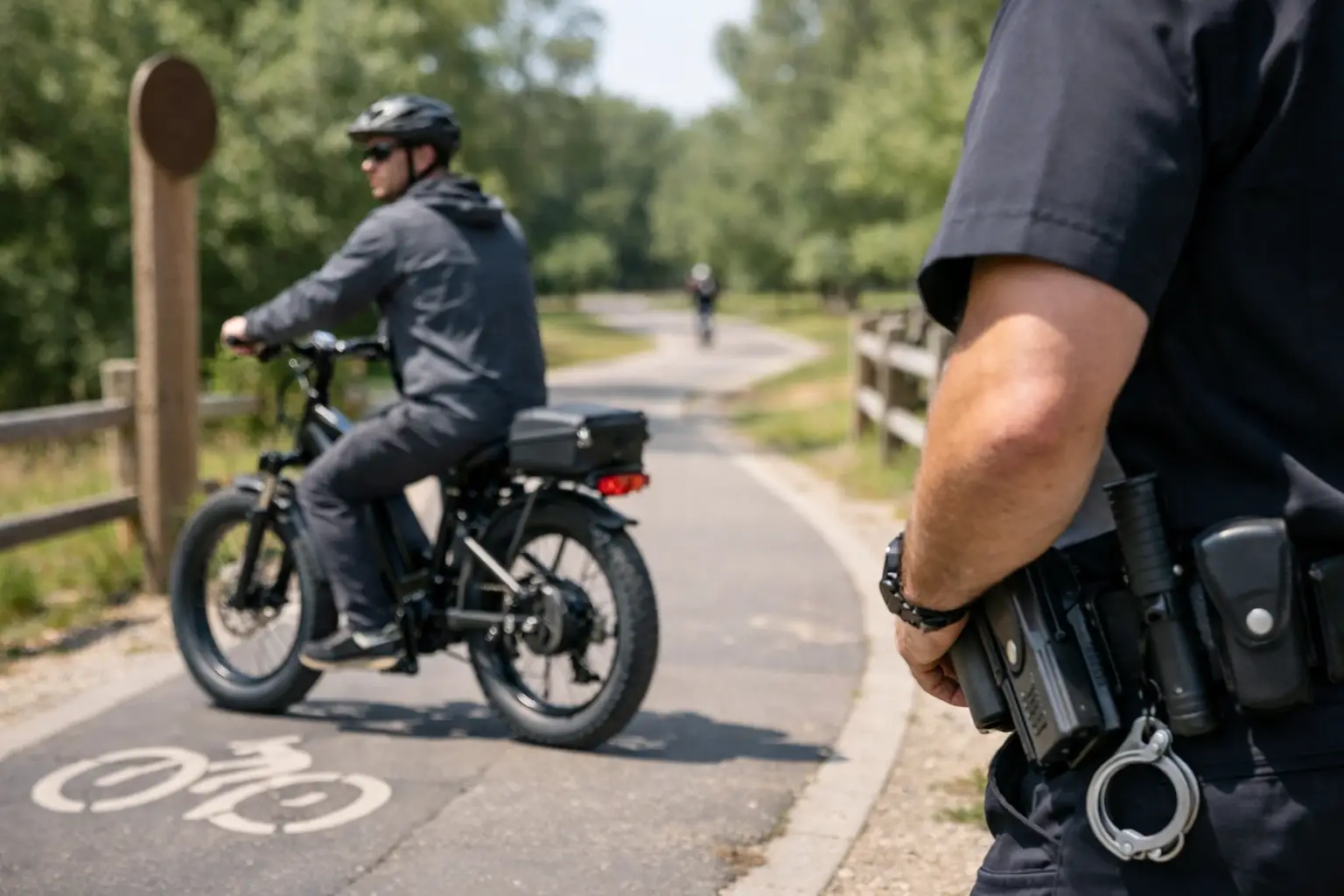
The short answer: electric bikes are legal on many bike paths, but not all of them. Whether you can ride depends on your e-bike’s class, the path manager’s rules, and the laws where the trail is located. A Class 1 e-bike is often allowed where regular bicycles are allowed, while throttle-equipped Class 2 bikes and faster Class 3 bikes may face tighter limits.
That distinction matters before you enter a crowded greenway or a signed multiuse trail. A bike path can cross city, county, state, federal, and private property in a single ride. The rule at one trailhead may not apply two miles later.
Are electric bikes legal on bike paths under US law?
There is no single nationwide rule that answers whether electric bikes are legal on bike paths. Federal law helps define certain low-speed electric bicycles for consumer-product purposes, but it does not create a universal right to use every trail, sidewalk, bike lane, or path.
In practice, access is usually decided at the state and local level. A state may set e-bike classes and default access rules. Then a city parks department, county trail authority, transit agency, state park, wildlife refuge, or other land manager may adopt more specific restrictions for paths it controls.
The practical rule is simple: treat a bike path like a managed facility, not an automatic extension of the road. If signs, posted regulations, or a trail operator say e-bikes are prohibited or limited to a certain class, follow that rule even if your state generally permits e-bikes elsewhere.
Your e-bike class usually determines access
Most states use a three-class system, although the details and trail-access rules still vary. Check the permanent label on your e-bike’s frame or consult the owner’s manual. The label commonly identifies the class, motor wattage, and top assisted speed.
| E-bike class | How assistance works | Common maximum assisted speed | Typical bike-path access |
|---|---|---|---|
| Class 1 | Pedal assist only | 20 mph (32 km/h) | Often allowed where bicycles are allowed, subject to local rules |
| Class 2 | Throttle and/or pedal assist | 20 mph (32 km/h) | Often allowed, but may be restricted on some natural-surface or local trails |
| Class 3 | Pedal assist only | 28 mph (45 km/h) | More frequently restricted from shared paths and some off-street trails |
A Class 1 bike stops providing motor assistance when you stop pedaling or reach 20 mph (32 km/h). A Class 2 bike can provide power without pedaling, up to its legal assisted limit. A Class 3 bike can assist while pedaling to 28 mph (45 km/h), which is why many agencies limit it to roads, bike lanes, or designated corridors rather than busy recreational paths.
These are general descriptions, not a guarantee of access. Some places allow all three classes on paved shared-use paths. Others allow only Class 1, prohibit throttle use, impose a lower trail speed limit, or prohibit every motorized device. A trail rule can be more restrictive than the capability printed on your bike.
“Bike path” can mean several different things
The name of the facility does not always tell you the rule. A paved path beside a roadway, a rail trail, a park greenway, and a mountain-bike trail may all be called bike paths, yet have different managers and regulations.
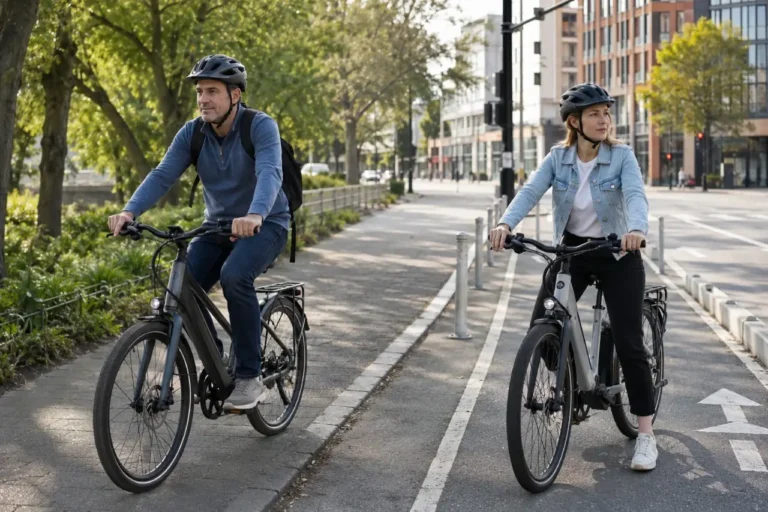
A paved, shared-use path is commonly open to conventional bicycles, walkers, runners, strollers, wheelchairs, and sometimes e-bikes. Because people travel at very different speeds, the posted speed limit may be far below your e-bike’s maximum assisted speed.
Natural-surface trails often have different concerns. Land managers may limit e-bikes to specific routes to protect trail surfaces, reduce conflicts with hikers and horses, or follow conservation rules. Do not assume that a mountain bike’s access means an electric mountain bike has the same access.
Sidewalks are separate from bike paths. A city may permit e-bikes on a multiuse path but prohibit riding on sidewalks, especially in business districts. Bike lanes are also separate facilities and may be governed by state traffic law rather than park or trail rules.
Check the rule before you ride
A quick check can prevent a citation, an awkward encounter with trail staff, or a forced turnaround. Use this process before riding an unfamiliar route.
- Identify your e-bike’s class. Look for the frame label. If the bike has been modified, the original label may no longer reflect how it operates. Do not rely on a seller’s description or assume that every e-bike with pedals is a Class 1 bike.
- Find the agency that manages the path. Look at trailhead signs, park maps, municipal recreation information, or the name displayed on route markers. The operator may be a city, county, park district, state agency, or federal land manager.
- Read posted rules at the access point. Signs may use terms such as “no motorized vehicles,” “Class 1 e-bikes only,” or “e-bikes permitted on paved trails.” A no-motorized-vehicles sign is not always self-explanatory because e-bike treatment varies by jurisdiction. Look for e-bike-specific language when available.
- Confirm speed and behavior requirements. Permission to use a path does not mean you may ride at your bike’s top assisted speed. Many shared paths require riders to travel at a safe speed, yield to pedestrians, and give an audible warning before passing.
- Check again when the route changes. A path can enter another jurisdiction or connect to land with separate rules. New signs take priority over assumptions from the earlier section.
If official information is unclear, contact the managing agency before your ride. Ask about your specific e-bike class, whether throttle operation is permitted, and whether the rule differs on paved versus natural-surface routes. Keep in mind that agency staff can explain their policy, but only qualified legal counsel can provide legal advice for an individual situation.
Ride legally even when e-bikes are allowed
Legal access is only the starting point. On a shared path, speed and passing behavior often determine whether an e-bike ride feels safe and respectful to everyone else.
Set your assist level lower when the path is busy, narrow, wet, or lined with driveways. Pedal assist can make it easy to reach 15 to 20 mph (24 to 32 km/h) quickly, but that may be too fast near children, dogs on leashes, blind corners, or older walkers. A slower pace gives you more time to brake and reduces the surprise factor for other path users.
Yield as required by local rules, and in the absence of a specific rule, give walkers and slower users plenty of space. Announce your pass early with a bell or a clear verbal warning such as “passing on your left.” Then wait for a safe opening. Do not squeeze between people, pass into an oncoming curve, or use the throttle to accelerate around congestion.
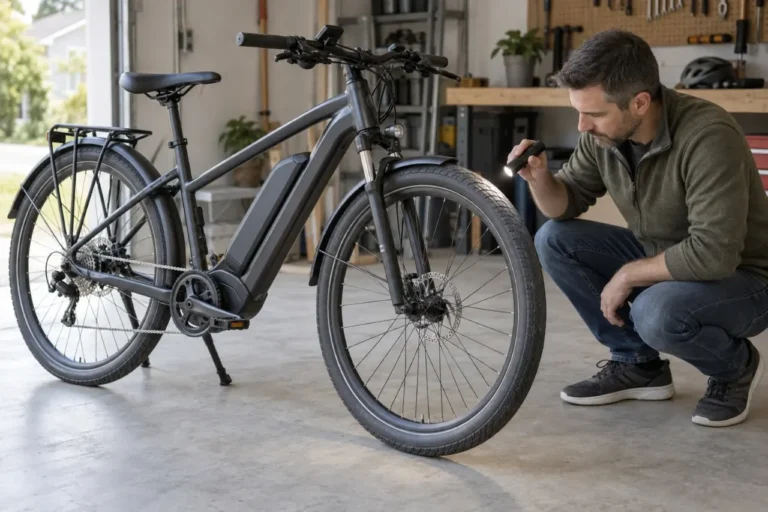
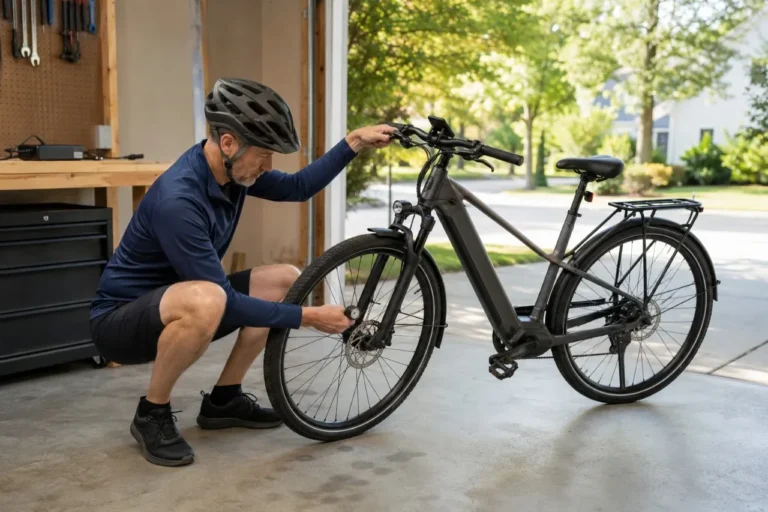
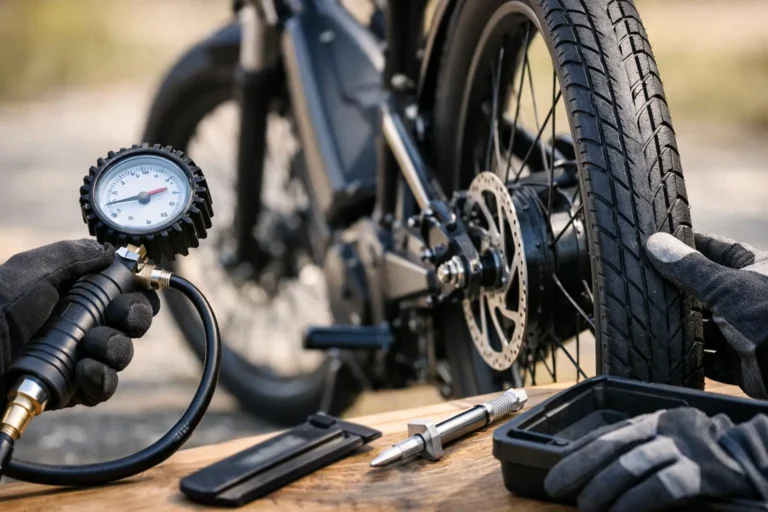
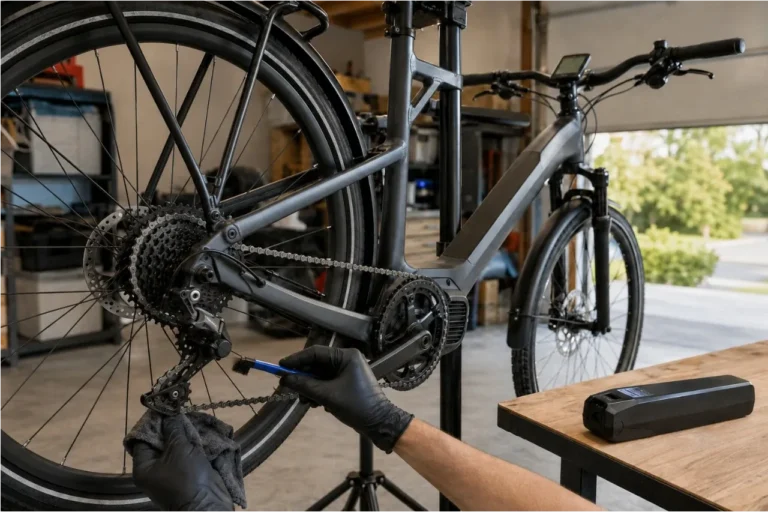
Keep both hands available for braking in crowded areas. Before a longer trail ride, check tire pressure, brake response, lights, and battery charge. A heavy e-bike takes more distance to stop than many standard bicycles, especially on loose gravel or wet pavement.
Watch for e-bikes that fall outside the usual classes
Not every electric two-wheeler is legally an e-bike. A bike that assists beyond the applicable class speed, has a motor more powerful than the state’s e-bike definition allows, lacks operable pedals, or has been altered to defeat its speed limit may be treated as a moped, motor-driven cycle, or another motor vehicle.
That can change where it may be ridden and may trigger requirements for registration, licensing, insurance, helmets, or roadway use. It can also remove access to paths that allow standard e-bikes. Do not change speed settings, remove limiters, or use an off-road mode on public paths unless the manufacturer and applicable law clearly allow the resulting configuration.
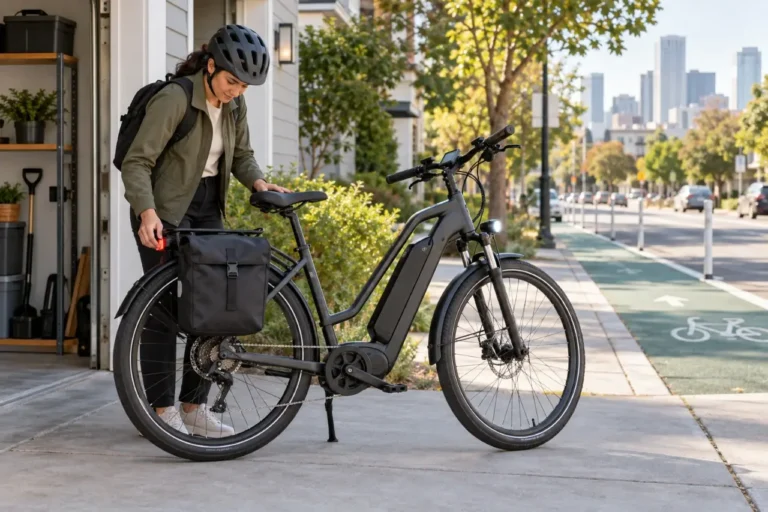
Cargo e-bikes and adaptive e-bikes deserve a separate mention. Their size does not automatically make them unlawful, but a wide bike, trailer, or long cargo frame may be difficult to operate safely on a narrow path. Consider path width, turning space, crowd levels, and posted vehicle-width rules before entering.
A practical rule for every trailhead
When the rule is uncertain, pause before riding. Confirm your e-bike class, read the signs, and choose the lower speed that fits the people and conditions around you. That small habit protects access for e-bike riders and makes shared paths better for everyone who uses them.