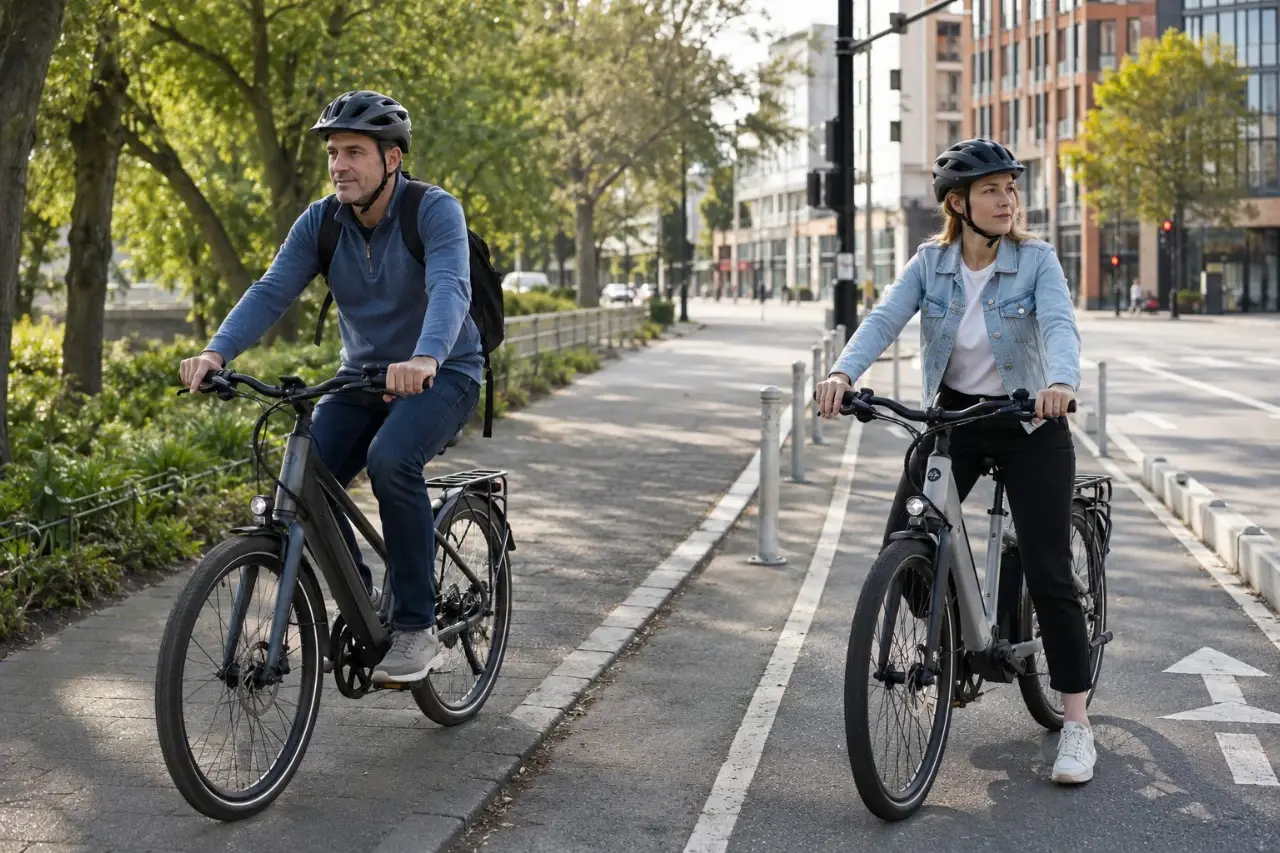
The main difference between a Class 1 and Class 2 e-bike is how the motor can deliver power. Under the three-class framework used in many US jurisdictions, a Class 1 e-bike assists only while you pedal, up to 20 mph (32 km/h). A Class 2 e-bike can propel the bike without pedaling—usually through a throttle—and its motor assistance also ends at 20 mph.
Neither class is automatically better. Class 1 often suits riders who want a bicycle-like feel and the broadest possible access to permitted paths. Class 2 can be more convenient for stop-and-go riding, loaded starts, or riders who benefit from occasional motor-only help. Local rules and the bike’s actual configuration still control where you may ride.
Class 1 vs Class 2 at a Glance
| Feature | Class 1 e-bike | Class 2 e-bike |
|---|---|---|
| How the motor engages | Only while the rider pedals | May propel the bike without pedaling |
| Typical control | Pedal-assist levels | Throttle, often with pedal assist as well |
| Motor-assistance limit | 20 mph (32 km/h) | 20 mph (32 km/h) |
| Starting from a stop | Rider must begin pedaling | Throttle may help the bike begin moving |
| Common fit | Pedal-focused riding and routes favoring Class 1 | Stop-and-go trips and occasional no-pedal assistance |
In this common framework, the motor stops helping at the class limit. The bicycle may still go faster through your own pedaling or while coasting downhill, subject to posted speed limits and local law.
These class definitions are not the same as the federal consumer-product definition of a “low-speed electric bicycle.” Federal law describes a two- or three-wheeled vehicle with fully operable pedals, a motor of less than 750 watts, and a motor-only maximum speed below 20 mph on a paved, level surface with a 170-pound rider. That definition helps determine federal product-safety treatment; it does not create one nationwide rule for road, sidewalk, path, or trail access.
What Defines a Class 1 E-Bike?
A Class 1 motor provides assistance only while the rider is pedaling and stops assisting when the bike reaches 20 mph. Stop pedaling, and the motor should stop adding power after the system’s normal cutoff response.
The ride can feel closer to a conventional bicycle because your legs initiate the assistance. The class does not determine smoothness, however. A torque sensor responds to pedal force, while a cadence sensor detects pedal movement; programming and gearing also affect how the bike feels.
Class 1 is a practical choice when you prefer to pedal throughout the ride, want fewer handlebar controls, or regularly use routes that allow pedal-assist bikes but restrict throttles. A Class 1 label is not a trail pass, however. The manager of a city path, park, public land unit, or private trail may set a narrower rule.
What Defines a Class 2 E-Bike?
A Class 2 motor may be used to propel the bicycle without pedaling and cannot provide assistance at or above 20 mph under the common definition. The rider normally requests motor-only power with a thumb lever, trigger, or twist throttle.
Many Class 2 e-bikes also have pedal assist, but the defining feature is motor-only capability. Read the manual because some throttles work from a standstill, while others engage only after the bike begins moving or a particular assist level is selected.
Class 2 can be useful when frequent stops make repeated starts difficult, when a loaded bike needs controlled help from a standstill, or when occasional motor-only support would help with fatigue or limited mobility. A throttle does not make an e-bike more powerful by itself. Hill performance still depends on torque, gearing, total load, traction, and battery condition.
For a deeper explanation of how the controls behave, see pedal assist versus throttle operation.
How the Two Classes Feel in Everyday Riding
Starting and low-speed control
Class 1 requires you to turn the pedals before the motor assists. On a cadence-sensor bike, there may be a brief delay before power arrives. Selecting an easy gear before stopping can make the next start smoother.
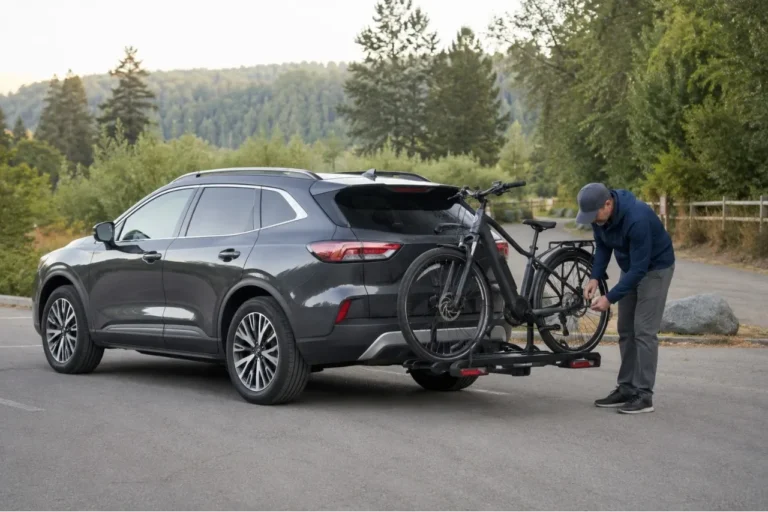
Class 2 can provide immediate help through the throttle, which may be useful at a stop or on an uphill start. That convenience also adds a control you can activate accidentally. A bumped or sticky throttle can make the bike surge while you are mounting it, walking beside it, or loading it onto a rack.
Turn a throttle-equipped e-bike off before moving it by hand when practical. Keep bags, gloves, phone mounts, and other accessories from interfering with the throttle. If the throttle does not return freely to its resting position, do not ride until the problem has been corrected by the manufacturer or a qualified e-bike mechanic.
Rider effort and battery range
Class 1 requires pedaling, but a high assist level can still reduce rider effort substantially. Class 2 riders may pedal most of the time and reserve the throttle for starts. Doing so does not normally make a labeled Class 2 bike Class 1 for access purposes; multi-class systems and state-specific rules can differ.
Class also does not determine range. Battery capacity, speed, terrain, weather, tire pressure, load, and rider effort all matter. Frequent throttle-only use may consume more energy, but a Class 2 bike is not automatically less efficient.
Where Can You Ride Class 1 and Class 2 E-Bikes?
Legal information checked August 19, 2026. The three-class definitions are a common model, not a single national operating law. State traffic rules, city ordinances, park policies, trail-manager decisions, and private-property rules can all affect access. Requirements for labels, helmets, minimum age, registration, licensing, and insurance also vary.
The National Park Service uses the three class definitions but allows individual superintendents to decide which roads and trails are open to particular classes. In NPS locations not open to public motor vehicles, using the motor exclusively for an extended period without pedaling is prohibited. State treatment can also change: New Jersey’s current rules require e-bike registration and distinguish low-speed electric bicycles from motorized bicycles.
Before an unfamiliar ride, identify the bike’s labeled class, speed limit, and throttle capability. Check current state rules, then find the agency or organization managing the route and read its official policy, alerts, and posted signs. Ask the manager if your specific configuration is not clearly addressed.
GoEBikeLife’s federal and state e-bike law guide explains the legal layers. For destination planning, also review the guides to e-bike trail access and bike-path rules for electric bikes.
How to Confirm Your E-Bike’s Class
Do not classify a bike from its appearance or advertised top speed alone. Use this sequence:
- Find the manufacturer’s label, if present. It may list the class, assisted speed, and motor wattage, although requirements vary.
- Read the manual and official specifications. Confirm whether the motor works only while pedaling or can use a throttle.
- Verify the assisted-speed cutoff. Use the documented setting; do not alter controller settings or bypass limits.
- Check for multi-class operation. Use only approved modes and confirm how local law treats the bike’s maximum capability.
- Resolve mismatches. Contact the manufacturer if behavior differs from the documentation. Stop riding after unexpected acceleration, continued power after releasing the control, or visible wiring damage.
Which Class Should You Choose?
Choose Class 1 when pedaling is central to the experience and your route options favor pedal-assist bikes. Choose Class 2 when motor-only starts would provide meaningful convenience and your normal routes allow throttle-equipped e-bikes.
Also compare fit, weight, brakes, tires, low-speed response, battery capacity, load ratings, documentation, and local rules. Class alone does not determine which bike is easier to control.
If you are new to either class, practice starting, stopping, turning, and changing assist levels in an open, low-traffic area. The beginner’s guide to riding an e-bike covers the core habits before you enter traffic.
Frequently Asked Questions
Are Class 1 and Class 2 e-bikes the same speed?
Under the common three-class framework, both stop providing motor assistance at 20 mph (32 km/h). You may pedal or coast faster, but local speed limits and traffic rules still apply.
Does using only pedal assist make a Class 2 bike a Class 1?
Usually not. Access rules commonly consider the bike’s labeled class and capabilities, not the control you happen to use during one ride. Multi-class bikes and state-specific laws can create exceptions, so verify the applicable rule.
Can a Class 2 e-bike go on the same trails as a Class 1?
Sometimes, but not always. A trail manager may allow both classes, permit Class 1 only, or prohibit all e-bikes. Check the current rule for the specific route before riding.
Which class has better range?
Neither class has an automatic range advantage. Battery capacity, speed, terrain, temperature, tires, load, and how much work the rider contributes matter more than the class number alone.
The Bottom Line
Class 1 and Class 2 e-bikes share the same common 20 mph motor-assistance limit. The practical difference is motor-only capability: Class 1 assists only while you pedal, while Class 2 can propel the bike without pedaling.
Choose based on the controls you can use confidently and the rules for your regular routes. Keep the bike in its manufacturer-approved configuration, practice low-speed handling, and verify local access before every unfamiliar ride.