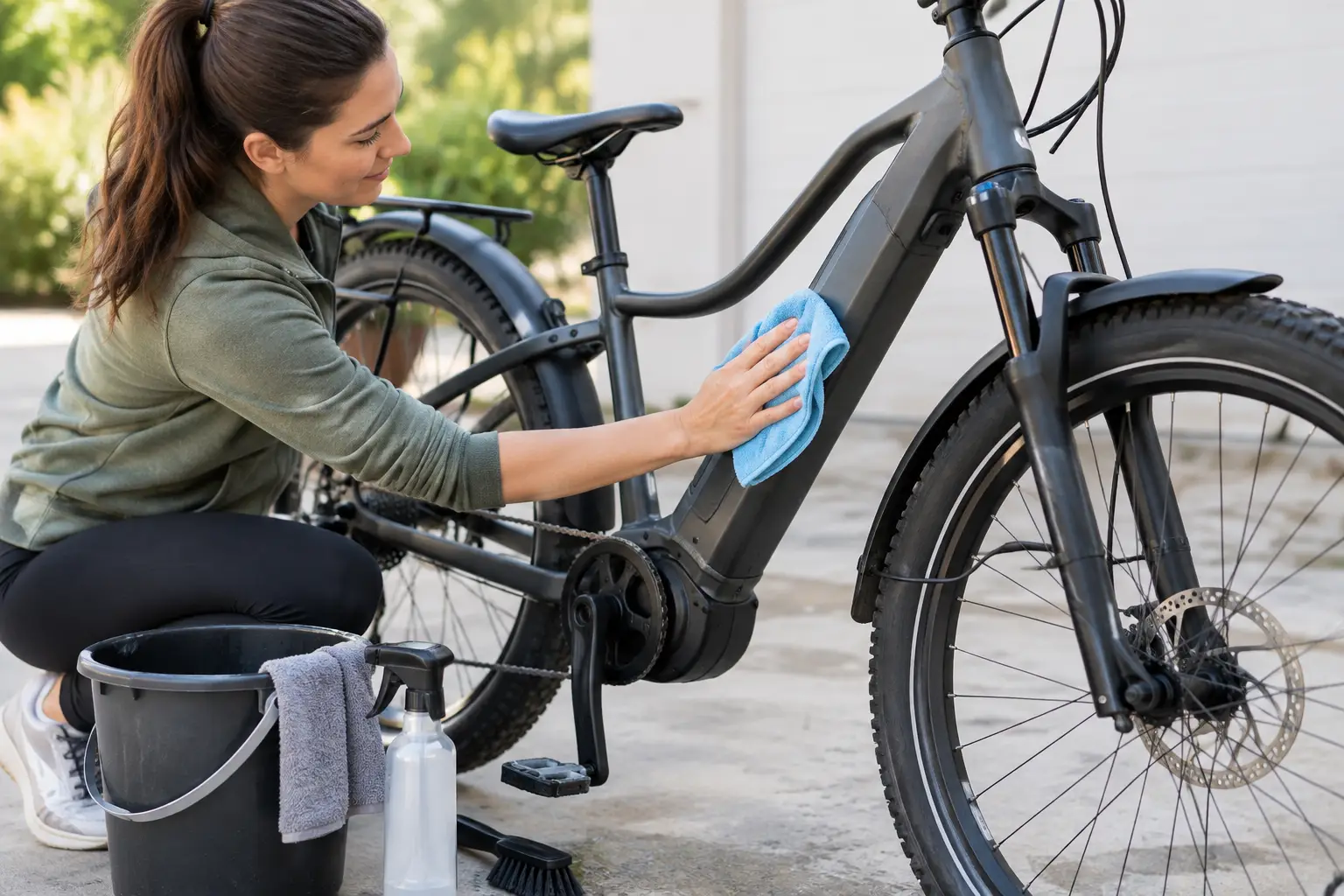
Mud on the tires is one thing. A direct blast of water at a display, battery connection, or wheel bearing is another. The most common e-bike cleaning mistakes to avoid come from treating an electric bike like a hose-friendly mountain bike or a household appliance. Clean gently, control water exposure, and protect the components that power, stop, and move your bike. The safest approach is to follow your e-bike manufacturer’s cleaning instructions first because water-resistance ratings and component designs vary by model.
For most riders, a basic wipe-down after wet or dirty rides and a more complete cleaning every few weeks is enough. Your owner’s manual always comes first, especially for instructions on removing the battery, cleaning electrical contacts, and the bike’s water-resistance limits.
1. Using a pressure washer or high-pressure hose
A pressure washer can force water and grit past seals that normally handle rain and road spray. That includes seals around wheel hubs, the bottom bracket, headset bearings, suspension pivots, and motor area. On an e-bike, high pressure can also reach electrical connectors, the display, switches, and charging port.
Water resistance is not the same as pressure-washer resistance. Even if your bike is designed for wet-weather riding, the manufacturer may specifically warn against high-pressure cleaning.
Use a bucket of clean water, a soft sponge or brush, and a gentle flow from a garden hose if your manual permits it. Better yet, wet the cloth instead of spraying sensitive areas directly. If you use a hose, keep the nozzle at a distance and never aim it at bearings, cable entry points, the motor, battery mount, display, or charging port.
| Preview | Product | Price | |
|---|---|---|---|

| Park Tool BCB-4 Bike Cleaning Brush Set | $27.68 $25.85 | View on Amazon |
2. Cleaning while the battery is installed
Leaving the battery on may seem more convenient, but it makes it harder to clean the frame around the battery mount without exposing connection points to moisture. If your manufacturer allows battery removal, switch the bike off, remove the battery, and close any protective cover over the frame contacts before cleaning.
Do not spray or soak the battery. Wipe its case with a lightly damp cloth, then dry it. Keep water, cleaning chemicals, and loose debris away from the battery terminals and the bike-side contacts.
Some e-bikes have integrated batteries that are not intended to be removed by the owner. In that case, turn the bike off, make sure the charge-port cover is closed, and use a damp cloth around the battery area rather than direct water. Never try to open the battery case or clean inside electrical compartments.
3. Washing a hot motor, battery, or brake rotor
Finishing a long climb and immediately rinsing the bike is not a great habit. Motor housings, brake rotors, and battery packs can be warm after riding, especially on hot days, steep hills, or heavy cargo trips. Allowing hot components to cool before cleaning is a practical precaution. Water or cleaning products on brake rotors can temporarily reduce braking performance until the braking surfaces are clean and dry.
Park the bike in a shaded, ventilated place and let it cool first. The waiting period also gives mud time to soften, which makes it easier to remove without aggressive scrubbing.
This matters even more after a ride in winter slush or on roads treated with salt. Let the bike cool, then clean off the salt residue promptly. Salt residue left on fasteners, spokes, drivetrain parts, and connectors can contribute to corrosion over time.
4. Getting degreaser on the brakes
Chain lubricant and degreaser belong on the drivetrain, not the brake system. A small amount of oil on a disc brake rotor or brake pad can cause noise, reduced stopping power, and persistent contamination. Rim brakes have the same issue if cleaning products reach the braking surface of the rim or the pads.
Before cleaning the chain, place a clean rag behind it to catch runoff. Apply degreaser sparingly to a brush or rag instead of spraying broadly across the bike. Keep it away from rotors, calipers, pads, and tires.
If you accidentally get lubricant or degreaser on a rotor, stop riding until you have addressed it according to the brake manufacturer’s instructions. A qualified bike mechanic can help if brakes squeal, feel weak, or continue to smell or slip after cleaning. Do not assume a few hard stops will fix contaminated pads.
5. Scrubbing electrical areas with wet tools
A muddy frame can be cleaned with a damp sponge. Electrical connection points need a lighter touch. Avoid pushing wet brushes, cotton swabs, or rags into the charging port, battery cradle, display buttons, wiring connections, or motor cable openings.
First, use a dry, soft brush or clean microfiber cloth to remove loose dust around these areas. Then wipe only the exterior surfaces with a barely damp cloth. Let everything dry fully before reinstalling the battery or connecting a charger.
If you see corrosion, bent pins, damaged seals, loose wiring, or moisture that appears trapped in a connector, stop using the bike and contact the manufacturer or a qualified e-bike service provider. Do not scrape terminals or apply random sprays to electrical contacts unless the manufacturer specifically approves the product and method.
6. Skipping the drivetrain after cleaning
A clean chain is not automatically a protected chain. Washing removes grime, but it can also strip away lubricant. Riding with a dry chain can create noise, poor shifting, and faster wear on the chain and gears.
Once the drivetrain is clean and dry, apply bicycle-specific chain lubricant one small drop at a time to the chain rollers. Turn the pedals backward by hand to distribute it, then wipe off the excess from the outside of the chain. Excess lube attracts grit and is more likely to migrate toward the brakes.
The right lubricant depends on where you ride. A wet-condition lube can last longer in rain but may collect more dirt in dry, dusty conditions. A lighter dry-condition lube can keep a cleaner drivetrain but may need more frequent reapplication. Follow the lubricant label and your bike maker’s maintenance guidance.
| Preview | Product | Price | |
|---|---|---|---|

| Muc-Off chain oil Dry Lube 120ml | $14.66 $14.00 | View on Amazon |
7. Forgetting the small places where grit collects
Dirt does not only live on the frame. It settles around the derailleur pulleys, cassette, chainring, fenders, kickstand, spoke crossings, pedal bodies, and the underside of the battery area. On commuter and utility e-bikes, check cargo-rack mounting points and trailer-hitch hardware too.
You do not need to make every ride a detailing project. Focus on places where buildup affects movement, visibility, or safety. Clear mud from around tires and fenders so it cannot rub the tire. Wipe lights and reflectors clean. Check that the brake calipers and wheel areas are free of sticks, packed debris, or loose material.
8. Drying poorly before charging or storing
An e-bike can look dry while water remains around the battery mount, charging port cover, display seams, and bolt heads. Putting a wet bike straight into a tight storage cover, garage corner, or vehicle can hold moisture against metal parts.
After cleaning, wipe the bike with clean towels and leave it in a dry, ventilated spot. Open no electrical covers unless the manual tells you to. Wait until the bike, battery compartment exterior, and charge port area are completely dry before installing the battery or charging. For more battery-related safety guidance, see our guide on common e-bike battery problems.
Avoid charging immediately after a wet ride or wash. The battery and charger should be dry and at a temperature allowed by the manufacturer. If either item was exposed to more water than normal rain or splash conditions, follow the manufacturer’s guidance before using it.
| Preview | Product | Price | |
|---|---|---|---|

| Chemical Guys, Megalodon Twisted Loop Microfiber Drying Towel, 24 x 36 in |
$39.98 | View on Amazon |
9. Treating cleaning as separate from inspection
Cleaning is one of the easiest times to spot a problem before it becomes a roadside issue. As you wipe the bike down, look for tire cuts, embedded glass, loose bolts, frayed cables, cracked reflectors, worn brake pads, and chain rust. Spin each wheel and listen for rubbing or unusual noise.
You can also check that the battery is secure in its mount, the charging-port cover closes properly, and the display and lights work after the bike is dry. If something feels loose, makes a new noise, or affects braking or steering, do not ride until it has been checked.
A clean e-bike is not about making it look showroom-ready. It is a simple way to protect expensive parts, keep safety systems visible, and notice wear while the fix is still small. Keep the water gentle, the brake surfaces clean, and the battery area dry, and your regular cleaning routine will do far more good than harm.
GoEBikeLife publishes independent e-bike reviews, comparisons, and practical buying guides. Some links on this page are affiliate links. If you make a purchase through an eligible link, we may earn a commission at no additional cost to you.