Your ebike runs through rain puddles, muddy trails, salty winter roads, and dusty paths. Over time, that grime builds up on the frame, drivetrain, and wheels. Cleaning your ebike regularly helps the components last longer, keeps the chain running smoothly, and makes it easier to spot wear or damage before it becomes a real problem.
Cleaning an ebike is safe when you use low-pressure water, a mild cleaner, and keep water away from the battery, display, motor area, and electrical connectors. It is not the same as hosing down a regular bicycle without a second thought. The electrical components need attention and protection during the process.
This guide walks you through every step: preparation, tools, washing, drivetrain care, drying, and what to check before your next ride.
Key Takeaways
- You can safely wash an ebike with low-pressure water, but protecting electrical components is the most important part of the process.
- Always power off the bike, remove the battery if possible, and let the bike dry completely before charging.
- Cleaning the drivetrain and relubricating the chain after every wash keeps shifting smooth and prevents premature wear.
Before You Start
Proper preparation makes the cleaning process safer and faster. Power off the bike, remove what can be removed, and give the electrical contact points a quick visual check before any water touches the frame.
Let The Bike Cool Down And Power It Off
If you just finished a ride, give the bike 10 to 15 minutes before cleaning. The motor and battery generate heat during use. Washing a warm motor area or exposing a warm battery to cold water is not ideal. Once cooled, power the bike completely off using the main power button.
Remove The Battery If Possible
Most mid-range and higher-end ebikes have a removable battery. Take it off before you start. This keeps water out of the battery slot and protects the contact pins from moisture. Store the battery indoors or somewhere dry while you clean the bike.
Check The Charging Port, Display, And Electrical Connectors
Before washing, close or cover the charging port cap if your bike has one. Check that any port covers or rubber gaskets are seated properly. If the display has a protective cover, use it. If not, plan to wipe it down carefully rather than rinse it.
Set Up A Stable Workspace
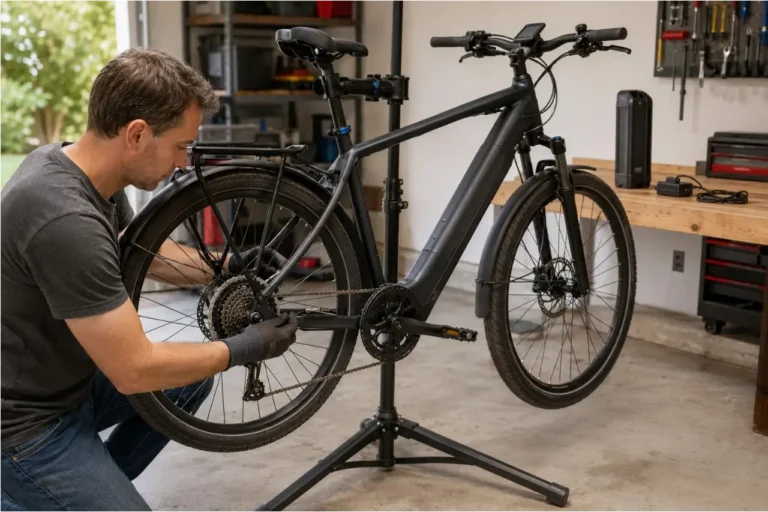
A bike stand makes cleaning much easier and keeps the bike from tipping over while you scrub wheels and the drivetrain. If you do not have a stand, lean the bike against a wall on a flat, stable surface. Work in a space where water can drain freely, like a driveway or outdoor area.
Tools And Supplies To Gather
You do not need anything specialized to clean an ebike. Most of what you need is inexpensive and reusable. Having everything ready before you start makes the process more efficient.
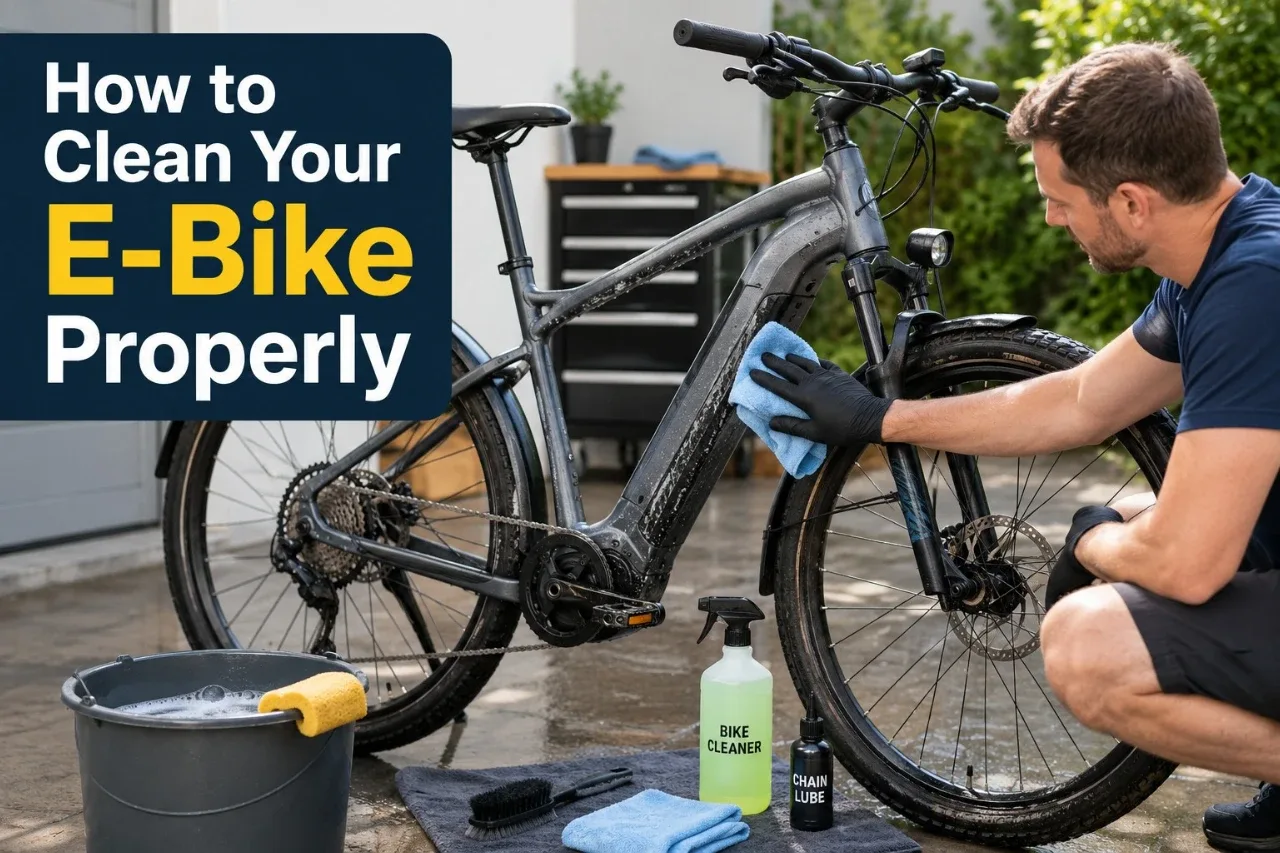
Basic Washing Supplies
- Bucket filled with warm water
- Mild bike-specific cleaner or a small amount of dish soap
- Soft sponge or wash mitt
- Soft-bristled brush for tires, frame crevices, and hard-to-reach spots
- Microfiber cloths for drying and wiping down sensitive areas
- Garden hose set to a gentle flow (no pressure nozzle)
Drivetrain-Specific Cleaning Supplies
- Bike-specific degreaser for the chain, cassette, and derailleur
- A narrow drivetrain brush or old toothbrush for the cassette and chainring
- A chain scrubber tool if you want a more thorough chain clean without removing it
- Chain lubricant appropriate for your riding conditions (wet lube for wet weather, dry lube for dry conditions)
A product like Muc-Off Bio Drivetrain Cleaner is biodegradable, safe for metal and rubber seals, and works well poured into a chain cleaner or applied directly to the cassette and derailleur.
What To Skip
- Pressure washers: even low settings force water into bearings, connectors, and seals.
- Kitchen degreasers or solvent-based sprays: they can strip bearing grease, damage rubber seals, and leave residue on brake rotors.
- Abrasive scrub pads: they scratch painted frames and plastic components.
- Compressed air: it can push moisture deeper into ports and connectors rather than removing it.
Safe Washing Method Step By Step
Working through the bike in a logical order saves time and avoids spreading grime back onto areas you have already cleaned. Start dirty and finish clean.
Knock Off Heavy Mud First
If the bike came back from a muddy ride, do not scrub dry mud directly into the frame. Use a gentle stream of water to loosen and rinse off large clumps of mud first. Let the water do the work. This prevents scratching the frame and makes the next steps faster.
Rinse With Gentle Water Only
Use a garden hose on a low, gentle flow or pour water from a bucket over the frame. Avoid pointing the stream directly at the charging port, battery slot, motor housing, display, or any connector. A wide, downward spray over the frame, wheels, and tires works well. This first rinse removes loose dirt before you apply any cleaner.
Wash The Frame, Fork, And Contact Points Carefully
Apply your bike cleaner to a soft sponge or cloth and work over the frame, fork, stem, handlebars, and seatpost. Pay attention to contact points like where the battery sits, around cable entry points, and under the bottom bracket. Wipe these areas carefully rather than scrubbing with a soaked sponge.
Scrub Wheels And Tires Without Soaking Sensitive Areas
Use a soft-bristled brush with a small amount of cleaner to scrub the tire sidewalls and tread. For the wheel rims and spokes, a sponge or cloth works fine. Keep water away from the hub motor if your bike is hub-driven. A light wipe rather than a direct spray is enough for the hub area.
Clean The Battery Mount And Motor Area With A Damp Cloth
Do not rinse these areas. Use a damp microfiber cloth to wipe down the battery mount, any exposed wiring, the motor housing, and the area around the controller box. Wring the cloth out well so it is damp, not dripping. This is enough to remove dirt without introducing moisture into sensitive areas.
Dry The Bike Before Moving On
Before you move to drivetrain cleaning, dry the frame with a clean microfiber cloth. This prevents water from mixing with degreaser and diluting its effectiveness. It also makes it easier to see what still needs attention on the frame and wheels.
Drivetrain And Brake Care Without Causing Problems
The drivetrain is the part of your ebike that gets the dirtiest fastest and also the part most likely to cause shifting problems or premature wear if neglected. It needs specific cleaning products and careful technique to avoid cross-contaminating the brakes.
Chain, Cassette, And Derailleur Cleaning
Apply a bike-specific degreaser to the chain, rear cassette, and derailleur pulleys. Use a drivetrain brush or old toothbrush to work the degreaser into the cassette cogs and around the derailleur. For the chain, a chain and drivetrain cleaning kit makes the job faster and less messy, using rotating brushes to clean all sides of the chain without removing it.
Applying Degreaser Without Reaching The Brakes
This is the most important safety step in drivetrain cleaning. Apply degreaser carefully and keep it away from the brake rotors and pads. Even a small amount of degreaser or chain lube on a disc brake rotor can reduce braking power significantly. Apply degreaser with a brush rather than spraying freely. If any degreaser gets on a rotor, wipe it off immediately with a clean, dry cloth.
Relubricating The Chain The Right Way
After degreasing, rinse the chain lightly, then let it dry before applying lubricant. Apply chain lube one drop per link while slowly rotating the pedals backward. Let the lube sit for a minute, then wipe off the excess with a clean cloth. Excess lube attracts dirt and makes the chain dirtier faster. Match your lube to conditions: wet lube for rain or winter, dry lube for dry and dusty riding.
Keeping Brake Rotors And Pads Free Of Contamination
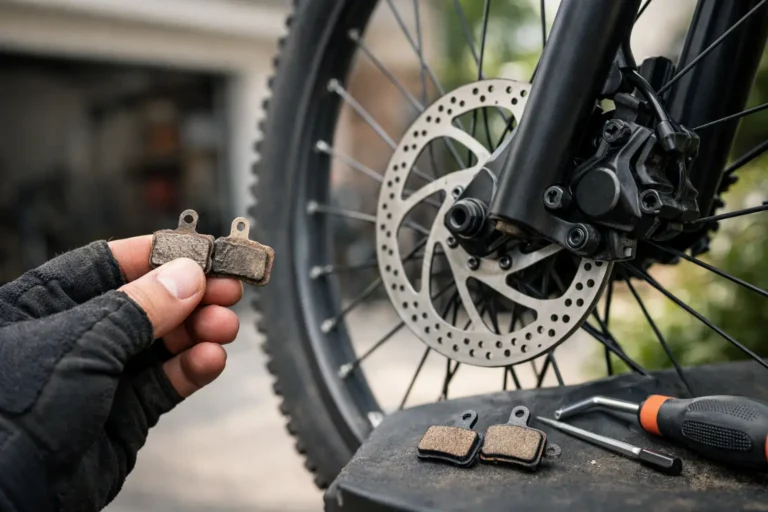
Disc brake rotors should stay clean and dry. If you notice squealing after washing or lubing the chain, there may be contamination on the rotor or pads. You can clean a rotor with isopropyl alcohol and a clean cloth. Contaminated brake pads, however, often need to be replaced since the contamination absorbs into the pad material.
Drying, Reassembly, And Post-Clean Checks
Rushing through drying is the most common mistake riders make after washing. Taking a few extra minutes here protects the electrical components and prevents corrosion.
Drying The Frame, Connectors, And Battery Area
Use a dry microfiber cloth to wipe down the entire frame, including the battery slot contacts, charging port area, display, and any exposed wiring. Open any port covers and let them air out. For areas that are hard to reach with a cloth, simply allow air drying time. Do not use a heat gun or hair dryer near electrical components.
When It Is Safe To Reinstall The Battery
Wait until the battery slot, contact pins, and surrounding area are completely dry to the touch. If you can see or feel any moisture, give it more time. In humid conditions or after a thorough wash, waiting 30 minutes of air drying after toweling off is a reasonable baseline. Once reinstalled, do not plug in the charger immediately. Allow the battery and bike to reach room temperature first if you brought either inside from the cold.
What To Inspect Before The Next Ride
Run through a quick check before your first post-wash ride:
- Battery: seated correctly, locking mechanism engaged
- Display: powers on without error codes
- Brakes: squeeze both levers and check for firm, consistent feel
- Chain: runs quietly through the drivetrain with no skipping
- Tires: no debris embedded in the tread from cleaning
- Cables and connectors: no visible moisture, no loose housings
- Lights: front and rear lights functioning
Common Mistakes To Avoid
Most cleaning-related ebike damage comes from a few repeated mistakes. Knowing what to avoid is as important as knowing the correct steps.
Using A Pressure Washer Or Heavy Spray
A pressure washer forces water past seals, into bearings, through connector gaskets, and into the motor housing. Even at a low setting, the pressure is more than an ebike’s components are designed to handle. The damage is often not immediate, but repeated exposure leads to corroded connectors, worn bearings, and eventually electrical faults. Stick to a gentle garden hose flow or a bucket and cloth.
Spraying Directly At Electronics And Bearings
Pointing a hose at the display, charging port, motor, controller box, or wheel bearings concentrates water right where it should not go. Use a damp cloth for these areas instead of any direct water stream. The headset, bottom bracket, and wheel hubs are also worth protecting since water intrusion shortens bearing life.
Charging Too Soon After Washing
Plugging in the charger before the charging port and battery contacts are fully dry creates a risk of a short circuit. Always confirm the port area is dry, the cover is seated properly, and the battery contacts show no moisture before connecting the charger.
Using Harsh Cleaners Or Too Much Degreaser
Automotive degreasers, kitchen degreasers, and solvent-based sprays are too aggressive for ebike components. They can strip grease from bearings, degrade rubber seals, and leave residue that attracts dirt. Use a bike-specific cleaner for the frame and a bike-specific degreaser for the drivetrain. Apply both with a brush or cloth rather than soaking components.
Cleaning Schedule And Long-Term Upkeep
How often you clean your ebike depends on where and how much you ride. A consistent cleaning routine keeps small maintenance tasks from becoming bigger, more expensive ones.
How Often To Clean Based On Riding Conditions
| Riding Condition | Recommended Full Clean |
|---|---|
| Daily urban commuting, dry roads | Every 2 to 4 weeks |
| Mixed terrain, occasional wet roads | After every 2 to 3 wet rides |
| Muddy trails or gravel | After every muddy ride |
| Winter riding with road salt | After every salted-road ride |
| Light recreational use, dry conditions | Every 4 to 6 weeks |
Road salt is particularly corrosive. If you ride through treated winter roads, rinsing the frame and drivetrain promptly after each ride significantly reduces corrosion on metal components.
Quick Wipe-Downs Between Full Washes
Between full washes, a quick wipe-down takes less than five minutes and keeps the bike in much better shape. Use a dry or lightly damp microfiber cloth to wipe the frame, battery casing, and display after each ride. Check the chain for visible dryness or grit and add a drop of lube if needed. This habit makes full cleaning sessions faster and less labor-intensive.
Storage Habits That Help Keep The Bike Cleaner
Storing your ebike indoors or under a waterproof bike cover reduces how dirty it gets between rides and protects it from UV damage, moisture, and temperature swings. If you store the bike in a garage or shed, a breathable cover works better than a sealed one since it allows moisture to escape. Keep the battery indoors if temperatures drop below freezing. GoEBikeLife’s ebike buying guides regularly note that storage reality is an important factor to plan for before purchasing an ebike, especially for apartment riders.
Conclusion
Cleaning an ebike properly is not complicated, but it does require more care than washing a standard bicycle. Protecting the battery, display, motor area, and connectors from direct water exposure is the foundation of safe ebike cleaning. Using the right tools, a low-pressure rinse, and bike-specific products keeps the process straightforward.
Dry the bike fully before reinstalling the battery or charging. Relubricate the chain after every full clean. Run a quick safety check before your next ride. Keeping these steps consistent extends the life of your drivetrain, protects the electrical components, and keeps the bike running reliably through whatever conditions you ride in.
If you want guidance on which ebike to buy or how to maintain specific types of electric bikes, GoEBikeLife’s buyer’s guides and maintenance content are a practical place to start before making a purchase or developing a care routine.
Frequently Asked Questions
What supplies and tools do I need to wash an e-bike safely?
You need a bucket, warm water, a mild bike-specific cleaner or dish soap, a soft sponge, a soft-bristled brush, microfiber cloths, a drivetrain brush, bike-specific degreaser, and chain lubricant. A garden hose set to a gentle flow is useful for rinsing. Avoid abrasive pads, pressure washers, and automotive-grade chemicals.
Can I rinse an e-bike with a garden hose, or should I avoid high-pressure water?
A garden hose on a gentle, low-pressure setting is fine for rinsing the frame, wheels, and tires. Avoid using a pressure washer or a high-pressure spray nozzle. High-pressure water can force moisture past seals and into motors, bearings, connectors, and the battery mount area.
How do I clean and lubricate the e-bike chain and drivetrain without damaging components?
Apply a bike-specific degreaser to the chain, cassette, and derailleur with a brush, then rinse lightly and let it dry. Once dry, apply chain lubricant one drop per link and wipe off the excess. Keep both degreaser and lube away from the brake rotors and pads to avoid contamination.
What parts should I keep dry or cover during washing, such as the battery, display, and motor area?
The charging port, battery slot and contact pins, display, motor housing, controller box, and any exposed electrical connectors should never have water sprayed directly at them. Remove the battery if possible, close port covers, and wipe these areas with a damp cloth rather than rinsing them.
What are the best steps for cleaning an e-bike after riding in mud, rain, or winter road salt?
Rinse off heavy mud with a gentle water flow before scrubbing. For winter salt, rinse the frame and drivetrain promptly after each ride since salt accelerates corrosion on metal parts. After rinsing, follow the full cleaning steps, dry thoroughly, and relubricate the chain before storing the bike.
What should I do if my e-bike stops working after being washed?
Power the bike off immediately and remove the battery. Dry all electrical contact points, connectors, and port areas with a microfiber cloth and allow extended air drying time before attempting to power it on again. If the problem persists after the bike is completely dry, take it to a qualified ebike technician rather than attempting electrical repairs yourself.