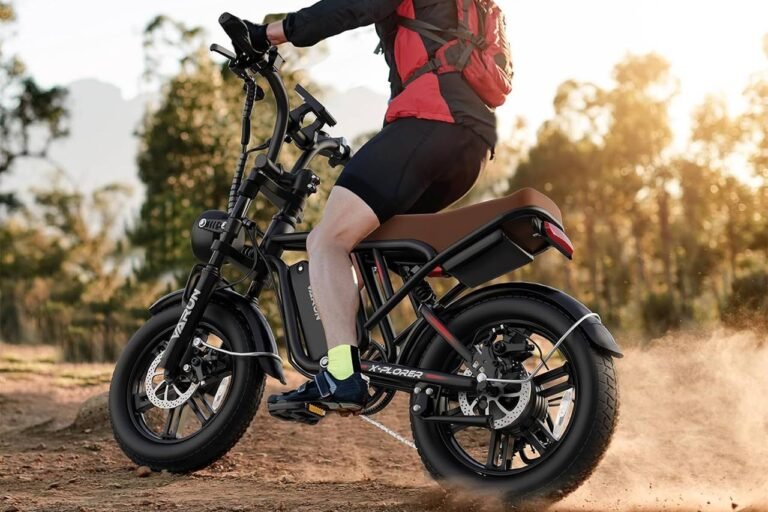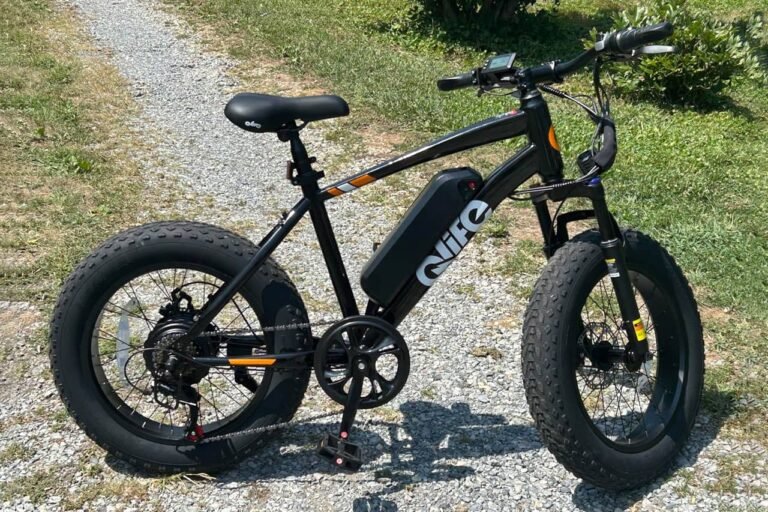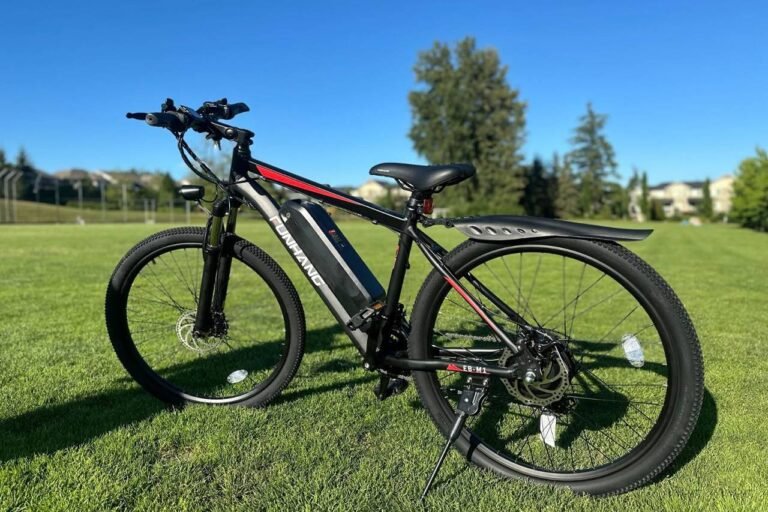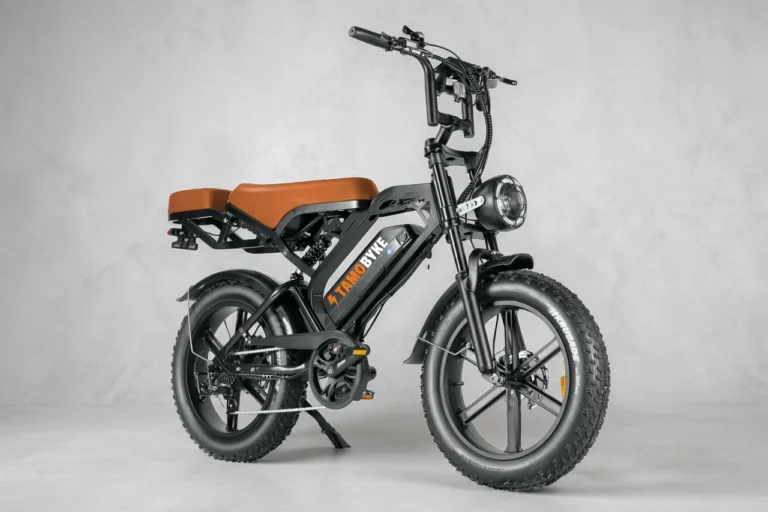
Finding the best electric bikes for hills under $1000 comes down to a few key specs: motor torque, battery voltage, drivetrain gearing, and braking quality. Motor wattage alone does not determine how well a bike climbs; torque output, voltage class, and gearing work together to pull you up an incline without overheating the motor. Most reliable budget hill climbers pair a 48V electrical system with at least 7 speeds and mechanical or hydraulic disc brakes.
The bikes on this list are commonly priced under $1,000 on Amazon, though prices shift frequently. Always confirm the current price before purchasing, as coupons and inventory changes affect availability.
When evaluating these bikes, we looked at verified motor specs, battery capacity, gearing range, brake type, tire size, payload rating, and bike weight. Manufacturer claims about range and hill grade are noted as such; actual climbing performance depends on rider weight, cargo load, slope length, surface condition, battery charge level, and how much you pedal.
Best Overall: LEONX M2 Pro Electric Bike
Best for Speed on Hills: Jasion EB5 MAX Electric Bike
Best Fat-Tire Option: Jasion EB5 Ultra Electric Bike
Best for Steep Hills: GREATWORK M8 Dual Motor Electric Bike
Best Commuter: PUJH 2000W Peak Electric Bike
Best Folding Option: VEBLUE 1500W Folding Electric Bike
Best for Heavier Riders: MTRSUE 9000W Dual Motor Folding Electric Bike
1. LEONX M2 Pro Electric Bike

Best For: Overall Hill-Climbing Value
The LEONX M2 Pro is a capable all-terrain e-bike built around a 48V system and a fat-tire MTB frame. It suits adults who want a dependable electric commuter bike for hilly areas without spending above $1,000.
Verdict: A well-rounded budget hill climber with strong motor specs, useful range, and a generous payload. It works best on moderate to rolling hills and paved inclines.
Key Specifications
| Spec | Detail |
|---|---|
| Motor | 1800W peak brushless rear hub |
| Published Torque | 110 Nm (manufacturer claim) |
| Battery | 48V 17.5Ah (840 Wh) |
| Claimed Range | Up to 85 miles (PAS mode) |
| Gears | 7-speed |
| Brakes | 180mm mechanical disc |
| Tires | 26″ x 4.0″ fat |
| Bike Weight | 90 lbs |
| Payload | 500 lbs |
| Suspension | Dual (lockable front fork) |
Why It Works for Hills
The 48V system and manufacturer-claimed 110 Nm of torque give this bike enough pulling force for moderate inclines. The 7-speed drivetrain lets you shift to a lower gear on longer climbs, reducing motor strain. Fat tires add stability on uneven surfaces. That said, at 90 lbs, it is heavy, which means coasting or pedaling without power requires real effort.
Who It Is For
Riders who tackle rolling hills and moderate grades on paved or light gravel routes. The 500 lb payload makes it one of the more inclusive options in this price range.
Limitations:
- At 90 lbs, it is one of the heavier bikes in this roundup, making manual pedaling tiring
- The LEONX brand has limited service infrastructure in the US; support relies on a 1-year warranty and online contact
Check current availability and pricing on Amazon before purchasing, as prices and coupons change frequently.
2. Jasion EB5 MAX Electric Bike

Best For: Speed and Power on Hilly Commutes
The Jasion EB5 MAX delivers a 2000W peak motor on a fat-tire platform with a carbon steel frame. It targets riders who want fast acceleration on hills and a commuter-ready feature set including fenders, rear rack, and cruise control.
Verdict: A well-rated option for hilly urban commutes where speed matters. The motor output is strong for this price tier, though the front-only suspension and carbon steel frame are worth noting.
Key Specifications
| Spec | Detail |
|---|---|
| Motor | 2000W peak hub motor |
| Published Torque | Not specified |
| Battery | 48V 15Ah (720 Wh) |
| Claimed Range | Up to 65 miles (PAS), 35 miles (throttle) |
| Gears | 7-speed |
| Brakes | 180mm mechanical disc |
| Tires | 26″ x 4.0″ fat |
| Frame | Carbon steel |
| Payload | 400 lbs |
| Suspension | Front only (lockable fork) |
Why It Works for Hills
A 2000W peak motor in the 48V class can produce meaningful thrust on shorter, moderate climbs. The 7-speed gearing helps manage steeper grades when motor assist alone is not enough. Cruise control is a practical touch on long, steady inclines.
Who It Is For
Commuters navigating hilly urban routes who want speed and everyday utility features. Less suited for technical off-road terrain given the front-only suspension.
Limitations:
- Torque is not published by the manufacturer, making direct hill-climbing comparisons harder
- Front-only suspension limits comfort on rough or unpaved climbs
Confirm current pricing and availability on Amazon before buying.
3. Jasion EB5 Ultra Electric Bike

Best For: Fat-Tire All-Terrain Hill Riding
The Jasion EB5 Ultra steps up from the MAX with a 2500W peak motor, dual suspension, hydraulic disc brakes, and a larger 52V 20Ah battery. It is the most capable all-terrain option in the Jasion lineup at this price level.
Verdict: For riders who want a fat-tire e-bike that handles hills, rough trails, and varied weather, the EB5 Ultra offers a meaningful spec upgrade over most competitors under $1,000.
Key Specifications
| Spec | Detail |
|---|---|
| Motor | 2500W peak hub motor |
| Published Torque | 75 Nm or more (manufacturer claim) |
| Battery | 52V 20Ah (1040 Wh) |
| Claimed Range | Up to 70 miles |
| Gears | 7-speed |
| Brakes | Hydraulic disc |
| Tires | 26″ x 4.0″ fat |
| Frame | Carbon steel |
| Payload | 330 lbs |
| Suspension | Dual (front fork + 160mm rear shock) |
Why It Works for Hills
Hydraulic disc brakes are a genuine advantage on descents after steep climbs, giving more consistent stopping than mechanical discs. The 52V system runs at a higher voltage than most budget bikes, which helps maintain motor efficiency on longer ascents. Dual suspension adds comfort when the road surface is uneven.
Who It Is For
Riders who want a capable affordable hill-climbing e-bike that doubles as a light trail bike. The hydraulic brakes and dual suspension make a real difference in confidence on descent.
Limitations:
- Carbon steel frame adds weight compared to aluminum
- 330 lb payload is lower than some competitors; heavier riders should check fit carefully
See current pricing on Amazon.
4. GREATWORK M8 Dual Motor Electric Bike

Best For: Steep Hill Climbing with High Power
The GREATWORK M8 uses a dual-motor setup rated at 5000W peak combined output and a large 52V 25Ah battery. It is the most powerful bike in this roundup by spec sheet and targets riders dealing with genuinely steep grades.
Verdict: If you regularly face steep paved inclines and want the highest peak motor output at this price tier, the M8 is worth considering. Its dual-motor modes add flexibility for conserving battery on flatter segments.
Key Specifications
| Spec | Detail |
|---|---|
| Motor | Dual motor, 5000W peak combined (2x 2500W) |
| Published Torque | 180 Nm combined (manufacturer claim) |
| Battery | 52V 25Ah (1300 Wh) |
| Claimed Range | Up to 100 miles (PAS), 60 miles (electric) |
| Gears | 7-speed |
| Brakes | Dual hydraulic disc |
| Tires | 26″ x 4.0″ fat |
| Bike Weight | 82 lbs |
| Payload | 330 lbs |
| Suspension | Dual front fork shocks |
Why It Works for Hills
Dual motors and a 52V high-capacity battery provide the kind of sustained torque that single-motor budget bikes cannot match on steep or repeated climbs. The ability to switch between single and dual motor modes is practical for balancing speed against range. Hydraulic brakes are essential when descending steep grades, and the M8 includes them.
Who It Is For
Riders on consistently steep routes who need high torque output and are willing to manage a heavier, more complex bike. Less suitable for casual commuters on moderate hills.
Limitations:
- At 82 lbs, manual pedaling is demanding if the battery runs low
- A newer brand with limited long-term reliability data and a 330 lb payload cap
Check availability and confirm pricing on Amazon.
5. PUJH 2000W Peak Electric Bike

Best For: City Commuting on Hilly Routes
The PUJH PU1 uses 29-inch wheels instead of the 26-inch standard seen on most fat-tire competitors. That larger wheel size rolls more easily over pavement and handles moderate terrain with less resistance, which benefits hill commuters on paved roads.
Verdict: A commuter-oriented e-bike with a 21-speed drivetrain and a 48V system, offering practical daily features like a cargo rack, phone holder, fenders, lock, and pump in the box.
Key Specifications
| Spec | Detail |
|---|---|
| Motor | 2000W peak brushless hub |
| Published Torque | 60 Nm (manufacturer claim) |
| Battery | 48V 17.5Ah (912 Wh) |
| Claimed Range | 30 to 80 miles |
| Gears | 21-speed |
| Brakes | Mechanical disc |
| Tires | 29″ x 2.1″ |
| Frame | 6061 aluminum |
| Payload | 264 lbs (120 kg) |
| Suspension | Front only |
Why It Works for Hills
The 21-speed drivetrain is the widest gear range in this roundup, giving riders the most control over cadence on varied slopes. On a hilly commute, that extra range of gears reduces motor strain and extends battery life. The 6061 aluminum frame keeps weight lower than steel-framed competitors.
Who It Is For
Urban commuters on paved hilly roads who want narrow tires, a wide gear range, and a full accessory kit. Not suited for off-road or gravel terrain given the 2.1-inch tire width.
Limitations:
- 60 Nm torque is lower than fat-tire competitors; steeper climbs will require more rider input
- Payload of 264 lbs is the lowest in this roundup
Verify current price on Amazon.
6. VEBLUE 1500W Folding Electric Bike

Best For: Folding Convenience with Hill Capability
The VEBLUE E7 is a folding fat-tire e-bike with 20-inch wheels, dual suspension, and a 52V 20Ah battery. At 71 lbs, it is lighter than most non-folding fat-tire bikes in this group and folds for storage in apartments, car trunks, or offices.
Verdict: The strongest folding option in this roundup for riders who need to store or transport their bike while still handling moderate hills. The 52V battery is a meaningful advantage over 48V folding competitors.
Key Specifications
| Spec | Detail |
|---|---|
| Motor | 1500W peak brushless hub |
| Published Torque | Not specified |
| Battery | 52V 20Ah (1040 Wh) |
| Claimed Range | 40 to 70 miles (PAS) |
| Gears | 7-speed |
| Brakes | 180mm dual mechanical disc |
| Tires | 20″ x 4.0″ fat |
| Frame | Carbon steel |
| Bike Weight | 71 lbs |
| Payload | 300 lbs |
| Suspension | Dual |
Why It Works for Hills
The 52V battery provides a higher voltage base than many budget folding bikes, which helps maintain motor output during climbs. Dual suspension on a folding frame is uncommon at this price and adds comfort on uneven hill surfaces. The 600-lumen headlight supports early-morning or late commutes.
Who It Is For
Commuters who live in apartments or use transit alongside cycling, and who still face hilly terrain. Less suited for high-speed or very steep routes given the 1500W peak motor rating and 20-inch wheels.
Limitations:
- Torque is not published; hill performance on steeper grades is harder to predict
- 20-inch wheels create a less stable feel at higher speeds compared to 26-inch alternatives
Check current availability on Amazon.
7. MTRSUE 9000W Dual Motor Folding Electric Bike

Best For: High-Power Folding E-Bike for Heavier Riders
The MTRSUE tt-7567 is a folding fat-tire e-bike with dual motors rated at 9000W peak combined and a 60V 30Ah battery. The manufacturer recommends it for riders over 5 feet 7 inches tall and specifies a 330 lb payload.
Verdict: The highest peak power output among folding bikes in this roundup. It suits taller or heavier adults who need a foldable design but do not want to sacrifice motor performance on hills.
Key Specifications
| Spec | Detail |
|---|---|
| Motor | Dual motor, 9000W peak combined |
| Published Torque | 190 Nm (manufacturer claim) |
| Battery | 60V 30Ah (1800 Wh) |
| Claimed Range | 26 to 70 miles |
| Gears | 7-speed (Shimano) |
| Brakes | Front and rear disc |
| Tires | 26″ x 4.0″ fat |
| Frame | Aluminum |
| Payload | 330 lbs |
| Suspension | Dual (front and rear) |
| Min. Rider Height | 5’7″ (manufacturer spec) |
Why It Works for Hills
Dual motors and a 60V system provide high peak output for short, steep bursts. The Shimano 7-speed drivetrain is a reliable gearing component that supports consistent shifting under load. The aluminum frame is a plus for long-term durability compared to steel alternatives.
Who It Is For
Taller adults who want a folding e-bike with high motor output and the ability to handle hills without feeling underpowered. The height requirement is a firm limitation for shorter riders.
Limitations:
- Only 21 ratings at time of writing; long-term reliability data is limited
- The manufacturer advises against changing LCD parameter settings, which limits tuning flexibility
Confirm current pricing and stock on Amazon.
Buying Guide
How We Chose These Bikes
We evaluated each bike on verified motor specifications, battery voltage and capacity, drivetrain gearing, brake type, tire size, payload rating, bike weight, and hill suitability. Manufacturer torque and range claims are noted as such throughout. We did not conduct hands-on testing; evaluations are based on listed specifications and documented features.
Motor Torque vs. Wattage
Peak wattage is a marketing figure. What actually moves you uphill is torque, measured in Newton-meters (Nm). A 750W motor with high torque can outclimb a 2000W motor with low torque on steep grades. When a manufacturer publishes a torque figure, use it for comparison. When torque is not specified, treat wattage claims cautiously.
36V vs. 48V Systems
A 48V electrical system delivers more power to the motor than a 36V system at the same amperage. For hill climbing, a 48V or 52V system is a meaningful advantage. Most bikes in this roundup use 48V or 52V, which is appropriate for hilly terrain. Avoid 36V systems if your route includes regular or steep climbs.
Cadence Sensors vs. Torque Sensors
Budget e-bikes almost always use cadence sensors, which detect pedal rotation and switch on motor assist. Torque sensors, which measure how hard you push and respond proportionally, are rare under $1,000. Cadence sensors work fine for commuting but provide less natural feel on hills.
Gearing Matters
More gears give you finer control over effort on varied slopes. A 21-speed drivetrain offers more flexibility than 7-speed, particularly on long climbs where you want to maintain a comfortable pedal rhythm. On hilly commutes, lower gears reduce motor strain and extend battery life.
Battery Capacity and Range Loss on Hills
Battery capacity is measured in watt-hours (Wh). Climbing hills draws significantly more power than flat riding, so expect 30 to 50 percent less range on a hilly route compared to manufacturer flat-terrain claims. A 700 Wh or larger battery is a reasonable target for daily hilly commutes.
Hydraulic vs. Mechanical Disc Brakes
Hydraulic disc brakes provide more consistent stopping power with less hand effort, which matters on steep descents. Mechanical disc brakes are more common at this price point and require more frequent adjustment. If your route involves long downhill sections, hydraulic brakes are worth prioritizing.
Tire Width and Stability
Wider tires (3.0 to 4.0 inches) provide more traction and stability on loose or uneven surfaces. Narrower tires (2.0 to 2.5 inches) roll faster on pavement and add less weight. Match tire width to your primary terrain.
Bike Weight and Payload
Budget e-bikes often weigh 70 to 90 lbs. A heavier bike requires more motor output on climbs and is harder to push or carry when the battery is depleted. Check that the bike’s payload rating comfortably exceeds your body weight plus any cargo.
Limitations of Sub-$1,000 Hill-Climbing E-Bikes
Budget models typically use hub-drive motors rather than mid-drive motors. Hub drives are less efficient on sustained steep climbs and generate more heat. Entry-level components, including brakes, displays, and connectors, may require more maintenance. Service support from smaller brands can be limited. For very steep or long daily climbs, a mid-drive e-bike above $1,000 may be a more practical long-term investment.
Comparison Table
| Bike | Motor (Peak) | Battery | Gears | Brakes | Tires | Payload | Best Use |
|---|---|---|---|---|---|---|---|
| LEONX M2 Pro | 1800W | 48V 17.5Ah | 7-speed | Mechanical disc | 26″ x 4.0″ | 500 lbs | All-around hill commuting |
| Jasion EB5 MAX | 2000W | 48V 15Ah | 7-speed | Mechanical disc | 26″ x 4.0″ | 400 lbs | Speed on hilly commutes |
| Jasion EB5 Ultra | 2500W | 52V 20Ah | 7-speed | Hydraulic disc | 26″ x 4.0″ | 330 lbs | All-terrain fat-tire climbing |
| GREATWORK M8 | 5000W dual | 52V 25Ah | 7-speed | Hydraulic disc | 26″ x 4.0″ | 330 lbs | Steep hills, high power |
| PUJH PU1 | 2000W | 48V 17.5Ah | 21-speed | Mechanical disc | 29″ x 2.1″ | 264 lbs | Paved hilly commutes |
| VEBLUE E7 | 1500W | 52V 20Ah | 7-speed | Mechanical disc | 20″ x 4.0″ | 300 lbs | Folding, moderate hills |
| MTRSUE tt-7567 | 9000W dual | 60V 30Ah | 7-speed | Disc | 26″ x 4.0″ | 330 lbs | Folding, heavier riders |
Frequently Asked Questions
Which budget electric bikes have enough torque to climb steep hills reliably?
Among the bikes in this roundup, the GREATWORK M8 publishes the highest combined torque at 180 Nm (manufacturer claim) and the LEONX M2 Pro lists 110 Nm. The Jasion EB5 Ultra lists 75 Nm or more.
These figures come from manufacturers and should be treated as starting points rather than independently verified results; actual climbing performance depends on rider weight, slope length, surface, and battery charge level.
What motor wattage and battery capacity should I look for to handle hilly commutes?
For regular hilly commutes, look for a 48V or 52V system with at least 700 Wh of battery capacity.
Peak motor wattage above 1500W provides more headroom on climbs, but torque and voltage class matter more than peak wattage alone.
A 48V 15Ah battery (720 Wh) is a reasonable minimum; 840 Wh or more gives better range when climbing regularly drains extra power.
How fast can a sub-$1000 e-bike realistically go while riding uphill?
Speed on hills varies significantly based on rider weight, slope angle, and how much you pedal. Most hub-drive budget e-bikes maintain 10 to 18 mph on moderate paved inclines when using full pedal assist.
On steeper grades, expect speeds to drop to 8 to 12 mph or lower. Manufacturer top-speed claims apply to flat terrain and are not representative of hill performance.
Are hub-drive or mid-drive systems better for hill climbing at this price point?
Mid-drive motors, which sit at the crank and use the bike’s gears, are more efficient and better suited to sustained steep climbing.
They are rarely available under $1,000. All bikes in this roundup use hub-drive motors, which work well on moderate hills but can overheat on long, steep grades.
If your route involves repeated steep climbs, a mid-drive system above the $1,000 threshold is worth considering.
Which under-$1000 electric bikes have the best brakes, tires, and gearing for steep terrain?
The Jasion EB5 Ultra and GREATWORK M8 both include hydraulic disc brakes, which provide more reliable stopping on steep descents than the mechanical disc brakes found on most budget bikes.
For gearing range, the PUJH PU1’s 21-speed drivetrain leads the group. For tire width and stability on mixed terrain, the 26-inch by 4.0-inch fat-tire bikes, including the LEONX M2 Pro, Jasion EB5 Ultra, and GREATWORK M8, offer the most traction on loose or uneven surfaces.
GoEBikeLife publishes independent e-bike reviews, comparisons, and practical buying guides. Some links on this page are affiliate links. If you make a purchase through an eligible link, we may earn a commission at no additional cost to you.