A sleeping e-bike battery that shows no lights and will not charge is often still alive. If the pack has not been physically damaged, plugging it into its original charger and following the manufacturer’s documented wake-up steps is usually the safest way to bring a sleeping e-bike battery back to normal charging, since this reconnects the battery management system without forcing current into the cells in an unapproved way.
That said, a response from the charger does not always mean the cells inside are healthy. A battery that was deeply discharged over a long winter in a cold garage can look like a simple sleep-mode case even when the pack has lost real capacity. Telling the difference matters, because the wrong fix, like jump-starting a pack with a car battery or prying open the case, can turn a recoverable battery into a fire risk.
This guide walks through the checks worth doing before you plug anything in, what a manufacturer-approved wake-up attempt looks like, and how to read the charger lights and voltage signs that follow. If your battery still will not respond safely, GoEBikeLife’s reviews and buying guides can help you figure out a compatible replacement once you know that’s the right call.
Is It Safe to Attempt a Wake-Up?
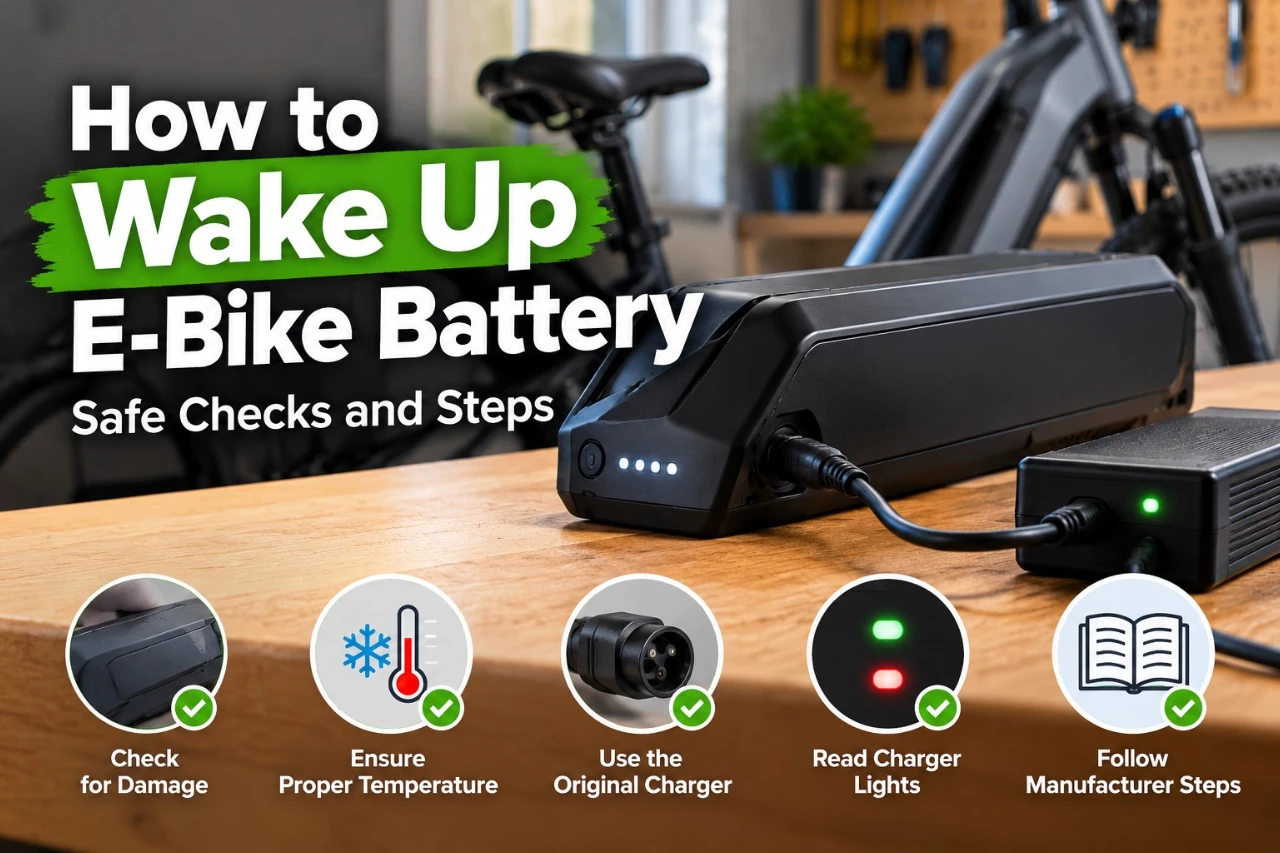
A wake-up attempt is safe only after you’ve ruled out physical damage and confirmed the battery is at a normal temperature. Skipping this step is where most battery incidents start, since a battery with internal damage can react badly to any current, even a gentle charge.
Lithium-ion batteries store a lot of energy in a small space. When a cell is damaged or charged outside its safe range, it can enter thermal runaway, a chain reaction where heat builds faster than it can escape. Charging a battery that’s too cold can also cause lithium plating on the anode, a buildup that raises both fire risk and the chance of permanent capacity loss.
Check for Swelling, Leaks, Impact Damage, and Water Exposure
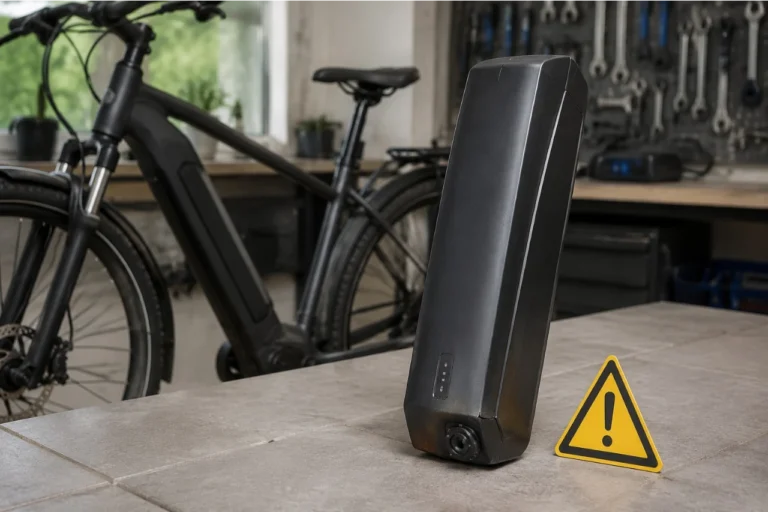
Look over the case before doing anything else. A swollen, cracked, or leaking battery, or one that’s been dropped or soaked, should not be charged or handled further. Stop using or charging it immediately and set it aside for disposal or professional evaluation rather than attempting any wake-up step.
Let Battery Temperature Reach the Manufacturer’s Charging Range
Bring a cold or hot battery indoors and let it sit at normal room temperature before charging. Charging in sub-freezing conditions can trigger lithium plating, and most battery management systems will block charging outside their approved temperature window anyway. Give it time to stabilize rather than rushing to plug it in.
What Should You Do if the Battery Smokes, Hisses, or Heats Rapidly?
Leave the area immediately and call emergency services. Do not try to move, cool, or handle a battery that’s smoking, hissing, or heating up fast, since lithium-ion fires can reignite and are difficult to put out with water. This is the one scenario where no troubleshooting step is worth the risk.
Try the Manufacturer-Approved Wake-Up Steps
The safest wake-up method is the one written in your battery’s own manual, using the charger that came with it. Skipping straight to generic online tricks, like holding a power button for an undocumented number of seconds, risks confusing a working BMS or damaging a pack that didn’t need forcing in the first place.
Find the Battery Manual and Confirm Charger Compatibility
Locate the model-specific documentation before you do anything else. Voltage and connector type must match exactly: using a 52V charger on a 48V battery can trigger an over-voltage fault in the BMS and cause permanent damage. If you’ve misplaced the manual, check the battery label or contact the manufacturer for the correct specs.
Check the Outlet, External Contacts, and Charge Port
Rule out simple connection problems first. Test the wall outlet with another device, inspect the charge port for dirt, moisture, or bent pins, and confirm the plug seats fully. A loose DC connector is a common cause of a charger that won’t respond at all.
Connect the Charger in the Documented Order and Monitor the Response
Follow the sequence your manual specifies, which is often plugging into the battery before the wall outlet. Watch for any change in the charger light within the first several minutes. If your manufacturer’s procedure calls for leaving the charger connected for an extended period to let the BMS re-engage, follow that guidance instead of a generic rule of thumb.
Use a Power-Button Sequence or BMS Reset Only if Documented
Some batteries include a physical reset button, but the hold-time and sequence vary by manufacturer. Only attempt this if your documentation describes it. If you want a closer look at reset procedures specific to common failure patterns, see this guide on how to reset an electric bike battery.
Stop if Normal Charging Does Not Resume Within the Stated Procedure
If the documented wake-up window passes with no change, stop. Repeated unplugging and replugging or extending the attempt past what the manual describes adds risk without adding odds of success.
What Do Charger Lights and Battery Readings Mean?
Charger lights tell you about the charger’s detection state, not the condition of the cells inside the pack. A solid green light, a dark LED, or a changing voltage reading each point to a different possible cause, and none of them alone confirm the battery is healthy or unhealthy.
Why Does the Charger Stay Green?
A charger that turns green immediately on a battery you know is low is usually not confirming a full charge. It more likely means the plug isn’t making full contact, the port is dirty or damaged, or the battery’s BMS is in a protective state that’s blocking current before it reaches the cells, as outlined in guidance on diagnosing a battery that won’t charge. Reseat the plug and inspect the port before assuming the pack is full.
Why Are the Battery LEDs and Bike Display Still Dark?
Dark indicators after the battery has been on the charger for a while point to the BMS still withholding output, even if some charge is reaching the cells. This is consistent with a protection state rather than proof of a dead pack. Give the documented wake-up period time to work before concluding anything further.
What Can a Multimeter Tell You Without Opening the Pack?
A multimeter can give you an external voltage reading at the battery’s approved test points, but only if your documentation specifies where and how to test safely. A very low or 0V reading at the output terminals often reflects the BMS cutting off output for protection, not necessarily a dead cell. Treat this as one data point, not a full diagnosis, since it can’t reveal cell balance or internal resistance.
Why Does the Bike Shut Down After the Battery Wakes?
A battery that wakes up but then cuts out under load may have cell imbalance or reduced capacity from aging or deep discharge. Voltage sag under load is more common in older batteries whose cells can no longer hold a consistent charge. If shutdowns repeat on a battery that otherwise charges normally, that’s a sign to look past simple wake-up troubleshooting.
Is the Battery Sleeping, Deeply Discharged, or Damaged?
A battery can look identical from the outside in all three cases, but each one calls for a different response. Sleeping and deeply discharged batteries may still respond to a documented charging attempt, while a damaged pack should not be charged at all.
How the Battery Management System Controls Charging and Output
The BMS constantly monitors voltage, current, and temperature, and it will cut power output or block charging when a reading falls outside safe limits. This protective shutdown is what most owners experience as a “dead” battery that suddenly has no response at all. It’s a safety function working as intended, not a malfunction on its own.
How Low-Charge Storage and Standby Drain Can Cause Deep Discharge
A battery stored at a very low charge level self-discharges slowly over time, and if it drops below a safe voltage threshold, often cited as around 2.5V per cell, the BMS will shut it down into a sleep or hibernation state. Months of winter storage with no top-up charge is the most common path to this state. Our guide on how to store your e-bike battery for winter explains how to avoid it next season.
Why Waking the Electronics Does Not Prove the Cells Are Healthy
Getting the BMS to re-engage and the charger light to behave normally only confirms the electronics are responding. It does not confirm the cells have normal capacity, balance, or internal resistance. A pack can wake up, accept a charge, and still underperform or shut down again under real riding load.
When Should You Seek Service or Replace the Battery?
Seek qualified service once a documented wake-up attempt fails or the battery shows repeat shutdowns after waking. Trying harder with unapproved methods at this point raises risk without raising your odds of a fix.
Why Jump-Starting, BMS Bypassing, and DIY Slow Charging Are Unsafe
Never jump-start an e-bike battery with a car battery, bypass the BMS, or open the pack to charge cells directly. These methods remove the safety checks that prevent overcharging and short circuits, and they’re a direct path toward thermal runaway. A battery that needs this kind of intervention needs professional evaluation instead.
What to Ask the Manufacturer or a Qualified E-Bike Service Provider
Ask whether your documented wake-up attempt was followed correctly for your exact model, whether the charger output voltage matches the battery’s rating, and what diagnostic steps they use to check cell balance and capacity. A technician can assess internal resistance and BMS function in ways a home multimeter reading cannot.
How to Choose a Compatible Replacement With Clear Safety Documentation
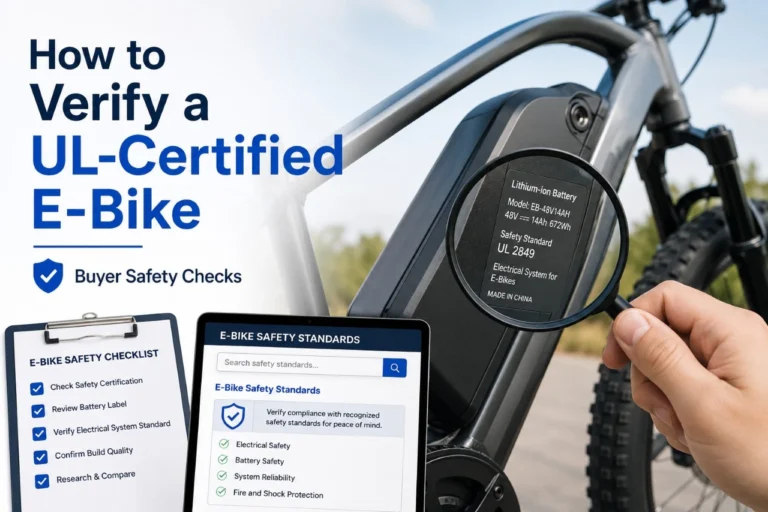
Match voltage, amp-hour capacity, connector type, and mounting dimensions to your original battery, and confirm the charger and BMS are compatible rather than just visually similar. Look for safety documentation such as UL 2849 certification, which tests the motor, controller, battery, and charger together as one system. GoEBikeLife’s ebike battery replacement guide covers what to check before ordering.
How to Arrange Safe Recycling for an Unusable Pack
Never put a lithium-ion e-bike battery in household trash or standard recycling. Contact a local battery recycling center, hazardous waste facility, or your dealer, and follow their instructions for preventing short circuits during transport, especially if the pack shows any of the battery damage warning signs covered elsewhere on this site.
How Can You Prevent Another Storage-Related Shutdown?
Storing the battery at a partial charge and checking on it periodically prevents most sleep-mode and deep-discharge problems before they start. This is simpler and cheaper than any wake-up procedure.
Follow the Recommended Storage Charge Level and Inspection Schedule
Store the battery at roughly 30 to 60 percent charge rather than fully charged or empty, and check it every one to two months, topping it up if the level has dropped. Our how to store ebike battery guide walks through the specifics for different storage lengths.
Reduce Standby Drain and Avoid Hot or Damp Storage
Keep the battery in a dry room between roughly 50 and 68 degrees Fahrenheit, away from direct sun or an unheated garage. Avoiding extreme heat and moisture slows self-discharge and limits the risk of short circuits. For tips on cutting standby drain specifically, see our guide on how to prevent ebike battery drain.
Check Charging Behavior and Ride Conservatively After Storage
After storage, charge the battery fully before your first ride and pay attention to how quickly it reaches full and how far it carries you. If range feels noticeably lower than before storage, ride conservatively and keep an eye on performance rather than assuming it will improve on its own. Our electric bike charging guide covers normal charging patterns to compare against.
Use Approved Wake-Up Steps, Not Forced Charging
A sleeping e-bike battery deserves a careful, documented approach, not an improvised one. The safest path is always the manufacturer’s charger and procedure, paired with a check for physical damage beforehand.
Forcing current into a pack with a mismatched charger, a jump-start, or a bypassed BMS trades a short-term fix for a real safety risk. The battery management system exists to protect the cells inside, and working with it, rather than around it, is what separates a successful wake-up from a dangerous one.
Frequently Asked Questions
Can you revive a dead e-bike battery after winter storage?
Often, yes, if the battery is in a BMS sleep state from low-charge storage rather than physically damaged. Reconnecting the original charger and following the manufacturer’s documented wake-up procedure is the right first step. If the battery doesn’t respond within that documented window, further charging attempts are not worth the risk.
How long should I leave a sleeping e-bike battery on its charger?
The correct duration depends on your specific battery and manufacturer, so check your manual rather than following a generic rule. Some batteries wake within minutes, while others may need a longer connected period as described in their documentation. Leaving it connected well beyond the stated procedure does not improve your odds and adds risk.
Does every e-bike battery have a reset button?
No. Some batteries include a physical reset or power button, but many rely only on the charger connection to wake the BMS. Check your battery’s manual before assuming a reset button exists or attempting any button sequence you found online.
Why is my e-bike battery fully charged but not working?
A battery that shows full charge but won’t power the bike may have a BMS output cutoff, a loose connection, or cell imbalance that limits power delivery under load. A full charge indicator confirms the charger’s detection, not that the cells can deliver normal power. This pattern is worth bringing to a qualified technician rather than repeated home charging attempts.
Can I jump-start an e-bike battery with another battery?
No, jump-starting an e-bike battery with a car battery or another power source is not a safe method. It bypasses the battery management system’s protections and raises the risk of a short circuit or thermal runaway. Stick to the manufacturer’s charger and documented procedure instead.