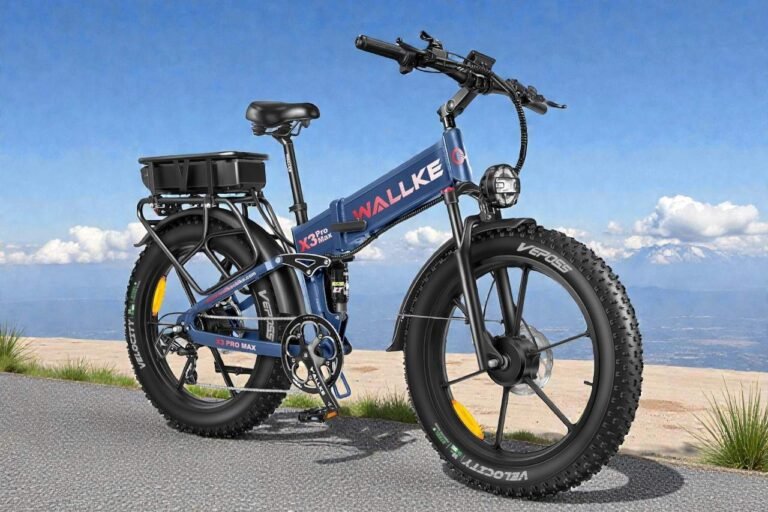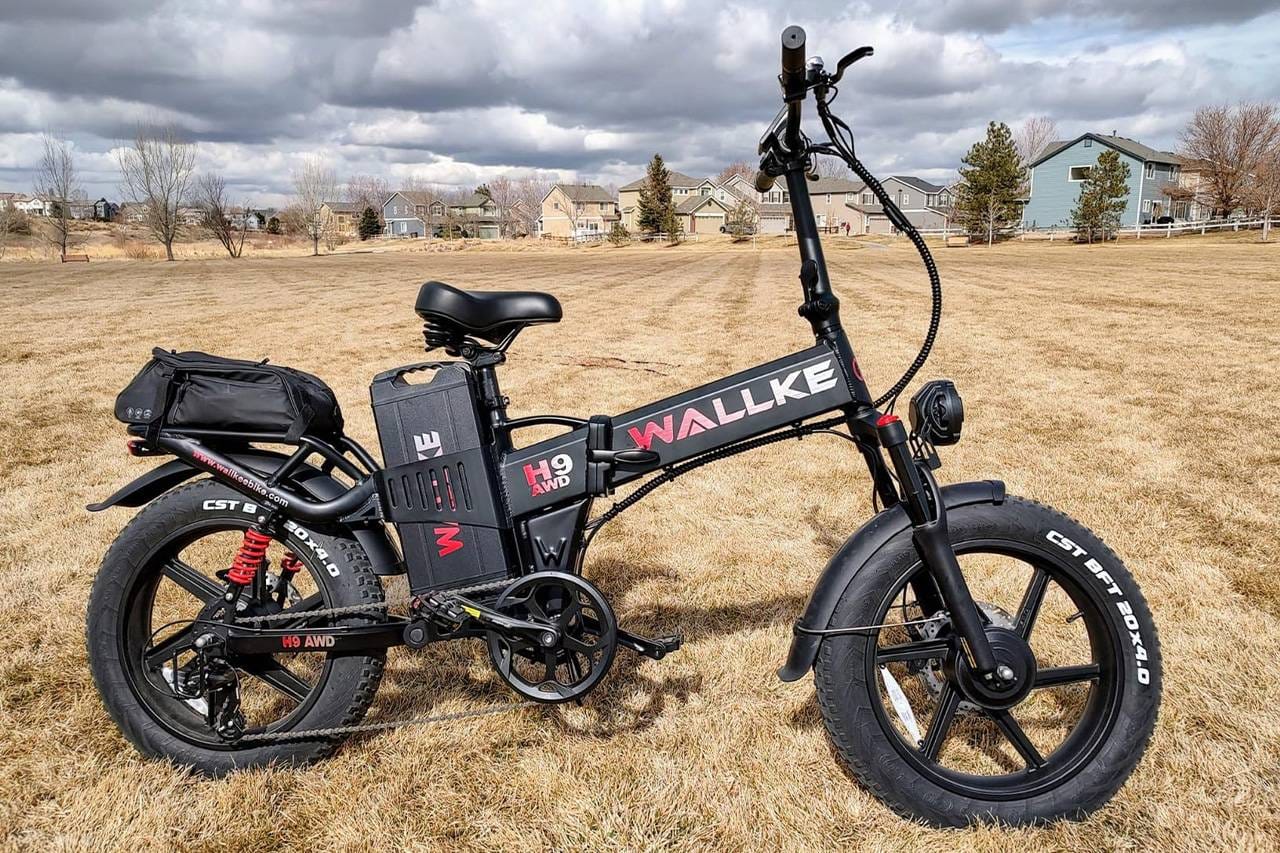
High-powered e-bikes designed for all-terrain use, long-range riding, and heavy cargo loads have carved out a clear niche for a specific type of rider. These are not casual neighborhood cruisers. They are built for people who want to cover serious distance, tackle steep hills, carry gear, or ride off pavement without compromise. Wallke has been building in this segment for eight years, and their lineup reflects a clear set of engineering priorities: durable frames, large-capacity batteries, and motors that can handle demanding terrain.
Before picking a Wallke model, it helps to know what actually separates a good high-powered e-bike from a mediocre one. Frame thickness and material determine how long the bike survives daily abuse. Battery capacity controls your realistic range. Motor type, whether single or dual, affects both climbing power and long-term reliability. Weight matters more than most buyers expect, since bikes in this class regularly exceed 100 pounds. Suspension quality, brake stopping power, and tire type all shape how safe and comfortable the ride actually feels.
The most important question to ask before buying is whether you need dual-motor AWD traction, a long-range torque-sensor single motor, a step-through frame for easy mounting, or a lightweight retro design, because each of these Wallke models serves a genuinely different type of rider.
Best for AWD power and heavy cargo hauling: Wallke H9 AWD
Best for long-range solo riding and off-grid power: Wallke H9 ULTRA
Best for riders who need easy mounting with full power: Wallke H7 ULTRA
Best for style-focused urban and light trail riding: Wallke Titan X1
1. Wallke H9 AWD Dual Motor E-Bike
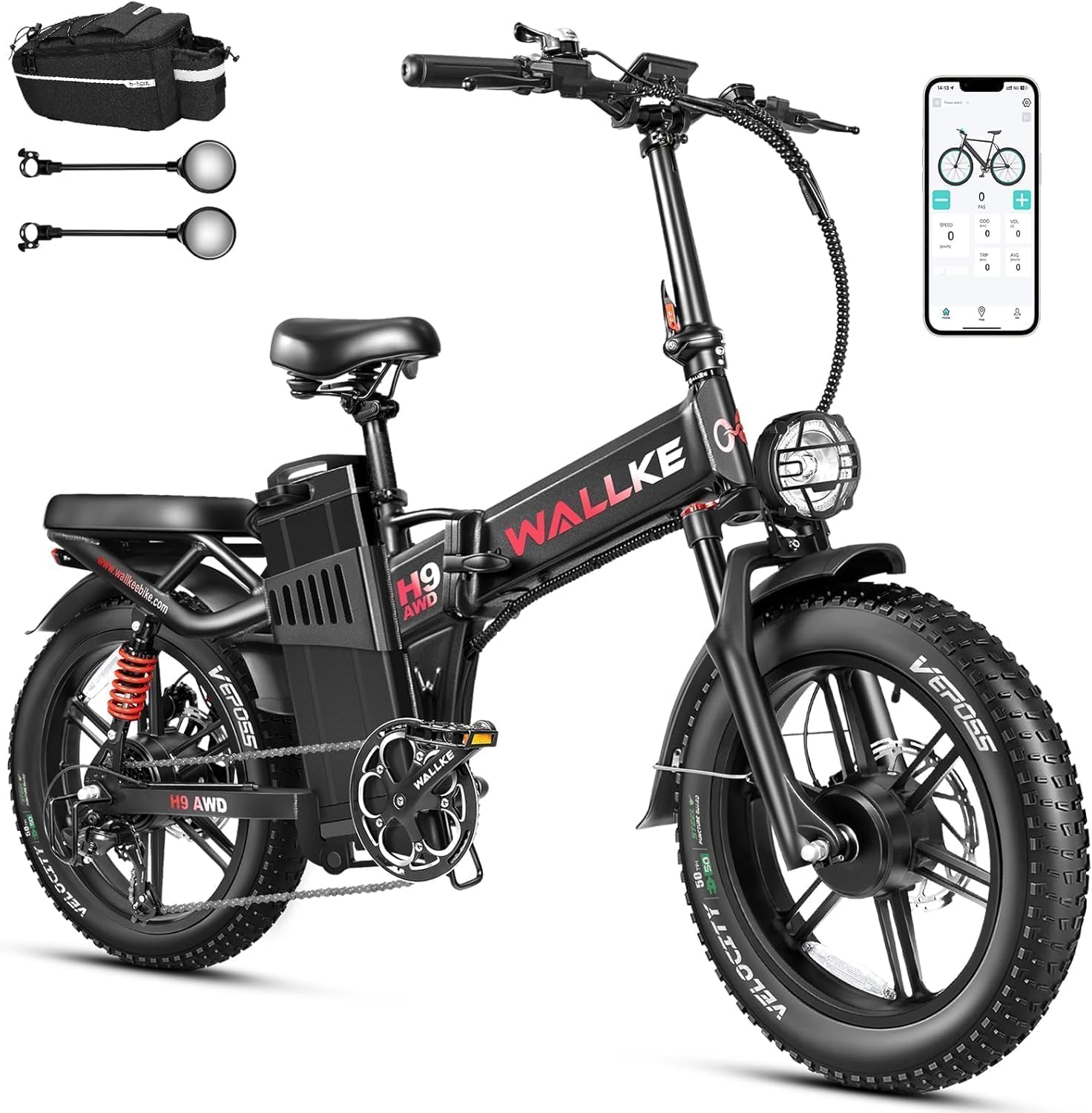
The Wallke H9 AWD suits riders who need maximum traction and serious hauling capacity, but its weight and size make it a poor fit for anyone with limited storage space or who needs a nimble commuter.
Pros
- Dual 3000W hub motors deliver strong AWD traction on loose or steep terrain
- 60Ah battery offers one of the largest capacities in this price range
- 400-pound total load capacity with a 150-pound rear rack rating
Cons
- Weight is not specified but dual-motor builds in this class typically exceed 110 pounds
- Only 35 reviews at the time of writing, which limits the reliability picture
- Folding design adds complexity; one buyer noted shipping chain issues requiring disassembly
| Preview | Product | Price | |
|---|---|---|---|

| Wallke H9 AWD Dual Motor Electric Bike 4000W Fast | 4000W Dual Motor For 38Mph. 48V 40Ah… | $1,299.00 | View on Amazon |
The H9 AWD runs a peak 6000W dual-motor system, with front and rear hub motors working together. In practice, AWD traction matters most in sand, snow, mud, or on loose gravel where a single rear motor can spin out. The 190Nm of combined torque is genuinely useful for loaded cargo runs or steep grades. The 48V 60Ah battery is the largest in the Wallke lineup, which translates to longer trips before you need to charge, though real-world range depends heavily on which power mode you use.
The full suspension setup, with a hydraulic front fork and rear shock paired with 203mm four-piston hydraulic disc brakes, provides meaningful stopping confidence at higher speeds. Fat 20×4-inch tires handle varied surfaces well. The seven-speed Shimano gear system gives you manual pedaling options when you want the exercise.
The dual-motor design does introduce more electrical complexity than a single-motor bike. One early buyer had to visit a bike shop to adjust the brakes after delivery, and another experienced a twisted chain on arrival. These are worth noting for buyers who want a simple unbox-and-ride experience.
2. Wallke H9 ULTRA Single Motor E-Bike
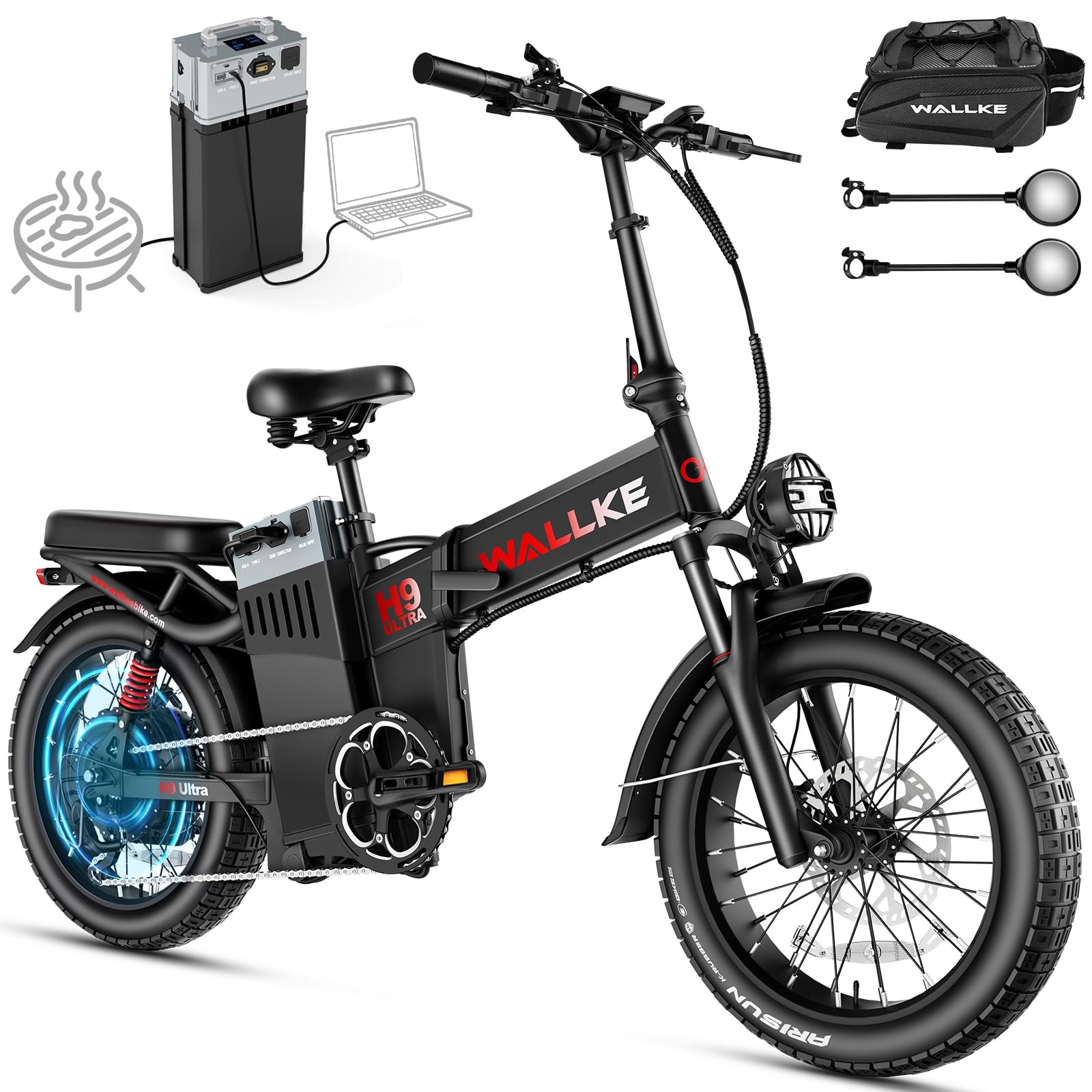
The Wallke H9 ULTRA is the right choice for long-distance riders and off-grid adventurers who want a torque-sensor-equipped, power-station-capable e-bike, but it is not the pick for anyone who needs AWD traction or the lowest possible weight.
Pros
- Torque sensor provides smoother, more natural pedal assist than a basic speed sensor
- Built-in 600W AC/USB/Type-C output lets you power devices directly from the bike
- ARISUN tires from ZC Rubber offer better durability and noise reduction than generic tires
Cons
- At 118 pounds, it is one of the heavier bikes in the Wallke lineup
- Single-motor setup means no front-wheel traction on loose terrain
- 55Ah is slightly smaller than the H9 AWD’s 60Ah battery despite similar range claims
| Preview | Product | Price | |
|---|---|---|---|

| Wallke H9 ULTRA HIGH-END Long Range Electric Bike for Adults, 55Ah 2640Wh Solar Power Hub… | View on Amazon |
The H9 ULTRA makes a deliberate argument against dual motors. A single 2000W rated motor with 105Nm of torque climbs steep terrain efficiently, and fewer electrical components reduce the chance of controller or sync failures. Wallke claims 70% fewer failure points compared to dual-motor designs based on internal testing. The torque sensor is the real differentiator here: it reads how hard you are pedaling and responds proportionally, which produces a more intuitive riding feel and meaningfully better range in pedal-assist mode.
The integrated power station function is genuinely useful for camping and off-grid use. You can charge a laptop, run a small grill, or power a drone directly from the battery. Solar charging support adds another layer of off-grid flexibility, though a solar panel is not included.
The 118-pound weight is a real consideration. Lifting it into a truck bed or carrying it up stairs is a two-person task. Buyers with physical limitations or tight storage spaces should factor this in carefully.
3. Wallke H7 ULTRA Step-Through E-Bike
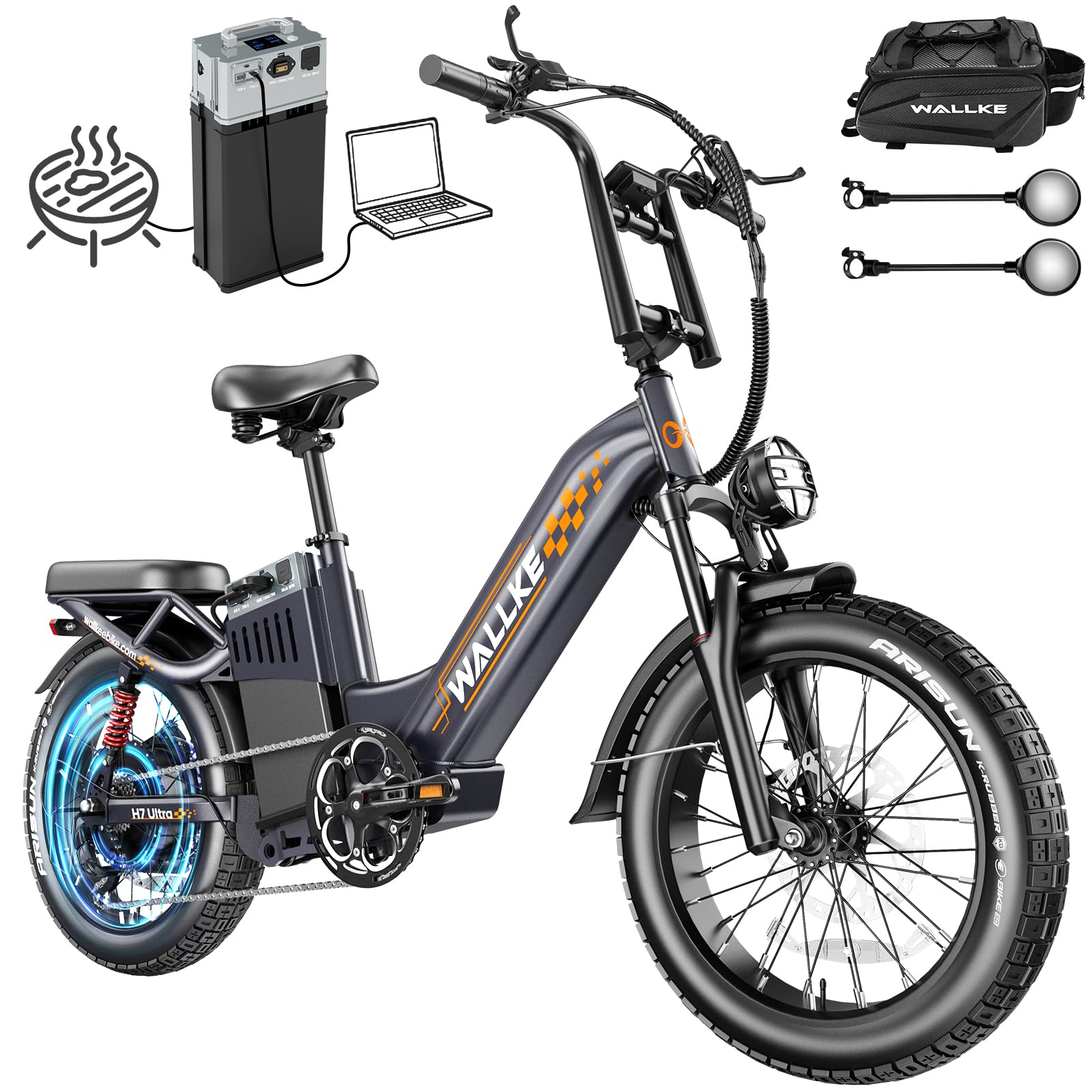
The Wallke H7 ULTRA is the best option in this lineup for riders who want the same power and battery capacity as the H9 ULTRA in a step-through frame that is easier to mount and dismount, though the weight remains substantial.
Pros
- Step-through frame makes mounting easy for riders with limited mobility or flexibility
- Same 2640Wh battery and 600W power output capability as the H9 ULTRA
- At 110 pounds, it is slightly lighter than the H9 ULTRA version
Cons
- Step-through geometry can feel less rigid than a diamond frame under heavy loads
- Heavier than most step-through e-bikes on the market
- Minimum rider height of 5.2 feet limits accessibility for shorter riders
| Preview | Product | Price | |
|---|---|---|---|

| Wallke H7 Ultra 4000W Long Range Electric Bike for Adults, Solar Charge Supported Fat Tire… | View on Amazon |
The H7 ULTRA shares its core drivetrain with the H9 ULTRA: the same 2000W rated single motor, 105Nm torque sensor system, 48V 55Ah battery, and ARISUN fat tires. The key difference is the frame geometry. A step-through design removes the top tube, making it far easier to get on and off the bike without swinging your leg over a high frame. This matters for older riders, people recovering from injury, or anyone who makes frequent stops.
Reviewers consistently mention that the power delivery feels smooth, which is a direct result of the torque sensor. One rider noted strong torque and adequate speed for their needs. The air-adjustable front fork with an included electric pump gives more suspension tuning flexibility than most bikes in this category.
At 110 pounds, the H7 ULTRA is still very heavy. The step-through makes mounting easier, but it does not make the bike easier to transport or store. If portability is a priority, this is not the right bike regardless of frame style.
4. Wallke Titan X1 Retro Carbon Fiber E-Bike
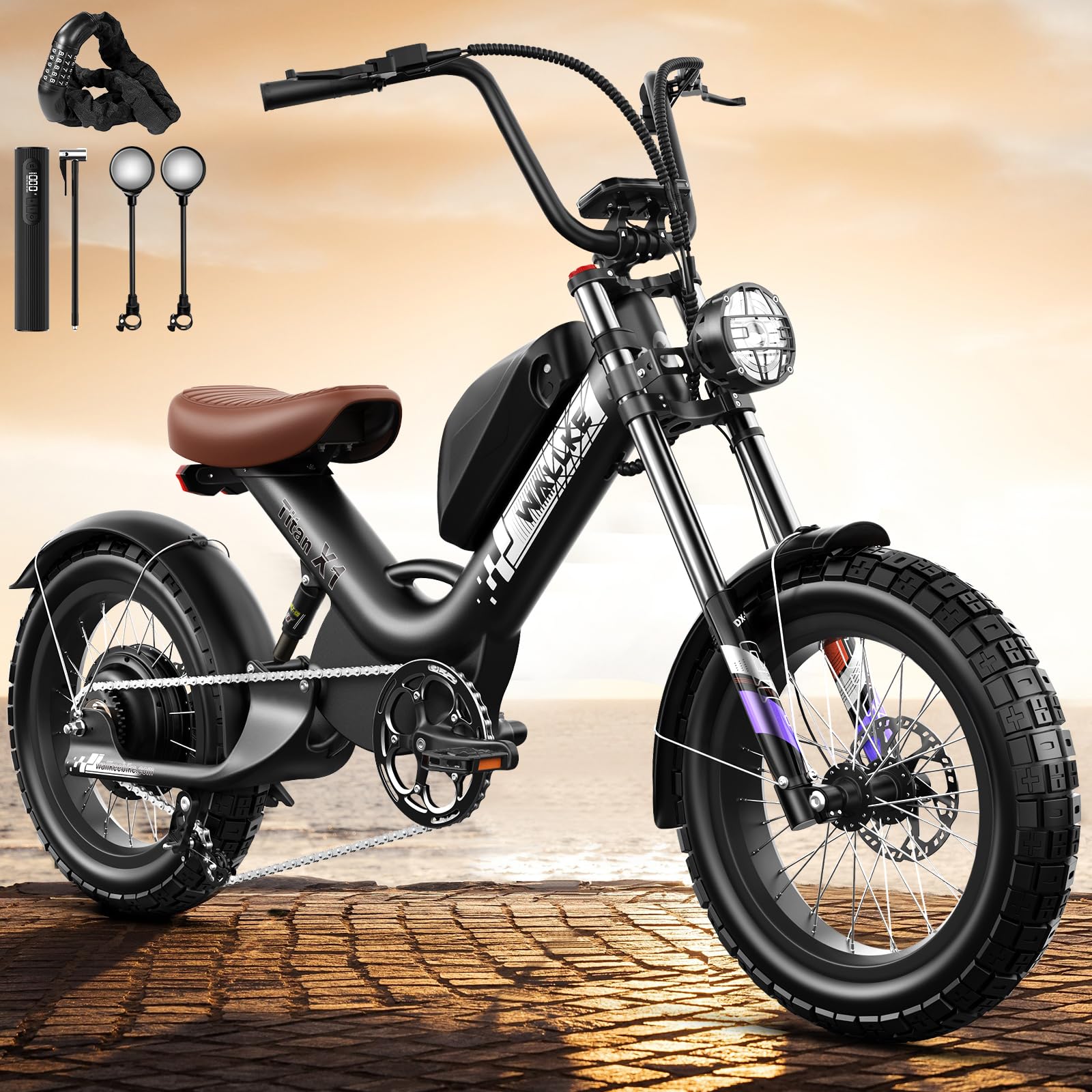
The Wallke Titan X1 suits style-conscious urban riders and casual trail users who want a lightweight, visually distinctive e-bike, but it is a poor fit for heavy cargo haulers or riders who need a wide gear range.
Pros
- Carbon fiber monocoque frame brings weight down to 85 pounds, the lightest in the lineup
- 20×5.0-inch ARISUN tires provide superior traction width compared to standard 4.0-inch fat tires
- Two-year warranty, which is longer than the one-year coverage on other Wallke models
Cons
- Single-speed drivetrain with no manual gear option limits fitness riding and steep climbs
- 48V 30Ah battery is significantly smaller than the H9 and H7 models
- No torque sensor; pedal assist operates through a simpler speed-based system
The Titan X1 occupies a different category than the other Wallke bikes. Its cafe racer-inspired design, stretched frame, and wide handlebars are clearly aimed at riders who care about aesthetics alongside performance. The carbon fiber frame is a genuine differentiator: at 85 pounds, it is 25 to 33 pounds lighter than the H9 and H7 models, which matters for storage, transport, and overall handling feel.
The 3800W peak motor provides strong acceleration and a 40MPH top speed, which is competitive. The inverted front fork with damping control and a rear shock rated at 1,500 pounds preload absorbs trail and road vibration effectively.
The trade-offs are meaningful. The 30Ah battery delivers a smaller energy reserve than the 55Ah or 60Ah options. No gear system means you cannot manually shift to an easier ratio on steep climbs or switch to pure pedaling for exercise. Reviewers have noted that the mirrors need replacement to see clearly, and the bike is sized toward taller riders, with one reviewer at 6’4″ flagging that shorter riders may struggle to get on comfortably.
Buying Guide
Who Should Buy a High-Powered Fat Tire E-Bike
Bikes in this category work best for riders who cover varied terrain, carry cargo, or want serious range without frequent charging stops. They are overkill for light neighborhood use and poorly suited to anyone who needs to carry their bike up stairs regularly.
Motor: Single vs. Dual
| Feature | Single Motor | Dual Motor (AWD) |
|---|---|---|
| Traction | Rear-wheel only | Front and rear |
| Reliability | Fewer failure points | More complex electronics |
| Efficiency | Better range per charge | Higher energy draw |
| Best for | Distance, fitness, commuting | Snow, mud, heavy loads |
A single motor with a torque sensor is generally more efficient and produces a smoother ride. Dual motor AWD adds traction on loose or slippery surfaces but comes with greater electrical complexity.
Battery Capacity and Real-World Range
Range Expectations by Mode
- Throttle-only at full speed: expect 30 to 60 miles on a large battery
- Pedal assist at low levels: 80 to 150 miles is realistic on a 55Ah or larger pack
- Maximum advertised range: always assumes optimal conditions; treat it as a ceiling, not a target
A larger battery (55Ah or higher) makes sense if you ride more than 30 miles in a session or want multi-day camping flexibility without hunting for outlets.
Weight and Portability
Bikes in this class weigh 85 to 120 pounds. Consider how you will store and transport the bike before buying. Foldable designs reduce storage footprint but do not make the bike light. A carbon fiber frame is the most effective way to reduce weight without sacrificing strength.
Suspension and Ride Comfort
Look for adjustable air forks over basic spring forks. Adjustability lets you tune the suspension to your weight and riding surface. Rear suspension matters most on rough trails and gravel roads. City commuters may find full suspension unnecessary, but it does add comfort on rough pavement.
Brakes
For bikes capable of 35 to 40MPH, hydraulic disc brakes with rotors of 200mm or larger are worth prioritizing. Larger rotors provide better heat dissipation and shorter stopping distances. Four-piston calipers are more powerful than two-piston units.
Tires
- 4.0-inch fat tires: standard choice for snow, sand, and trail
- 5.0-inch fat tires: wider contact patch improves traction; better for loose surfaces
- ARISUN/ZC Rubber tires: a meaningfully better tire than generic replacements; lower noise and longer tread life
Torque Sensor vs. Speed Sensor
A torque sensor reads pedaling force and adjusts motor output accordingly. A speed sensor detects wheel rotation and applies a fixed power level. Torque sensors produce smoother, more natural pedal assist, improve range, and feel safer at speed. Speed sensors are simpler but can produce jerky starts.
What to Ask Before Buying
- Do you need AWD traction, or is a single rear motor sufficient for your terrain?
- How far do you ride in a single trip, and does the battery match that distance?
- Can you physically manage the bike’s weight for storage and transport?
- Do you want pedal fitness built into your rides, or will you mostly use throttle?
- Is the frame height compatible with your body proportions?
GoEBikeLife publishes independent e-bike reviews, comparisons, and practical buying guides. Some links on this page are affiliate links. If you make a purchase through an eligible link, we may earn a commission at no additional cost to you.