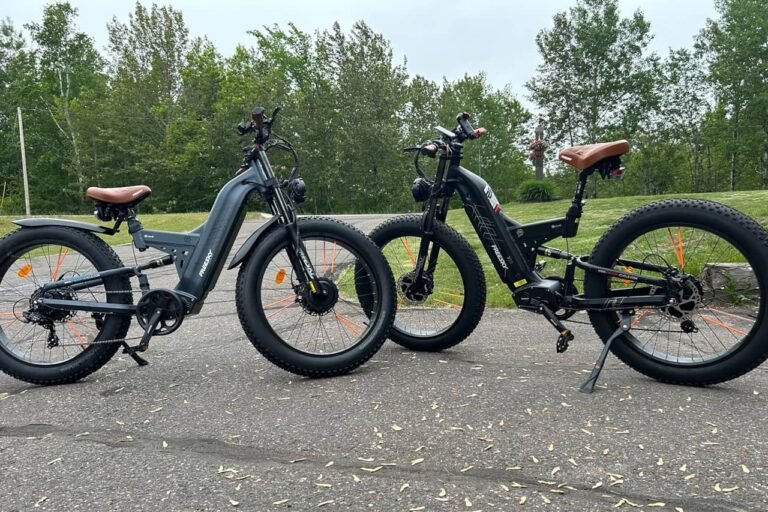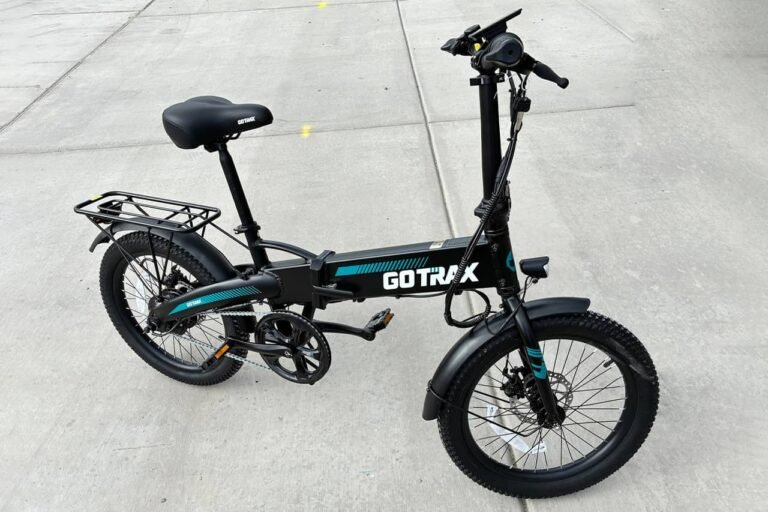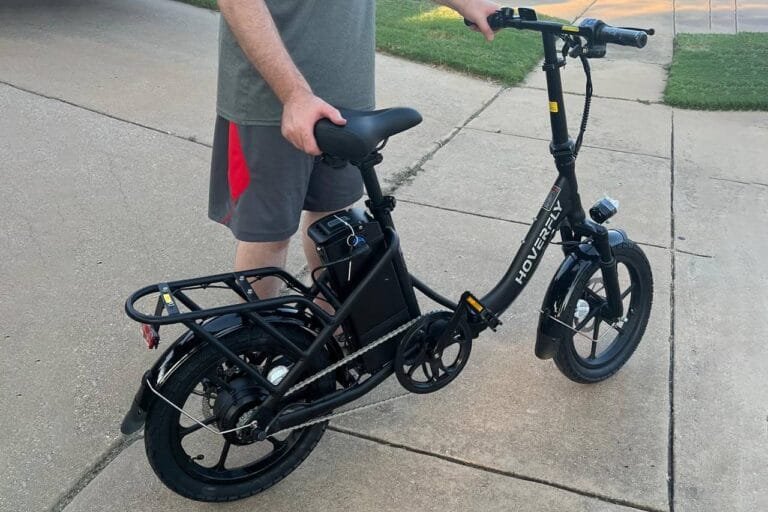
Jasion makes a wide range of electric bikes that cover commuters, off-road riders, heavier riders, and people who need a folding bike for storage. With motor peak outputs ranging from 1,000W to 3,000W and battery capacities from 360Wh to 1,040Wh, the lineup spans budget entry-level models to feature-rich fat-tire bikes built for serious terrain. Choosing the right Jasion model comes down to matching motor power, battery capacity, payload limit, and tire type to your specific riding needs.
When comparing Jasion bikes, pay attention to the difference between peak and continuous motor output. A “2,000W peak” motor may only sustain 750W continuously, which affects real-world hill-climbing performance. Battery capacity (measured in watt-hours, or Wh) is a stronger predictor of range than the maximum figure in the listing. Also check payload capacity carefully if you carry cargo or weigh over 250 lbs, since several models cap out at 330 lbs while others support up to 400–500 lbs. Tire size, suspension type, and folding capability round out the key decision factors.
The seven models below cover every major use case in the Jasion catalog. We reviewed each one using listed specs, verified buyer feedback, and practical use-case analysis so you can make a confident purchase decision.
Best for long-range fat-tire commuting: Jasion Thunder
Best for dual-suspension off-road performance: Jasion EB5 Ultra
Best mid-range all-terrain value: Jasion EB5 MAX
Best retro-style moped look with off-road power: Jasion RetroVolt Pro
Best foldable fat-tire bike for travel: Jasion X Hunter PRO
Best budget entry-level commuter: Jasion EB5
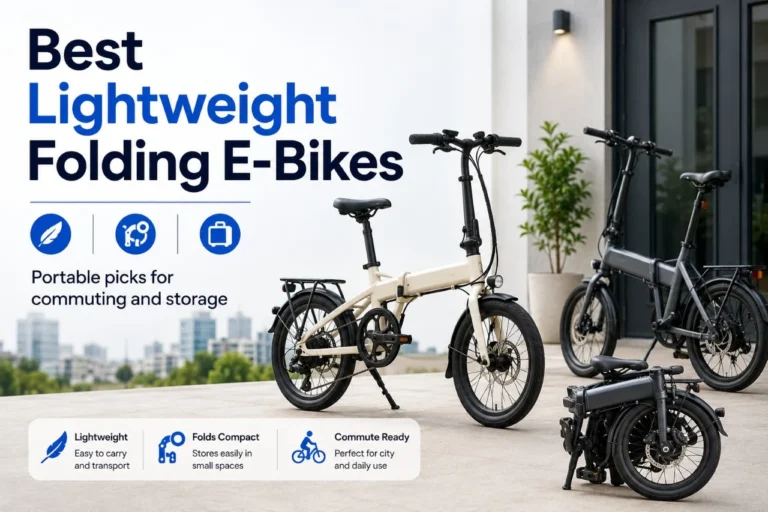
Best lightweight folding commuter: Jasion EB6
1. Jasion Thunder Electric Bike
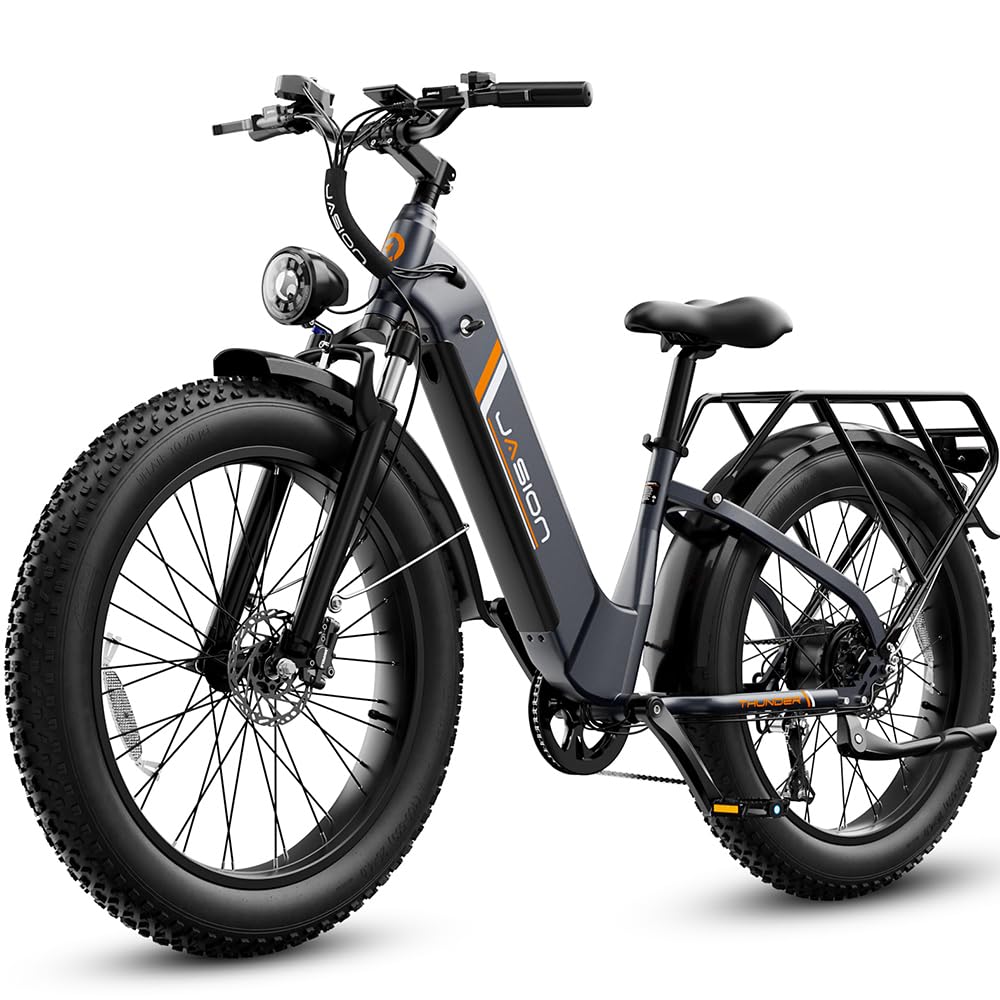
The Jasion Thunder is the brand’s most feature-complete fat-tire commuter, combining a 1,040Wh battery, turn signals, a companion app, and a 400 lb payload into one well-rounded package for daily riders who want range and safety features.
Pros
- 1,040Wh battery supports up to 80 miles in eco mode
- Integrated turn signals, brake light, and horn improve urban safety
- Jasion app allows remote locking and ride tracking
Cons
- Actual range drops considerably with heavier riders or higher assist levels
- Early production units had a short kickstand that prevented stable parking
- One report of throttle failure mid-ride, though support response was noted as responsive
| Preview | Product | Price | |
|---|---|---|---|

| Jasion Thunder Electric Bike for Adults,1800W Peak,26”x 4”Fat Tire E Bikes,80 Miles with… | $869.99 $729.99 | View on Amazon |
The Thunder runs a 750W continuous motor with an 1,800W peak, producing 85 N·m of torque. That is enough to handle 30-degree inclines confidently, and riders report smooth pedal assist up to 28 mph. The 26×4-inch fat tires and front suspension handle mixed terrain well, from city streets to light trails.
Safety features set this model apart from most competitors at its price. Turn signals, a horn, and an integrated brake light are practical additions for commuters sharing roads with traffic. UL certification adds further assurance for apartment charging.
Best for: Commuters and mixed-terrain riders who want long range, app connectivity, and integrated lighting in a single bike.
Avoid if: You need maximum off-road suspension or plan to regularly carry loads near the 400 lb limit, where realistic range will be significantly shorter than advertised.
2. Jasion EB5 Ultra Electric Bike
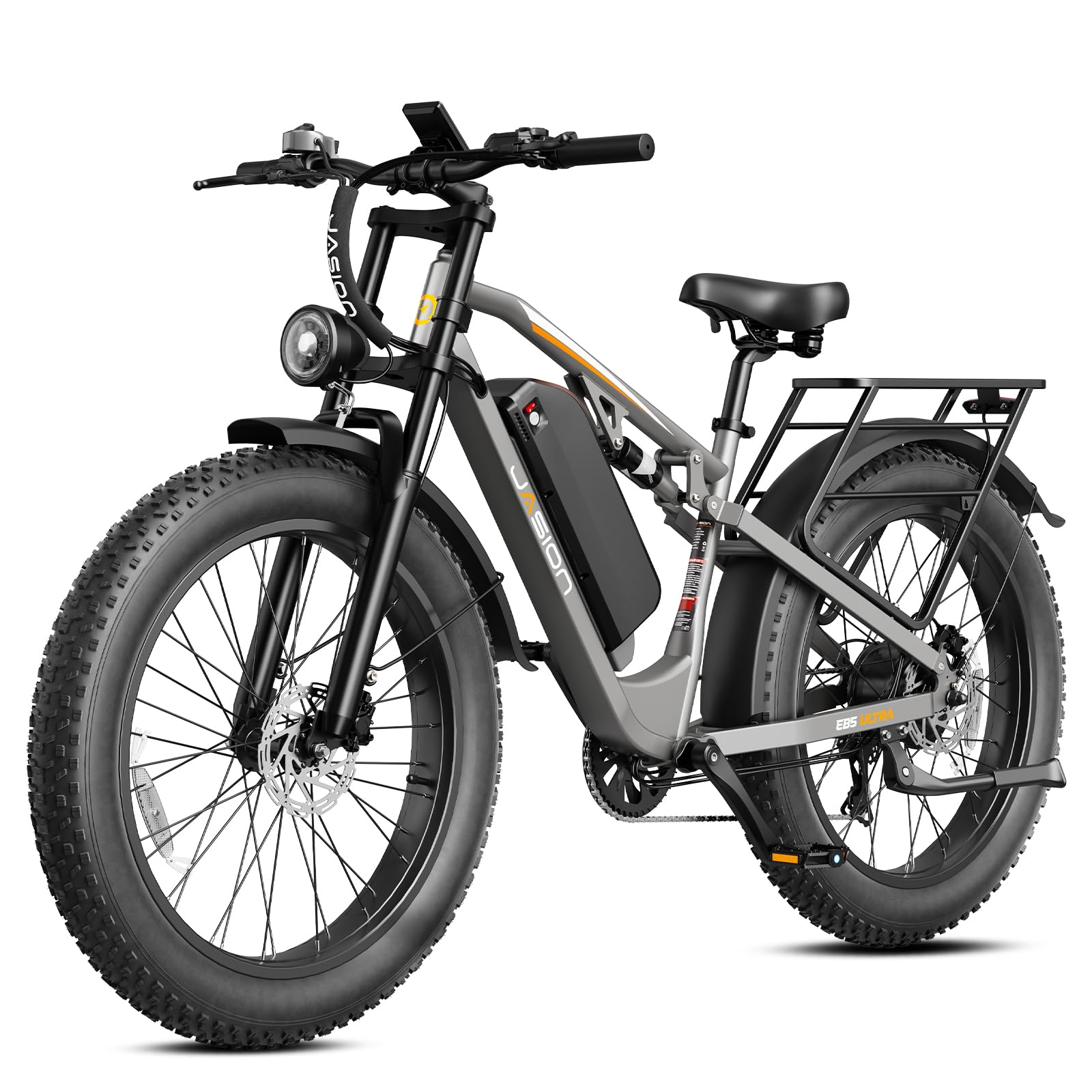
The EB5 Ultra is built for riders who prioritize off-road comfort and confidence, with a dual suspension system and a 2,500W peak motor that separates it from the single-suspension models in this lineup.
Pros
- Full dual suspension absorbs rough terrain better than front-only forks
- 52V 20Ah (1,040Wh) battery offers competitive real-world range
- Verified buyers report speeds accurately matching the 35 mph listing
Cons
- Carbon steel frame adds weight compared to aluminum alternatives
- Payload capacity caps at 330 lbs, lower than several Jasion competitors
| Preview | Product | Price | |
|---|---|---|---|

| Jasion EB5 Ultra Electric Bike for Adults 2500W Peak Motor, 1040Wh Battery | 52V 20Ah… | $999.99 $699.99 | View on Amazon |
The 160mm rear shock combined with the reinforced front fork makes a noticeable difference on gravel, packed trails, and uneven pavement. Riders commuting through potholed city streets or tackling light off-road routes will feel the improvement over front-suspension-only designs.
At 52V, the battery voltage gives the EB5 Ultra a slight edge in sustained power delivery compared to 48V models. Hydraulic disc brakes provide reliable stopping at higher speeds. The 70-mile range estimate reflects eco-mode riding; expect 35–45 miles in mixed real-world use.
Best for: Off-road enthusiasts and heavier mixed-terrain riders who want dual suspension and a high-capacity battery without spending significantly more.
Avoid if: You are near or above the 330 lb payload limit, or need to frequently carry the bike up stairs due to its heavier steel frame.
3. Jasion EB5 MAX Electric Bike
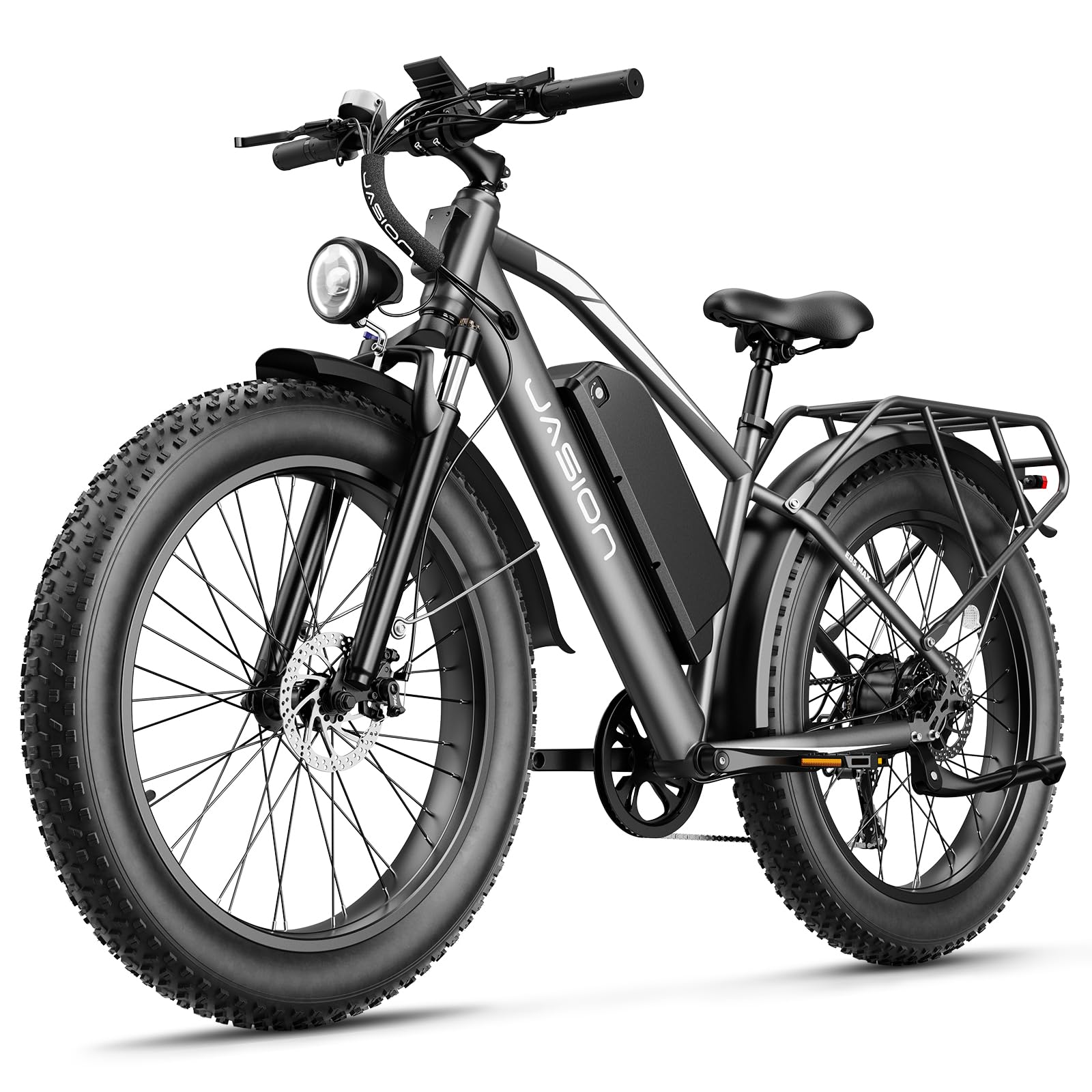
The EB5 MAX sits between the entry-level EB5 and the premium EB5 Ultra, offering a 720Wh battery, cruise control, and a password-protected display at a mid-range price point that suits frequent but casual riders.
Pros
- Cruise control reduces hand fatigue on longer flat rides
- Password-protected dashboard adds a practical layer of theft deterrence
- 400 lb payload capacity handles heavier riders and cargo loads
Cons
- 720Wh battery is significantly smaller than the EB5 Ultra’s 1,040Wh pack
- Throttle-only range drops to around 35 miles, limiting battery-only commuters
| Preview | Product | Price | |
|---|---|---|---|

| Jasion EB5 MAX Electric Bike for Adults 2000W Peak Motor, 48V 15Ah Battery | 720Wh Battery… | $859.99 | View on Amazon |
The 2,000W peak motor delivers enough power for 28+ mph on flat terrain, and the Shimano 7-speed drivetrain provides smooth gear transitions. The removable 48V 15Ah battery locks in place securely, a feature riders appreciate when parking in public.
Front suspension with a lockable fork is a practical detail for urban commuters who want to stiffen the ride on smooth pavement. Buyers with 115+ miles on the bike report no major mechanical issues, which is a positive signal for build durability at this price tier.
Best for: Riders who want more range and payload than the base EB5, plus cruise control, but do not need full dual suspension.
Avoid if: You rely primarily on throttle mode without pedaling, since the 35-mile throttle range may fall short of longer commutes.
4. Jasion RetroVolt Pro Electric Bike
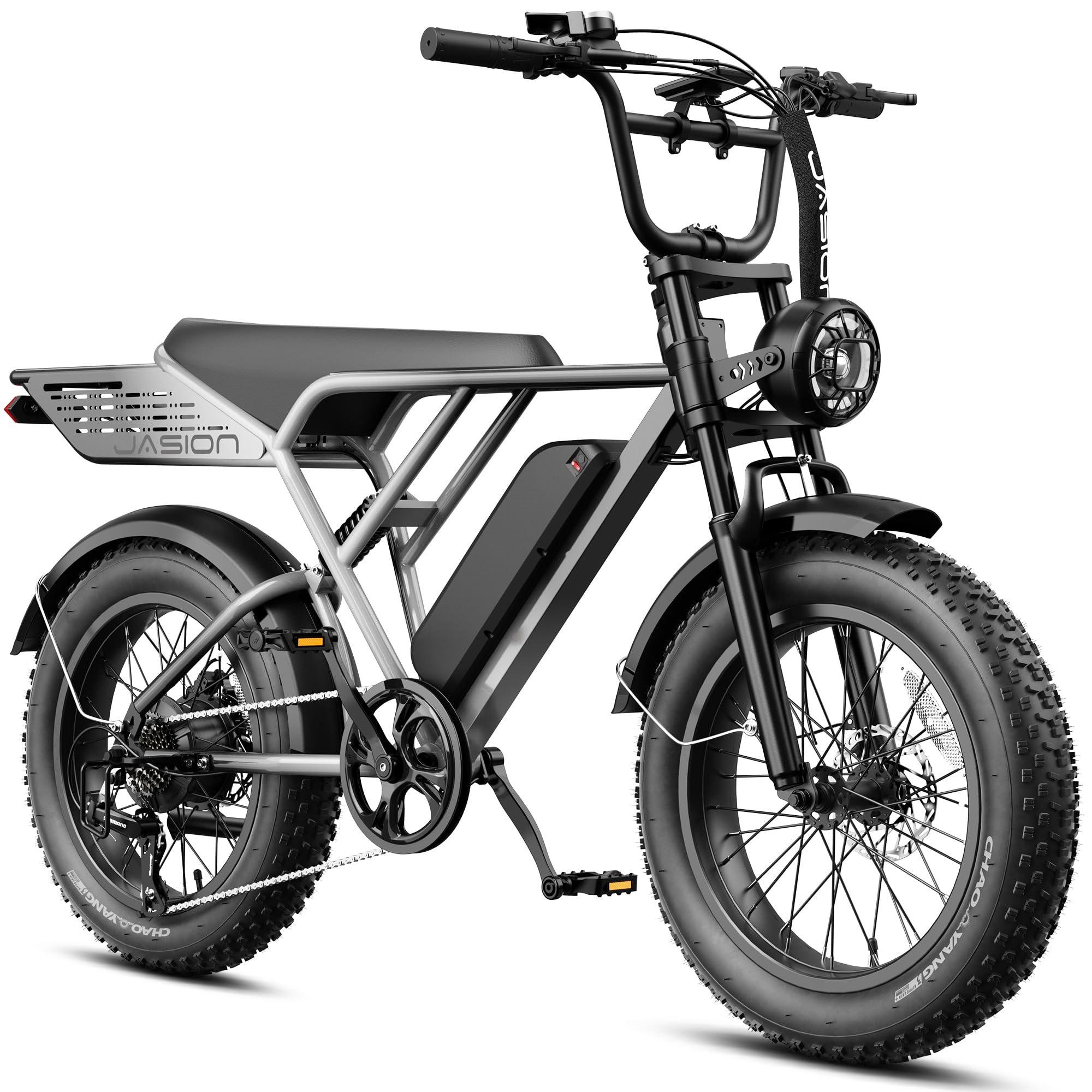
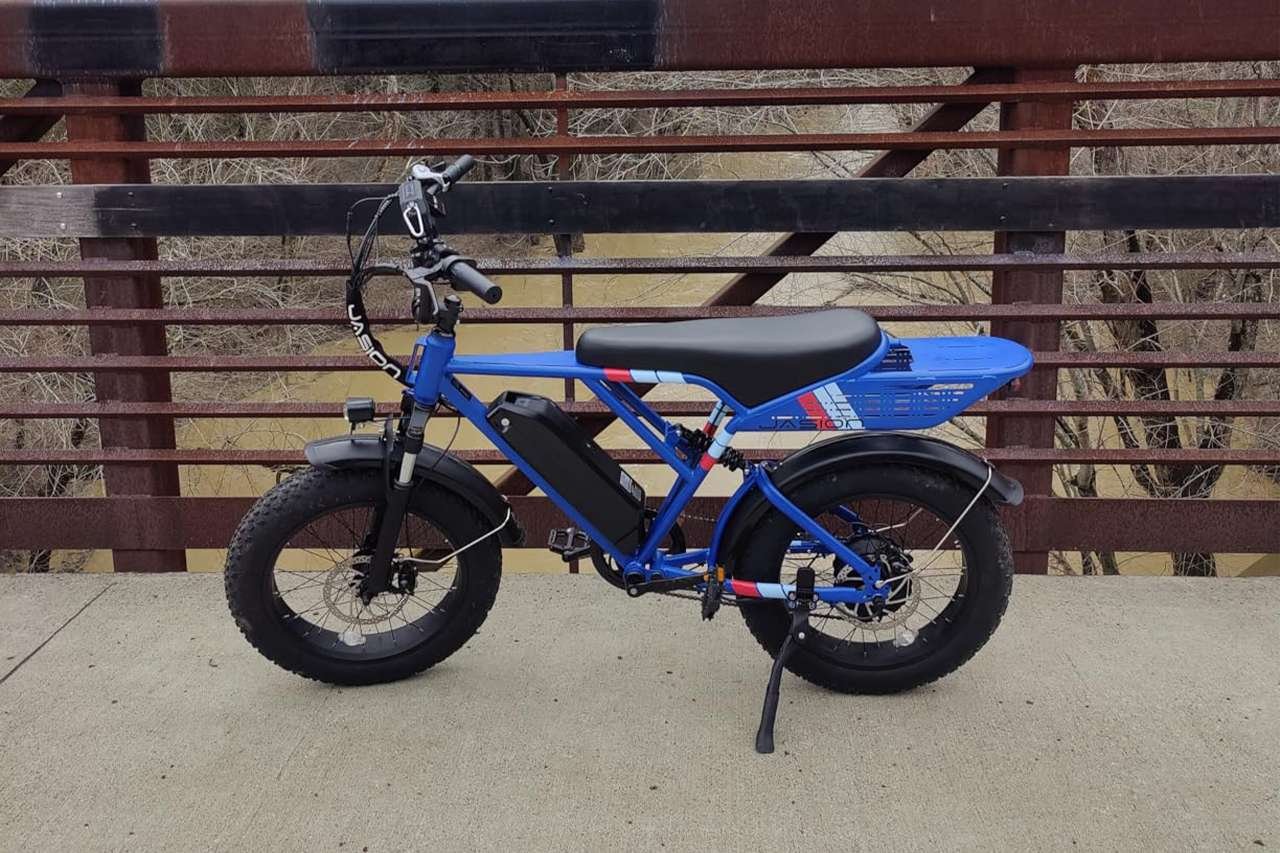
The RetroVolt Pro is Jasion’s most visually distinctive model, combining a moped-inspired silhouette with a 3,000W peak motor and full dual suspension for riders who want performance and style in one package.
Pros
- 3,000W peak motor and 120 N·m torque handle steep climbs and fast acceleration
- Full dual suspension system improves comfort across rough terrain
- 450 lb payload capacity, the highest in this Jasion lineup
Cons
- Speed and power settings may need manual reprogramming out of the box to reach advertised performance
- Brakes occasionally arrive misaligned and require adjustment before first ride
| Preview | Product | Rating | Price | |
|---|---|---|---|---|

| Jasion RetroVolt Pro E-Bike for Adults, 2000W Peak, Removable Battery | 52V 20Ah battery… | $839.99 | View on Amazon |
The 52V 20Ah battery supports up to 90 miles in PAS mode, though mixed riding puts realistic range closer to 45–55 miles. At 38 mph, this is also the fastest model in the Jasion range, which makes responsible riding habits and a proper helmet non-negotiable.
Buyers consistently mention the bike’s visual appeal, with several noting unsolicited compliments from passersby. The moped-style design, combined with its legal classification as an ebike, makes it a practical choice for riders who want the look of a dirt bike with street-legal operation.
Best for: Heavier riders and performance-focused buyers who want maximum torque, the highest payload limit, and a retro aesthetic.
Avoid if: You are not comfortable adjusting drivetrain or brake settings out of the box, or if responsive after-sales support is a priority for you.
5. Jasion X Hunter PRO Foldable Electric Bike
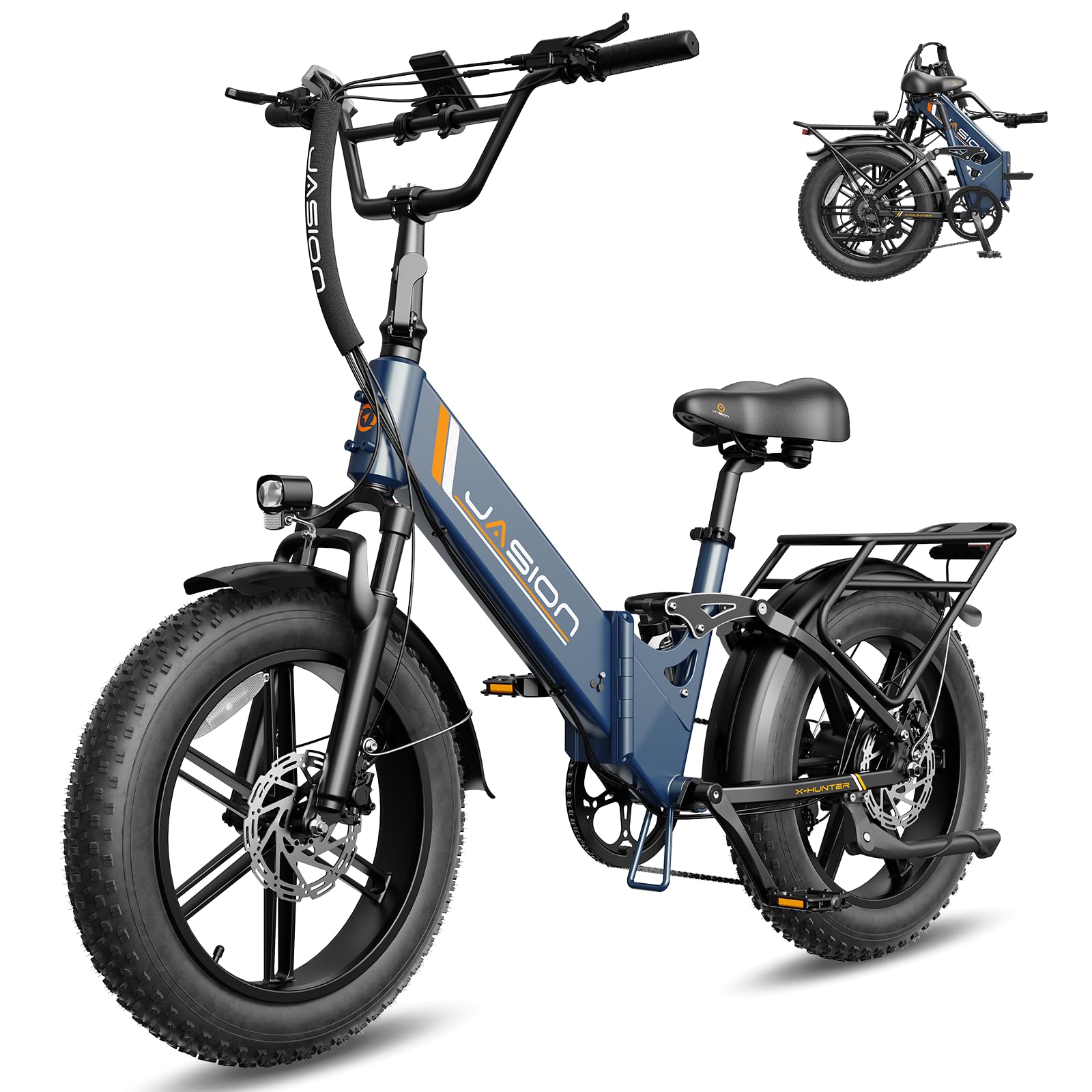
The X Hunter PRO is Jasion’s most capable foldable bike, pairing a 4-link rear suspension system with 20×4-inch fat tires and a 480 lb payload capacity that no other folding model in this lineup can match.
Pros
- 4-link rear suspension adds genuine trail comfort beyond standard seat-post designs
- 480 lb payload is exceptionally high for a folding fat-tire ebike
- UL2849 certification supports safe indoor and apartment charging
Cons
- Weighs approximately 71 lbs, making carry and trunk loading physically demanding
- Warranty parts support hours are limited and primarily email-based, which frustrates some buyers
- 624Wh battery on the ST model is notably smaller than the PRO’s 720Wh pack
| Preview | Product | Price | |
|---|---|---|---|

| Jasion X-Hunter Electric Bike for Adults,1400W Peak Motor 30MPH Max Speed 48V 13AH… | $638.99 | View on Amazon |
The 1,400W peak motor tops out at 30 mph and produces 85 N·m of torque. Riders in hilly areas report consistent performance on steep grades. The battery lock design requires folding the frame to access the pack, which adds theft resistance but slightly complicates battery removal for home charging.
The compact folded dimensions make it workable for car trunks and RV storage. At 71 lbs, it folds but does not lift easily. Consider this bike if portability means car transport rather than hand-carrying.
Best for: Heavier riders who need a foldable fat-tire bike for car travel, camping, or RV trips, and who prioritize suspension and payload over light weight.
Avoid if: You need to physically carry the folded bike up stairs or onto public transit regularly.
6. Jasion EB5 Commuter Electric Bike
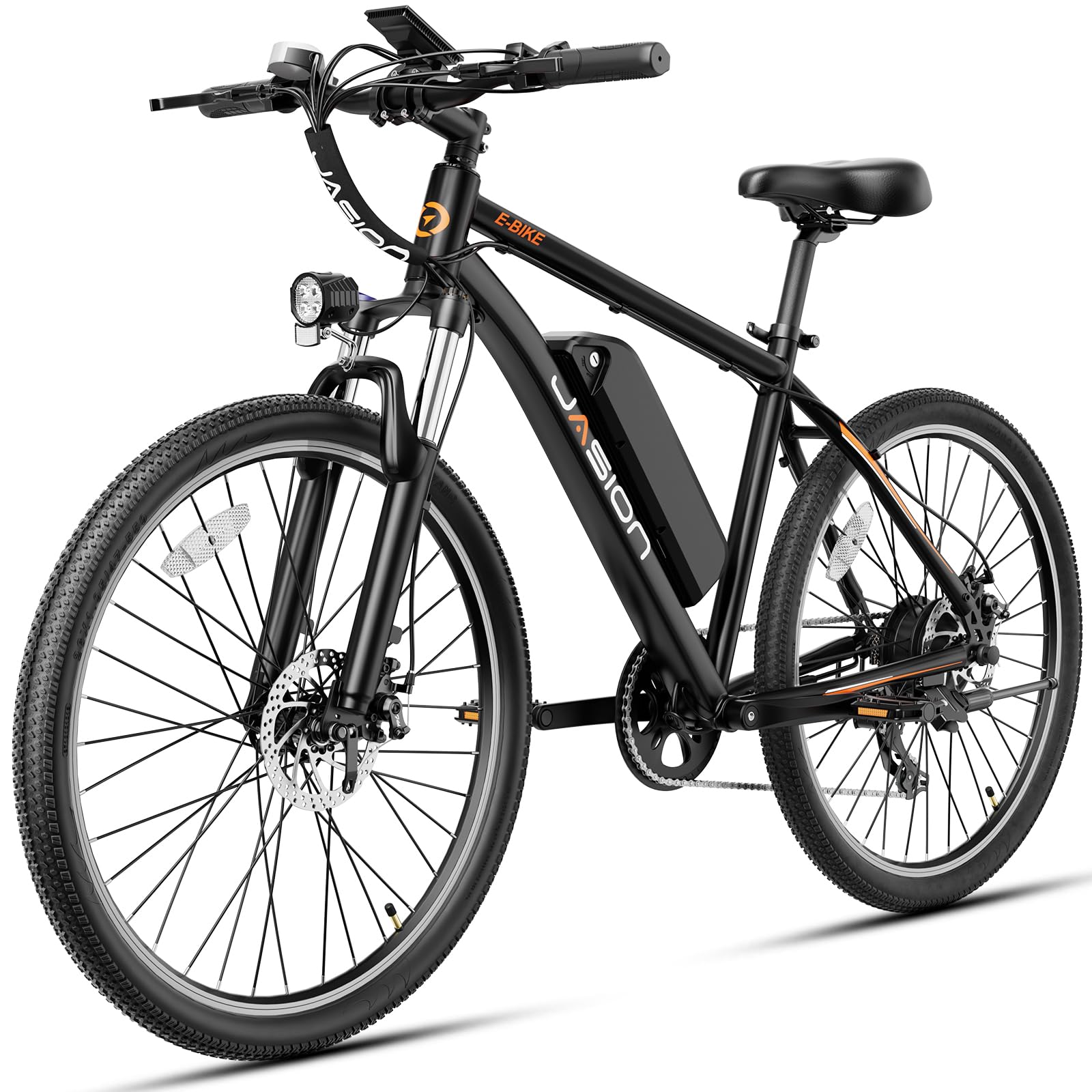
The base EB5 is Jasion’s entry-level commuter and the most widely reviewed model in the lineup, offering a lightweight 49.6 lb frame, a 1,000W peak motor, and a 360Wh battery at the most accessible price point in the range.
Pros
- Lightweight at 49.6 lbs, easier to handle than heavier fat-tire models
- Simple four-mode system is straightforward for first-time ebike riders
- Highly rated with the largest review base of any model in this lineup
Cons
- 360Wh battery limits real-world range to 25–35 miles under typical conditions
- 20 mph top speed is modest compared to most other Jasion models
- Mechanical disc brakes are noisier and less consistent than hydraulic alternatives
| Preview | Product | Price | |
|---|---|---|---|

| Jasion EB5 Electric Bike for Adults 26″ tire with 1000W Peak Motor | Removable Battery… | $339.99 $305.99 | View on Amazon |
The EB5 suits riders with short to medium daily commutes on relatively flat terrain. Buyers with 400+ miles on the bike report reliable performance, though battery capacity starts to show its limits on routes over 20 miles without pedal assist.
At 49.6 lbs with a 26-inch wheel and sleek city-oriented geometry, this is the easiest Jasion model to maneuver in traffic and store in smaller spaces. It is not designed for off-road use; on paved and light mixed-surface routes, it performs well for the price.
Best for: Budget-conscious first-time ebike buyers who commute 10–20 miles daily on paved roads and want a lightweight, no-fuss bike.
Avoid if: You have hilly terrain, longer commutes over 25 miles, or need speeds above 20 mph.
7. Jasion EB6 Foldable Electric Bike
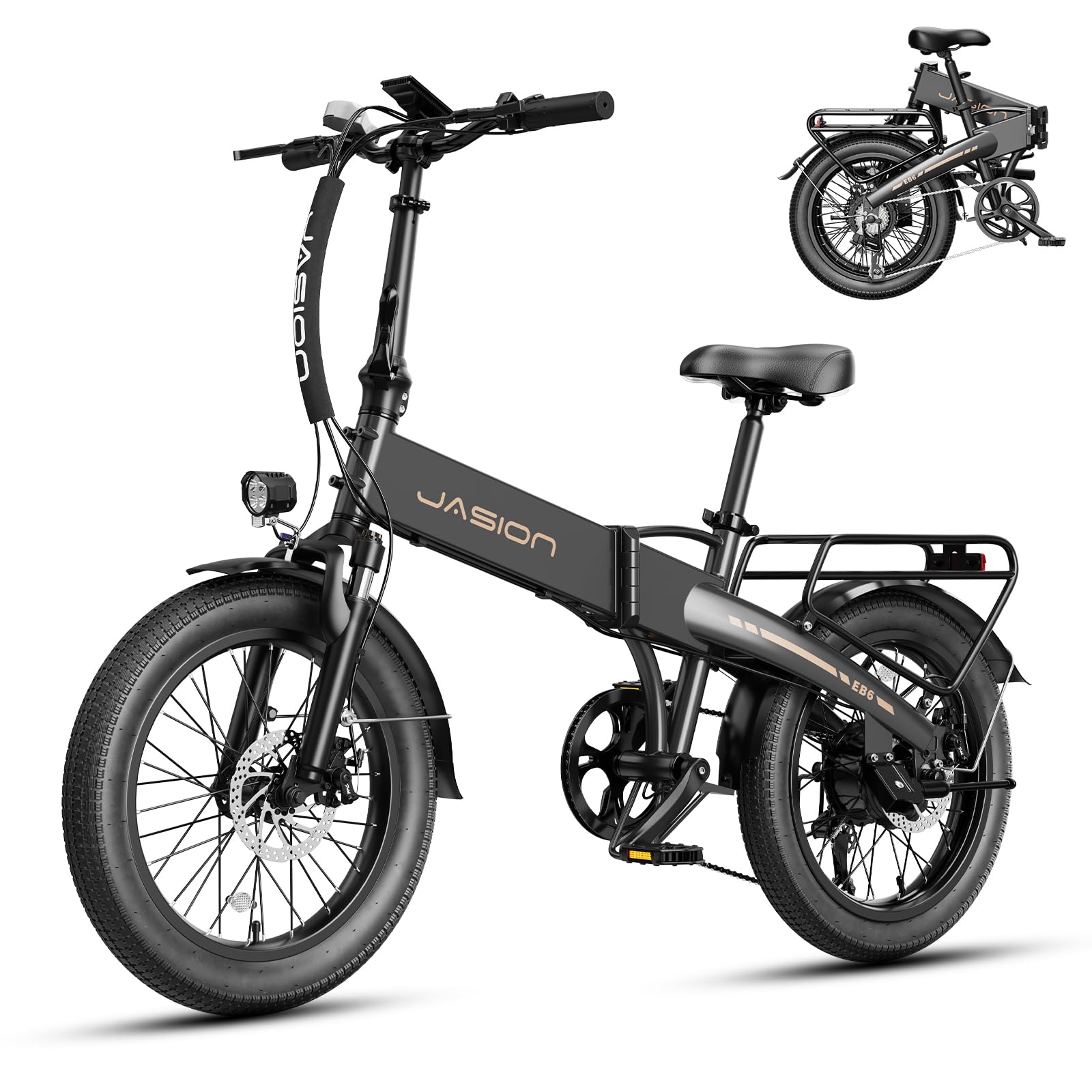
The EB6 is Jasion’s most portable folding commuter, built on a lightweight aluminum frame that keeps weight at 59 lbs and folds down to a compact 36x19x29-inch footprint for car trunks, offices, and small apartments.
Pros
- Aluminum frame keeps weight lower than the steel-framed folding alternatives
- Compact folded size fits car trunks and apartment storage with minimal effort
- 90% pre-assembled; most buyers report setup in under 30 minutes
Cons
- Built-in (non-removable) battery limits charging flexibility in some environments
- 1,200W peak motor struggles on steep hills without active pedaling
- 330 lb payload is the lowest capacity in the Jasion lineup
| Preview | Product | Price | |
|---|---|---|---|

| Jasion EB6 Foldable Electric Bike for Adults, 1200W Peak Motor 25 MPH EBike | 20″ Fat Tire… | View on Amazon |
The 374Wh built-in battery supports up to 45–50 miles in optimal conditions. Real-world city commuting will land closer to 30–35 miles. The non-removable battery is the most significant practical trade-off; charging requires access to an outlet near where the bike is parked.
At 25 mph, this is not a fast bike. Riders using it primarily on flat urban routes and light paths find it well-matched to the use case. A 72-year-old buyer noted easy learning and comfortable ergonomics, which reflects the accessible low-step design well.
Best for: Urban commuters and casual riders who prioritize portability and compact storage over range, speed, or off-road capability.
Avoid if: You live above ground level without elevator access to an outlet, or if you need to charge the battery separately from the bike.
Buying Guide
Choosing an electric bike involves more than picking the highest motor wattage. Understanding a few key specifications will help you match a bike to your actual riding needs.
Motor Power: Peak vs. Continuous
Most ebike listings advertise peak motor output. Peak wattage reflects a short burst of maximum power, not what the motor sustains during a full ride. A motor listed at 2,000W peak may only run continuously at 750W. For daily commuting, continuous output matters more. For steep climbs or heavy loads, peak output determines whether the bike will struggle.
Battery Capacity and Realistic Range
| Battery Size (Wh) | Expected City Range | Expected Mixed Range |
|---|---|---|
| Under 400Wh | 20–30 miles | 15–22 miles |
| 400–700Wh | 30–50 miles | 22–38 miles |
| 700–900Wh | 45–65 miles | 35–50 miles |
| 900Wh+ | 60–80+ miles | 45–65 miles |
Advertised range figures assume a light rider, flat terrain, eco assist mode, and moderate temperatures. Real-world range with a 200–250 lb rider on mixed terrain with moderate assist typically runs 30–50% below the maximum listed figure.
Payload Capacity and Its Effect on Performance
If you weigh over 200 lbs or carry cargo regularly, check the payload limit carefully. Riding near the maximum capacity reduces range, acceleration, and braking responsiveness. Choose a bike rated at least 50–75 lbs above your loaded weight.
Suspension Type
- Front suspension only: Suitable for paved roads and light gravel. Lower cost, slightly lighter.
- Dual suspension: Better comfort on rough trails, packed dirt, and potholed streets. Adds weight and cost.
- No suspension: Found on lightweight commuters; best only for smooth, flat surfaces.
Tire Type and Size
Fat tires (4 inches wide) provide better traction on sand, snow, and loose terrain, but increase rolling resistance on pavement, which reduces range. Standard tires (2–2.5 inches) are more efficient for pure city use.
Folding vs. Non-Folding
| Feature | Folding | Non-Folding |
|---|---|---|
| Portability | High | Low |
| Weight | Usually heavier per size | Varies |
| Storage | Compact | Requires full bike footprint |
| Frame stiffness | Slightly reduced at hinge | Generally stiffer |
Folding bikes add convenience for commuters who combine cycling with public transit or car travel. The hinge mechanism adds slight flex and weight compared to rigid frames of similar size.
Safety Certifications
Look for UL2849 certification, which covers electrical system safety including battery, motor, and wiring. This certification is especially important if you plan to charge the bike indoors or in an apartment.
Braking Systems
Hydraulic disc brakes provide more consistent stopping power than mechanical disc brakes, particularly in wet conditions or at higher speeds. If you plan to ride above 25 mph or on hilly terrain, hydraulic brakes are worth prioritizing.
Frequently Asked Questions
Are Jasion electric bikes reliable for daily commuting and weekend rides?
Jasion bikes generally perform reliably for commuting when matched to the right use case. Models like the EB5 and EB6 suit shorter flat commutes well, while the Thunder and EB5 MAX handle longer mixed-terrain routes more confidently. Buyer feedback across thousands of reviews suggests most mechanical issues arise from setup rather than fundamental build quality.
How does Jasion compare to other budget e-bike brands in overall value and performance?
Jasion offers competitive specifications at their price points, with features like hydraulic brakes, UL certification, and app connectivity appearing on models where comparable brands charge more. The trade-off is that build tolerances and customer support response times are less consistent than premium brands, so buyers should factor in the possibility of minor adjustments after delivery.
What are the most common problems or complaints reported by Jasion e-bike owners?
The most frequently reported issues include derailleur adjustments needed out of the box, brake rubbing on the wheel after assembly, and range that falls short of advertised maximums under real-world conditions. A smaller number of buyers report component failures like throttle issues or battery problems, with mixed experiences regarding warranty resolution speed.
How long does a Jasion e-bike battery typically last before needing replacement?
Lithium-ion batteries in this price range generally retain usable capacity for 500–800 full charge cycles, which translates to roughly 2–4 years of daily use depending on charging habits. Avoiding full discharges and storing the battery at partial charge in mild temperatures extends lifespan meaningfully.
What should buyers check before purchasing a low-cost e-bike to avoid poor-quality models?
Prioritize models with UL2849 certification, which independently verifies electrical safety rather than relying solely on manufacturer claims. Check whether the frame is aluminum or steel (aluminum resists corrosion better), confirm brake type (hydraulic over mechanical for high-speed use), and verify the actual battery watt-hours rather than only the amp-hour rating, since voltage varies between models and affects total energy capacity.
GoEBikeLife publishes independent e-bike reviews, comparisons, and practical buying guides. Some links on this page are affiliate links. If you make a purchase through an eligible link, we may earn a commission at no additional cost to you.