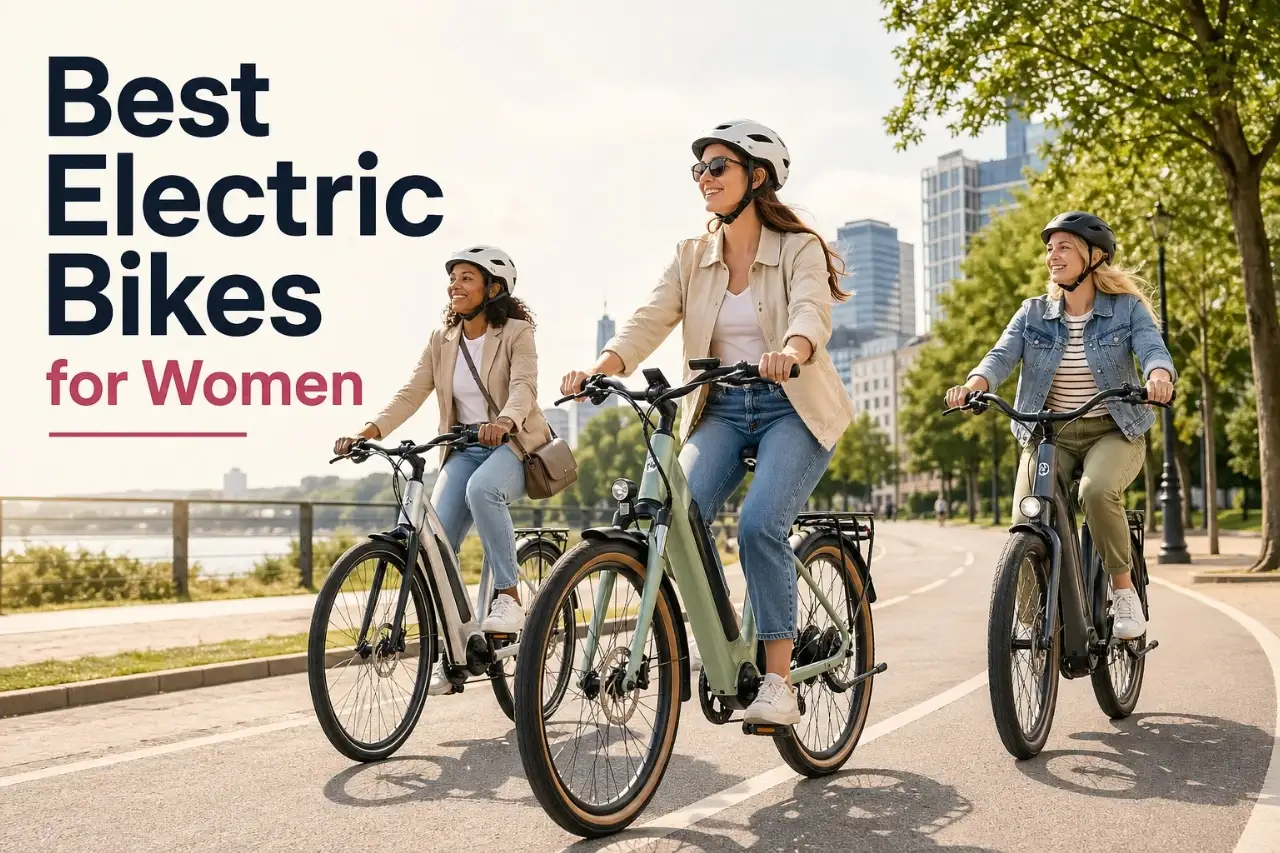
Finding the right electric bike comes down to more than color options or marketing language. For many riders, the most important factors are how well the bike fits their body, how easy it is to get on and off, how much it weighs, and whether it feels stable and confident to ride in real traffic. A step-through frame, an upright riding position, adjustable handlebars, and a manageable total weight can make a bigger difference to daily ridability than motor size alone.
Frame geometry, standover height, and handlebar reach affect how comfortable a rider feels from the very first ride. Riders who are shorter, who carry cargo, or who store their bike in tight spaces will find these factors matter as much as battery range or motor wattage.
Choosing between models also means being honest about real-world range, which is usually well below the manufacturer’s maximum claim. Terrain, rider weight, wind, and how much pedal assist is used all cut into that number. The bikes reviewed here vary in motor power, battery capacity, frame style, and price. Each one suits a slightly different rider, so the best pick depends on the individual’s height, daily riding needs, and storage situation.
Best for Power and Range: Cybervelo EK2 Classic Electric Bike
Best for City Commuting: Movcan V80 Electric Bike
Best for Lightweight Commuting: ANCHEER 48V Commuter Electric Bike
Best Step-Through for Comfort: Funhang EB-C1 City Cruiser Ebike
Best Budget-Friendly Pick: Gotrax Dolphin Step-Thru Electric Bike
Comparison Table
| Feature | Cybervelo EK2 | Movcan V80 | ANCHEER 48V | Funhang EB-C1 | Gotrax Dolphin |
|---|---|---|---|---|---|
| Motor (Peak) | 1000W | 1000W (1500W peak) | 350W | 500W (1000W peak) | 350W (500W peak) |
| Battery | 48V 720Wh | 48V 624Wh | 48V 500Wh | 48V 374Wh | 48V 280Wh |
| Claimed Range | Up to 80 mi | Up to 70 mi | Up to 60 mi | 40–50 mi (PAS) | Up to 30 mi (PAS) |
| Wheel Size | 26 in | 26 in | 26 in | 26 in | 26 in |
| Frame Type | Step-over | Step-over | Step-over | Step-through | Step-through |
| Bike Weight | Not listed | 60.6 lbs | 66 lbs | 61.5 lbs | 49 lbs |
| Payload | 330 lbs | 330 lbs | Not listed | 300 lbs | 300 lbs |
| Brakes | Dual disc | Dual disc | Dual disc | Disc | Dual disc |
| Suspension | Front | Front | Front | Front | Front |
| Speeds | 7 | 7 | 7 | 7 | 7 |
| UL 2849 Certified | Yes | Yes | Yes | Yes | Yes |
| Rider Height | 5’3″–6’5″ | 5’4″–6’4″ | 5’4″–6’5″ | 5’3″–6’1″ | 5’2″–6’4″ |
Cybervelo EK2 Electric Bike

The Cybervelo EK2 offers the most battery capacity in this group and is worth considering for riders who want meaningful range and real hill-climbing power on daily commutes.
Pros
- Largest battery in this comparison at 720Wh, supporting longer rides
- UL 2849 certified with a built-in battery management system
- Supports riders up to 330 lbs with a reinforced carbon steel frame
Cons
- Newer brand with only a small number of reviews so far
- Step-over frame is harder to mount for shorter or less flexible riders
- Real-world range will likely be well under the claimed maximum
Best for: Taller riders who want longer range and strong motor output for hilly terrain or longer commutes.
Key Specs:
Motor: 1000W peak brushless
Battery: 48V 720Wh
Range: Claimed up to 80 miles
Speeds: 7
Brakes: Dual disc
Suspension: Front fork
Rider Height: 5’3″ to 6’5″
Max Load: 330 lbs
What It Does Well
The 720Wh battery is the standout feature. That capacity gives this bike the best chance of delivering meaningful range in real-world conditions, especially if riders use pedal assist rather than pure throttle mode. The 1000W peak motor handles 30-degree inclines, which is useful for hilly cities or suburban routes with frequent stops and starts.
Main Drawbacks
Cybervelo is a new brand with a limited review count. A few buyers reported quality control issues, including a broken battery cover and loose hardware. One reviewer described the bike as low-quality. These are real concerns for a bike that requires some assembly and long-term reliability expectations.
Fit and Comfort Notes
The step-over frame suits riders between 5’3″ and 6’5″, but it may feel awkward for riders at the shorter end of that range or those with limited flexibility. The seat and handlebars are adjustable, which helps with dialing in a comfortable position.
Practical Daily-Use Notes
The removable battery allows indoor charging, which is convenient for apartment dwellers. Assembly takes roughly two hours for most buyers. The LCD display shows speed, battery level, and assist mode in real time.
Who Should Buy It: Riders wanting long-range capability on a moderate budget, comfortable with some assembly and an emerging brand.
Who Should Skip It: Riders who need a step-through frame, prefer an established brand, or want a lighter bike for easy storage.
Verdict: The battery size stands out, but the limited review track record and step-over frame design mean it is better suited for taller, confident riders who are comfortable with some risk on a newer brand.
Movcan V80 Electric Bike

The Movcan V80 is a well-rounded city commuter with a strong motor and good accessory value, making it a practical option for riders who want a capable bike without spending significantly more.
Pros
- Strong 1000W peak motor with 80Nm torque for confident hill climbing
- Comes with phone holder, bike lock, spare brake pads, and a rearview mirror
- Quick assembly; several buyers completed it in under 30 minutes
Cons
- Step-over frame limits easy mounting, especially for shorter riders
- At 60.6 lbs, it is heavy and not easy to carry or lift into storage
- Relatively small review pool compared to more established brands
Best for: Commuters who want a motor-capable city bike with a practical accessory kit already included.
Key Specs:
Motor: 1000W (1500W peak)
Battery: 48V 624Wh
Range: Up to 70 miles (PAS), 30 miles (pure electric)
Speeds: 7
Brakes: Dual disc
Suspension: Front
Weight: 60.6 lbs
Max Load: 330 lbs
What It Does Well
The V80 arrives with more accessories out of the box than most bikes in this price range. Buyers noted the bike is responsive, quiet, and smooth on city roads. The 624Wh battery provides solid range for multi-stop commutes. Several reviewers mentioned the seat comfort as a positive surprise.
Main Drawbacks
The 60.6-lb weight makes this bike difficult to carry upstairs or lift into a vehicle. The step-over frame is also a limiting factor for riders with shorter inseams or joint limitations. The 70-mile range claim is a best-case figure achieved in low-assist mode.
Fit and Comfort Notes
The seat and handlebars are adjustable. Riders with longer inseams will find the fit more natural. Shorter riders may find the standover height challenging for confident stopping and starting.
Practical Daily-Use Notes
The removable battery supports home or office charging. The included bike lock adds useful convenience for urban parking. Four riding modes, including cruise control, help reduce hand fatigue on longer rides.
Who Should Buy It: City commuters of average to taller height who want strong motor performance and a ready-to-ride accessory package.
Who Should Skip It: Shorter riders, those who need to carry the bike upstairs, or riders who prefer a step-through design.
Verdict: The Movcan V80 delivers solid performance and good value for its category, but its weight and step-over frame design are real limitations for a portion of potential buyers.
ANCHEER 48V Commuter Electric Bike


The ANCHEER 48V is a straightforward commuter bike from an established brand with a large review base, making it a lower-risk choice for first-time e-bike buyers who want proven reliability over raw power.
Pros
- Established brand with a significantly larger review base than most competitors here
- Aluminum frame is a weight advantage over carbon steel alternatives
- Cruise control and 5 pedal assist levels suit relaxed commuting well
Cons
- Actual motor is 350W continuous, making it less capable on steep hills
- 66 lbs is the heaviest bike in this group, which affects handling and storage
- Listed battery capacity is smaller than several competitors at 500Wh
Best for: First-time e-bike buyers who want a reliable commuter from a known brand and mostly ride on flat to gently rolling terrain.
Key Specs:
Motor: 350W (500W peak)
Battery: 48V 500Wh
Range: Up to 60 miles
Speeds: 7
Brakes: Dual disc
Suspension: Front
Weight: 66 lbs
Frame: Aluminum
What It Does Well
ANCHEER has a long track record in the entry-level e-bike market. The aluminum frame is a genuine advantage in terms of corrosion resistance and frame stiffness. Cruise control reduces hand fatigue on flat commutes. Buyers with multiple years of use report consistent battery health over time.
Main Drawbacks
At 66 lbs, this is the heaviest option in this comparison. That weight, combined with a 350W continuous motor, limits performance on meaningful hills. The 60-mile range is a best-case figure and real-world commuting range will be considerably lower, particularly with frequent stops or heavier riders.
Fit and Comfort Notes
The step-over frame is standard for this style. The adjustable seat and handlebars help riders dial in a comfortable position. The front suspension fork helps absorb small bumps on city roads.
Practical Daily-Use Notes
The bike arrives 85% pre-assembled. The LCD display is readable in daylight and nighttime conditions. A rear light is included for visibility after dark. The 7-speed twist grip system is intuitive for riders new to derailleur bikes.
Who Should Buy It: Flat-terrain commuters who value brand reliability and a large user community for support and troubleshooting.
Who Should Skip It: Riders who need hill-climbing power, those who struggle with heavier bikes, or anyone who needs a step-through frame.
Verdict: A safe, predictable choice for mild commuting, but the weight and motor output are genuine trade-offs that matter for riders dealing with hills or storage limitations.
Funhang EB-C1 City Cruiser Ebike

The Funhang EB-C1 is the most comfort-focused step-through option in this group, offering easy frame access, an adjustable stem, and a rear rack included from the factory, which makes it a practical daily commuter for a wide range of riders.
Pros
- Step-through frame design makes mounting and dismounting easy at any stop
- Rear rack, fenders, and kickstand included without extra cost
- Adjustable stem allows riders to customize handlebar height for an upright position
Cons
- 300-lb payload limit is the lowest in this group
- Actual range in pure electric mode is 25 to 30 miles, which is limited
- Some buyers noted the seat is uncomfortable for riders with wider hips
Best for: Riders who prioritize easy frame access, an upright position, and practical cargo capability for daily errands and commuting.
Key Specs:
Motor: 500W (1000W peak)
Battery: 48V 374Wh
Range: 40 to 50 miles (PAS), 25 to 30 miles (pure electric)
Speeds: 7
Brakes: Disc
Suspension: Front
Weight: 61.5 lbs
Rider Height: 5’3″ to 6’1″
Max Load: 300 lbs
What It Does Well
The step-through frame is the defining feature. It makes getting on and off the bike easy at traffic lights or when navigating tight spaces. The adjustable stem is a practical detail that lets riders fine-tune their riding position. The included rear rack adds real utility for grocery runs or bag carrying without requiring aftermarket purchases.
Main Drawbacks
The 374Wh battery is the smallest in this group, which limits real-world range. Pure electric mode gives 25 to 30 miles, which may fall short for longer commutes. One buyer also noted the throttle is touchy, particularly when turning, which can be unsettling for less experienced riders.
Fit and Comfort Notes
The bike is recommended for riders between 5’3″ and 6’1″. The step-through design particularly benefits shorter riders who find mounting a standard frame awkward. The stock seat may not suit all riders, and swapping it for a wider aftermarket saddle is a straightforward upgrade for those who find the stock one uncomfortable.
Practical Daily-Use Notes
Fenders are included, which keeps riders cleaner in wet conditions. The five riding modes, including a booster mode, add flexibility. Assembly is 85% complete out of the box and most buyers complete it without difficulty.
Who Should Buy It: Riders who want easy frame access, a cargo-ready setup, and a comfortable upright position for short to medium daily commutes.
Who Should Skip It: Riders who need more than 40 miles of real-world range, heavier riders near the 300-lb limit, or those who need a more powerful motor for steep terrain.
Verdict: The best step-through choice in this roundup for practical daily use, with the caveat that its smaller battery limits it to shorter rides.
Gotrax Dolphin Step-Thru Electric Bike

The Gotrax Dolphin is the lightest and most affordable bike in this group, and it earns strong long-term reviews from real users, making it a credible choice for budget-conscious riders who keep their daily distances moderate.
Pros
- Lightest bike in this comparison at 49 lbs, making it easier to lift and store
- Step-through frame with a low standover height suits a wide range of rider heights
- Strong long-term user feedback, including positive one-year reports on battery health
Cons
- Smallest battery in this group at 280Wh; pure electric range is around 15 miles
- 350W continuous motor is underpowered for steep hills or heavier riders
- 30-mile maximum range requires light PAS use and favorable conditions
Best for: Budget-focused riders with flat or mildly hilly commutes of 10 to 20 miles round-trip who want a lighter, easy-to-store step-through bike.
Key Specs:
Motor: 350W (500W peak)
Battery: 48V 280Wh
Range: Up to 30 miles (PAS), 15.5 miles (pure electric)
Speeds: 7 (Shimano)
Brakes: Dual disc
Suspension: Front
Weight: 49 lbs
Frame: Aluminum
Max Load: 300 lbs
What It Does Well
At 49 lbs, the Dolphin is noticeably easier to manage than most bikes in this category. Riders report being able to lift it into a car trunk or carry it up a flight of stairs without significant difficulty. The Shimano 7-speed drivetrain is a quality component that tends to shift reliably over time. Long-term buyers report the battery holds its charge well after a year of regular use, which is a meaningful indicator of quality at this price.
Main Drawbacks
The 280Wh battery is a real limitation. Riders who commute more than 12 to 15 miles each way in pure electric mode will likely run out of charge before reaching their destination. The 350W motor also struggles on meaningful inclines, particularly with a heavier rider or when carrying cargo.
Fit and Comfort Notes
The step-through frame and adjustable seat height make this bike accessible for a wide range of rider sizes. The low standover height is genuinely useful for riders who feel uncertain stopping and dismounting at intersections. The handlebar angle is also adjustable, which supports a more upright, comfortable position.
Practical Daily-Use Notes
The boost mode adds a brief speed kick for getting through intersections or up short inclines. The front suspension handles city potholes and minor road imperfections adequately. Assembly takes most buyers under 30 minutes.
Who Should Buy It: Riders on a tighter budget, those with flat commutes under 15 miles each way, and anyone who needs a lighter bike for storage in small spaces or vehicle transport.
Who Should Skip It: Riders with hilly routes, those who need more than 20 miles of pure electric range, or riders who regularly carry heavy cargo.
Verdict: The Gotrax Dolphin is a genuinely capable entry-level step-through e-bike with strong reliability feedback. Its range and motor output are real constraints, but for the right rider and route, it delivers solid, practical value.
Buying Guide
Choosing an e-bike involves balancing several competing factors. Prioritizing fit, weight, and daily usability over raw specs often leads to a better long-term purchase.
Frame Type: Step-Through vs Step-Over
A step-through frame has a low or absent top tube, making it easy to swing a leg over without lifting it high. This matters when stopping frequently at lights, when wearing certain clothing, or when a rider has limited hip flexibility.
A step-over frame offers more structural rigidity at the same weight, but requires a higher leg clearance to mount. Shorter riders or those with joint limitations often find step-through frames more confidence-inspiring in daily use.
Rider Height and Standover Fit
Check the manufacturer’s recommended rider height range before buying. Standover height, which is the clearance between the top tube and the rider’s inseam, affects how safely a rider can stop and put a foot down.
| Rider Height | Suggested Approach |
|---|---|
| Under 5’3″ | Look for a step-through frame with low standover height |
| 5’3″ to 5’8″ | Most step-through and some step-over frames will fit |
| 5’8″ to 6’0″ | Most standard frames work; check saddle height max |
| Over 6’0″ | Look for large frame options with extended seat post range |
Bike Weight and Storage
E-bike weights in this category range from about 49 to 66 lbs. That difference matters if a rider needs to carry the bike upstairs, lift it into a vehicle, or maneuver it in tight storage spaces.
A lighter bike is also easier to control at low speeds. Riders who are less experienced or managing balance challenges will often find a lighter bike more approachable.
Motor Power and Real-World Hill Performance
Motor ratings can be misleading. A “1000W peak” bike may run a 350W or 500W continuous motor, with peak power available only in short bursts. For most urban and suburban commuting, 500W continuous is adequate. For riders dealing with consistent steep hills or heavier loads, a higher continuous wattage matters more than the peak number.
Battery Range: Realistic Expectations
Manufacturer range claims are almost always best-case figures measured at the lowest assist level, on flat terrain, with a lighter rider. Realistic range is typically 40 to 60 percent of the claimed maximum under normal commuting conditions.
| Claimed Range | Realistic Commuting Range |
|---|---|
| 80 miles | 35 to 50 miles |
| 70 miles | 30 to 45 miles |
| 60 miles | 25 to 38 miles |
| 30 miles | 12 to 20 miles |
Brakes and Stopping Confidence
All five bikes in this roundup use disc brakes, which perform better than rim brakes in wet conditions. Mechanical disc brakes are the standard at this price point and are adequate for commuting use. The key is that the brakes feel firm and responsive right away, not spongy. New buyers should always test braking before riding in traffic.
Handlebar and Saddle Comfort
An upright riding position reduces strain on the wrists, back, and shoulders. Look for bikes with adjustable handlebars or stems that allow riders to bring the bars closer or raise them higher. Saddle comfort is personal, and many riders end up replacing the stock seat with a wider or better-padded aftermarket option within the first few weeks.
Cargo and Accessories
A rear rack dramatically increases the daily usability of a commuter bike. Not all bikes include one, and some require aftermarket installation. Fenders are similarly practical for wet-weather commuting. Check which accessories come included rather than assuming they are standard.
Frequently Asked Questions
Which e-bike features matter most for rider comfort and confidence on daily rides?
Frame access, handlebar height, saddle fit, and braking confidence are the most impactful for daily comfort. An adjustable stem and a step-through frame make a meaningful difference for riders who stop frequently or feel uncertain about mounting and dismounting at speed.
How do you choose the right frame size and step-through height for a shorter rider?
Shorter riders should look for a low or no top tube design and confirm the manufacturer’s minimum recommended height. The standover height should allow both feet to rest flat on the ground when stopped, which is critical for confident, safe riding in traffic.
What should buyers watch out for when comparing motor power, torque, and real-world hill performance?
Focus on the continuous wattage rather than the peak figure. A 350W continuous motor will struggle on steep inclines under load, while a 500W or higher continuous motor handles hills more consistently. Torque figures above 50Nm generally feel more capable on grades.
How much range can you realistically expect for commuting or errands, and what affects it most?
Plan for roughly 40 to 60 percent of the manufacturer’s claimed range in typical commuting conditions. Rider weight, wind, terrain, temperature, and assist level all reduce range. A 70-mile claimed range may realistically deliver 30 to 45 miles on a mixed urban route.
What are the best lightweight e-bikes for easier lifting, storage, and transport, and what trade-offs come with them?
Lighter e-bikes, such as those under 55 lbs, are easier to carry and maneuver but often have smaller batteries and less powerful motors. The Gotrax Dolphin at 49 lbs is the lightest option here, but its range and hill power are limited compared to heavier bikes with larger batteries.
Which e-bikes work best with a child seat or cargo setup while staying stable and easy to handle?
Bikes with a rear rack, a high payload capacity, and a stable wheelbase are the better candidates for child seat or cargo use. A 300-lb or higher payload limit gives more headroom when adding cargo weight. Disc brakes and front suspension are important for maintaining control with added load.
Do women need a women-specific electric bike?
No. The most important factors are frame fit, standover height, handlebar reach, and overall comfort. Many bikes marketed as women-specific simply use different colors. Riders should focus on geometry and adjustability rather than branding.
Are step-through e-bikes safer or better than standard frames?
Step-through frames are not inherently safer, but they make mounting and dismounting easier, which reduces the risk of losing balance at a stop. For riders who are newer to cycling or who ride frequently in stop-and-go conditions, this can translate to more confidence and fewer close calls.
GoEBikeLife publishes independent e-bike reviews, comparisons, and practical buying guides. Some links on this page are affiliate links. If you make a purchase through an eligible link, we may earn a commission at no additional cost to you.