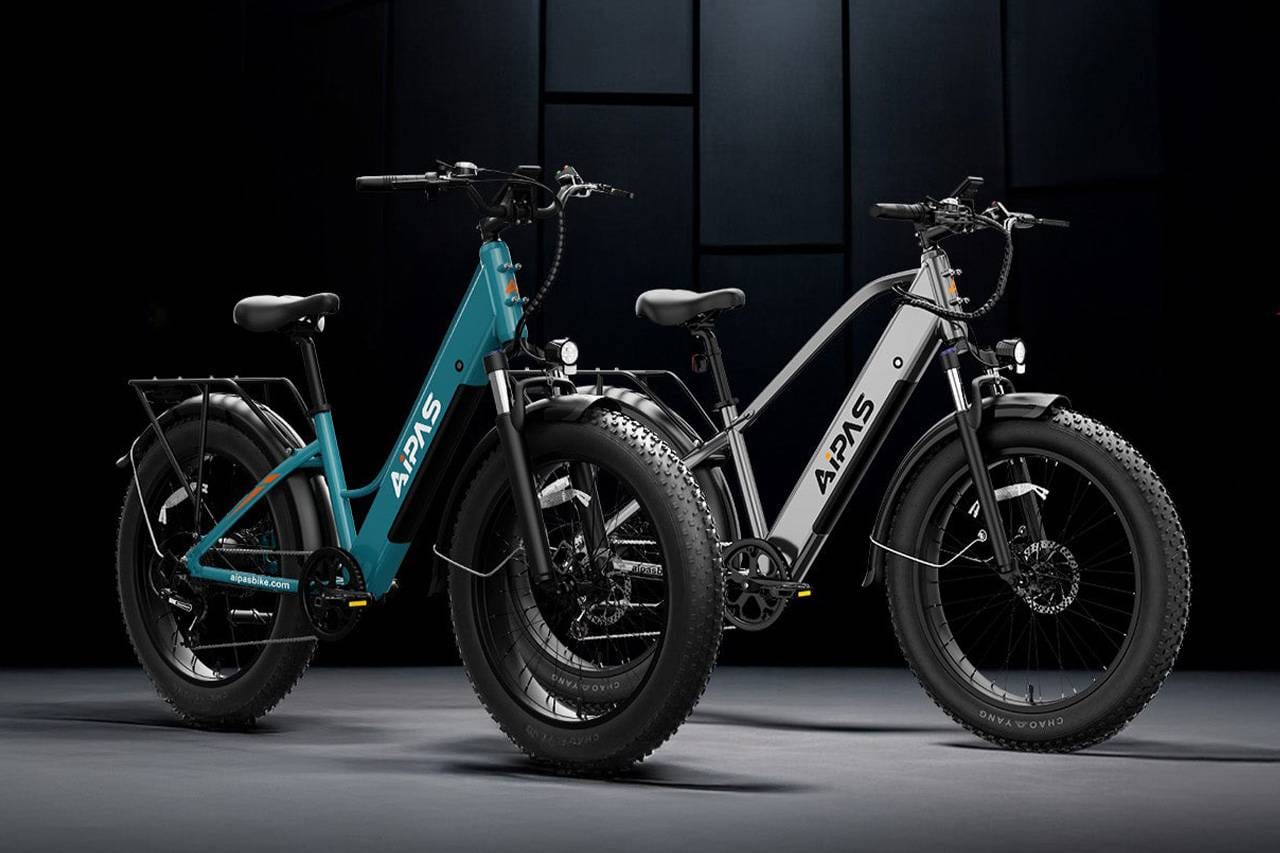
Aipas makes a wide enough lineup that picking the right model takes more than glancing at the spec sheet. Riders shopping this brand face a genuine fork in the road: do you want a full-size fat-tire mountain bike, a folding commuter, or a step-through city cruiser? Each category solves a different problem, and choosing the wrong one means living with a bike that doesn’t fit your garage, your hills, or your body.
The right Aipas model depends on where you ride, how you store the bike, and how much power you actually need. This aipas ebike review covers six models across the lineup. GoEBikeLife has organized each section around real ownership trade-offs, not manufacturer copy, so you can match the bike to your situation before you buy.
Aipas builds two broad types of bikes. The M-series and C-series are full-size frames suited to riders who have storage space and want trail or mixed-terrain capability. The A-series and F-series are folding bikes built for apartments, car trunks, and multimodal commutes. Within each type, the differences in motor size, battery capacity, suspension design, and braking hardware have real implications for how the bike rides and what it costs to own.
Best for off-road and long trail rides: Aipas M1 Pro Electric Bike
Best for heavier riders on trails: LEONX M2 Pro Electric Bike
Best for urban commuting on a budget: Aipas C1 Electric Bike
Best folding bike for city commuters: Aipas A2 Folding Electric Bike
Best folding bike for rough roads and high power: Aipas F3 Max Folding Electric Bike
Best step-through for long-range commuting: Aipas C1 Max Electric Bike
1. Aipas M1 Pro Electric Mountain Bike

The M1 Pro is the right pick for riders who want fat-tire trail performance and a claimed top speed near 36 mph without spending at the premium tier.
| Spec | Detail |
|---|---|
| Motor (peak) | 1800W brushless hub |
| Torque | 110 Nm |
| Battery | 48V 17.5Ah |
| Claimed range | 25 to 85 miles |
| Tires | 26″ x 4.0″ fat |
| Brakes | 180mm mechanical disc |
| Suspension | Dual (lockable front fork + rear shock) |
| Payload | 450 lbs |
| Frame | High-carbon steel, step-through |
Best for: Recreational trail riders, heavier adults, riders who want step-through access and fat-tire stability.
Not ideal for: Apartment dwellers with no storage space, riders who need to carry the bike upstairs, or road-only commuters who don’t need 4-inch tires.
The 110 Nm of torque translates to confident climbing on steep inclines up to about 23 degrees, based on manufacturer claims. The dual suspension helps on gravel and packed dirt. The 26×4 fat tires add rolling resistance on pavement but significantly improve grip on sand, loose soil, and wet surfaces.
The mechanical disc brakes are adequate but a step down from hydraulic units on more expensive bikes. Riders who brake hard on long descents may find them less consistent. The steel frame keeps costs down but adds weight; this bike is heavy, which reviewers noted as a real-world handling consideration.
Range varies widely. The claimed 85-mile figure assumes light pedal assist on flat terrain. Expect 30 to 50 miles under realistic mixed conditions.
Compared to the M2 Pro, the M1 Pro carries a slightly lower payload but adds a rear basket and has broader retail review support. Both share the same core drivetrain.
GoEBikeLife recommends the M1 Pro for trail-focused riders and heavier adults who want dual suspension and fat-tire grip. Skip it if compact storage or low weight matters to your commute.
2. LEONX M2 Pro Electric Mountain Bike

The M2 Pro suits heavier riders and those who want the highest payload in this lineup paired with 1800W peak power and fat-tire versatility.
| Spec | Detail |
|---|---|
| Motor (peak) | 1800W brushless hub |
| Torque | 110 Nm |
| Battery | 48V 17.5Ah |
| Claimed range | Up to 85 miles |
| Tires | 26″ x 4.0″ fat |
| Brakes | 180mm mechanical disc |
| Suspension | Front lockable fork |
| Payload | 500 lbs |
| Frame | Aluminum |
Best for: Heavier adult riders, those who want a higher weight capacity, and MTB-style riders who prioritize frame material.
Not ideal for: Riders who need rear suspension for rough trails, or buyers who want a bike with a strong review history.
The M2 Pro’s 500-lb payload is the highest of any model in this lineup. That matters directly for heavier riders or anyone who regularly carries cargo. The aluminum frame is lighter than the M1 Pro’s steel construction, which has real-world implications for maneuverability.
The front-only suspension is a meaningful downgrade from the M1 Pro’s dual setup on rougher terrain. Rear bumps will transfer more directly to the rider on gravel or dirt. The 180mm mechanical discs are the same spec as the M1 Pro.
Reviewers noted shipping and assembly issues in some cases. One reported a warped brake disc and squealing on acceleration. Customer service responsiveness received mixed feedback, which is worth weighing for a heavier, more complex bike.
Claimed climbing ability reaches 30 degrees, slightly steeper than the M1 Pro’s 23-degree figure. Real-world climbing will depend heavily on rider weight and assist level.
Compared to the M1 Pro, the M2 Pro has a higher payload and lighter frame but loses rear suspension. For riders under the M1 Pro’s 450-lb limit, the dual suspension on the M1 Pro is a better trail experience.
GoEBikeLife recommends the M2 Pro specifically for heavier adults who exceed the M1 Pro’s payload limit. Otherwise, the M1 Pro’s dual suspension makes it a more capable trail bike.
3. Aipas C1 Electric Commuter Bike

The C1 is a capable urban commuter for riders who want a traditional upright bicycle form factor, a lighter build, and daily-use practicality over off-road performance.
| Spec | Detail |
|---|---|
| Motor (peak) | 1100W brushless |
| Torque | 90 Nm |
| Battery | 48V 12.8Ah |
| Claimed range | 60+ miles |
| Tires | 26″ x 2″ standard |
| Brakes | Dual mechanical disc |
| Suspension | Front fork, adjustable |
| Payload | 400 lbs |
| Frame | Carbon steel |
Best for: Daily urban commuters, campus riders, and adults who want a lighter, road-oriented bike without fat tires.
Not ideal for: Off-road or trail riding, heavier riders above 400 lbs, or anyone needing folding storage.
The 1100W peak motor delivers claimed speeds up to 28 mph. Torque sits at 90 Nm, which is lower than the M-series bikes but well-suited to paved roads and moderate inclines. The 2-inch tires roll efficiently on pavement without the added weight and resistance of fat tires.
At 63 lbs, this is the lightest full-size model in this comparison. That difference is felt in daily handling, especially at low speeds in traffic or when lifting the bike. The included rear rack, fenders, lights, and horn make it genuinely commuter-ready out of the box.
The 48V 12.8Ah battery is the smallest in the lineup. Claimed range tops out around 62 miles but expect closer to 30 to 40 miles in real-world mixed conditions with moderate assist.
The main trade-off against the C1 Max is battery size and payload. The C1 carries 400 lbs max and has the smaller battery. Riders who want longer range or a step-through frame should look at the C1 Max instead.
GoEBikeLife recommends the C1 for city commuters who prioritize lighter weight and road efficiency. Choose the C1 Max if you need more range or a step-through design.
4. Aipas A2 Folding Electric Bike

The A2 is the right folding bike for commuters who need a compact, storable e-bike that handles daily city riding without the weight and cost of a more powerful folding model.
| Spec | Detail |
|---|---|
| Motor (peak) | 750W hub |
| Torque | 55 Nm |
| Battery | 48V 12.8Ah (614Wh) |
| Claimed range | 30 to 62 miles |
| Tires | 20″ x 3″ fat |
| Brakes | Dual mechanical disc |
| Suspension | Front fork |
| Payload | 350 lbs |
| Frame | Aluminum alloy, foldable |
Best for: Apartment dwellers, multimodal commuters who combine biking with transit, and riders who regularly store the bike in a car trunk or small space.
Not ideal for: Steep hill climbers, heavier riders over 350 lbs, or anyone who needs full suspension for rough trails.
At 65 lbs and folding to roughly 33″ x 20″ x 31″, the A2 is the most portable option in this group. The aluminum frame helps keep weight down compared to steel folding designs. The step-through geometry makes mounting and dismounting easy, which reviewers appreciated for urban stop-and-go riding.
The 750W peak motor is the least powerful in the lineup. The 55 Nm torque figure is adequate for flat city terrain and gentle grades. On steeper hills, expect the motor to work harder and battery draw to increase significantly. Claimed range of up to 62 miles should be understood as a best-case, low-assist number.
The 20×3 fat tires offer more grip and bump absorption than typical folding bike tires. Turn signals, integrated lights, and brake lights add visibility, which is a practical safety benefit for city commuting.
Compared to the F3 Max, the A2 is lighter, less expensive, and easier to carry. The F3 Max offers substantially more power, full suspension, and a larger battery, but at added weight and cost.
GoEBikeLife recommends the A2 for city-focused riders who prioritize portability and storage. Riders who regularly tackle hills or want off-road capability should look at the F3 Max.
5. Aipas F3 Max Folding Electric Bike

The F3 Max is the most capable folding bike in this lineup and suits riders who refuse to trade performance for portability.
| Spec | Detail |
|---|---|
| Motor (peak) | 1800W hub |
| Torque | 110 Nm |
| Battery | 48V 18Ah (864Wh) |
| Claimed range | 40 to 85 miles |
| Tires | 20″ x 4.0″ fat |
| Brakes | 180mm dual hydraulic disc |
| Suspension | Full (front fork + rear Horst-link hydraulic) |
| Payload | 500 lbs |
| Frame | High-carbon steel, foldable |
Best for: Riders who want full-suspension folding performance, heavier adults, and anyone combining commuting with genuine off-road or gravel riding.
Not ideal for: Buyers prioritizing low weight for carrying upstairs, riders who need the most affordable folding option.
The hydraulic disc brakes are a genuine upgrade over the mechanical units on every other bike in this comparison. Hydraulic brakes deliver more consistent stopping force with less hand fatigue, especially on longer descents. This is a meaningful real-world advantage, not just a spec-sheet distinction.
Full suspension on a folding bike is uncommon at this price tier. The rear Horst-link (quad-link) design absorbs bumps more progressively than a simple rear shock, which translates to a noticeably smoother ride on gravel and uneven pavement.
The 864Wh battery is the largest in this group. Claimed range of up to 85 miles in pedal-assist mode is a best-case figure; realistic mixed-use range will sit closer to 40 to 60 miles depending on rider weight and terrain.
The steel frame adds weight compared to the A2’s aluminum build. This bike is heavier to carry, which matters if you walk it up stairs or load it into a car frequently. No user reviews were available at the time of writing, so real-world reliability data is limited.
Compared to the A2, the F3 Max delivers substantially more power, better braking, and full suspension but at a higher weight penalty. For flat-city commuters, the A2 is the smarter choice. For performance-focused riders who need a folding design, the F3 Max is a clear step up.
GoEBikeLife recommends the F3 Max for riders who want a serious all-terrain folding bike. Skip it if you prioritize lightweight portability over power and suspension.
6. Aipas C1 Max Step-Through Electric Bike
The C1 Max is built for long-range commuters and riders who need easy step-through access, a large battery, and a high payload in a city-ready package.
| Spec | Detail |
|---|---|
| Motor (peak) | 1100W brushless |
| Torque | 90 Nm |
| Battery | 48V 18Ah (864Wh) |
| Claimed range | Up to 85 miles |
| Tires | 24″ x 2.6″ |
| Brakes | Dual mechanical disc |
| Suspension | Front fork |
| Payload | 500 lbs |
| Frame | Carbon steel, step-through |
Best for: Long-distance commuters, heavier adults, seniors, and riders who benefit most from step-through frame geometry.
Not ideal for: Off-road or trail use, riders who want fat tires, or those prioritizing low bike weight.
The 864Wh battery is the same capacity as the F3 Max. For a city commuter bike, that is a meaningful advantage. Longer daily routes become more manageable without the concern of arriving on a depleted battery. Claimed range of 85 miles reflects ideal low-assist conditions; plan for 40 to 60 miles in real-world use.
At 74 lbs, this is one of the heavier bikes in the comparison. The 500-lb payload and durable carbon steel frame add to that weight. For riders who plan to leave the bike locked outside rather than carry it upstairs, the weight is less of a concern.
The 24-inch wheels with 2.6-inch tires sit between a standard commuter tire and a fat tire. They offer more stability than a narrow road tire but less rolling resistance than the 4-inch fat tires on the M-series bikes.
The step-through design deserves specific attention. It is not just a style choice; it meaningfully reduces the mobility required to mount and dismount. This matters for riders with hip, knee, or balance considerations, and for anyone who wears a skirt or work attire.
Compared to the C1, the C1 Max offers a larger battery, higher payload, and step-through access. It gives up some weight. Riders who do not need 85 miles of range or step-through geometry may find the standard C1 a more manageable daily option.
GoEBikeLife recommends the C1 Max for heavier adults, seniors, and commuters with longer daily routes who want an accessible, full-size city bike. Choose the C1 if you prefer a lighter frame with the same commuter feature set.
Buying Guide
Choosing among Aipas models comes down to five core questions: where you ride, how you store the bike, your body size and mobility, how far you travel per charge, and how much raw power you need.
Full-Size vs. Folding
Full-size bikes (M1 Pro, M2 Pro, C1, C1 Max) offer larger wheels, more stable handling, and generally stronger frames. Folding bikes (A2, F3 Max) trade some ride stability for the ability to fit in a car trunk, closet, or under a desk. If storage space is limited, a folding model is worth the trade-off. If you have a garage or shed, full-size bikes give you more riding capability per dollar.
Fat Tires vs. Standard Tires
Fat tires (4 inches wide) improve grip on sand, snow, loose gravel, and wet pavement. They also add rolling resistance on smooth roads, which slightly reduces range and requires more effort to pedal without assist. If you ride primarily on pavement, the 2-inch tires on the C1 or the 2.6-inch tires on the C1 Max are more efficient. Fat tires on the M-series and F3 Max make sense for mixed terrain or beach riding.
Motor and Battery Sizing
- 750W peak (A2): Sufficient for flat city commuting, light grades
- 1100W peak (C1, C1 Max): Good for moderate hills, longer daily commutes
- 1800W peak (M1 Pro, M2 Pro, F3 Max): Best for steep climbs, heavier riders, and faster trail riding
Battery capacity directly affects range. A 48V 12.8Ah battery (614Wh) gives you a realistic 30 to 40 miles. A 48V 18Ah battery (864Wh) pushes that to 40 to 60 miles under real-world mixed conditions. Manufacturer maximum-range figures assume light pedal assist on flat terrain; they are not typical results.
Brakes: Hydraulic vs. Mechanical
Only the F3 Max uses hydraulic disc brakes. Hydraulic systems deliver more consistent, progressive stopping force and require less hand pressure. Mechanical discs on all other Aipas models are functional for most riders but may feel less precise at higher speeds or on long descents. If you plan to ride fast or on hilly terrain regularly, the F3 Max’s brakes are a genuine advantage.
Payload and Rider Size
| Model | Payload | Min. Height |
|---|---|---|
| Aipas M1 Pro | 450 lbs | 5’5″ |
| LEONX M2 Pro | 500 lbs | 5’8″ |
| Aipas C1 | 400 lbs | 5’1″ |
| Aipas C1 Max | 500 lbs | 5’1″ |
| Aipas A2 | 350 lbs | 4’7″ |
| Aipas F3 Max | 500 lbs | 4’7″ |
Heavier riders should prioritize the M2 Pro, C1 Max, or F3 Max for their 500-lb ratings. The A2’s 350-lb limit is the most restrictive in the lineup.
Ownership Considerations
Assembly is required on all models; most arrive 85 to 95 percent pre-assembled. Budget 30 to 90 minutes for final setup. All models include a 1-year limited warranty. Aipas is a direct-to-consumer brand, which means warranty service and parts sourcing happen through the brand directly rather than through a local dealer network. Factor that into your expectations for post-purchase support compared to brands sold through bike shops.
Replacement parts, particularly brake pads and tires for fat-tire models, are widely available through third-party suppliers. The 7-speed Shimano drivetrain on all models uses standard components that any bike shop can service.
GoEBikeLife publishes independent e-bike reviews, comparisons, and practical buying guides. Some links on this page are affiliate links. If you make a purchase through an eligible link, we may earn a commission at no additional cost to you.