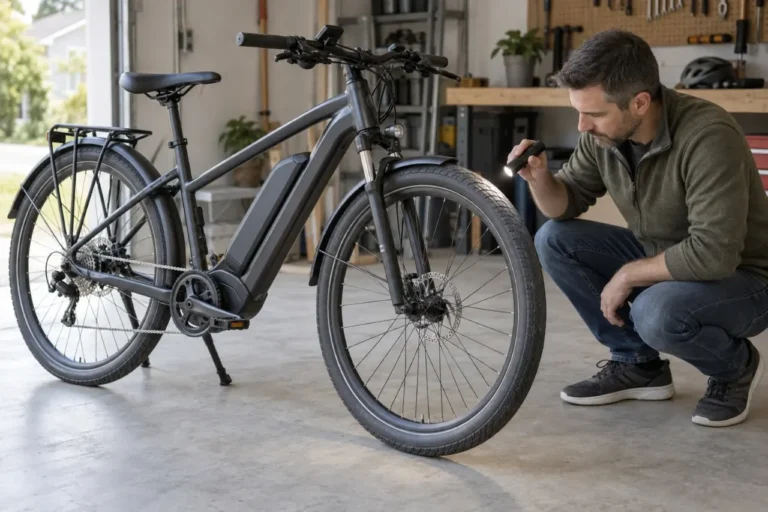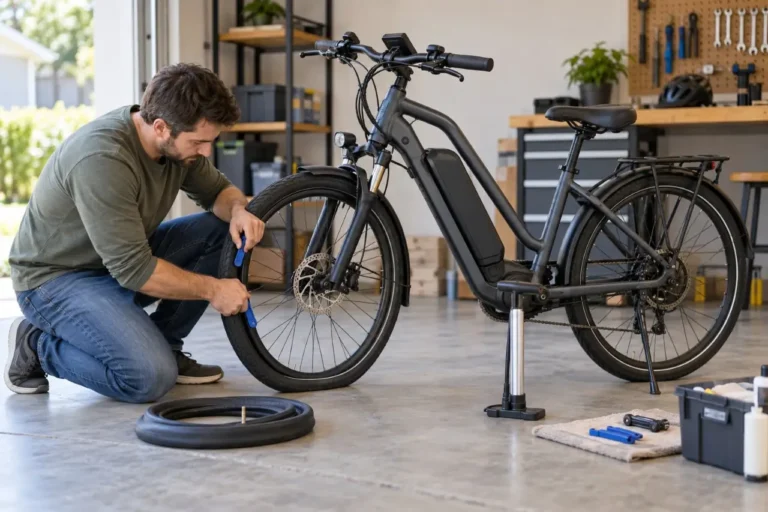
An e-bike warranty covers certain failures caused by manufacturing defects during a stated warranty period.
It is not a maintenance plan, accident insurance, theft protection, or a guarantee that every repair will be free.
Understanding e-bike warranty terms helps you register your bike, maintain proper records, and know what information to provide if you need support.
What an e-bike warranty usually covers
Most e-bike warranties divide coverage into separate categories. The frame, electrical system, battery, and accessories may each have different warranty periods and conditions.
A warranty normally focuses on defects in materials or workmanship. Examples may include a manufacturing-related frame issue, a motor failure during normal use, or an electronic component that stops working without physical damage.
Before buying or registering an e-bike, review:
- Covered components
- Warranty length for each component
- Who can submit a claim
- Required registration steps
- Repair, replacement, or refund options
- Labor and shipping responsibilities
A statement such as “two-year warranty” does not always mean every part is covered for two years. Read the separate terms for the frame, motor, controller, display, battery, charger, suspension parts, and accessories.
Important e-bike warranty terms explained
Warranty documents often use legal language, but several terms appear repeatedly.
Limited warranty
Most e-bike warranties are limited warranties. This means coverage applies only under specific conditions listed by the manufacturer. Exclusions and requirements are part of the agreement.
Original owner
Many e-bike warranties apply only to the original retail purchaser. Some cannot be transferred after resale. If warranty transfer matters, confirm the policy before purchasing a used e-bike.
Normal use
Normal use generally means riding the bike as intended by the manufacturer and within stated limits.
For example, a commuter e-bike designed for roads and bike paths may not be covered for damage caused by racing, jumps, extreme terrain, crashes, or use outside its intended conditions.
Always check the owner’s manual for intended use and limitations.
Defect in materials or workmanship
This means the failure came from the manufacturing process or assembly rather than normal wear, misuse, accidents, or outside damage.
For example:
- A factory assembly issue may qualify as a workmanship problem.
- Damage from a crash usually does not.
Labor, shipping, and service fees
Some warranties cover replacement parts but not labor. Others may require customers to pay shipping, transportation, diagnosis, or service fees.
This is especially important for direct-to-consumer e-bikes that do not have a nearby dealer network.
Common e-bike warranty exclusions
Warranty exclusions define what the manufacturer considers normal ownership responsibility.
Common exclusions may include:
- Tires, tubes, brake pads, chains, grips, cables, and other wear items
- Damage from crashes or improper transportation
- Theft or loss
- Commercial use when not approved
- Water damage beyond stated limits
- Use outside weight or terrain restrictions
- Unauthorized electrical modifications
Electrical changes can create serious warranty problems. Examples include incompatible batteries or chargers, altered wiring, modified controllers, or attempts to bypass factory safety settings.
Always follow the manufacturer’s instructions for electrical components and accessories.
Battery warranty terms require extra attention
An e-bike battery is a consumable lithium-ion component. Its ability to store energy normally decreases over time because of age, charge cycles, temperature exposure, and usage.
A battery warranty usually covers manufacturing defects or failures that meet the manufacturer’s requirements. Normal capacity loss or reduced range may not qualify unless the manufacturer defines it as excessive degradation.
Check:
- Battery warranty length
- Capacity-retention requirements
- Testing requirements
- Approved charger requirements
- Storage instructions
Use only the charger specified for your battery system. Charger compatibility cannot be determined only by connector shape. Voltage, charging specifications, battery chemistry, and manufacturer requirements must all match.
If a battery is swollen, leaking, unusually hot, severely damaged, or involved in a serious crash or water immersion, stop using it and follow manufacturer safety instructions. Do not open or repair the battery yourself.
How to protect your e-bike warranty
Good records and normal maintenance can make warranty claims easier.
1. Register your e-bike
If registration is available, complete it promptly. Save:
- Purchase date
- Receipt or order confirmation
- Frame serial number
- Battery serial number if available
- Seller information
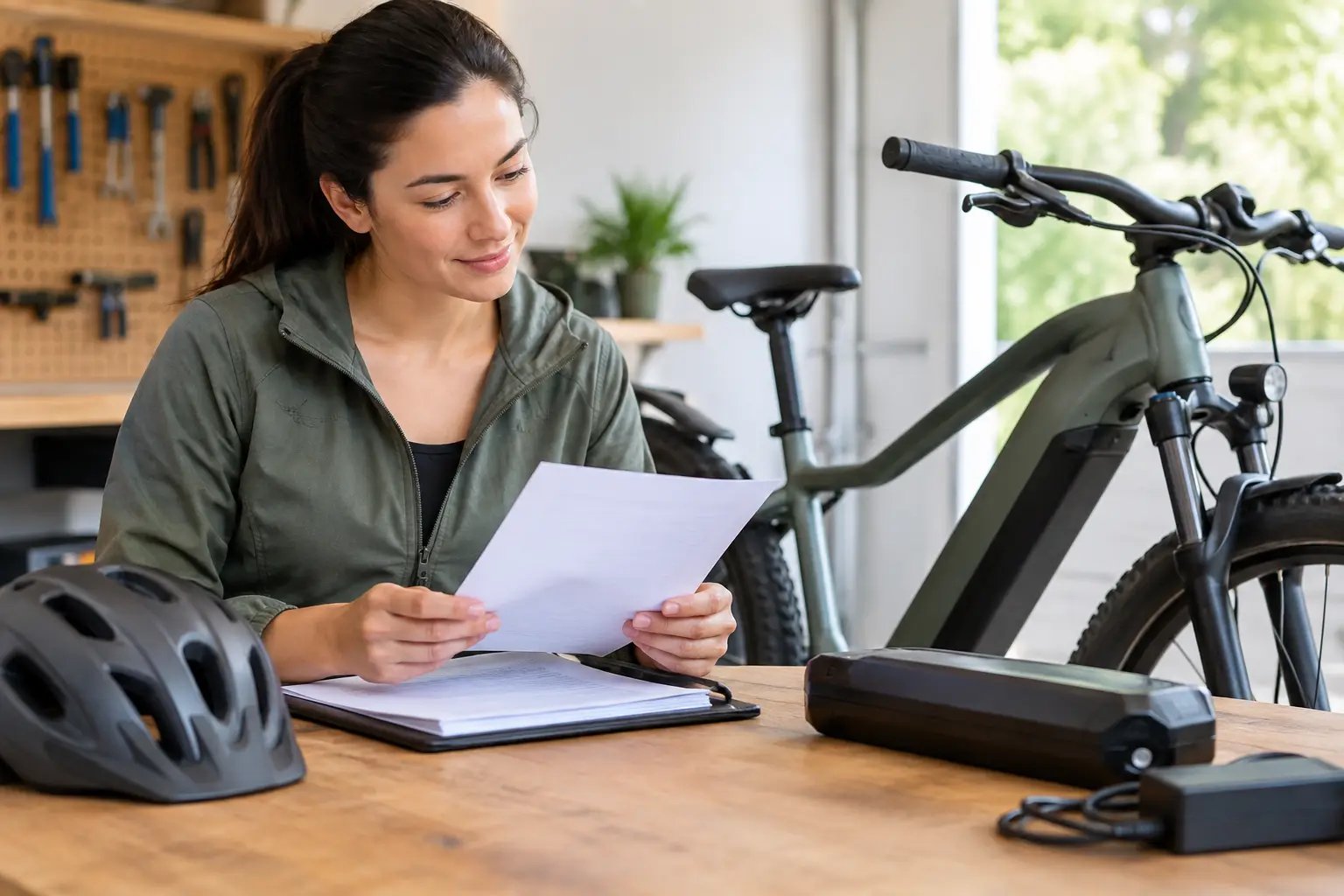
2. Keep important documents
Store digital copies of:
- Warranty policy
- Owner’s manual
- Assembly instructions
- Service records
- Receipts
Taking photos of the bike when new, including serial numbers, can also help document ownership.
3. Follow maintenance requirements
Routine care helps prevent avoidable problems. Check:
- Tire pressure
- Brake operation
- Loose fasteners
- Chain condition
- Lights and controls
Address unusual sounds, warning messages, or loose components early. You can also review common troubleshooting steps for issues such as e-bike error codes.
4. Use approved equipment and service
Follow manufacturer instructions for:
- Charging
- Battery storage
- Transportation
- Cleaning
- Accessories
If the warranty requires authorized service for a specific repair, confirm that requirement before paying for outside work.
5. Report problems promptly
Do not continue riding if you notice a serious electrical, frame, brake, fork, or wheel problem. Prompt reporting can help prevent additional damage and creates a clearer service record.
How to make a warranty claim
Start with the manufacturer or dealer listed in your warranty documents.
Provide:
- A clear description of the problem
- When the issue started
- Error codes or warning messages
- Photos or videos showing the issue
- Proof of purchase
- Serial numbers when requested
Avoid attempting internal electrical diagnosis or battery repairs yourself.
Before shipping an e-bike or battery, follow the manufacturer’s instructions. Lithium-ion battery transportation has specific requirements and should not be handled casually.
Ask these questions before approving service:
- Is the failed part covered?
- Is labor covered?
- Who pays shipping or transportation costs?
Request important decisions in writing when possible. If a claim is denied, ask for the reason and the specific warranty section involved.
Warranty vs. other protection options
A warranty is designed for manufacturing defects, not every ownership problem.
A warranty usually does not replace:
- Theft protection
- Crash coverage
- Routine maintenance
- Normal wear replacement
Some riders may explore insurance or other protection options, but coverage varies by provider and policy.
When to stop riding and seek help
A warranty claim should never be more important than safety.
Stop riding and seek qualified assistance if you notice:
- Weak or unreliable braking
- Loose steering
- Wheel instability
- Serious frame damage
- Persistent electrical warnings
- Battery swelling, leaking, smoke, or abnormal heat
Final thoughts

An e-bike warranty is an ownership document that explains the manufacturer’s responsibilities and your responsibilities as a rider. Save the paperwork, understand battery and electrical exclusions, keep basic maintenance records, and contact the manufacturer early when a problem appears.
A clear warranty record can make the support process easier while helping you keep your e-bike safer to ride.
GoEBikeLife publishes independent e-bike reviews, comparisons, and practical buying guides. Some links on this page are affiliate links. If you make a purchase through an eligible link, we may earn a commission at no additional cost to you.