There is no universal mileage or age limit for e-bike tires. Tire life depends on construction, pressure, rider and cargo weight, road surface, weather, braking, and how much drive force reaches the wheel.
Replace a tire immediately if it has a bulge, exposed casing, serious sidewall damage, separated tread, or another structural defect.
Otherwise, use mileage and age as planning clues while letting the tire’s actual condition decide when replacement is due.
The short answer: e-bike tire life varies widely
A useful replacement schedule cannot be based on one mileage number. Two riders can use the same tire and get very different service life because their loads, roads, pressures, speeds, and riding habits are different.
Some tire manufacturers publish mileage ranges for specific product families, but those figures are not universal e-bike replacement intervals. Schwalbe notes that pressure, load, road surface, temperature, and rider behavior all affect tire mileage. Track your own mileage, but inspect the tire regularly.
Use this rule of thumb:
| What you find | What it means |
|---|---|
| Normal tread wear with no damage | Keep monitoring and compare with the tire maker’s wear guidance |
| Manufacturer wear indicator has reached its limit | Replace the tire |
| Repeated punctures or fast pressure loss | Find the cause before riding again; the tire may need replacement |
| Bulge, exposed casing, separated tread, or serious sidewall damage | Stop riding and replace the damaged tire |
| Uneven wear, rubbing, wobble, or abnormal handling | Stop and identify the underlying cause before continuing |
For a more detailed damage checklist, see our guide to the signs of worn e-bike tires.
Why e-bike tires may wear faster
Many e-bikes operate under higher loads and higher average riding speeds than conventional bicycles. Cargo, heavy frames, frequent commuting, and motor assistance can increase tire wear. Drive force also matters: rear-hub motors apply torque directly at the rear wheel, while mid-drive systems send motor power through the drivetrain.
That does not mean every e-bike tire wears quickly. A properly inflated commuter tire on smooth pavement may last much longer than a tire used on rough streets or gravel under a heavy load.
Mileage is useful for planning, not for declaring a tire safe
Tracking mileage can help you predict when an inspection should become more frequent, but it should not override visible condition.
If one tire lasted 2,500 miles on your normal route, that can become a useful personal reference point. Changes in load, pressure, road surface, weather, or riding style can still change the result. Never keep riding a damaged tire just because it has not reached an expected mileage.
A simple maintenance log can make your own data much more useful. Record:
- The installation date
- The tire brand, model, and full size marking
- Odometer mileage at installation
- Major punctures or repairs
- Pressure problems or recurring air loss
- The mileage when tread wear becomes noticeable
Over time, that record will give you a better estimate for your own e-bike and routes than a generic mileage figure.
Does tire age matter even if tread still looks good?
Yes, but calendar age alone does not determine whether a bicycle tire is safe. Heat, sunlight, ozone, storage conditions, pressure, and rubber formulation all influence aging.
A tire that spends long periods outdoors or in a hot garage may crack or harden before the tread looks worn. Inspect the sidewalls and tread rather than relying only on the purchase date. Deep or spreading cracks, sidewall splitting, bead problems, or visibly deteriorating rubber need attention. If you cannot tell whether cracking is cosmetic or structural, have a qualified bicycle shop inspect it before riding.
Rear tires often reach the end of their life first
The rear tire often wears faster because it carries substantial rider load and transmits drive force. The front tire still deserves equal attention because it is critical for steering and braking control.
You do not need to replace both tires automatically every time one wears out. Replace each tire based on its own condition and compatibility, and never move a questionable rear tire to the front just to get more use from it. Front and rear tires may also differ in size, tread design, direction, or load requirements.
Tire pressure has a major effect on service life


Consistently low pressure can increase casing flex, sidewall stress, pinch-flat risk, and rim-strike risk. Tire manufacturers such as Schwalbe specifically warn that prolonged underinflation can contribute to premature sidewall wear and cracking.
Too much pressure is not a solution. Overinflation can reduce comfort and traction, and you must never exceed the applicable tire, rim, wheel, or e-bike limits.
Use a pressure gauge rather than judging by hand. Start with the approved range or recommendation for your exact tire and e-bike, then account for rider weight, cargo, terrain, and wheel setup. Our e-bike tire pressure guide explains how to choose a safe starting pressure without relying on a universal PSI number.
For a frequently ridden e-bike, regular gauge checks are more useful than waiting until the tire feels soft. Recheck before long rides, after storage, or whenever handling feels different.
Know the difference between a repairable flat and a worn-out tire
One puncture does not automatically end a tire’s life. A conventional inner tube may be repairable or replaceable, and compatible tubeless systems can often seal or repair certain punctures according to the tire and sealant manufacturer’s instructions.
The important step is finding the cause. A thorn, wire, glass shard, rim-tape problem, damaged valve, or casing defect can cause another flat immediately. If the tire has exposed casing, a bulge, a serious sidewall cut, separated tread, or bead damage, a tube patch does not make it structurally sound.
If the tire itself appears sound and you are dealing with a normal puncture, our guide to fixing a flat tire on an electric bike covers the repair decision and the extra care required around hub-motor wheels.
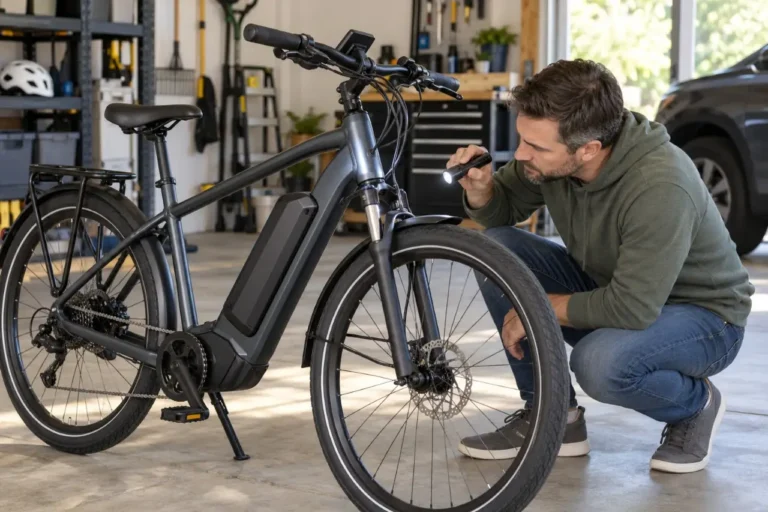
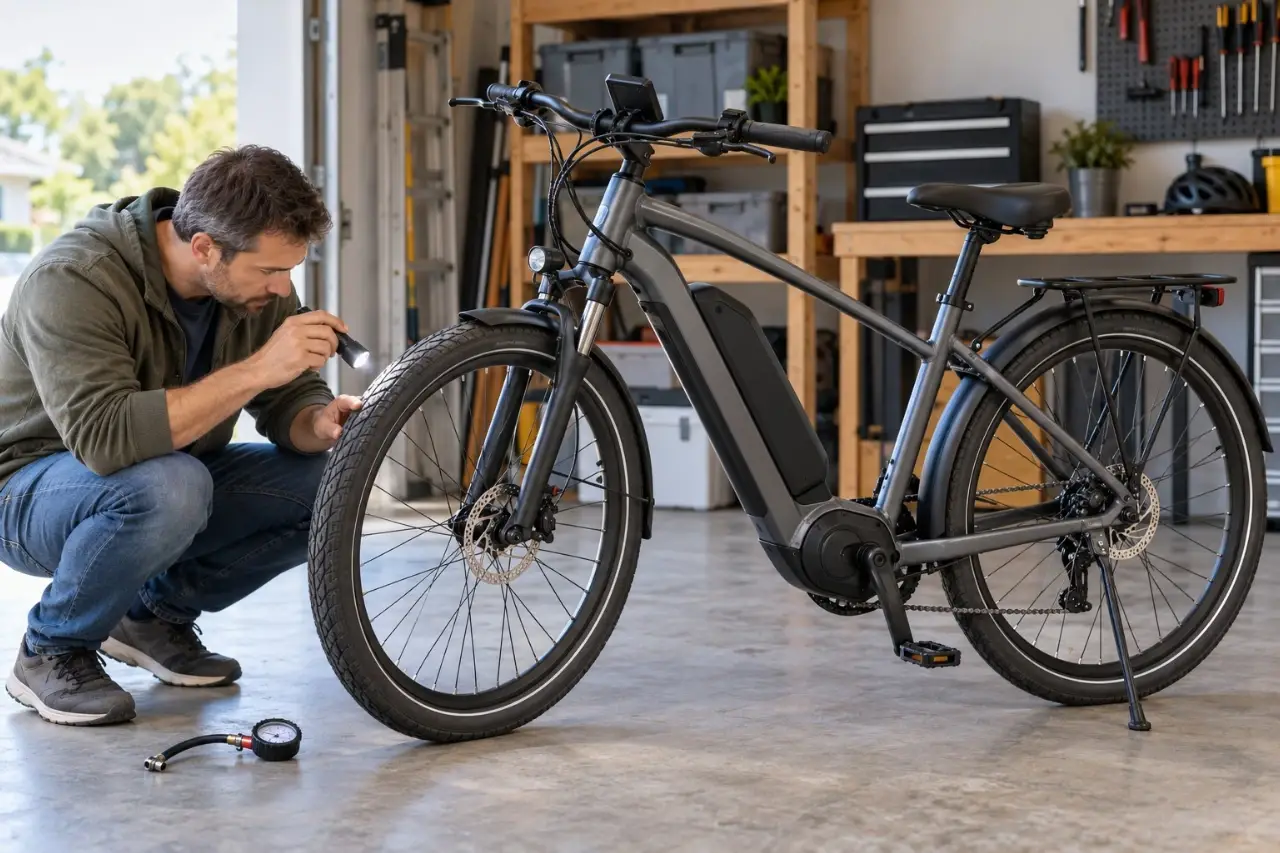
How to inspect tire life in a few minutes
Turn the e-bike off and stabilize it on level ground. Then inspect each tire separately.
- Look at the tread. Compare the center and shoulders with the tire’s original pattern. Check any manufacturer-provided wear indicators.
- Inspect both sidewalls. Look for cuts, bulges, deep cracking, abrasion, or areas where the casing appears distorted.
- Check the bead line. The tire should sit evenly around the rim. An unseated or damaged bead needs attention before riding.
- Look for embedded debris. Glass, thorns, wire, or sharp stones can remain in the rubber and cause slow or repeated leaks.
- Measure pressure. Rapid pressure loss can point to a puncture, valve, rim-tape, bead, tube, sealant, or casing problem.
- Check for rubbing. Confirm that the tire clears the frame, fork, fenders, racks, and wiring throughout the wheel’s rotation.
A broader e-bike pre-ride safety checklist can help you combine the tire check with brakes, wheel security, steering, lights, and other safety items.

When to replace an e-bike tire immediately
Mileage and age stop mattering once structural damage appears. Do not ride on a tire with:
- A bulge or lump in the casing
- Exposed fabric, cords, or casing threads
- Separated tread
- A deep sidewall split or serious cut
- A damaged or unseated bead
- Tire rubbing that cannot be corrected safely
- Rapid pressure loss that has not been diagnosed
- Damage that causes unstable handling or a visible wheel/tire problem
If the problem could involve the rim, spokes, axle, wheel alignment, or hub-motor hardware, replacing the tire alone may not solve it. Have the wheel system inspected before riding again.
Choosing a replacement tire
Match more than the general wheel diameter. Confirm the full tire size and the sizes approved for the rim, frame, fork, and e-bike.
Many bicycle tires include an ETRTO/ISO size such as 50-622, which identifies tire width and bead-seat diameter in millimeters. That dimension is more precise than relying only on an inch label such as “28 inch” or “29 inch.”
Before ordering, confirm:
- Tire diameter and width
- Rim-width compatibility
- Frame, fork, and fender clearance
- Tube or tubeless compatibility
- Directional mounting requirements
- Load capability
- Any speed, e-bike, or manufacturer-specific requirements in the owner’s manual
Do not assume a wider tire will fit simply because the wheel diameter matches. A tire that rubs the frame, fork, fender, rack hardware, or motor wiring is not a safe upgrade.
When a bike shop should handle the job
Many riders can inspect tires, measure pressure, or repair a simple tube puncture. Use a qualified shop when damage is hard to judge, the wheel will not seat correctly, the rim is damaged, or a rear hub motor requires model-specific cable, axle, washer, or torque procedures.
After any tire or wheel work, confirm that the bead is evenly seated, the wheel is secure, the brakes work normally, the tire does not rub, and inflation is within every applicable limit before riding.
Bottom line
E-bike tires do not have one reliable replacement mileage or age. Track how long your tires last, but let condition make the final decision. Pressure, load, road surface, heat, braking, and motor-assisted riding can all change tire life.
Replace structural damage immediately. For normal wear, follow the tire maker’s wear indicators and compare the tread with its original design. A short, regular inspection gives you a safer and more useful answer than waiting for a fixed mileage number.
GoEBikeLife publishes independent e-bike reviews, comparisons, and practical buying guides. Some links on this page are affiliate links. If you make a purchase through an eligible link, we may earn a commission at no additional cost to you.