A little joy belongs in every day.

Learn how e-bikes work and how to ride, charge, maintain, and store them safely. Our practical guides explain motors, batteries, controls, maintenance, riding techniques, troubleshooting, and everyday ownership in clear language—helping new and experienced riders avoid common mistakes and make informed decisions.
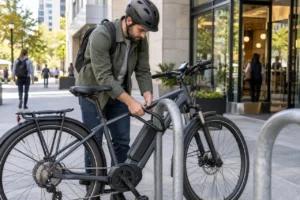
Learn how to park and lock an e-bike safely with practical security tips for choosing locations, securing frames, protecting batteries, and preventing theft.

E-bike access in parks depends on the managing agency, trail type, and bike class. Learn how to check rules before riding.
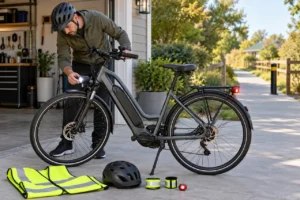
E-bike visibility depends on working lights, clean reflectors, visible clothing, and predictable riding habits. Use this checklist before every ride.
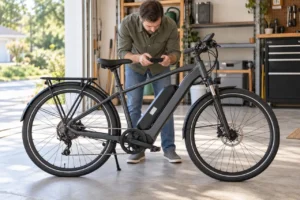
An e-bike battery label lists voltage, capacity, energy, and identification details. Learn what these ratings mean and what they cannot prove about safety.
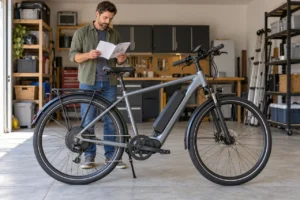
Ebike motor watt ratings need context: input or output, nominal or peak, and test conditions. Learn what the numbers can tell you about real riding.
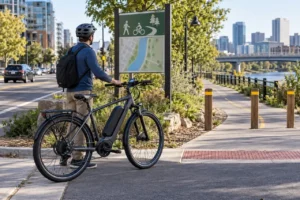
Class 3 e-bike rules vary across the U.S. Learn where these 28 mph pedal-assist bikes can ride and how to check local requirements.

Understand e-bike warranty terms, including coverage limits, battery rules, exclusions, claim steps, and how proper records can protect your warranty.
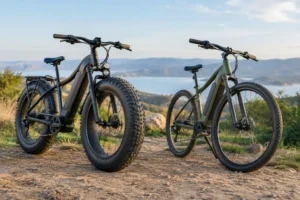
Fat and narrow e-bike tires offer different advantages. Learn how tire width affects comfort, traction, handling, efficiency, and everyday riding.
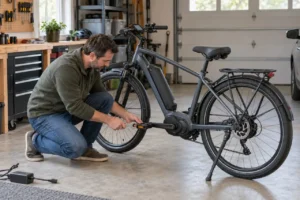
A loose e-bike pedal can damage your crank arm if ignored. Learn how to find the cause, tighten safely, and know when repairs require a mechanic.
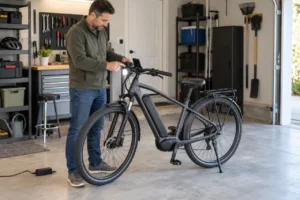
A flickering e-bike light may come from battery conditions, loose connections, moisture, or settings. Learn safe checks before your next ride.
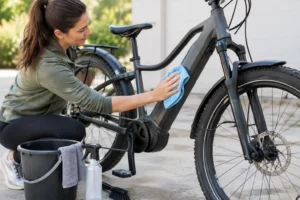
Learn the most common e-bike cleaning mistakes, from pressure washing to brake contamination, and how to clean your electric bike safely.
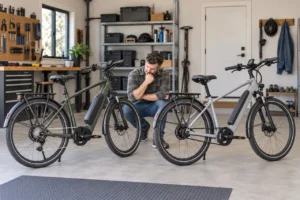
A practical comparison of belt drive and chain drive e-bikes, covering maintenance, gearing, repairs, compatibility, and real-world riding differences.
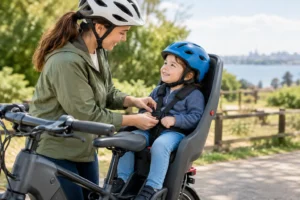
A practical e-bike child seat safety checklist covering compatibility, installation, harness adjustment, riding changes, and pre-ride checks.
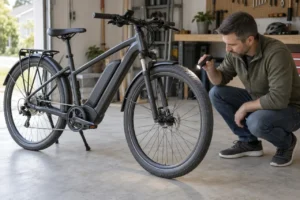
Worn e-bike tires can show exposed casing, deep cracks, bulges, or fading wear indicators. Stop riding with structural damage and replace the affected tire.
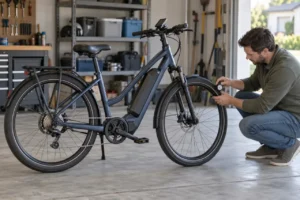
E-bike pedals can feel hard because of high gearing, reduced motor assistance, low tire pressure, or mechanical drag. Check safety before a short test ride.
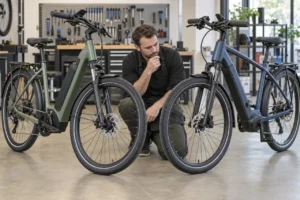
Hydraulic e-bike brakes usually offer lighter lever action and finer control, while mechanical brakes cost less and are easier to service on the road.
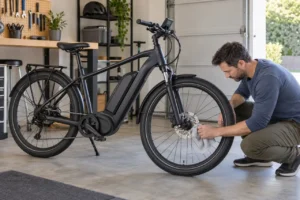
Ebike brakes usually squeal because of vibration, contamination, moisture, or worn parts. Learn how to find the cause and restore quiet, reliable braking.
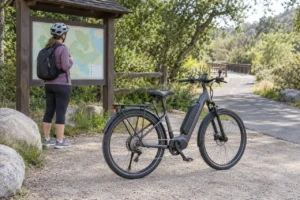
Local e-bike rules depend on your bike and route. Check official laws, access policies, speed limits, and current closures with the responsible authority.
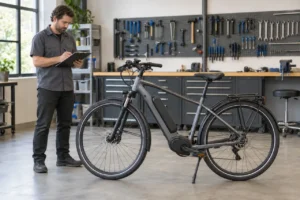
An annual e-bike safety review checks wear, brakes, wheels, battery condition, and overdue service. Record findings and resolve safety faults before riding.
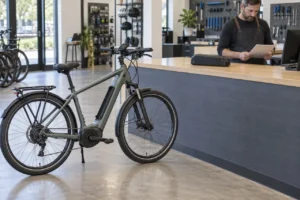
Recycle an old e-bike battery through a confirmed collection program. Check brand eligibility and battery condition before arranging safe drop-off or disposal.