
How to Do an E-Bike Range Test and Spot Unrealistic Range Claims Fast
Run a practical E-Bike Range Test: understand watt-hours, assist level, hills, speed, and tire pressure—so you can plan rides with a safe buffer.

Learn how e-bikes work and how to ride, charge, maintain, and store them safely. Our practical guides explain motors, batteries, controls, maintenance, riding techniques, troubleshooting, and everyday ownership in clear language—helping new and experienced riders avoid common mistakes and make informed decisions.
Run a practical E-Bike Range Test: understand watt-hours, assist level, hills, speed, and tire pressure—so you can plan rides with a safe buffer.
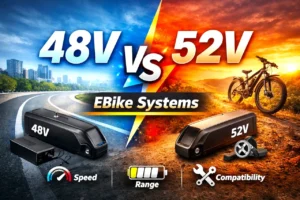
48V and 52V e-bike systems feel closer than most people expect. Here’s what changes on hills and speed, what doesn’t, and how to choose safely.
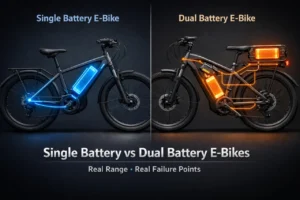
Single vs dual battery e-bikes isn’t just about miles. Learn real range expectations, weight trade-offs, and the failure points that affect ownership.

Full suspension isn’t always better. Compare full suspension vs hardtail e-bikes for comfort, traction, range, weight, and maintenance—then choose confidently.

Suspension fork vs no suspension e-bike—this guide explains when suspension improves comfort and control, when it wastes energy, and who should skip it.
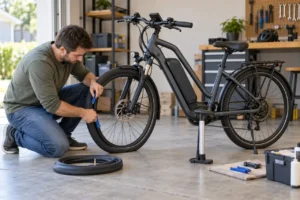
Fixing an electric bike flat tire requires careful wheel removal, tube repair, correct inflation, and attention to hub motors, cables, and safety checks.

Step-through vs step-over isn’t about looks—it’s about daily confidence. Compare stability, fit, and cargo handling to choose the frame you won’t regret.
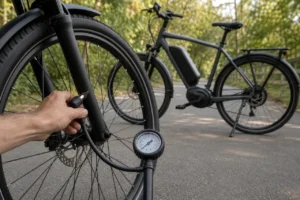
Use your tire, rim, and e-bike limits to find the right PSI, then adjust for load, terrain, and wheel setup without exceeding approved ranges.

E-bike range often drops faster in cold weather. Learn how temperature, riding habits, and terrain affect battery life — and how to fix it.

Class 2 vs class 3 e-bikes, explained for USA riders: real speed benefits, safety trade-offs, legal reality, common mistakes, and a decision checklist.

Fat Tire vs Regular Tire: learn how tire width changes comfort, range, handling, and flats—plus simple rules to choose the right setup.
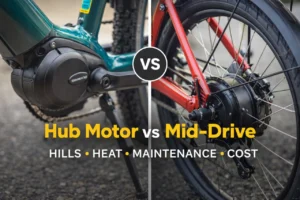
Hub motor vs mid-drive isn’t about hype—it’s about hills, heat, maintenance, and long-term cost. Here’s what you’ll feel in real riding, fast.
Torque sensor vs cadence sensor—what’s the real difference? Compare ride feel, hills, stop-and-go commuting, and range to choose the right assist style.

Learn how to read e-bike battery specs: Wh, volts, amps and C-rate—so you can cut through marketing claims, estimate real-world range and buy with confidence.
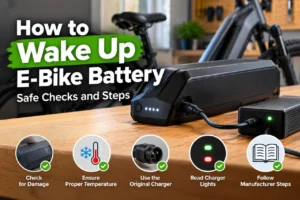
To wake a sleeping e-bike battery, inspect it for damage, let it reach a safe temperature, then use the original charger and the maker's approved steps.

Get your e-bike winter-ready with a 10-step checkup: battery care, tire grip, brake refresh, brighter lights, salt-proof cleaning, and range-saving tips.
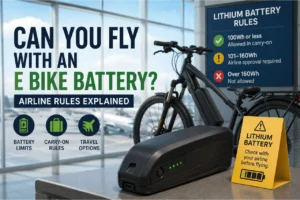
Most e-bike batteries exceed airline lithium battery limits. Riders should check Wh ratings, airline rules, and safer travel options before flying.
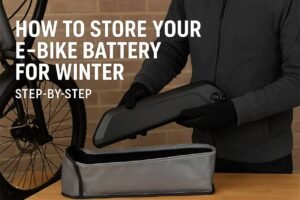
Learn how to store your e-bike battery for winter: ideal charge, safe storage, monthly checks, and a spring wake-up that protects range and extends life.
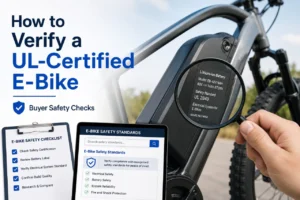
To verify a UL-certified e-bike, check UL Product iQ, match the exact model number, confirm the standard, and review the physical UL mark before purchase.
E-bike rebates vary by location and may require approval before purchase. Check income limits, eligible bikes, retailers, and funding before you buy.