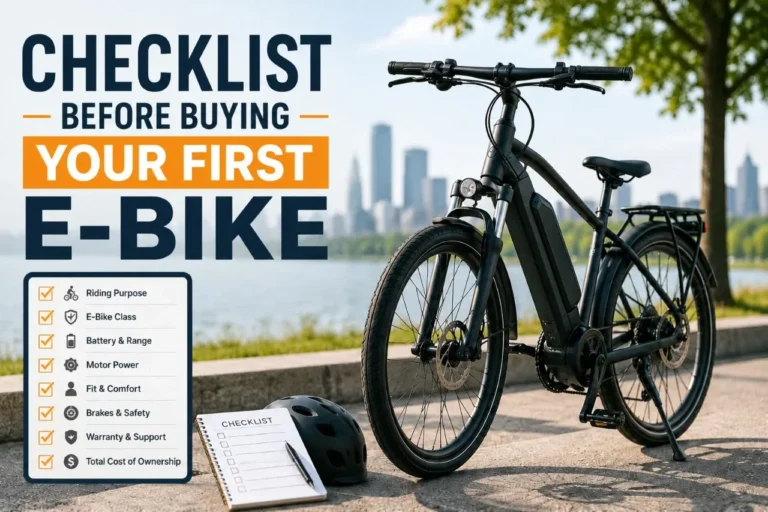
Your first year with an e-bike is mostly about building a few repeatable habits: learn the controls, check the bike before riding, charge the battery correctly, watch tire and brake condition, follow the service schedule, and learn the rules for the places you ride. You do not need to become a mechanic. The goal is to notice small changes early and know when a problem is safe to handle yourself—or needs a qualified shop.
Your owner’s manual always takes priority over general advice, especially for charging, battery storage, tire pressure, torque values, cleaning, service intervals, and electrical troubleshooting.
First Day: Record the Details You May Need Later
Save the e-bike model and serial number, purchase receipt, warranty details, battery and charger model information, key number if applicable, and a digital copy of the owner’s manual. Photograph the bike, battery label, charger label, and serial number so you have a backup for support, replacement parts, or theft reporting.
With the bike stationary, learn how to power the system on and off, change assist levels, operate the lights, read the battery display, and use the throttle if fitted. For your first rides, practice starting, stopping, turning, shifting, and changing assist in a clear, low-traffic area so you can learn how the extra weight and motor assistance affect control.
Before Every Ride: Use a Short Safety Check

A quick inspection should become automatic during the first year. Keep the electrical system off while you walk around the bike, then finish with a brief low-speed test in a clear area.
Check these items:
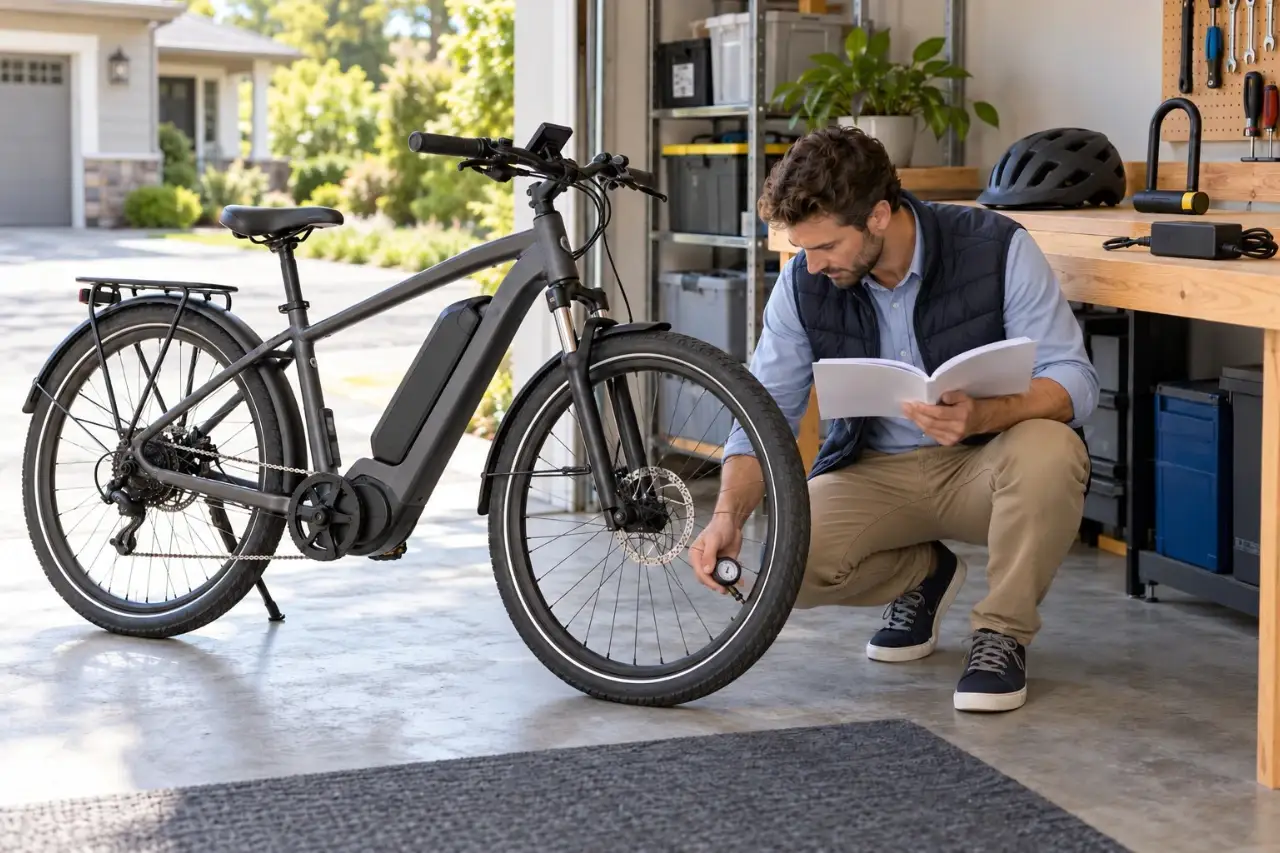
- Wheels and tires: Both wheels should be secure, and the tires should have adequate pressure with no bulges, exposed casing, rapid air loss, or obvious damage.
- Brakes: Each lever should feel normal for your system and provide reliable braking. Do not ride with weak braking, a lever that pulls to the grip, a fluid leak, a badly frayed cable, or another clear brake fault.
- Steering and frame: Look for looseness, cracks, impact damage, or anything that has changed since the previous ride.
- Battery: Confirm that it is undamaged, seated correctly, and locked into its mount if required.
- Controls and lights: Make sure the display, assist controls, throttle if fitted, and lights operate normally.
- Cargo and accessories: Secure panniers, straps, locks, child-seat hardware, or other accessories so nothing can enter a wheel, brake, chain, or crank.
Our 3-minute e-bike pre-ride safety checklist gives a more detailed sequence and clear stop-riding conditions.
Tire pressure deserves particular attention. Start with the limits provided by the tire, rim, and e-bike manufacturer. The number molded onto a tire sidewall may be a permitted range or maximum rather than the ideal pressure for every rider. Load, tire size, terrain, wheel setup, and whether the tire uses a tube or compatible tubeless system can all affect the appropriate setting.
First Few Weeks: Learn Your Real Range and Handling


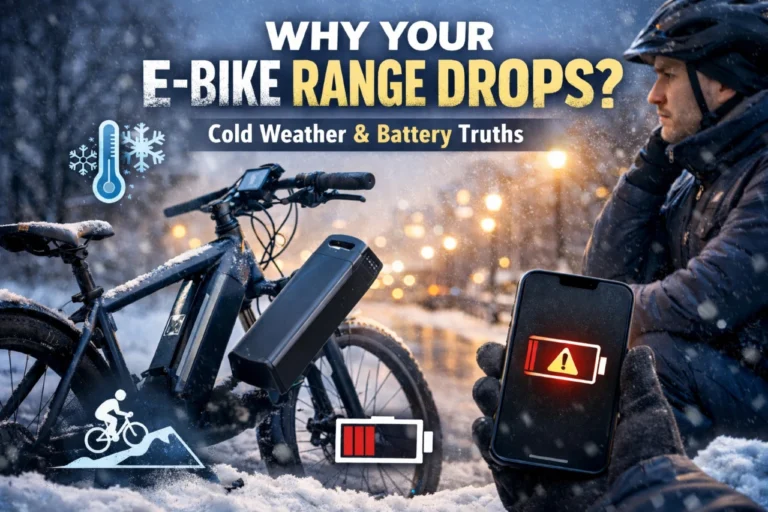
Treat the advertised range as a reference point, not a promise for every ride. Actual energy use changes with assist level, speed, hills, wind, temperature, stop-and-go riding, tire pressure, cargo, rider load, and how much you pedal.
Use one or two familiar routes as a baseline. Note battery use, distance, assist level, weather, and extra load, and leave a reserve until you understand your normal consumption. If range later drops sharply, first check tire pressure, brake rub, temperature, cargo, hills, wind, and assist use before assuming the battery has failed.
Also learn your braking distance and low-speed balance. Brake progressively with both brakes and start slowing earlier on descents, wet pavement, loose surfaces, or with cargo. Stop riding if steering becomes unstable, braking is unpredictable, or motor power does not stop normally.
Wear a properly fitted bicycle helmet on every ride, and use front and rear lights when visibility is poor. Make sure loose clothing, shoelaces, and bag straps cannot reach the chain, crank, or wheels. If the bike feels too tall, cramped, or difficult to control at stops, correct the fit according to the manufacturer’s guidance or ask a qualified bicycle shop for help rather than compensating with an unsafe riding position.
Battery Charging: Build a Safe Routine Early
Most modern e-bikes use rechargeable lithium-ion battery packs, but battery systems are not interchangeable. Use the charger supplied with the bike or a replacement specifically approved by the e-bike or battery manufacturer.
A plug that fits does not prove that a charger is compatible. Safe compatibility requires checking the battery chemistry, nominal battery voltage, charger output voltage, charging current, connector, polarity, and the manufacturer’s compatibility requirements. Our e-bike charger compatibility guide explains what to verify before connecting a replacement charger.
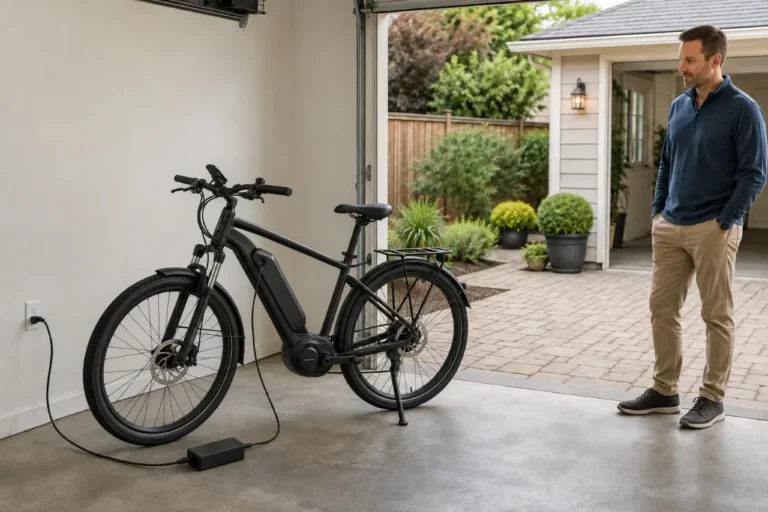
For routine charging, follow the manual’s sequence and temperature limits; use a dry, stable area away from heat, combustible clutter, and exit paths; keep the charger and battery uncovered; stay present while charging; and unplug when charging is complete unless the manufacturer says otherwise. Do not charge while sleeping or when nobody is home. Never use damaged cords, connectors, charger housings, or a visibly damaged battery.
If the battery is unusually hot after a ride, wait until it is within the manufacturer-approved charging temperature range. Stop using or charging a battery that is swollen, leaking, unusually hot, producing a strong odor or hissing, repeatedly faulting, severely impacted, or suspected of water intrusion. If it is smoking or burning, move away, alert others, call emergency services, and do not attempt to handle it.
During the Year: Keep Maintenance Simple and Consistent
Routine maintenance is mostly conventional bicycle care plus external electrical checks. Owners can usually handle tire pressure, gentle cleaning, chain lubrication, visible wear checks, and accessory tightening when the manual provides the correct method and torque.
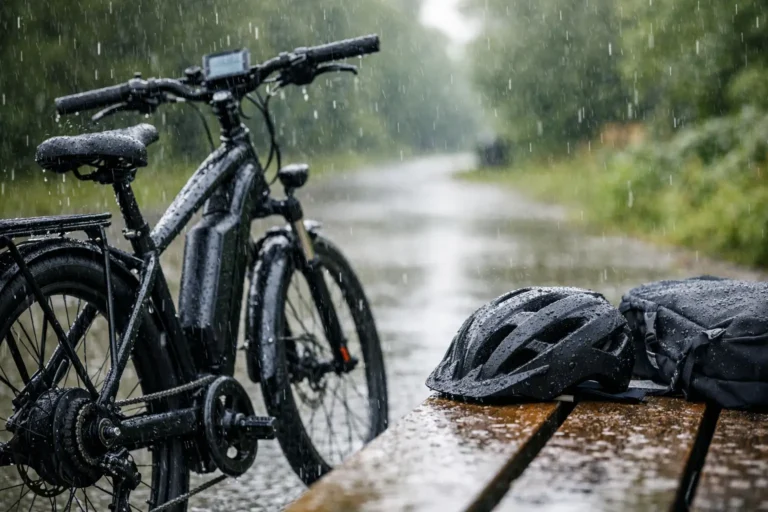
After wet, dusty, muddy, or salty rides, clean the bike with a soft brush or damp cloth rather than a pressure washer or strong water jet near bearings or electrical parts. Lubricate a chain-drive drivetrain sparingly with bicycle-specific lubricant and keep all lubricant and cleaners away from braking surfaces.
Do not open the battery, charger, controller, display, or motor housing for home electrical repairs, and never bypass a battery-management system, brake cutoff, speed control, or other safety function.
Follow Service Intervals Instead of Guessing by Mileage
There is no single service mileage that fits every e-bike. The correct interval depends on the model, component maker, riding conditions, load, weather exposure, and actual wear.
Follow any early break-in inspection specified in your manual, then shorten later intervals if you commute daily, carry cargo, ride in rain or salt, use rough trails, or descend long hills frequently. Our guide to e-bike service intervals explains how to combine manufacturer requirements, time, mileage, and condition.
Get professional help promptly for a loose wheel or steering component, cracked frame or fork, repeated spoke problems, unreliable brakes, significant wheel wobble, persistent drivetrain skipping under load, exposed wiring, damaged connectors, or recurring electrical faults.
Store the Battery for the Conditions, Not the Calendar
Keep the battery within the manual’s temperature and moisture limits, and avoid prolonged storage in a hot vehicle, direct sun, or outside its approved range. For storage lasting weeks or months, many manufacturers specify a partial charge; the exact percentage and check interval vary by system. Before charging a cold-stored battery, let it reach the approved charging temperature. Never open, jump-start, or bypass a battery that will not charge normally after storage.
Parking, Theft Prevention, and Transport


Use a sturdy lock through the frame and a fixed object, choose visible parking when possible, and secure easy-to-remove accessories. If the battery is designed for routine removal and the manufacturer allows it, taking it with you can reduce theft exposure.
For vehicle transport, check the actual bike weight, per-bike and total rack capacity, tire width, wheelbase, vehicle or receiver limits, and approved contact points. Do not assume a rack designed for conventional bicycles can carry heavy e-bikes. Remove a detachable battery to reduce transport weight only when the bike, battery, and rack instructions allow it.
For the full loading and capacity checklist, see how to transport an e-bike safely.
Learn the Rules for Your Actual Routes
Legal information checked: October 9, 2026. E-bike laws and access rules are not uniform across the United States. Class definitions, equipment rules, rider requirements, registration rules, and access can differ by state and locality. Street legality also does not guarantee permission on a sidewalk, bike path, park, trail, or public-land route.
Before riding somewhere new, identify your e-bike’s legal category and check the current authority responsible for that route. Our local e-bike rules guide shows how to verify access without relying on an outdated summary.
Before the First Year Ends: Review What Has Changed
By the end of your first year, compare the bike with the baseline you learned when it was new. Check whether tires still hold pressure, brakes remain predictable, the drivetrain runs normally, wheels stay true, accessories are secure, and battery range remains reasonable for similar conditions. Review the manual for any due inspection, component service, or software check.
Your first year should make ownership simpler, not more complicated. Keep the manual, use a short pre-ride check, charge with approved equipment, address changes early, and hand off safety-critical or internal electrical work when it goes beyond basic owner maintenance.
GoEBikeLife publishes independent e-bike reviews, comparisons, and practical buying guides. Some links on this page are affiliate links. If you make a purchase through an eligible link, we may earn a commission at no additional cost to you.