Buying your first e-bike sounds straightforward until you start researching. Suddenly you’re comparing motor wattage, battery voltage, throttle classes, and tire widths while trying to figure out whether a particular model is even legal on the bike path near your home.
This checklist is designed to cut through that confusion and help you buy the right e-bike for your actual life, not the most impressive one on a spec sheet.
The goal here is practical. You’ll go through each key decision point, from how you plan to ride to what kind of brakes you actually need, so you avoid overpaying for features you won’t use or underpaying for a bike that fails you on hills, in storage, or after 200 miles. Every point applies to U.S. buyers shopping in 2026, including newer tariff-related price realities that have pushed many entry-level models higher than they were a few years ago.
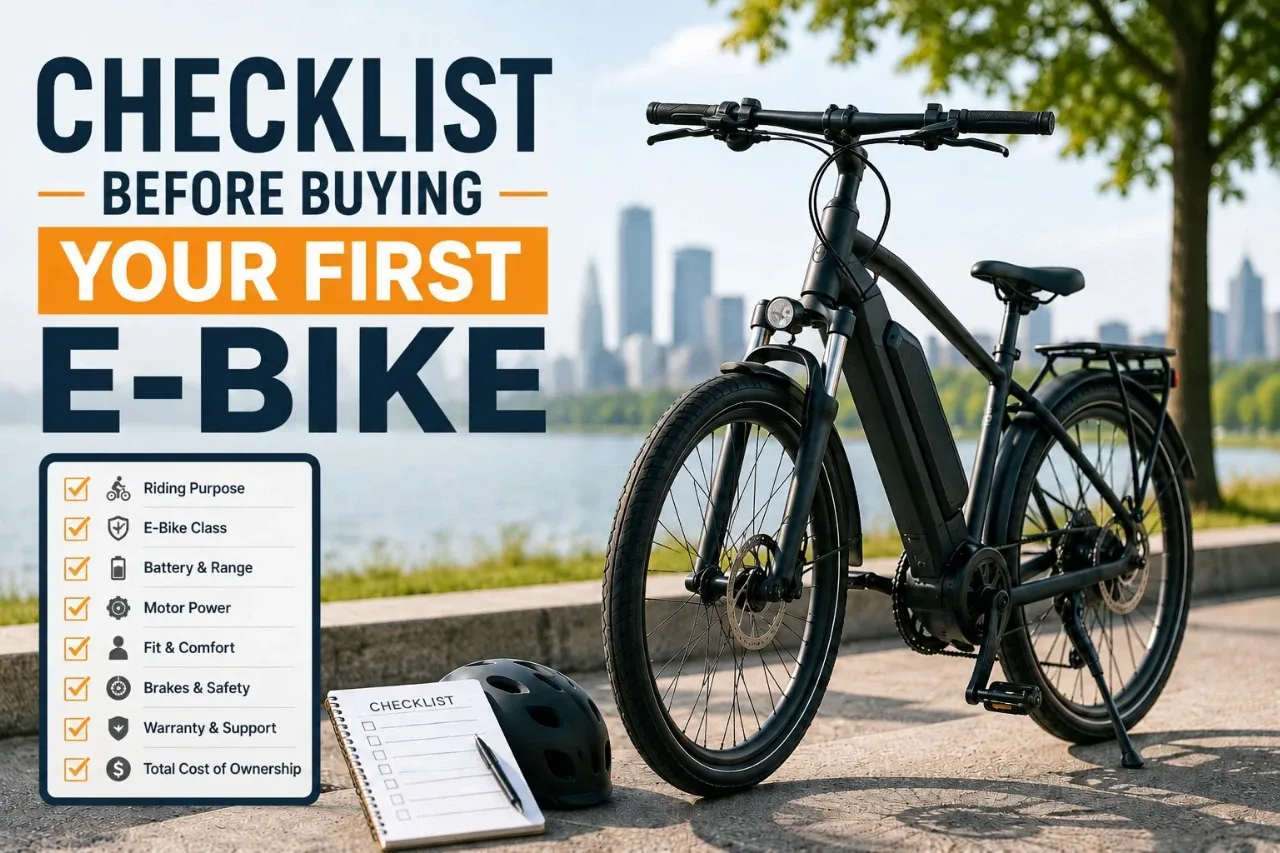
Quick First E-Bike Buying Checklist
Use this table as a fast reference before you read the full sections below.
| Checklist Item | What To Confirm |
|---|---|
| Riding purpose | Commute, errands, trails, or casual weekend use |
| E-bike class | Class 1, 2, or 3 legal in your area |
| Battery capacity | Watt-hours, not just advertised range |
| Motor power | Matched to hills, cargo, and your weight |
| Frame style | Step-through, step-over, or folding for your height and flexibility |
| Weight capacity | Rider weight plus gear, cargo, or child seat |
| Tire type | 20-inch folding, commuter, fat tire, or mixed surface |
| Brake type | Mechanical disc or hydraulic disc based on speed and weight |
| Comfort features | Suspension, saddle, handlebar reach, riding position |
| Safety and ownership | UL certification, warranty, return policy, assembly, and parts support |
1. Define Your Main Ride: Commuting, Errands, Trails, Or Casual Weekend Use
Start here before you look at a single spec. Your riding purpose shapes every other decision on this list.
A daily commuter needs lights, fenders, a rack, and a reliable range that covers round trips without a midday charge. A trail rider needs wider tires, better suspension, and more motor power. A casual weekend rider may prioritize comfort and lighter weight over raw performance. Someone running errands needs cargo capacity and a frame that is easy to mount and dismount repeatedly.
If you try to buy one bike that does everything, you often end up with one that does nothing well. Be specific about where you will ride, how far, and how often.
Ask yourself these questions before you move on:
- How far is your typical ride, one way?
- Will you carry groceries, a backpack, or a child seat?
- Are there hills on your route?
- Will you store the bike indoors, in a small apartment, or in a garage?
- Do you need to fold it for a train or trunk?
Answering these honestly narrows your category quickly. A folding e-bike makes sense for a multimodal commuter. A fat tire model makes sense for gravel, sand, or snow. A lightweight commuter makes sense for flat city routes. Knowing your use case first saves you from buying the wrong type entirely.
2. Check Whether A Class 1, Class 2, Or Class 3 E-Bike Is Legal Where You Ride
E-bike laws in the United States vary by state, city, and trail system. Buying a Class 3 bike without checking local rules can mean you are legally unable to ride it where you planned.
According to Consumer Reports, the three classes work like this:
- Class 1: Pedal-assist only, no throttle, maximum assisted speed of 20 mph.
- Class 2: Pedal-assist plus throttle, maximum speed of 20 mph.
- Class 3: Pedal-assist up to 28 mph, no throttle on most models. Often restricted from shared bike paths.
Most city bike lanes and multi-use trails allow Class 1 and Class 2 bikes but restrict Class 3. Some states require a helmet for Class 3 riders. A few states have their own definitions that differ slightly from this standard framework.
Check your state’s department of motor vehicles or transportation website, then check local park or trail rules separately. Do not assume that what is legal on roads applies to trails or paths. If you commute partly on a trail and partly on streets, the most restrictive rule applies.
For most beginner buyers, Class 2 offers the most flexibility. You get a throttle for hills and intersections, and you stay within the 20 mph limit accepted nearly everywhere.
3. Compare Battery Size In Watt-Hours, Not Just Claimed Range
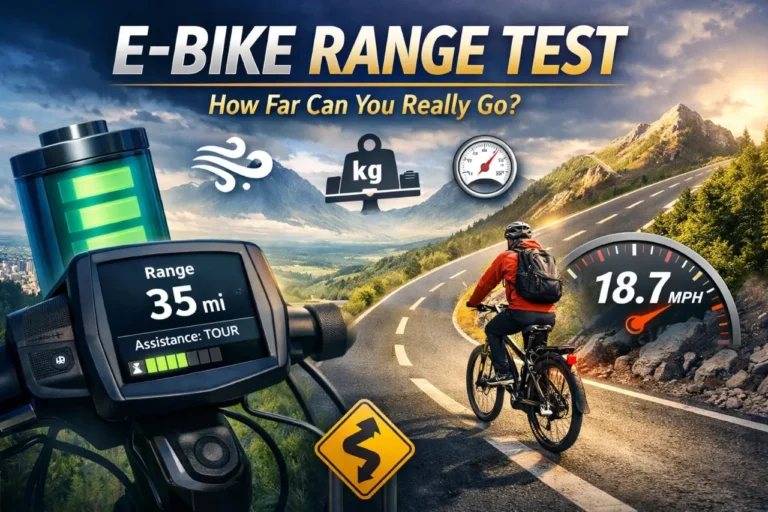
Manufacturers often advertise range numbers that assume ideal conditions: flat terrain, light rider weight, low assist level, and mild temperatures. Your real-world range will usually be lower.
The most useful number to compare is battery capacity measured in watt-hours (Wh). A 480Wh battery stores more energy than a 360Wh battery, period. That comparison holds regardless of what brand claims on the box.
As a rough planning guide:
- Under 400Wh: Expect 20 to 30 realistic miles in mixed conditions.
- 400 to 500Wh: Expect 30 to 45 miles depending on assist level and terrain.
- 500Wh and above: Better range buffer for longer commutes or heavier riders.
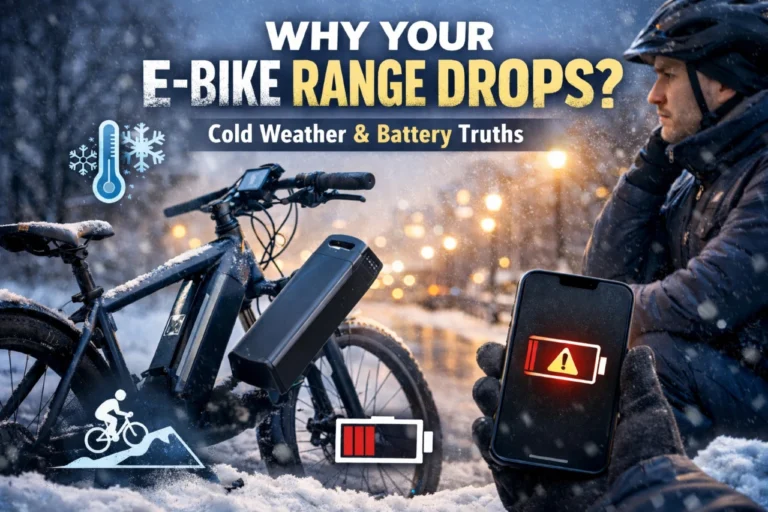
Several factors drain your battery faster than the advertised number suggests: steep hills, high assist modes, cold weather below 40°F, heavier rider weight, cargo loads, and headwinds. Plan for real-world range to be roughly 60 to 70 percent of the manufacturer’s best-case figure.
If your commute is 15 miles round trip, a 400Wh battery is workable. If you ride 25 miles daily and face hills, look for 500Wh or more and plan where you can charge if needed.
4. Match Motor Power To Your Hills, Cargo, And Rider Weight
Motor wattage gets used heavily in marketing, but the number alone does not tell the full story. A 500W hub-drive motor and a 500W mid-drive motor perform very differently on hills.
Mid-drive motors route power through the bike’s gears, which makes them more efficient on climbs and better for heavier riders. Hub-drive motors are simpler, quieter, and common on budget bikes, but they struggle more on steep grades when compared to mid-drives of the same nominal wattage.
Use this as a starting framework:
- 250 to 350W: Flat city riding, lighter riders under 180 lbs, casual use.
- 500W: General commuting, moderate hills, riders up to around 220 lbs.
- 750W and above: Steeper hills, heavier riders, cargo loads, or mixed terrain.
If you weigh more than 220 lbs, carry regular cargo, or face hills above a 5 percent grade, prioritize 750W or a quality mid-drive. Torque, measured in Newton-meters, also matters on hills. A motor with higher torque will feel more responsive on inclines than a high-wattage motor with lower torque numbers.
5. Choose A Frame Style That Fits Your Height, Flexibility, And Confidence
Frame geometry affects how easy the bike is to mount, how stable it feels, and how comfortable you are over longer rides. Getting this wrong leads to a bike you avoid riding.
The main frame options for e-bikes are:
- Step-over (diamond frame): Classic design with a high top tube. Requires swinging your leg over. Best for taller, flexible riders comfortable with traditional bikes.
- Step-through: Low or no top tube. Easy to mount and dismount without raising your leg high. Great for seniors, shorter riders, riders with limited flexibility, and anyone who stops and starts frequently.
- Folding frame: Compact, hinged design for apartment storage or multimodal commuting. Usually has 20-inch wheels, which handle differently than full-size wheels.
Before buying, check the minimum and maximum saddle height listed in the specs. Your leg should reach a slight bend at the knee when the pedal is at the bottom of the stroke. If a bike only fits riders 5’4″ and above, it will not work for a 5’2″ rider regardless of how good the motor is.
If you have knee, hip, or back issues, a step-through frame with an upright handlebar position reduces strain significantly.
6. Confirm The Weight Limit For Heavier Riders, Groceries, Child Seats, Or Backpacks
Every e-bike has a stated maximum weight capacity that includes the rider and everything they carry. Exceeding this limit affects braking, handling, frame durability, and battery range.
Most budget and mid-range e-bikes have weight limits between 220 and 265 lbs. Some cargo-focused and fat tire models are rated higher, up to 330 lbs or more. Always check the specific number in the product specs, not just the category.
Add up your actual load before comparing:
- Your body weight
- A loaded backpack or messenger bag (typically 10 to 25 lbs)
- Groceries or cargo in panniers (can reach 20 to 40 lbs)
- A rear child seat with a child (add 50 to 70 lbs)
If your combined total pushes close to the stated limit, look for a bike rated at least 20 to 30 lbs above your expected maximum load. This gives you a safety margin on braking distance, frame stress, and motor strain.
Heavier riders should also pay extra attention to brake quality and wheel strength, since both face more stress on descents and sudden stops.
7. Pick Tires For Your Real Terrain: 20-Inch Folding, Commuter, Fat Tire, Or Mixed Surface
Tire type shapes the ride more than most beginners expect. The wrong tires for your terrain make every ride harder than it needs to be.
Here is a quick breakdown:
- 20-inch tires (folding bikes): Compact and lightweight. Good for city riding but give a slightly harsher, less stable feel compared to 26-inch or 27.5-inch wheels. Maneuverability is good; long-distance comfort is limited.
- Commuter tires (1.75 to 2.2 inches wide): Efficient on pavement, lighter rolling resistance, better range. Best for flat city routes and smooth bike paths.
- Fat tires (3.5 to 5 inches wide): Wide contact patch adds stability and absorbs bumps on gravel, sand, snow, and rough roads. Heavier and slower rolling on pavement. Better for mixed terrain than dedicated pavement use.
- Mixed or hybrid tires: Moderate width, lightly treaded, works on pavement and light gravel. A good middle-ground for urban riders who occasionally hit unpaved paths.
If your route is 95 percent pavement, fat tires mostly add weight and reduce range. If you ride gravel paths or uneven terrain regularly, commuter tires will feel uncertain and uncomfortable.
8. Inspect Brake Type Carefully: Mechanical Disc Vs. Hydraulic Disc On Faster, Heavier Bikes
Brake quality is a safety issue, not a preference. A heavier e-bike moving at 20 to 28 mph takes significantly more stopping distance than a lighter pedal bike. Weak brakes on a fast, heavy bike are a real risk.
The two main types you will encounter:
- Mechanical disc brakes: Use a cable to activate the caliper. Reliable and easy to maintain yourself. Common on budget and mid-range bikes. Stopping power is good but requires more hand force and more frequent cable adjustment over time.
- Hydraulic disc brakes: Use fluid pressure for activation. More responsive, require less hand force, and maintain consistent feel as pads wear. More expensive and harder to service at home, but meaningfully better on heavier, faster bikes.
For bikes under 40 lbs or Class 1 models ridden mostly in flat areas, mechanical disc brakes are workable. For Class 3 bikes, bikes over 55 lbs, fat tire models with dual motors, or any setup where you carry heavy cargo, hydraulic brakes are worth paying extra for.
Avoid rim brakes entirely on e-bikes. They lose stopping power in wet conditions and are not designed for the weight of a motorized bike.
9. Test Comfort Features Like Suspension, Saddle Shape, Handlebar Reach, And Riding Position
You can buy a bike with impressive specs and still dread every ride if the comfort is wrong for your body. Comfort features matter especially on rides longer than 20 to 30 minutes.
Key comfort elements to evaluate:
- Front suspension fork: Absorbs road vibration and small bumps. Useful on city streets with potholes, gravel paths, or rough pavement. Not all budget bikes include this, and some forks that ship on low-cost models are very stiff.
- Rear suspension or a suspension seatpost: Adds comfort for riders with back sensitivity. Less common in the budget tier.
- Saddle shape: Wide, cushioned saddles suit upright riding positions. Narrow saddles suit riders who lean forward. The stock saddle can be replaced inexpensively if it does not suit you.
- Handlebar reach and rise: Handlebars too far forward put strain on your lower back. A more upright position reduces fatigue on longer rides.
- Riding position: Upright feels more comfortable for casual and commuter use. More aggressive, forward-leaning positions are better for speed-focused riding.
If possible, test the bike before buying, even briefly. Comfort factors that look fine on paper often feel wrong in practice.
10. Review Safety, Warranty, Return Terms, Assembly Needs, And Total Ownership Cost
The sticker price is only part of what you pay. Understanding the full ownership picture before you buy prevents expensive surprises.
Battery safety: Look for bikes with UL 2849 certification on the electrical system or a UL-listed battery. This certification means the electrical system has passed independently verified safety standards. Battery fires from low-quality cells are a real concern with unverified products.
Warranty terms: Most reputable brands offer at least a one-year warranty on the frame and components. Check whether the battery is covered separately and for how long. Short battery warranties on expensive packs are a red flag.
Return policy: Many e-bikes are sold online and arrive in large boxes. Understand the return window, who pays return shipping, and whether the seller requires the bike to be unridden. Some sellers have narrow return windows or high restocking fees.
Assembly: Most online e-bikes require partial assembly, including attaching the handlebars, front wheel, display, and pedals. Some also need brake and derailleur adjustment. If you are not comfortable with this, factor in a local bike shop assembly fee, usually $50 to $100.
Ongoing costs: Budget for a quality helmet, a U-lock or folding lock, a lights upgrade if not included, and possible tire or brake adjustments within the first few months of riding.
How To Compare Beginner-Friendly E-Bikes
Not every beginner has the same needs. Your priorities should shift based on your age, fitness level, commute, and how you plan to use the bike most often.
What A Student Should Prioritize
Students typically need a reliable daily commuter that fits a tight budget and stores in a small space. A folding e-bike or a compact commuter model makes sense here. Prioritize battery range that covers your campus commute round trip, a decent lock setup, and a frame that fits in a dorm room or small apartment. Avoid spending money on power or speed you will not legally use on campus paths.
What A Senior Should Prioritize
Ease of mounting and dismounting comes first. A step-through frame significantly reduces the risk of losing balance while getting on or off. Upright handlebar geometry reduces back and wrist strain. Wider tires add stability. Hydraulic disc brakes improve stopping confidence. A torque-sensor pedal-assist system feels more natural and predictable than a cadence sensor for riders who prefer smooth, gradual acceleration.
What A Commuter Should Prioritize
Reliability and practicality matter more than top speed. Look for integrated lights front and rear, a rear rack, fenders, and a battery sized to cover your round trip with a buffer. A Class 2 bike gives you a throttle for intersections and hills without pushing you into Class 3 restrictions. Brake quality is important if your route involves traffic stops, hills, or wet weather.
What A Heavier Rider Should Prioritize
Check the weight capacity before anything else. Look for a bike rated at least 30 lbs above your actual loaded weight. A 750W or higher motor handles hills and extra load better than lower-powered options. Fat tires improve stability and comfort under added weight. Hydraulic disc brakes are particularly important when stopping takes more distance and force. Reinforce your budget to include a high-quality saddle if the stock seat is too narrow.
Common First-Time Buying Mistakes
Trusting Claimed Range Too Literally
Manufacturers test range under conditions that favor the battery: flat terrain, low assist mode, light rider, and mild temperatures. In real riding, your range can drop 30 to 40 percent from what is advertised. Always estimate based on 60 to 70 percent of the stated figure, especially if you ride hills, use high assist frequently, carry cargo, or ride in cold weather.
Buying For Top Speed Instead Of Daily Use
A Class 3 e-bike sounds appealing until you realize it is restricted from most bike lanes and shared paths in your city. High-speed models also demand better brakes, sharper handling skills, and more attention to traffic. For most daily riders, a Class 2 bike at 20 mph is faster in practice because you can legally use more routes and feel confident stopping quickly.
Ignoring Storage And Carry Weight
E-bikes are heavy. Most weigh between 40 and 70 lbs. If you live in a third-floor apartment with no elevator, that weight becomes a daily obstacle. If you need to load the bike into a car trunk or onto a bus bike rack, weight matters directly. Check the folded dimensions and weight before you buy. A bike that is too heavy or too bulky for your storage situation will stop being used.
Overlooking Parts Support And Warranty Clarity
Many budget e-bikes are sold by overseas brands with no U.S. service network, limited replacement parts, and warranty claims that require shipping the bike internationally. Before buying, search for user reviews that mention warranty claims, spare part availability, and customer service responses. A bike that costs $200 less but leaves you stranded after a broken display or failed motor controller is not actually cheaper.
Before You Buy: Compare A Few Real Options
Use GoEBikeLife Reviews And Buying Guides For Side-By-Side Research
Before you commit to a model, it helps to read independent reviews from sources focused on real-world riding rather than spec sheets alone. GoEBikeLife publishes buying guides across categories including commuter e-bikes, folding models, fat tire bikes, budget options under $1,000, and electric trikes, with spec comparisons that cover battery size, brake type, tire width, weight, and price side by side. Using a structured guide like this helps you compare honestly rather than guessing from product listings alone.
Check Real-World Trade-Offs Before Ordering
Every e-bike involves compromises. A lighter folding bike gives up range. A fat tire model sacrifices pavement efficiency for trail stability. A powerful dual-motor setup reduces battery life per charge. Reading detailed trade-off sections in reviews, not just the highlights, is where first-time buyers usually save themselves from regret.
Narrow Your List To Two Or Three Beginner-Friendly Models
Once you know your use case, budget, and must-have features, narrow your options to two or three specific models. Compare them on the criteria that matter most to your situation: range versus weight, brake type, frame fit, and warranty terms. Choosing between a small, focused list is far more manageable than trying to evaluate dozens of options all at once.
Final Thoughts
The right first e-bike is not the most powerful, the fastest, or the cheapest one available. It is the one that fits how you actually ride, where you actually live, and what your body actually needs. That means matching your use case first, then checking class legality, battery capacity, motor fit, frame geometry, tire type, brake quality, and ownership costs before you buy.
A few extra hours of research now prevents months of frustration with a bike that does not fit your storage space, cannot handle your hills, or leaves you stranded before your commute ends. Use the checklist above as your framework, read independent reviews from sources like GoEBikeLife that cover real-world trade-offs, and check current prices when you are ready to compare specific models. When you are ready to move forward, the GoEBikeLife buyer’s guides can help you narrow your list to beginner-friendly options across every major category.
Frequently Asked Questions
What features should I prioritize when choosing my first e-bike?
Start with riding purpose, battery capacity in watt-hours, and frame fit for your height.
After that, prioritize brake quality, motor power matched to your hills and weight, and a clear warranty with accessible parts support.
Avoid buying based on top speed or motor wattage alone.
Which e-bike class should I choose, and how do Class 1, Class 2, and Class 3 differ?
For most beginners, Class 2 offers the best balance of flexibility and legal access across U.S. routes.
How much range do I realistically need, and what factors reduce battery range?
Plan your range based on 60 to 70 percent of the manufacturer’s advertised figure.
Hills, cold weather, high assist modes, and heavier rider weight all reduce battery life.
For a 15-mile round trip commute, a 400Wh battery is workable; for 25 miles or more, look for 500Wh or above.
What motor power and torque are appropriate for my terrain, commuting distance, and rider weight?
A 500W motor handles moderate hills and riders up to around 220 lbs.
If you weigh more, carry regular cargo, or face grades steeper than 5 percent, a 750W motor or a quality mid-drive with higher torque will perform noticeably better.
Mid-drive motors are more efficient on climbs than hub motors of the same wattage.
How can I evaluate battery safety and the risk of overheating or fire?
Look for bikes with UL 2849 certification on the electrical system or a UL-listed battery pack.
This independently verified certification means the electrical components meet established safety standards.
Avoid bikes with no safety certifications listed, especially at very low price points where battery quality is harder to verify.
What warning signs suggest an e-bike brand or model should be avoided?
Red flags include no stated weight capacity, vague or missing warranty terms, no U.S. customer service contact, unrealistic range claims with no supporting detail, and extreme motor power claims such as 3,000W or higher on a bike priced under $800. Also be cautious of brands with no user reviews mentioning real warranty or parts support experiences.