A little joy belongs in every day.

A practical comparison of belt drive and chain drive e-bikes, covering maintenance, gearing, repairs, compatibility, and real-world riding differences.
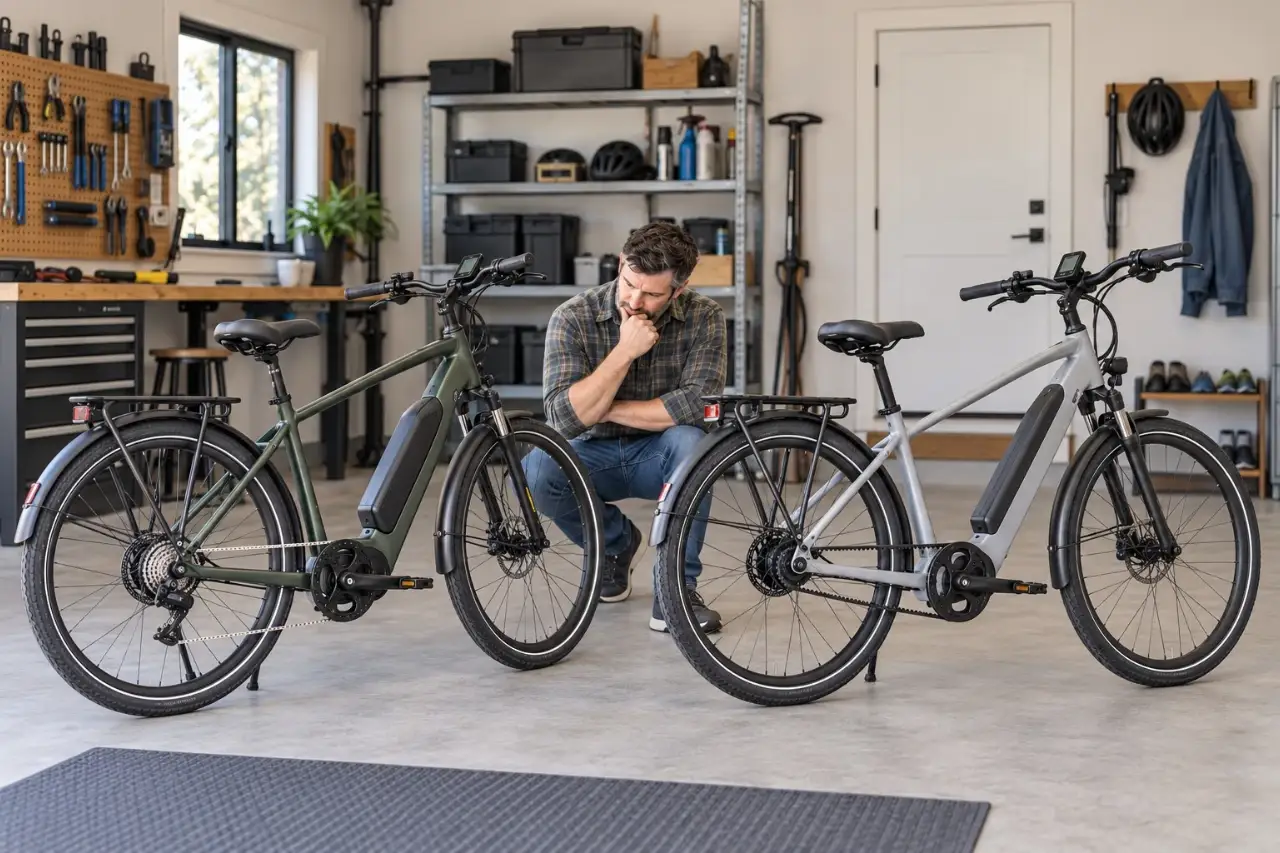
A belt drive is usually cleaner, quieter, and lower-maintenance than a chain, while a chain remains more common and easier to service almost anywhere. The right choice depends on how you ride, the drivetrain design of the e-bike, your maintenance habits, and the service support available in your area.
Both systems transfer your pedaling force to the rear wheel. On an e-bike, they also work alongside the motor, especially on mid-drive models where motor power passes through the drivetrain.
A conventional bicycle chain uses linked metal rollers that mesh with toothed rings at the pedals and rear wheel. It needs periodic cleaning and lubrication because it is exposed to water, grit, and road residue.
A belt drive uses a reinforced toothed belt, usually made from a durable synthetic material with internal cords. It runs on matching toothed pulleys rather than metal chainrings and cogs. It does not use oil-based chain lubricant.
The biggest ownership difference is routine care. A chain rewards regular attention. A belt asks for much less day-to-day maintenance, but it depends on correct alignment and tension and has fewer roadside repair options.
For commuters and riders who want to spend more time riding than cleaning, a belt can be appealing. It stays dry, so it is less likely to leave black marks on pants, shoes, car interiors, or your hands when lifting the bike onto a rack.
Belt systems also run quietly when properly adjusted. That can make an e-bike feel more refined at low speeds, particularly when paired with an internally geared hub. Instead of shifting across several exposed rear cogs, an internally geared hub shifts inside its rear hub shell. Many belt-drive e-bikes use this arrangement because a belt cannot move sideways across derailleur gears like a chain can.
Wet streets are another meaningful advantage. Rain itself does not make a belt maintenance-free, but it does not wash away belt lubricant because there is none. After a wet ride, you generally just rinse or wipe off dirt as your manufacturer permits and check that debris has not collected around the pulleys.
That said, low maintenance does not mean no inspection. Small stones, sticks, or packed mud can damage a belt or interfere with its path. A belt that is too loose may skip under load. One that is too tight can add drag and place unnecessary load on bearings. Belt tension is specific to the bike and system, so use the owner’s manual and a qualified bike shop if adjustment is needed.
Chains are standard on most e-bikes for good reasons. They work with familiar derailleur systems, support a broad range of gearing, and can be repaired or replaced at many bike shops. For riders far from home, that availability has real value.
A chain-driven e-bike can also be a practical fit for hilly routes and riders who need many closely spaced gears. Derailleur drivetrains offer a wide range of gear choices, which can help you maintain a comfortable pedaling cadence as grades and speeds change.
A chain does require regular care, particularly on a powerful mid-drive e-bike. Motor torque can accelerate wear if you shift under heavy load, ride with a dirty chain, or let the chain run dry. This does not mean a chain is fragile. It means the drivetrain should be treated as a working system rather than ignored until it starts skipping.
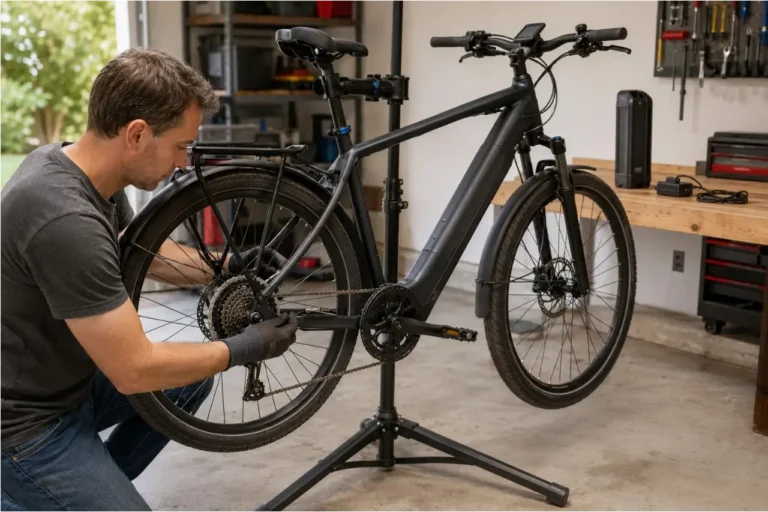
For many owners, chain care is manageable: clean off grime when needed, apply a bicycle-specific lubricant sparingly, wipe away excess, and have wear checked during routine service. Avoid spraying lubricant onto brake rotors, pads, tires, or the belt if your bike has one.
| Factor | Belt drive | Chain drive |
|---|---|---|
| Routine cleaning and lubrication | Usually simpler; no lubrication | Needs periodic cleaning and lubrication |
| Noise and mess | Often quiet and clean | Can become noisy or dirty when neglected |
| Gearing options | Usually single-speed, internally geared hub, or gearbox | Commonly used with derailleur gearing |
| Repairs away from home | May require specific parts and a compatible shop | Parts and service are widely available |
| Frame requirements | Needs a frame designed to install a continuous belt | Fits conventional bicycle frames |
| Setup sensitivity | Alignment and tension are critical | Adjustment is familiar to most bike shops |
These are general patterns, not promises. Specific components, riding conditions, and maintenance quality can change the outcome.
You generally cannot replace a chain with a belt on an existing e-bike as a simple upgrade. A belt is a continuous loop, so the frame needs a designed opening, often called a belt split, to install it. The bike also needs compatible front and rear pulleys, a suitable chainline, and a method for setting belt tension.
A derailleur is also not designed to shift a belt from one rear pulley to another. That is why belt-drive e-bikes commonly use a single speed, an internally geared hub, or a gearbox. These systems can be excellent for commuting, but they are a different drivetrain design, not a bolt-on conversion.
For the same reason, do not substitute parts based only on appearance. Belt widths, tooth profiles, pulley specifications, and tension requirements vary by system. Use only parts approved by the e-bike and drivetrain manufacturers.
| Preview | Product | Price | |
|---|---|---|---|

| focopot Bike Cleaning Kit with Bike Chain Degreaser,Scrubber,Lube | $22.99 | View on Amazon |
A belt drive often makes sense for an urban rider who values clean clothing, quiet operation, and low routine maintenance. It can be especially convenient for a short daily commute, flat-to-rolling terrain, or an e-bike stored indoors where oil and grime are a nuisance.
A chain may suit riders who regularly face steep hills, changing terrain, long rural routes, or situations where local repair access matters. It is also the usual choice for e-bikes with derailleur gears and many recreational or utility setups.
Motor placement changes the picture. A rear-hub motor drives the wheel separately from your pedaling drivetrain, so the chain or belt handles your pedal input but not the motor’s full power. A mid-drive sends motor power through the chain or belt system. On a mid-drive, reducing pressure on the pedals briefly before shifting is particularly helpful. This gives the chain, belt, and internal gear components a less abrupt load change.
| Preview | Product | Price | |
|---|---|---|---|

| Muc-Off Bio Dry Bike Chain Lube 4.06 fl oz – for Smooth Gear Shifts |
$14.66
$11.66 | View on Amazon |
Whether your e-bike has a belt or chain, inspect the drivetrain before a ride that will take you far from home. With the e-bike powered off, look for obvious damage, loose parts, heavy buildup, or unusual rubbing. Turn the pedals by hand only if the bike is stable and your fingers stay clear of moving parts.
For a chain, watch for rust, stiff links, grinding sounds, and skipping under normal pedaling. Skipping can also come from worn cogs, derailleur adjustment problems, or an internal gear issue, so do not assume lubrication alone will fix it. A shop can measure chain wear and identify what needs replacement before wear spreads to other parts.
For a belt, look for frayed edges, missing teeth, cracks, embedded debris, or a belt that tracks unusually close to one side of a pulley. A squeak, click, or repeated skip deserves attention. Do not apply chain lube, grease, or household solvents to a belt. Follow the belt and e-bike manufacturer’s cleaning instructions, as approved cleaning products can vary.
After riding through mud, road salt, sand, or heavy rain, gently remove contamination from the drivetrain. Avoid directing high-pressure water at bearings, electrical connections, the motor area, or the battery compartment. Let the bike dry before storage and clean the chain promptly if it was exposed to salty winter roads.
Stop using the bike and arrange service if a belt is visibly damaged, skips repeatedly, or has come off a pulley. A damaged belt should not be patched or improvised. If a chain has broken, jammed, or repeatedly falls off, avoid forcing the pedals or using motor assistance to power through the problem.
Also seek service if shifting becomes suddenly harsh, the rear wheel makes grinding noises, or the drivetrain binds. On an e-bike, forcing a damaged drivetrain can affect more than pedaling comfort. It can leave you without reliable control of power delivery and may cause further component damage.
Your owner’s manual takes priority for cleaning methods, tension checks, compatible replacement parts, and service intervals. Belt tension tools, adjustment procedures, and replacement specifications vary by system, so follow the manufacturer’s requirements rather than using general bicycle guidelines. A qualified bicycle mechanic is the right next step when an adjustment involves belt tension, internal gearing, or a persistent shifting problem.
A belt drive can make e-bike ownership pleasantly simple, while a chain offers familiar gearing and practical repairability. Choose the system that fits the rides you actually take, then give it the modest, consistent care it needs to stay quiet, efficient, and dependable.