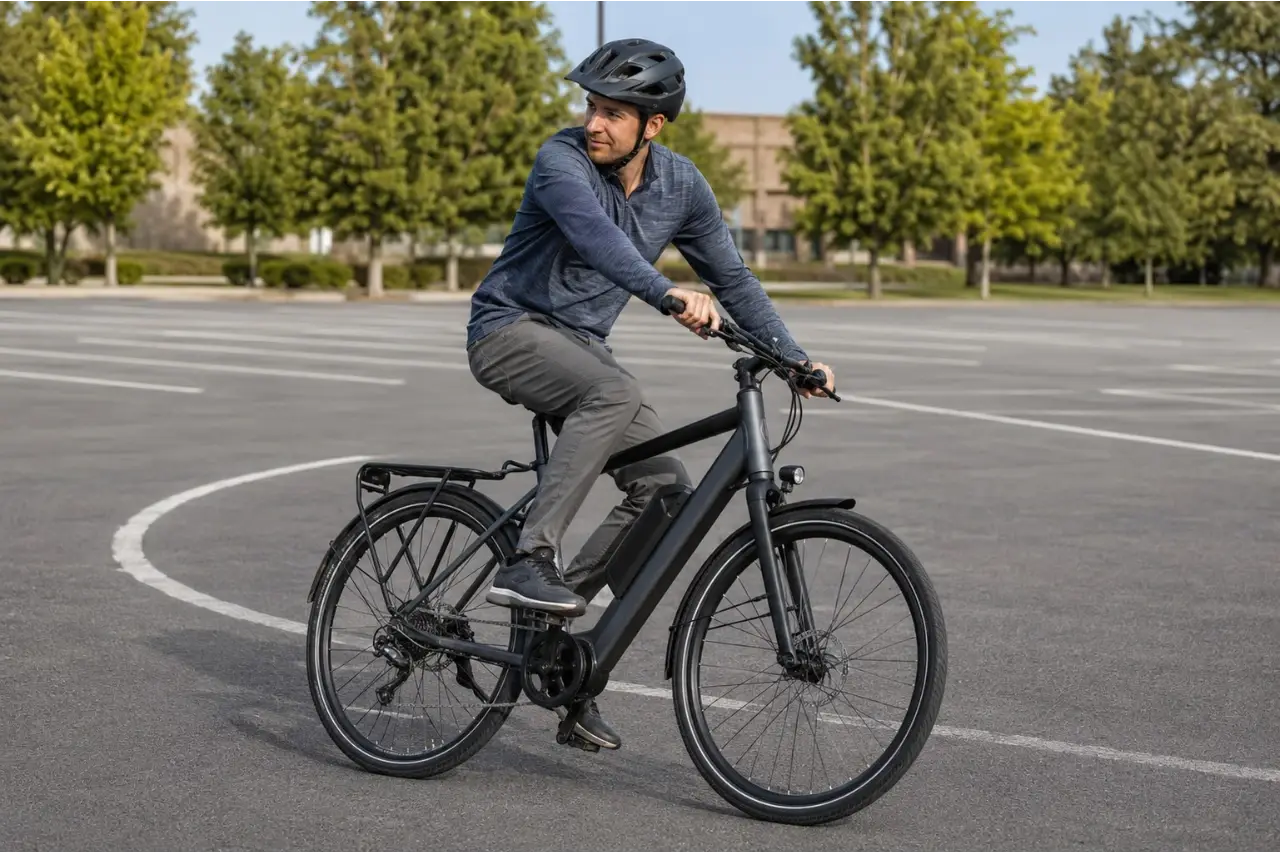
To corner an e-bike safely, reduce your speed before the turn, look through the corner, keep the inside pedal raised, and use smooth steering. Avoid hard braking, sudden pedal pressure, or abrupt throttle input while the bike is leaned over. As the exit opens, bring the bike upright before adding power gradually.
These habits leave more grip available for turning and more time to respond to hazards. Your owner’s manual takes priority for model-specific guidance on braking, assist, cargo, or passengers.
Why Cornering Can Feel Different on an E-Bike
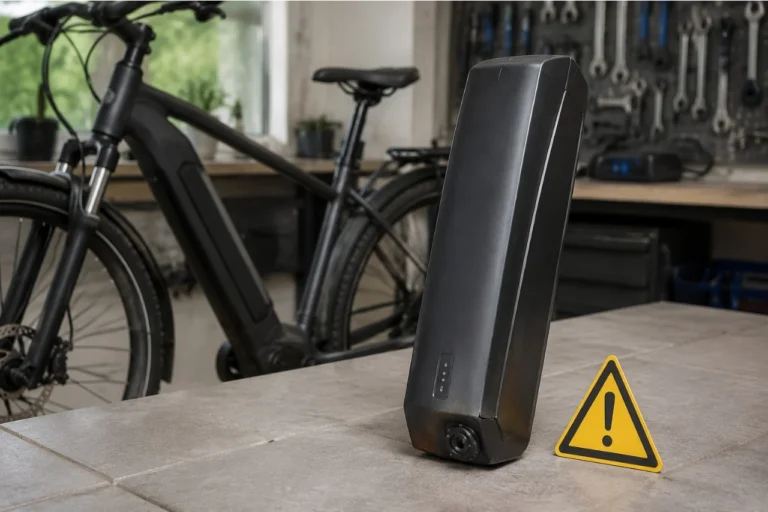
Many e-bikes weigh more than conventional bicycles because of the motor and battery. At the same speed, a heavier bike-and-rider combination carries more momentum, but weight alone does not determine stopping distance. Tire grip, brake condition, surface, speed, geometry, technique, and cargo placement also matter.
Motor assistance also changes the feel. Depending on the system, a pedal stroke may produce help immediately or after a short delay. Make most speed changes before the corner and keep power predictable while turning.
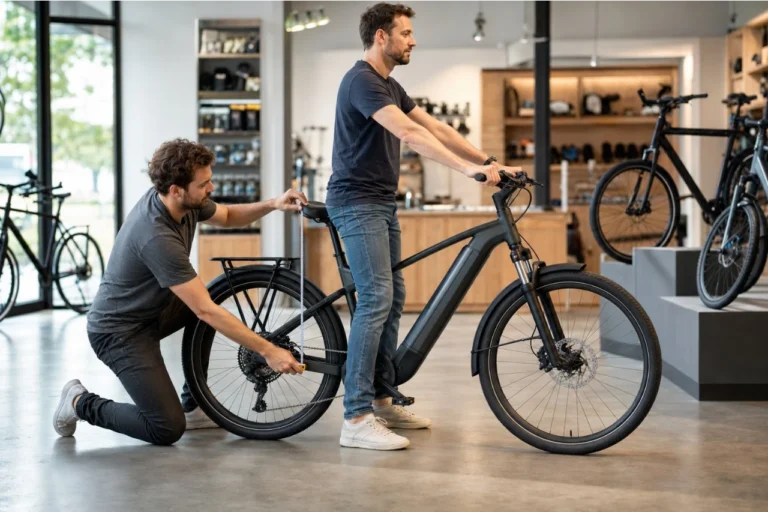
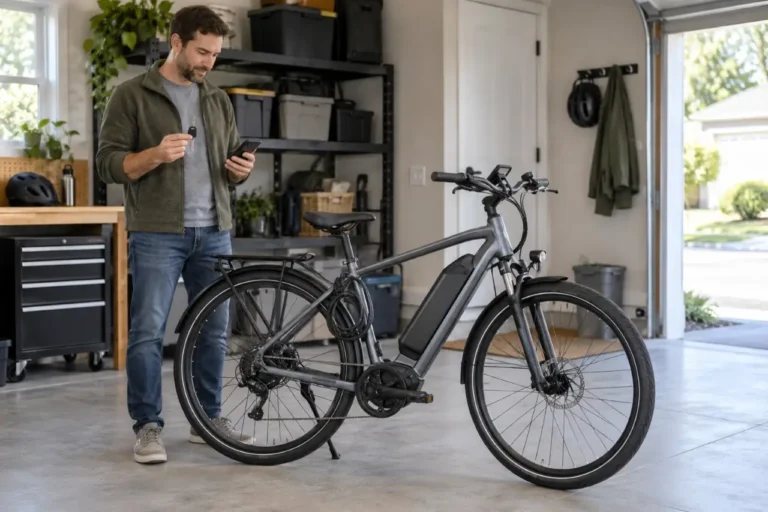
Before practicing, confirm that the steering, wheels, tires, and both brakes are in good condition. This three-minute e-bike pre-ride checklist covers the main checks.
How to Corner an E-Bike Safely in 7 Steps
1. Scan the Corner and Choose a Clear Line
Look beyond the near edge of the turn. Identify where the corner begins, where it appears tightest, and where you want to exit. Keep scanning because the corner may tighten or reveal a hazard after you enter it.
On roads, watch for turning vehicles, driveways, potholes, drain grates, parked-car doors, and oncoming traffic. Check behind before changing position, and signal when it is safe to take one hand off the handlebar. On shared paths, expect others to change direction unexpectedly.
Identify a hazard, then direct your eyes toward the safe path around it. Leave room to adjust without crossing the centerline or leaving your lane.
2. Set Your Speed Before the Turn
Do most of your braking while the e-bike is upright and moving in a straight line. Use both brakes with a smooth, progressive squeeze, then ease off as you begin to turn. Enter at a speed that still leaves room to respond if the corner is tighter, rougher, or busier than expected.
There is no universal safe cornering speed. A wide, dry, visible curve may allow more speed than a blind corner covered with leaves. Slow down more when visibility, traction, or your stopping space is limited.
If a hazard appears after you have leaned into the turn, do not grab either brake. Straighten the bike as much as your lane and surroundings safely allow, then apply both brakes progressively. If you must brake while still leaned, use gentle, controlled pressure; the tires are already using part of their available grip to turn.
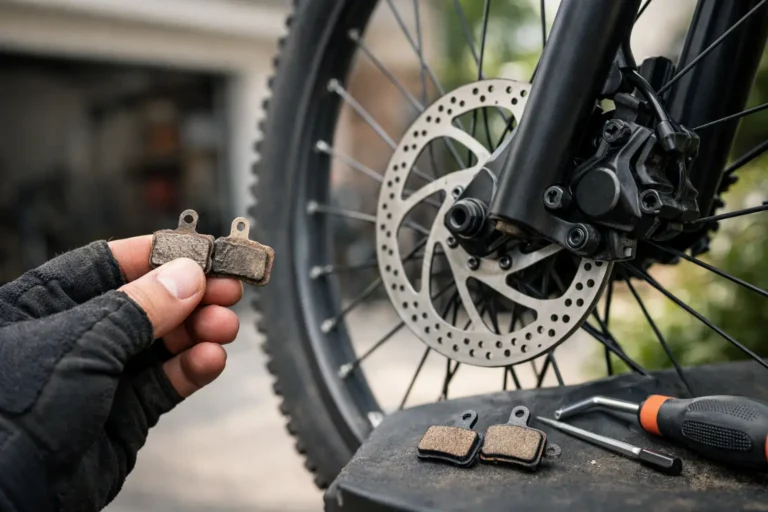
Brake feel varies, so follow your owner’s manual. If either brake feels weak, inconsistent, or unusually noisy, stop riding and use this e-bike brake inspection guide before continuing.
3. Raise the Inside Pedal
When coasting through a normal turn, keep the inside pedal up and the outside pedal down. In a left turn, the left pedal is up; in a right turn, the right pedal is up. This reduces the chance that the inside pedal will strike the pavement as the bike leans.
Place steady pressure through the outside foot, keep your knees and elbows relaxed, and hold the handlebars securely without squeezing them tightly. Locked arms and a rigid upper body make it harder to absorb small bumps or make smooth corrections.
Low-speed turns are different. During a tight U-turn, you may need to pedal gently while steering more with the handlebar. Keep the bike relatively upright, check pedal clearance, and use low assist. Practice away from traffic first.
4. Lean Smoothly and Stay Balanced
A moving bicycle must lean to follow a curve, but do not force a dramatic angle. Use a gentle steering input, keep your head up and torso relaxed, and let the bike settle into a smooth arc.
Body position changes with speed, bike type, and terrain. Bike-body separation can help in some off-road turns, while a slow paved turn may need little lean. Beginners should stay centered, avoid sudden movements, and not force a particular pose.
Bike designs respond differently, and wide tires or suspension do not guarantee traction. Learn your bike’s handling at low speed before attempting tighter turns.
5. Keep Motor Power Predictable
For a tight corner, slippery surface, crowded path, or unfamiliar bike, select a lower assist level before entering. Do not look down at the display or change settings while you need your full attention on the turn.
When conditions are uncertain, coast through the tightest part. Keep a thumb or twist throttle neutral, and avoid a hard pedal stroke while the bike is leaned over. Once you can see a clear exit and the bike is beginning to straighten, resume pedaling or apply throttle gradually.
Assist behavior differs among e-bike systems. Practice how your bike starts and stops providing power. If assistance surges or does not cut out as designed, stop riding and have the controls checked.
6. Reduce Lean and Inputs on Slippery Surfaces
Wet leaves, loose gravel, sand, ice, oil, metal utility covers, painted markings, and rail tracks can reduce traction. When you cannot avoid a questionable surface, slow down before reaching it, keep the bike more upright, and minimize braking, steering, and acceleration while crossing it.
Cross rail tracks and similar narrow grooves as close to a right angle as your lane and traffic conditions safely allow. Do not swerve into another lane or across a path centerline to create a better angle. If you cannot cross safely, stop in a safe place and walk the bike where permitted.
If a tire begins to slide, avoid sudden steering, braking, or power. Look toward open space, ease off pedal or throttle pressure, and reduce lean without leaving your safe travel area. A front-tire slide can become a fall quickly, so conservative entry speed is the best defense.
Correct tire pressure also supports predictable handling. The number on a sidewall may be a permitted range or a maximum, not the ideal pressure for every rider. Use the limits from the tire, rim, and bike manufacturers, then account for load and surface using this e-bike tire pressure guide.

7. Straighten Before Adding Power
As the corner opens, look farther ahead and gradually bring the e-bike upright. Add pedal assistance or throttle only as traction demands decrease. Accelerating progressively is especially important when you are carrying cargo, entering a downhill section, or joining traffic.
Leave a safety margin instead of using every inch of pavement. Stay within your lane, follow signs and signals, and yield as required. Access and operating rules can also differ by state, city, park, and trail system, so check the current local rules for e-bikes on bike paths before riding.
Adjust for Cargo, Passengers, and Different Bike Designs
Cargo can change the bike’s center of mass and may shift during a turn. Secure bags so they cannot swing, contact a wheel, or interfere with steering. Keep the load within the bike and rack limits, distribute it as the manufacturer directs, and begin with wider turns at lower speeds.
Use a passenger seat, child seat, or trailer only if both manufacturers approve the combination. Follow all weight, fit, restraint, foot-protection, and installation requirements. Practice without a passenger first.
Long-tail bikes, front-loading cargo bikes, tricycles, and trailers need different turning space. A tricycle does not lean like a two-wheeler and can lift an inside wheel if cornered too quickly. Follow the instructions for that design.
When to Stop Riding Instead of Practicing
Do not continue if you find any of the following:
- A brake that does not stop its wheel reliably
- A loose handlebar, stem, wheel, axle, or headset
- A cut, bulge, exposed casing, or severe pressure loss in a tire
- A badly bent rim, broken spokes, or noticeable wheel wobble
- Steering that binds, feels loose, or pulls unexpectedly
- Motor assistance or a throttle that surges or fails to disengage normally
- Cargo, a child seat, or a trailer that cannot be secured correctly
Have a qualified bicycle or e-bike technician inspect problems involving steering, wheels, brakes, the frame, fork, or electrical controls. Do not use a public ride to test an uncertain repair.
Practice Cornering in a Low-Risk Area


Choose an empty, clean parking lot or another paved area away from traffic and pedestrians. Wear a properly fitted helmet; this e-bike helmet fit and replacement guide explains the essential checks.
Start in the lowest practical assist setting and ride large circles in both directions. Practice looking through the turn, slowing while upright, raising the inside pedal, and adding power only after straightening. Gradually make the circles smaller while keeping the speed comfortable. Add gentle figure eights only after both directions feel controlled.
If you are returning to cycling, changing to a heavier e-bike, or carrying passengers or cargo, consider an in-person bicycle skills class. Good cornering should feel calm and repeatable—not dramatic or uncertain.
GoEBikeLife publishes independent e-bike reviews, comparisons, and practical buying guides. Some links on this page are affiliate links. If you make a purchase through an eligible link, we may earn a commission at no additional cost to you.