Real rides. Real notes. No hype.

Step-through vs step-over isn’t about looks—it’s about daily confidence. Compare stability, fit, and cargo handling to choose the frame you won’t regret.
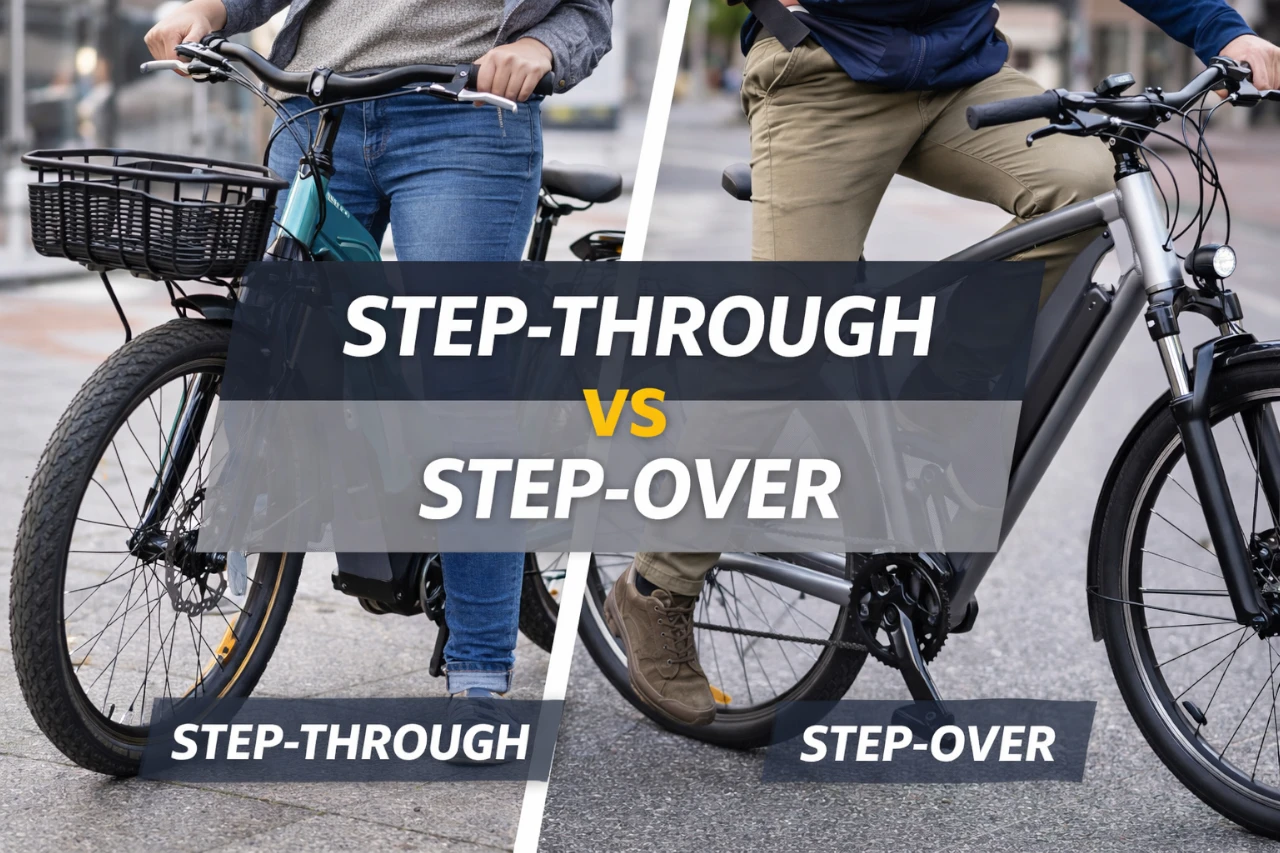
If you’re choosing between step-through vs step-over, here’s the honest shortcut:
In my experience, the “better” option depends less on marketing and more on how often you’ll be getting on/off the bike and what you’ll carry.
| Category | Step-Through | Step-Over |
|---|---|---|
| Mount/Dismount | Best-in-class easy access | Requires swinging leg over top tube |
| Low-Speed Stability | Often feels calmer during stop-and-go | Stable, but can feel taller/less “step-in” friendly |
| Fit Range (short riders) | Usually friendlier standover | Often higher standover; inseam matters |
| Cargo & Carrying Loads | Easier to manage with a loaded rack/basket | Good for loads, but mounting with cargo is harder |
| Frame Stiffness | Can be slightly less stiff (varies by design) | Typically stiffer triangle frame |
| Best For | Commuting, errands, accessibility, comfort-first riding | Sportier feel, higher-speed stability, traditional handling |
Step-through frames lower or remove the top tube so you can “step in” rather than swing a leg over.
Step-over frames use the classic triangle layout with a higher top tube.
One detail people miss: many “step-through” e-bikes are really mid-step designs (lower top tube, not completely open). That can be a great compromise.
In city riding, stability isn’t just about cornering. It’s about the awkward moments: stopping at lights, dodging potholes, putting a foot down, restarting with a loaded rack, and doing all of that while cars and pedestrians are around.
At higher speeds, a traditional step-over triangle can feel a bit more rigid, especially on bikes with long forks, heavy batteries, and racks. But don’t overgeneralize—some step-through frames are extremely solid, and some step-overs flex because of budget parts or long stems.
My rule: if you’re riding 25–28 mph frequently, hauling cargo, or you’re a heavier rider, pay extra attention to frame build quality and wheel strength (not just frame type).
If you’re between sizes, standover is what makes a bike feel “friendly” or “intimidating.” Step-through wins here for most people, especially:
Frame type doesn’t automatically mean upright or aggressive. You can find upright step-overs and sporty step-throughs. The real posture drivers are:
If multiple people in a household will ride one bike, step-through is often the easiest “one-bike-fits-most” answer, because mounting and quick adjustments feel less intimidating for casual riders.
The moment you add a rear basket, panniers, a child seat, or a big front rack bag, swinging a leg over a step-over becomes… awkward. Not impossible—just annoying, and sometimes unsafe if the bike tilts.
Step-through’s best feature isn’t comfort—it’s control while loaded.
If you’re carrying heavy loads daily, a stiff frame and strong rear triangle help prevent “wobble” and keep handling predictable. Step-over often wins on stiffness, but many step-through e-bikes solve this with:
So: don’t assume step-through can’t carry. Just verify payload ratings and rack design.
Most e-bike accidents in traffic happen during low-speed mistakes: awkward stops, unstable starts, sudden dismounts, or trying to mount with cargo. That’s exactly where step-through can reduce risk.
Also, if you’re shopping budget e-bikes, put safety above frame type. Two internal reads that help:
Is step-through always less stable than step-over?
No. In stop-and-go riding, step-through can feel more stable because dismounts and foot-down moments are easier. At higher speeds, some step-overs feel stiffer—but build quality matters more than labels.
Is step-through only for seniors?
Not at all. Step-through is a practicality choice. Plenty of commuters and riders hauling cargo pick it because it’s simply easier and safer day-to-day.
Which is better for carrying a child seat?
Step-through is usually easier because you’re not trying to swing a leg over a rear child seat or loaded rack. Just make sure the rack is rated for the seat and your total payload is within spec.
Which is better for heavy riders?
Either can work, but heavy riders should prioritize frame build quality, wheel strength, and payload rating over frame style. Start here: Best E-Bike for 300lb+ Riders.
What if I’m on the fence?
If you’re truly 50/50, choose step-through for commuting/errands and choose step-over for sportier riding. Most everyday riders regret “hard to mount” more than they regret “slightly less stiff.”
The step-through vs step-over decision is less about “which is better” and more about how you actually live with the bike. If you want a bike that feels effortless in daily life—especially with cargo—step-through is hard to beat. If you want the most rigid, traditional ride feel and don’t mind the mount, step-over remains a solid choice.
Either way, prioritize fit, payload, and safety basics—and your decision will hold up long after the first week excitement fades.