If you want serious climbing power and a battery big enough for long weekend rides, the FREESKY Swift Horse Ultra is worth a close look. GoEBikeLife put together this buyer’s guide to help you weigh its advertised 4000W motor, 1680Wh battery, and full suspension setup against what your actual rides and storage space can handle.
For riders tackling hilly commutes, rough trails, or hauling gear, the Swift Horse Ultra’s BAFANG motor and 48V 35Ah LG battery offer enough advertised power and range to cover long, demanding routes, provided you check fit, local regulations, and warranty terms first.
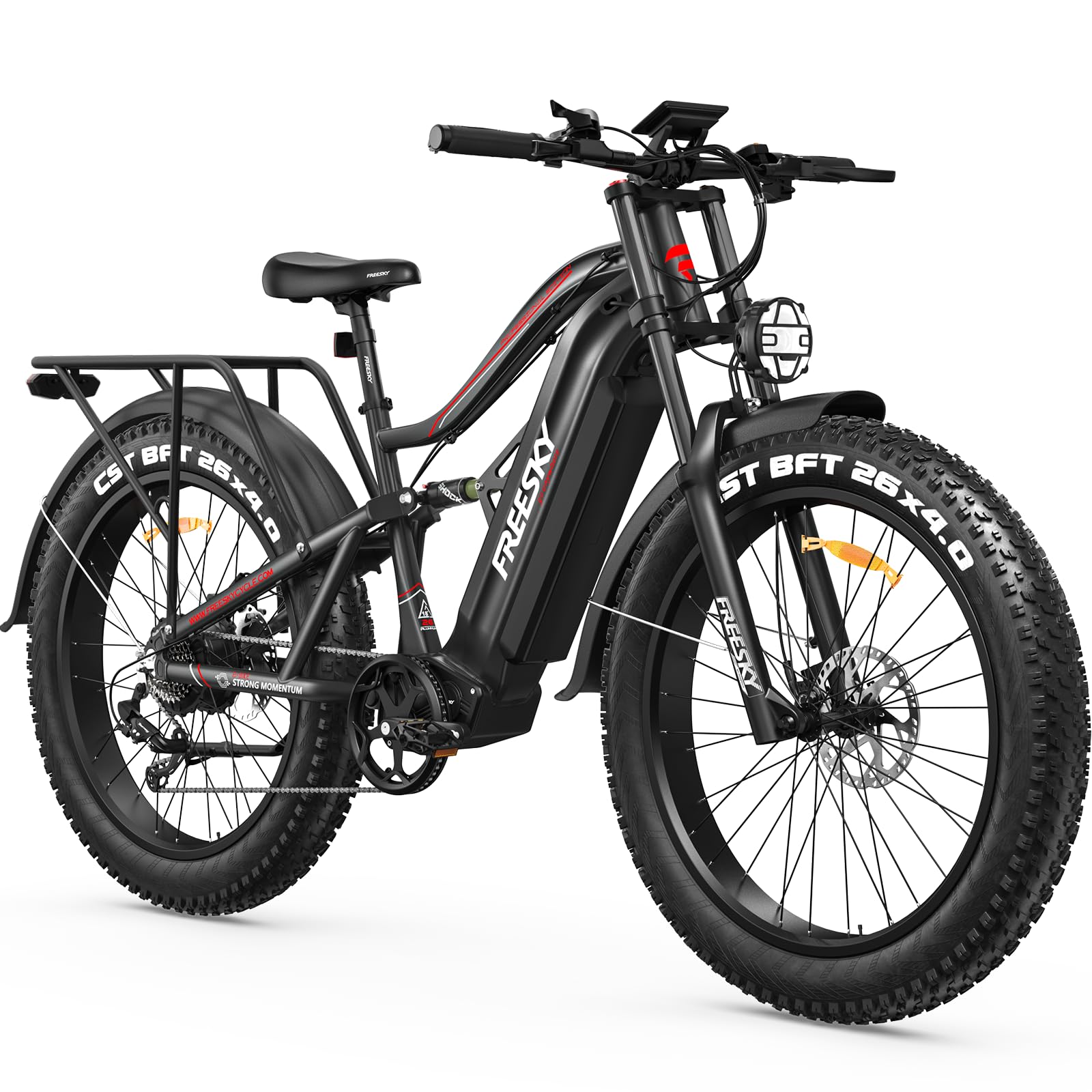
The Swift Horse Ultra pairs a high-torque motor with a battery rated for extended range, plus front and rear suspension meant to smooth out rough terrain. FREESKY also lists a 400-pound payload capacity, which opens the door to cargo use and heavier riders alike.
Bottom Line
The Swift Horse Ultra looks built for riders who need strong hill-climbing assistance, long range between charges, and comfort over mixed terrain. If that matches your riding plans, check current pricing and availability for the FREESKY Swift Horse Ultra on Amazon.
FREESKY Swift Horse Ultra Overview: Who Is It For?
The Swift Horse Ultra suits riders who need serious motor assistance and long range more than riders looking for a light, simple commuter bike. Its weight, power, and feature set point toward hilly commutes, mixed-terrain exploring, and hauling cargo or gear.
Quick Take on Rider Fit and Value
This bike makes the most sense for someone replacing short car trips on hilly terrain or carrying loads that a standard e-bike can’t manage. Riders wanting a lightweight, easy-to-store bike for flat city blocks may find it more bike than they need.
What Comes with the X-6E Standard?
The X-6E Standard version ships with a rear rack and full fenders, based on the listed style configuration. It includes the battery, a 7-speed twist-grip shifter setup, and an LCD display for monitoring speed, battery level, and assist mode. Buyers should confirm whether a charger, tools, and mounting hardware are included before checkout, since those details are not always specified by the listing.
4000W BAFANG Motor: What Can Buyers Expect?
FREESKY advertises a 4000W BAFANG motor producing up to 150Nm of torque and speeds above 38 mph, figures that likely describe peak output rather than sustained rated power. BAFANG is a recognized name in e-bike drive systems, which adds some confidence around build quality and parts availability.
How Does the Claimed 150Nm Translate to Hill Climbing?
Torque in the 150Nm range typically supports strong acceleration and steady climbing on moderate to steep grades. Real-world hill performance depends on rider weight, cargo load, and grade steepness, so your climbing results may differ from the advertised figures. For context on how wattage claims relate to real performance, our guide on ebike motor watt ratings explains the difference between peak and continuous power.
Where Can You Legally Ride This High-Power Bike?
A motor this powerful, with speeds above 38 mph, exceeds the federal Class 1, 2, and 3 e-bike thresholds in most U.S. states. That likely classifies the Swift Horse Ultra as a low-power motorcycle or moped in many jurisdictions, which can require registration, insurance, or a license depending on local law. Check your state and city rules before riding on public roads or bike paths, since classification varies widely.

1680Wh LG-Cell Battery: How Realistic Is the Range?
Multiplying 48 volts by 35 amp-hours gives 1680 watt-hours of battery capacity, a figure confirmed by simple math rather than a tested result. That capacity is large for an e-bike, comparable to batteries found in some longer-range touring models.
What Does the Up-to-140-Mile Claim Actually Mean?
FREESKY’s 140-mile figure almost certainly reflects best-case conditions: low assist levels, flat terrain, light rider weight, and favorable tire pressure. Real range drops significantly with hills, higher assist settings, cold weather, and added cargo weight. Our article on how far can an electric bike go walks through the variables that separate advertised range from everyday range, and ebike range drops explained covers why real-world numbers often land lower than the spec sheet.
Removable Battery Convenience and Charging Considerations
A removable battery makes indoor charging and storage easier, especially for apartment dwellers without garage access. LG cells generally support more charge cycles over their lifespan compared to lower-grade cells, which can extend how many years the battery performs well. Spec sheets list an 8-hour battery life figure, but full recharge time depends on the charger’s output and remaining charge level; our guide on how long does ebike battery last explains what affects long-term battery health.
Full Suspension and Fat Tires for Rough-Road Comfort
Full suspension and oversized tires work together to absorb bumps and improve control on uneven ground. This setup targets comfort on gravel, dirt trails, and rough pavement rather than racing efficiency on smooth roads.
Dual-Crown Fork and Rear Air Shock
The dual-crown hydraulic fork and rear air shock are designed to soak up impacts from potholes, roots, and loose terrain. Full suspension systems generally add comfort and control at the cost of some added weight and maintenance complexity compared to hardtail designs. Our comparison of full suspension vs hardtail e-bikes breaks down that trade-off in more detail.
26 × 4-Inch Tires: Stability vs. Rolling Efficiency
Fat tires at 26 by 4 inches improve traction and stability on sand, snow, and loose dirt. They also tend to roll slower and feel heavier on smooth pavement compared to narrower tires. For a closer look at that balance, see our breakdown of ebike fat versus narrow tires and how tire width changes ride feel across terrain types.
What Should Buyers Verify Before Ordering?
Confirming a few practical details before ordering can prevent a frustrating ownership experience. This bike’s power, weight, and features come with specific checks worth making ahead of purchase.
Rider Fit, Bike Weight, and Storage Practicality
A bike with this much battery and motor hardware is likely to be heavy, which affects how easily you can lift it onto a rack or carry it up stairs. The listing does not specify exact shipping or bike weight, so confirm that figure directly with the seller if stairs or lifting will be part of your routine. Also check standover height and frame sizing against your own height before buying.
Braking Hardware and Exact Safety Certifications
The bike uses disc brakes, which generally offer stronger stopping power than rim brakes, especially in wet conditions. FREESKY advertises TÜV-certified safety systems, but TÜV certification typically covers specific electrical or component safety standards rather than full road-legal status in the U.S. Confirm exactly which parts carry TÜV certification and whether hydraulic or mechanical disc brakes are installed, since that detail affects both performance and maintenance.
400-Pound Payload, Cargo Accessories, and Load Limits
FREESKY lists a 400-pound payload capacity, which includes rider weight plus any cargo or accessories mounted to the bike. That capacity suggests suitability for hauling gear, though heavier loads will reduce range and may affect handling. If you plan to carry camping or hunting equipment regularly, our guide to best ebike for 300lb heavy riders covers how payload capacity affects bike selection.
Assembly, Replacement Parts, and Warranty Support
FREESKY’s warranty covers the motor, battery, controller, and frame for 24 months, with other components covered for 12 months. Confirm what the warranty excludes, how to reach customer support, and whether replacement parts ship quickly, since those details matter more over time than they do on day one. Ask the seller directly about assembly requirements before the bike arrives.
Pros & Cons

Weighing the strengths against the open questions helps frame a realistic purchase decision.
Pros
- Strong advertised torque and motor power for hills and mixed terrain
- Large 1680Wh battery capacity from premium LG cells
- Full suspension and fat tires suited to rough or uneven roads
- High 400-pound payload capacity for cargo and heavier riders
- 24-month warranty coverage on major components
Cons
- High top speed likely exceeds standard e-bike legal classifications in most states
- Advertised range and torque figures reflect manufacturer claims, not independent testing
- Heavier build likely makes lifting, storage, and transport more demanding
- Exact TÜV certification scope and brake hardware details require direct confirmation
Customer Reviews: What Does the 4.6-Star Rating Tell Us?
A strong average rating across a solid number of ratings suggests general buyer satisfaction, though it does not explain specific experiences. Without published review text, it’s worth treating that number as a starting point rather than a full picture.
What the Supplied 142-Rating Snapshot Shows
The rating snapshot reflects overall sentiment from verified buyers at a single point in time. It does not reveal which features reviewers praised, what problems came up, or how recent those ratings are relative to the 2026 model update.
Why Individual Reviews and Model-Year Details Still Matter
Model-year changes, like the upgraded battery and drivetrain algorithm in this 2026 version, mean older reviews may describe a different bike. Reading recent, detailed reviews on the Amazon listing itself, once available, will give a clearer sense of real ownership experience than the star average alone. For a broader look at how FREESKY’s lineup has performed across models, our FREESKY electric bike reviews overview covers other models in the brand’s range.
Conclusion
The FREESKY Swift Horse Ultra offers a strong combination of motor power, battery capacity, and suspension comfort for riders tackling hills, rough terrain, or cargo-hauling needs. Its claimed specifications point to serious capability, though buyers should treat torque, speed, and range figures as manufacturer claims until confirmed through direct use.
Riders focused on flat urban commuting or easy portability may find a lighter, simpler e-bike better suited to their needs. For those planning longer rides over mixed terrain with gear in tow, this bike’s specifications line up well with those demands, provided you confirm legal classification, weight, and warranty terms in your area before buying.
| Preview | Product | Price | |
|---|---|---|---|

| FREESKY Electric Bike for Adults, 4000W BAFANG Motor, 48V 35Ah Battery RB | 38+MPH… | View on Amazon |
Frequently Asked Questions
Is the FREESKY Swift Horse Ultra X-6E suitable for daily commuting?
It can work for commuting, especially on hilly routes, thanks to its strong motor and long battery range. Its weight and high top speed make it better suited to riders comfortable with a larger, more powerful bike than a typical city commuter.
Can the FREESKY Swift Horse Ultra really travel 140 miles?
The 140-mile figure is a manufacturer claim based on best-case conditions like low assist and flat terrain. Real-world range will likely be lower once hills, cargo weight, and higher assist levels come into play.
Is the FREESKY Swift Horse Ultra street legal in the U.S.?
Its advertised top speed above 38 mph likely places it outside standard Class 1, 2, and 3 e-bike definitions in most states. Check your state’s e-bike and moped laws before riding it on public roads or bike paths.
Does the FREESKY Swift Horse Ultra come with a rack and fenders?
The X-6E Standard configuration is listed with a rear rack and full fenders included. Confirm this detail directly on the current Amazon listing before ordering, since configurations can change.
What warranty does FREESKY offer on the Swift Horse Ultra?
FREESKY provides a 24-month warranty on the motor, battery, controller, and frame. Other components carry a 12-month warranty, so check with the seller about specific exclusions before buying.
Read Also:
Freesky Warrior M-530 Electric Mountain Bike Review
Freesky Himalaya X-5E Electric Bike Review
GoEBikeLife publishes independent e-bike reviews, comparisons, and practical buying guides. Some links on this page are affiliate links. If you make a purchase through an eligible link, we may earn a commission at no additional cost to you.