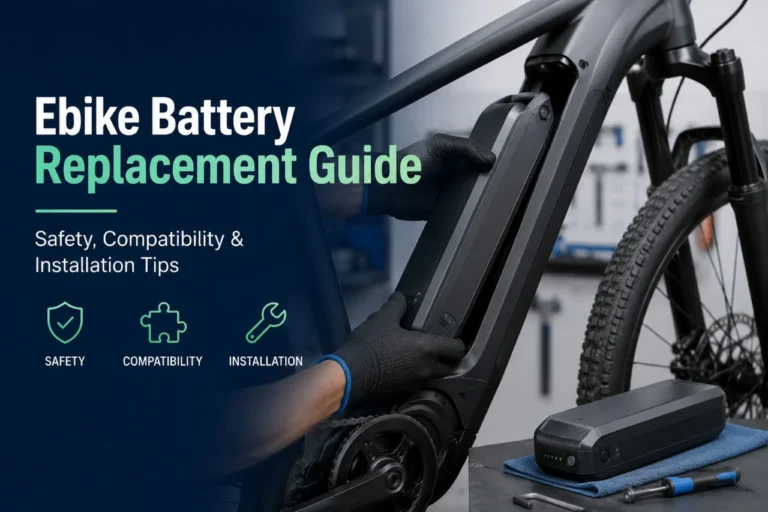
To recycle an old e-bike battery in the United States, contact a participating e-bike battery collection site, the manufacturer, or your local household hazardous waste program. Confirm that the site accepts your battery’s brand, size, and condition before traveling. Never put the pack in household trash or curbside recycling. Damaged or recalled batteries require separate instructions; a smoking or rapidly overheating battery is an emergency, not a drop-off task.
U.S. program and safety information checked September 7, 2026. Local acceptance policies and disposal requirements vary; confirm current instructions before visiting.
Where can you recycle an e-bike battery?
Start with a program that specifically handles e-bike batteries. A location accepting small household batteries does not necessarily accept a large bicycle pack.
| Option | What to ask before visiting |
|---|---|
| Participating e-bike battery collection site | Is my brand eligible, and can you accept this specific pack in its current condition? |
| Manufacturer or authorized dealer | Do you offer take-back, a recall process, or a local recycling referral? |
| City or county household hazardous waste program | Do you accept e-bike lithium-ion batteries? Are there residency, appointment, size, or fee requirements? |
| Specialized battery recycler | Do you accept individual household customers and this battery type? What preparation is required? |
The Hungry for Batteries website provides links to participating brands and collection locations for the industry e-bike battery recycling program, powered by The Battery Network and endorsed by PeopleForBikes. The program accepts batteries from participating brands, not every product sold as an e-bike. Its eligibility rules also exclude out-of-class products marketed as e-bikes; ask the program about an uncertain model rather than assuming eligibility.
If your brand is not covered, contact its manufacturer and your local waste authority for alternatives. An electronics collection event or bicycle shop may be able to refer you elsewhere, but neither should be treated as an automatic acceptance point.
Do not assume recycling is free. Ask the receiving location whether any charge applies to your particular battery and service.
Check the battery’s condition before removing it
Check from a safe distance before touching, removing, or packaging the pack. Do not handle a questionable battery just to read a hidden label.
Leave the area and call 911 from a safe location if there is smoke, flame, rapid heating, hissing, popping, active leakage, or a strong unusual chemical odor. Keep other people away. Do not carry the battery outside, drive it to a shop, cover it, or package it. Follow emergency responders’ instructions; do not delay the call to contact a recycler. The FDNY battery safety guidance explains why evacuation matters and why a battery can reignite.
If there is no active emergency but the case is swollen, cracked, melted, or severely corroded, stop riding and charging. A pack involved in a serious impact, flood, or fire also needs specialist guidance, even when damage is not obvious. Do not run the bike or charge the pack to test it.
Our guide to what to do with a swollen e-bike battery explains the immediate stop-use precautions. Contact the manufacturer or local household hazardous waste authority before arranging removal or transport. If you cannot determine whether the situation is immediately dangerous, contact emergency services.
For an intact battery with no concerning history or symptoms, turn the bike off and disconnect it from charging before removal. Follow the owner’s manual, use the normal release mechanism, and never force a stuck pack. If removal requires disassembly, leave it to a qualified service provider.
How to prepare an intact battery for drop-off
These steps apply only to an undamaged battery that the receiving location has agreed to accept. They are not instructions for damaged, defective, or recalled packs.
1. Identify the pack and check for recalls
Record the brand, battery model, chemistry, and labeled voltage and watt-hours if available. Our explanation of e-bike battery specifications can help you identify the label’s terms. Do not open the housing to find information.
Check the manufacturer’s recall notices and the CPSC recall database. If a recall applies, follow that notice’s safety and disposal instructions. Tell the collector about it even if the battery looks normal.
2. Confirm the handoff details
Describe the pack accurately and ask about its eligibility, any fee, opening hours, and whether an appointment is needed. Mention any shutdowns, charging faults, or unusual behavior; appearance alone cannot establish that a battery is safe.
Ask whether staff accept the battery alone or also take chargers and other electronics. Keep any instructions they provide so you can follow the agreed process.
3. Prevent short circuits and physical damage
For used lithium-ion batteries, the EPA recommends separate collection and protecting terminals with nonconductive tape or individually bagging batteries. Ask the collection site how to apply its preparation requirements to your intact e-bike pack, especially if the contacts are recessed or difficult to identify. Do not insert anything into connectors or disassemble the housing.
Keep the pack separate from loose tools, keys, screws, and other metal objects. Secure it against shifting and impact using the collector’s instructions, and protect it from heat and water during the trip. Do not leave it in a hot parked vehicle.
4. Hand it directly to staff
Tell staff that it is an e-bike lithium-ion battery and report its condition again. Do not leave it outside a closed facility or put it into an ordinary unattended battery box. Let the trained receiving staff handle onward packaging and shipment.
What changes for damaged or recalled batteries?
A damaged battery may still be recyclable, but it needs a different collection process. The Battery Network e-bike program provides participating retailers with resources for end-of-life and damaged or defective packs. That does not mean every shop can receive every damaged battery without advance arrangements.
Call before moving it. State clearly whether it is swollen, damaged, defective, or recalled, and describe any impact or water exposure. Ask who is qualified to arrange collection and transport. If the manufacturer is unavailable, your local waste authority or fire department’s non-emergency contact may help identify an appropriate service when there is no active emergency.
Do not attempt to make the pack acceptable by draining it, taping a cracked case, removing cells, or repairing its battery management system. Ordinary packaging cannot make an unstable battery safe.
Can you mail an old e-bike battery to a recycler?
Do not mail or ship it on your own using an ordinary parcel process. An offer to accept the battery—or a prepaid label—does not by itself establish that the shipment meets applicable requirements.
PHMSA’s lithium battery transportation guidance explains that used batteries remain a fire hazard and that damaged, defective, or recalled batteries need additional assessment. Commercial shipment can involve hazardous materials packaging, marking, documentation, and carrier restrictions.
Use a manufacturer or qualified recycling service that confirms the battery’s eligibility and arranges a compliant process. Tell it about all damage and recall history before shipment. These commercial shipping requirements are separate from the receiving site’s instructions for a local household drop-off trip.
What should you do while waiting for collection?
Arrange collection promptly. For an intact pack, follow the manufacturer’s storage precautions and the recycler’s holding instructions. Keep it dry, protected from impact, away from heat and combustible materials, and out of escape routes.
Our e-bike battery storage guide covers batteries intended for future use. Do not automatically apply its charging targets to a battery awaiting disposal. Do not charge or deliberately discharge a questionable battery to reach a storage percentage; ask the manufacturer or collector what is appropriate.
A battery that no longer powers the bike may still contain energy. Treat it with the same care during collection arrangements.
Recycling the rest of the e-bike
The bicycle and battery may need different destinations. If the remaining bike is repairable, ask a qualified shop or bicycle co-op whether it can be reused or accepted for parts. Disclose known faults and confirm acceptance before donating anything.
For a bike beyond practical repair, ask a municipal recycling facility or scrap recycler whether it accepts the complete battery-free bicycle. Metal frames, tires, electronics, motors, and chargers may have separate requirements. Do not assume everything belongs in a scrap-metal load.
Have a qualified service provider handle any required electrical disassembly. Do not cut wiring or open a battery to satisfy a recycler’s intake rules.
Keep the manual, keys, mounting hardware, and service information with a bike intended for reuse. Before buying a replacement battery, ask the manufacturer or dealer how the old pack will be collected. That gives you a confirmed destination before another battery needs disposal.