A good ride can change your day.

You can charge an e-bike outside only when the manual permits it and the charger, battery, outlet, and weather support a dry, supervised setup.
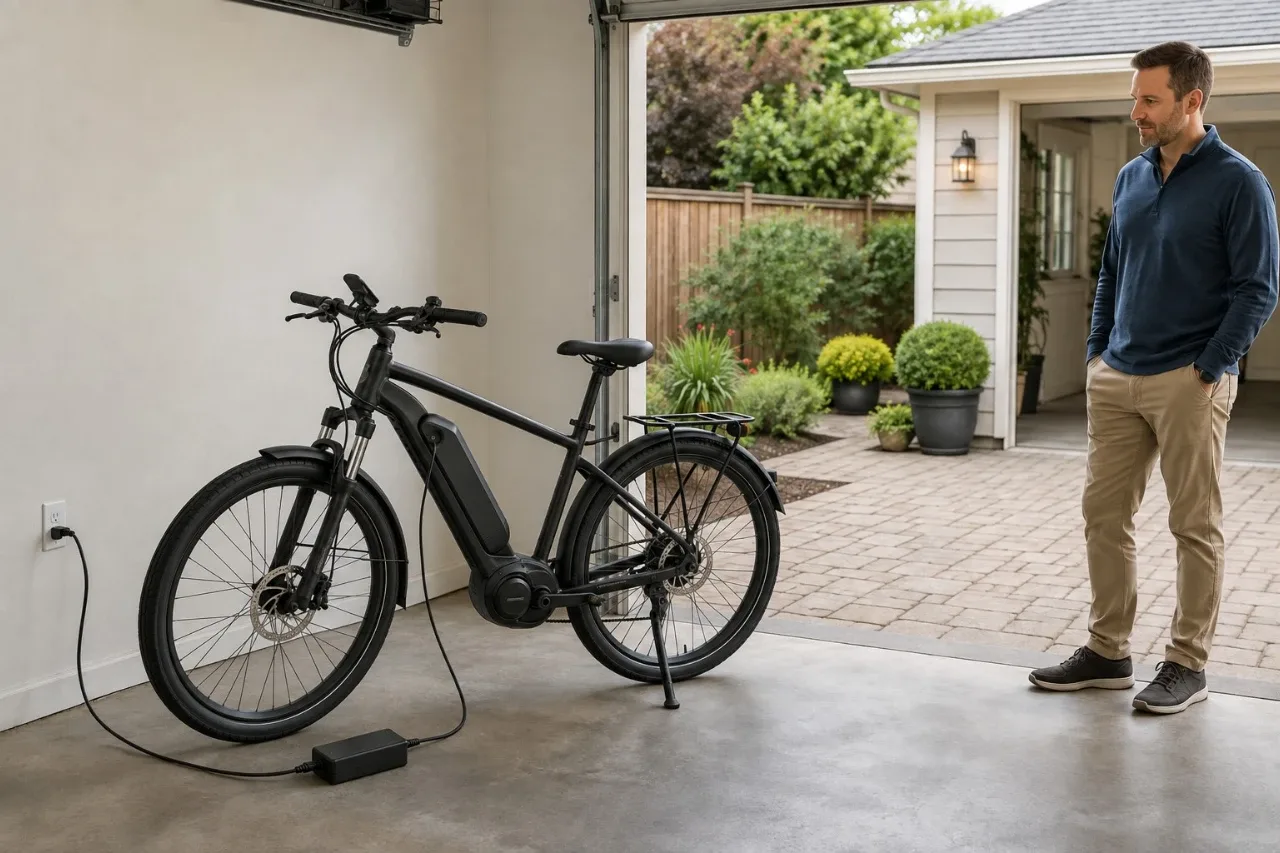
Yes, you can charge an e-bike outside only if the battery and charger instructions permit it and the entire setup stays dry, within the approved temperature range, and connected to a suitable outlet. If the charger label or owner’s manual says “indoor use only,” charge indoors. Wherever you plug in, keep the battery away from combustible materials and exit routes, remain present, and never charge while sleeping.
There is no universally safe answer based on location alone. Outdoor charging can reduce fire exposure inside a building, but moisture, direct sun, temperature extremes, and unsuitable electrical equipment create other risks.
First, follow the battery and charger instructions for location, temperature, ventilation, connection order, and supervision. Do not use a charger outside if it is marked for indoor use only. Wherever you charge, keep every electrical part dry, clear combustible materials and exits, and stay present. The U.S. Consumer Product Safety Commission (CPSC) says not to charge a micromobility product while sleeping or when no one is home.
For the complete connection and disconnection process, see our guide to charging an e-bike battery safely at home.
Neither setting is automatically safe. The better choice is the location that satisfies both the manufacturer’s instructions and basic fire and electrical precautions.
The National Fire Protection Association (NFPA) says the safest place to charge an e-bike or e-scooter is outdoors, away from structures and enclosures and out of direct sunlight. FDNY also advises outdoor charging when possible. These recommendations focus on reducing danger to occupants and buildings if a battery fails.
However, outdoor charging is not appropriate when the charger is intended only for indoor use, when the equipment could become wet, or when the temperature is outside the manufacturer’s charging range. A covered porch does not automatically solve those problems. Wind-driven rain, dew, condensation, dust, and temperature swings can still reach the charger and connections.
For many owners, a dry indoor space is therefore the most practical approved location—but not every room or garage is suitable.
| Condition | Indoor charging | Outdoor charging |
|---|---|---|
| Manual and charger label permit the location | Required | Required |
| Battery, charger, plugs, and outlet stay dry | Easier to control | More difficult to guarantee |
| Temperature stays within the approved range | Usually easier to control | Weather-dependent |
| Away from exits and combustible materials | Must be planned | Must be planned |
| Suitable wall outlet | Sound indoor receptacle | Outdoor GFCI-protected receptacle with an appropriate weatherproof cover |
| Direct sun, rain, snow, dew, or flooding | Usually avoidable | Charging should not begin or continue |
| Supervision while charging | Required | Required |
Choose a dry area with a hard, level surface and space for air to circulate. Keep the charger uncovered and off upholstered furniture.
Keep the cord out of walking paths and stabilize the bike so it cannot tip or pull on the connector. Keep children and pets away from the equipment.
Use a sound wall outlet and follow the manufacturer’s electrical instructions. The U.S. Fire Administration advises against extension cords and multiplug adapters. Do not use a loose, scorched, cracked, sparking, or unusually hot receptacle; have a qualified electrician assess it.
A garage can work if it is dry, within the manual’s charging temperature range, and clear of gasoline, paint, solvents, oily rags, and other combustibles.
Follow local smoke-alarm placement requirements and the alarm manufacturer’s instructions. Do not treat an alarm as permission to charge unattended. For broader parking and battery considerations, see our safe indoor e-bike storage guide.
Outdoor charging should meet all of the following conditions:
A GFCI helps reduce shock risk from a ground fault. It does not waterproof the charger, prevent a battery fire, or make charging in rain acceptable. Stop using a damaged, loose, corroded, or repeatedly tripping receptacle and have an electrician inspect it.
Do not assume the bike’s water-resistance rating also applies to its charger. When charging is complete, follow the specified disconnection sequence and bring the charger inside unless its instructions permit outdoor storage.
After a hard ride or transport in a hot vehicle, let the battery cool naturally in a dry location. A cold battery may need to warm to the approved range. Use the limits in its manual; they vary by system.
Do not speed the process with a hair dryer, heater, heating pad, direct sunlight, refrigerator, or freezer. Battery-management-system protection is a backup, not a substitute for following the instructions.
If the bike was ridden in rain, switch it off and wait until the battery, charge port, connector, and surrounding area are dry before charging. Water resistance is not the same as permission to connect wet charging equipment. After significant water exposure or submersion, do not charge the battery until the manufacturer or a qualified service provider has advised you. Our e-bike water-damage guide explains the appropriate first checks.
Do not start or continue charging if you notice:
For visible damage without smoke, fire, or extreme heat, stop using and charging the battery and contact the bike or battery manufacturer or a qualified e-bike battery service provider. Do not open, puncture, compress, or attempt to repair the pack. See the full list of e-bike battery damage warning signs.
If the battery is smoking, venting, making alarming noises, extremely hot, or burning, move people away, leave the area, and call 911 or the local emergency number. Do not approach or handle the battery to move it. Follow the instructions of emergency responders.
A lease, building policy, local fire code, or designated-area rule may also restrict charging. Requirements vary by city and property.
Do not run a cord through a window, common hallway, or over a sidewalk. If no permitted location meets the requirements, ask the property manager about an approved charging area rather than improvising.
Before every charge:
Can I charge an e-bike under a covered porch?
Only if the charger and battery instructions allow that location and the entire setup remains dry, within the approved temperature range, and connected to a suitable outdoor receptacle. A roof alone does not protect against wind-driven rain, dew, condensation, or humidity.
Can I leave an e-bike charger outside?
Not unless its documentation expressly permits outdoor storage. Bring a typical charger into a dry location after use. Do not leave it connected to the outlet or exposed to weather.
Is it safe to charge an e-bike in a garage?
It can be, provided the garage is dry, within the approved temperature range, clear of gasoline and other combustible materials, and equipped with a sound outlet. Do not charge near an exit or leave the battery charging while you are asleep or away.
Charge outside only when the manufacturer permits it and you can provide a dry, temperature-appropriate, electrically suitable, supervised setup. If the charger is indoor-only or outdoor conditions are uncertain, use a carefully chosen indoor location away from exits and combustible materials. The safest decision comes from the equipment instructions and the actual charging environment—not from the words “indoors” or “outdoors” alone.