Real rides. Real notes. No hype.

How to fix a flat tire on an electric bike, from powering down to reconnecting hub-motor wiring—plus bead seating, PSI tips, and flat prevention.

A flat tire can stop your ride fast, especially when an electric bike adds weight and wiring to the job. You can fix the problem yourself with basic tools and the right steps, even on the side of the road. This guide shows what to expect and how to stay safe before you touch the wheel.
You fix a flat tire on an electric bike by turning off the power, removing the wheel, repairing or replacing the inner tube, and reinstalling the tire with proper pressure. The process takes more care than a standard bike, but it stays simple when you know where to focus. Many riders follow a clear process like the one outlined in this step-by-step e-bike flat tire repair guide.
You will learn how to spot the cause of the flat, handle motor cables, and avoid common mistakes that lead to repeat punctures. You will also see how regular checks and tire care lower the risk of future flats, as explained in this electric bike flat tire repair overview.
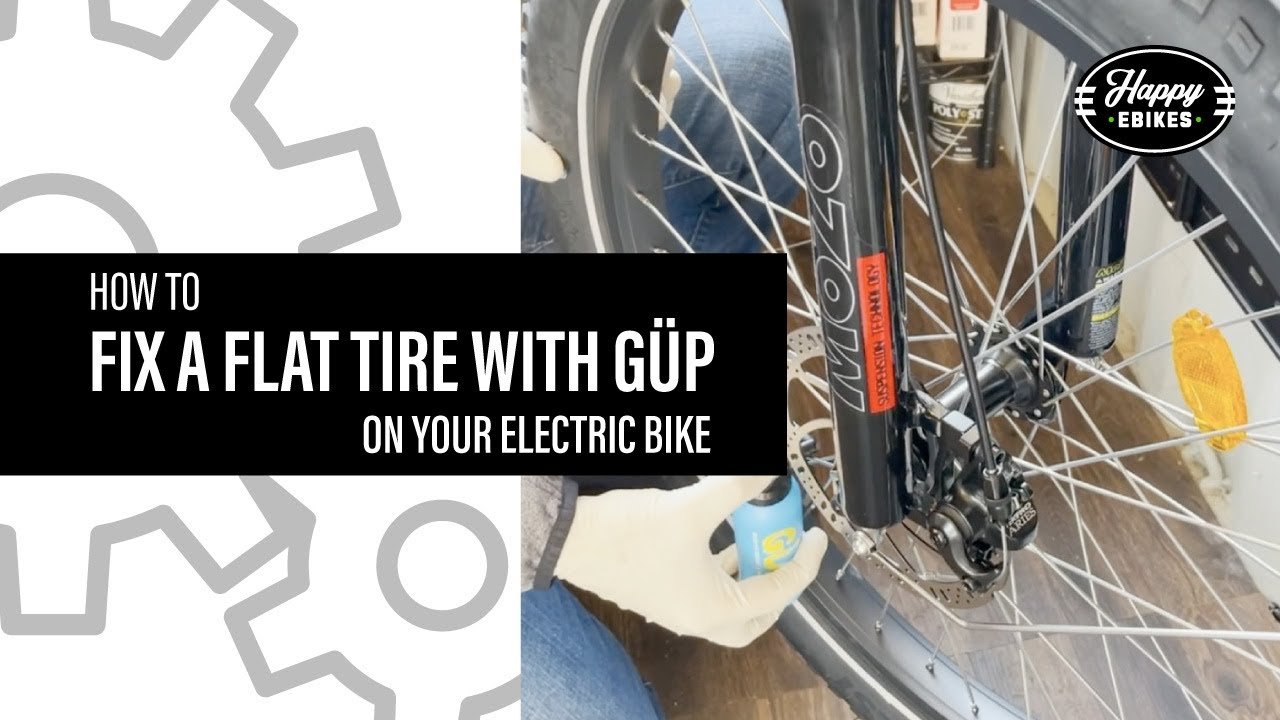
You need a small set of reliable tools to fix an e-bike flat without stress. Each item serves a clear purpose, from removing the tire to getting back to the right air pressure safely and fast.
Tire levers help you remove the tire from the rim without damaging it. E-bike tires often feel tighter than standard bike tires, so strong levers matter.
Choose plastic or reinforced nylon tire levers. Metal levers can scratch rims and pinch tubes. Carry at least two levers, though three make the job easier.
Use the lever to lift one side of the tire bead over the rim. Work around the wheel in small steps. Keep steady pressure instead of forcing it.
A good overview of the process appears in this guide on how to fix a flat tire on your e-bike.
You can repair a puncture or swap the tube. Each option fits a different situation.
A patch kit works well for small holes. It includes patches, glue, and a scraper. Patches save space and cost less, but they take more time and care.
A replacement tube offers speed and reliability. You remove the damaged tube and install a new one. This option reduces the risk of repeat leaks during the ride.
Many riders carry both. Use the replacement tube on the road, then patch the old tube at home for later use.
You must refill the tire to the correct pressure after the repair. E-bike tires need proper inflation to handle weight and speed.
A CO2 inflator works fast and packs small. It uses cartridges to inflate the tire in seconds. You only get one or two tries, so accuracy matters.
A mini hand pump gives you full control. It takes more effort, but you can adjust pressure as needed.
| Tool | Best For | Limitation |
|---|---|---|
| CO2 inflator | Quick roadside fixes | Limited air supply |
| Hand pump | Precise inflation | Slower to use |
A spare inner tube should match your tire size and valve type. Check the tire sidewall before you buy.
Most e-bikes use Schrader or Presta valves. Carry the correct valve to avoid fit issues. Fold the tube neatly to prevent creases and damage.
Store the tube in a small bag or wrap it in cloth. Keep it away from sharp tools.
A spare inner tube matters because it turns a long repair into a short stop. This approach aligns with common advice found in step-by-step guides like this one on fixing a flat tire on an electric bike.

Before you touch the wheel or tire, take time to shut down power, stabilize the bike, and protect sensitive parts. These steps reduce the risk of electric shock, part damage, and injury while you work on your e-bike.
Turn off the e-bike using the main power switch or display. Wait a few seconds to confirm the system is fully off. This step stops current from flowing to the motor and controller.
Remove the battery from the frame if the design allows it. Many e-bikes use slide-out or key-locked batteries. Set the battery in a dry place away from tools and metal objects.
If the battery does not remove easily, check the manual and do not force it. For safety, avoid pressing the power button while the battery is out. Never work on an e-bike tire while the system is powered on, especially with a hub motor.
Place the e-bike on a flat, solid surface. Shift to the lowest gear to reduce chain tension. This makes wheel removal easier and lowers the risk of sudden movement.
Use a bike repair stand if you have one. If not, carefully flip the bike upside down so it rests on the handlebar and seat. Pad contact points with a cloth to protect displays and controls.
Before lifting the wheel, check stability. The bike should not rock or slide. If needed, use zip ties or straps to hold the handlebar straight. A stable bike helps you apply force without tipping or strain.
If your e-bike uses a rear hub motor, locate the motor cable before removing the wheel. The cable usually runs along the chainstay and connects to a plug near the frame.
Unplug the connector by pulling straight apart. Do not twist or yank the wires. Many connectors have arrows or marks that show proper alignment.
Release any zip ties or clips holding the cable to the frame. Keep track of their placement so you can reinstall them later. Lay the cable aside to avoid pinching it during the repair. Damaging a hub motor cable can stop the e-bike from working, even if the tire repair goes well.
Disc brakes require extra care during tire work. Avoid touching the brake rotor with your fingers. Skin oils can reduce braking power.
When removing the wheel, guide it straight out so the rotor clears the brake caliper. Do not bend or twist the rotor. Even a small bend can cause rubbing or noise.
Insert a clean spacer or folded cardboard between the brake pads once the wheel is out. This prevents the pads from closing if the brake lever gets pulled by mistake.
Keep tools away from the rotor and caliper. Store the wheel flat with the rotor facing up to protect it from impact.
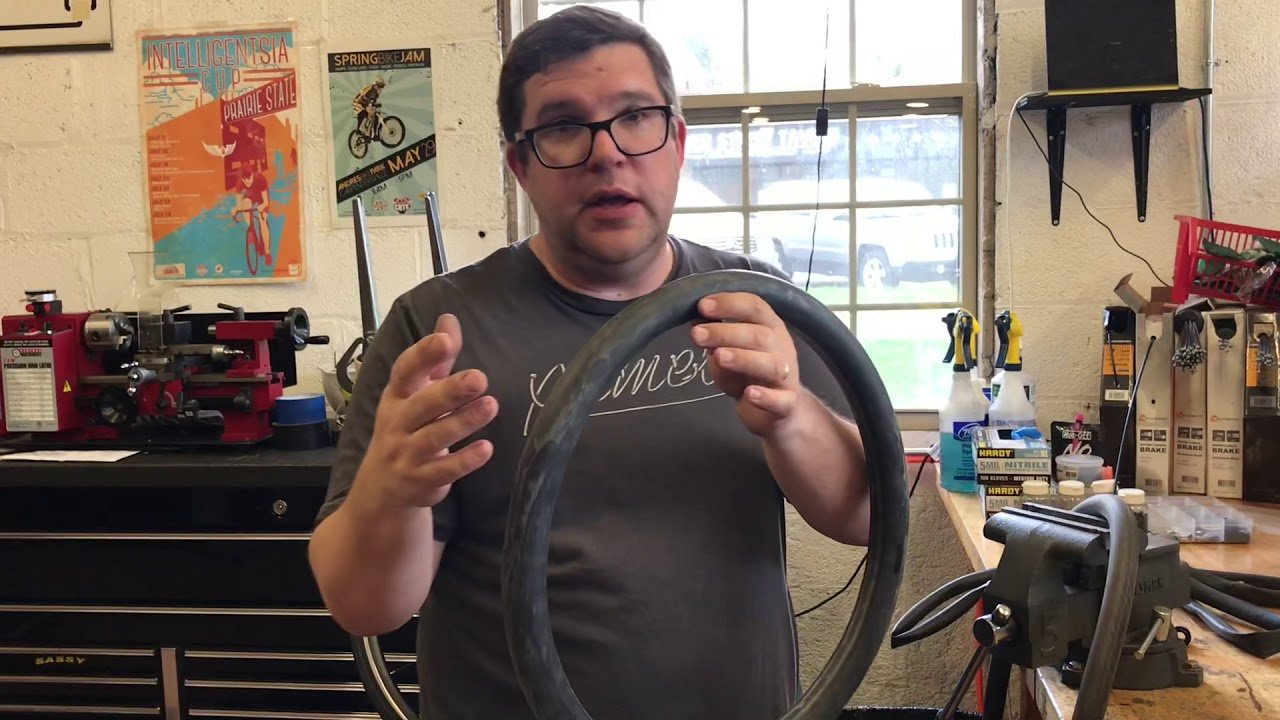
You need to confirm the cause of an e-bike flat tire before you start any repair. Careful checks help you avoid repeat flats, wasted time, and missed damage. Focus on air loss, tire pressure issues, and visible signs on both the tire and tube.
Start by checking how fast the tire lost air. Fast air loss often points to a clear puncture, while slow leaks can take hours to show.
Inflate the tire slightly and listen for a hiss. If you hear nothing, spray or drip soapy water over the tread and sidewalls. Bubbles show the exact leak point, which helps with puncture repair.
Pay close attention to the rear wheel. E-bikes place more weight and motor force there, which raises puncture risk. This extra load explains why rear e-bike flat tires happen more often, as described in this step-by-step e-bike flat tire guide.
Mark the leak before deflating the tire fully so you do not lose track of it.
A pinch flat happens when the tube gets trapped between the tire and rim. The tube tears from impact instead of a sharp object.
You usually see two small holes close together, often called a snake bite pattern. These flats often occur after hitting a curb, pothole, or sharp edge at speed.
Low tire pressure plays a major role. E-bikes weigh more than regular bikes, so underinflated tires fail faster. Riding with extra cargo or a heavier rider increases this risk even more.
Common causes include:
Pinch flats cannot seal themselves and always require tube replacement or patching.
After removing the wheel, inspect the tire inside and out. Run your fingers slowly along the inner casing to feel for glass, wire, or thorns. Remove debris carefully so it does not cause another flat.
Check the tube next. Inflate it slightly and rotate it in your hands. Look for holes, long tears, or weak spots near the valve.
Use this quick checklist during inspection:
| Area | What to Look For |
|---|---|
| Tire tread | Cuts, embedded objects |
| Sidewalls | Cracks, bulges |
| Tube | Holes, seam damage |
| Rim tape | Shifts, sharp edges |
This careful inspection step mirrors the safety checks used in this electric bike flat tire repair guide and reduces repeat puncture repair issues.
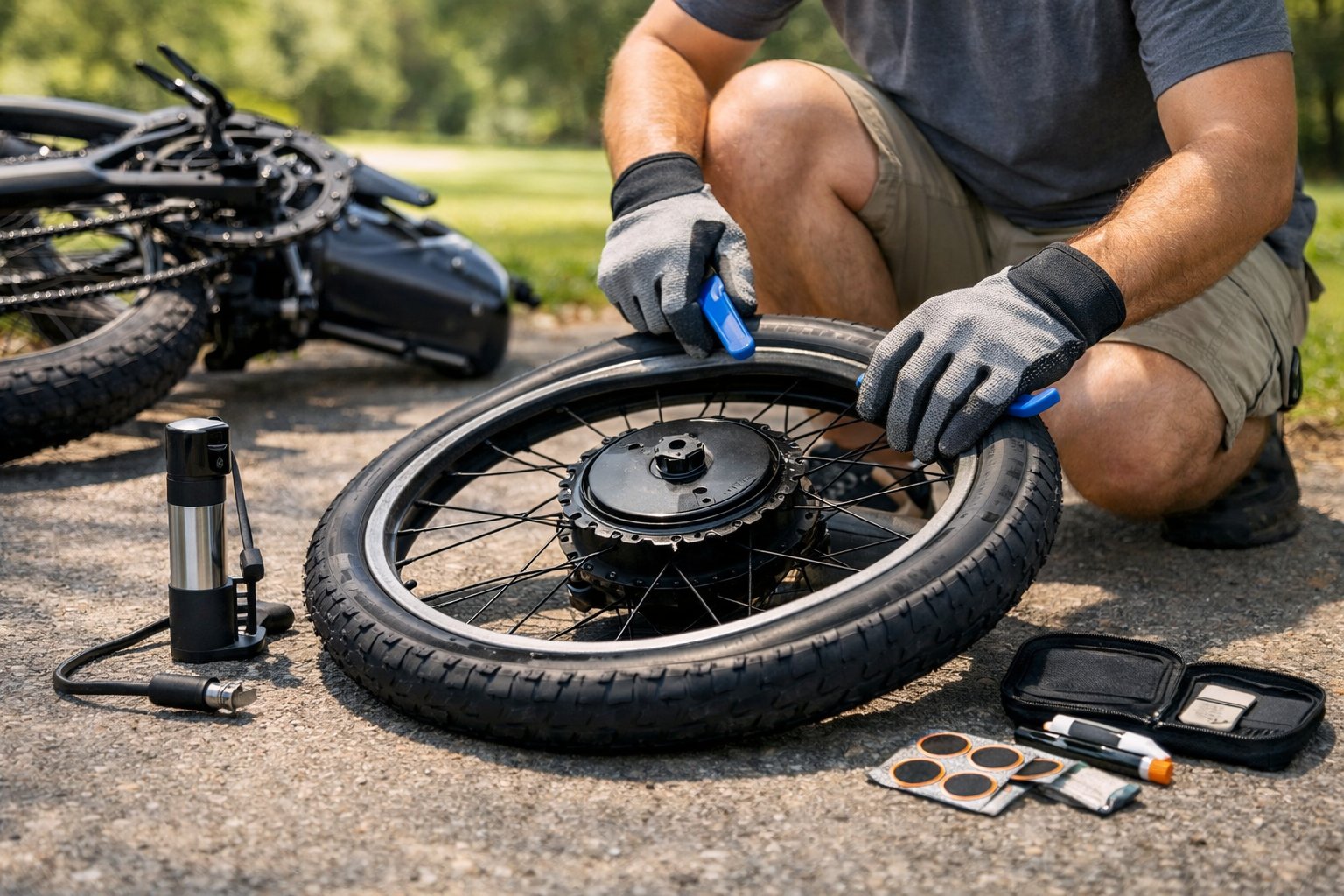
You need to secure the bike, loosen the axle hardware, and handle motor cables with care. Correct wheel removal prevents damage to the hub motor, wiring, and dropouts, and makes tire repair faster.
Start by turning the bike off and removing the battery. This step reduces risk and keeps wires safe.
Use the correct wrench to loosen the axle nuts. Most e-bikes use 15mm or 18mm nuts. Turn counterclockwise and keep even pressure on both sides. If your bike has torque arms, remove them before pulling the axle free.
Watch the dropouts as you loosen the nuts. Do not pry the axle out at an angle. Pull it straight to avoid bending the frame slots.
Helpful tips
Rear wheels with a hub motor include a power cable that must come apart before wheel removal. Pulling the wheel without disconnecting the cable can tear the connector.
Find the motor connector near the chainstay or seatstay. Align the arrows or marks, then pull straight apart. Do not twist.
Many repair guides stress this step, including this step-by-step e-bike flat tire guide that shows common connector layouts.
Cable handling rules
Front wheel removal stays simple because no motor cable is present. Release the brake, open the axle, and guide the wheel down and out.
Rear wheel removal takes more care due to weight and alignment. Support the wheel as it drops to protect the derailleur and motor housing. Clear the chain from the cassette before lowering it fully.
This DIY e-bike flat tire repair guide shows how rear motor wheels sit lower and require a straight drop.
| Wheel position | Key concern | What to do |
|---|---|---|
| Front motor | Brake clearance | Release brake first |
| Rear motor | Chain and wiring | Drop wheel straight down |
Keep the wheel flat on the ground once removed to protect the rotor and axle threads.
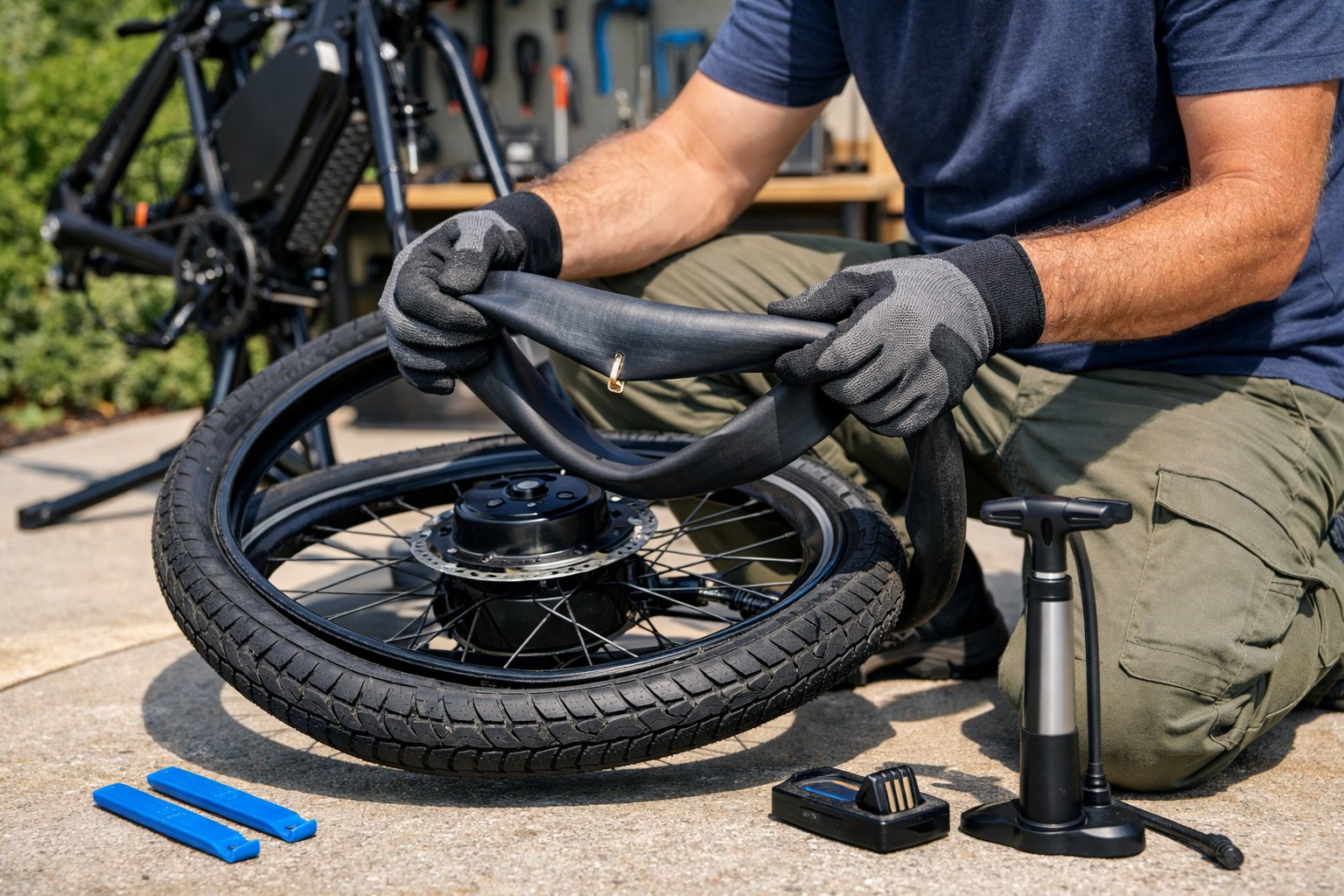
A flat on an electric bike often comes from a puncture, tube wear, or a pinch flat. You fix it by removing the tire bead, checking the tube, and then patching or replacing it with care to avoid repeat damage.
Start with the wheel fully off the bike and all air out of the tube. Press the tire sidewalls inward to loosen the tire bead from the rim. This step makes removal easier and protects the rim.
Place a tire lever under the bead, opposite the valve. Pry the bead over the rim edge, then hook the lever to a spoke. Use a second lever a few inches away and slide it along the rim. Keep steady pressure and avoid sharp pulls.
You only need to remove one side of the tire. Pull the tube out starting at the valve. Set the tire aside and keep track of the valve hole so reassembly stays aligned.
Check the tube first to find the leak. Inflate it slightly and listen for air, or submerge it in water and watch for bubbles. Mark the hole so you do not lose it.
Inspect the tire next. Run your fingers slowly along the inside to find glass, wire, or thorns. Remove any debris before you repair the tube.
Use a patch kit if the hole is small and clean. Lightly rough the area, apply adhesive if needed, and press the patch firmly in place. Let it set before handling. Detailed steps follow common methods in this bike flat tire repair guide.
Choose a replacement tube that matches the tire size and valve type printed on the sidewall. Using the wrong size increases failure risk, especially on heavier e-bikes.
Add a small amount of air so the tube holds shape. Insert the valve straight through the rim hole, then tuck the tube evenly into the tire. Avoid twists or folds.
Seat the tire bead back onto the rim with your hands. Work from the valve outward on both sides. Use tire levers only for the final tight section, and keep the tube away from the lever edge.
A pinch flat happens when the tube gets trapped between the tire bead and rim. This often occurs during installation or from low pressure.
Before inflating fully, check both sides of the tire. Look for any tube showing between the bead and rim. Push the bead inward if needed.
Inflate slowly and stop at mid-pressure. Spin the wheel and inspect again. Then inflate to the recommended PSI listed on the tire. Proper pressure and careful seating reduce repeat flats, as explained in this how to fix a flat bike tire guide.
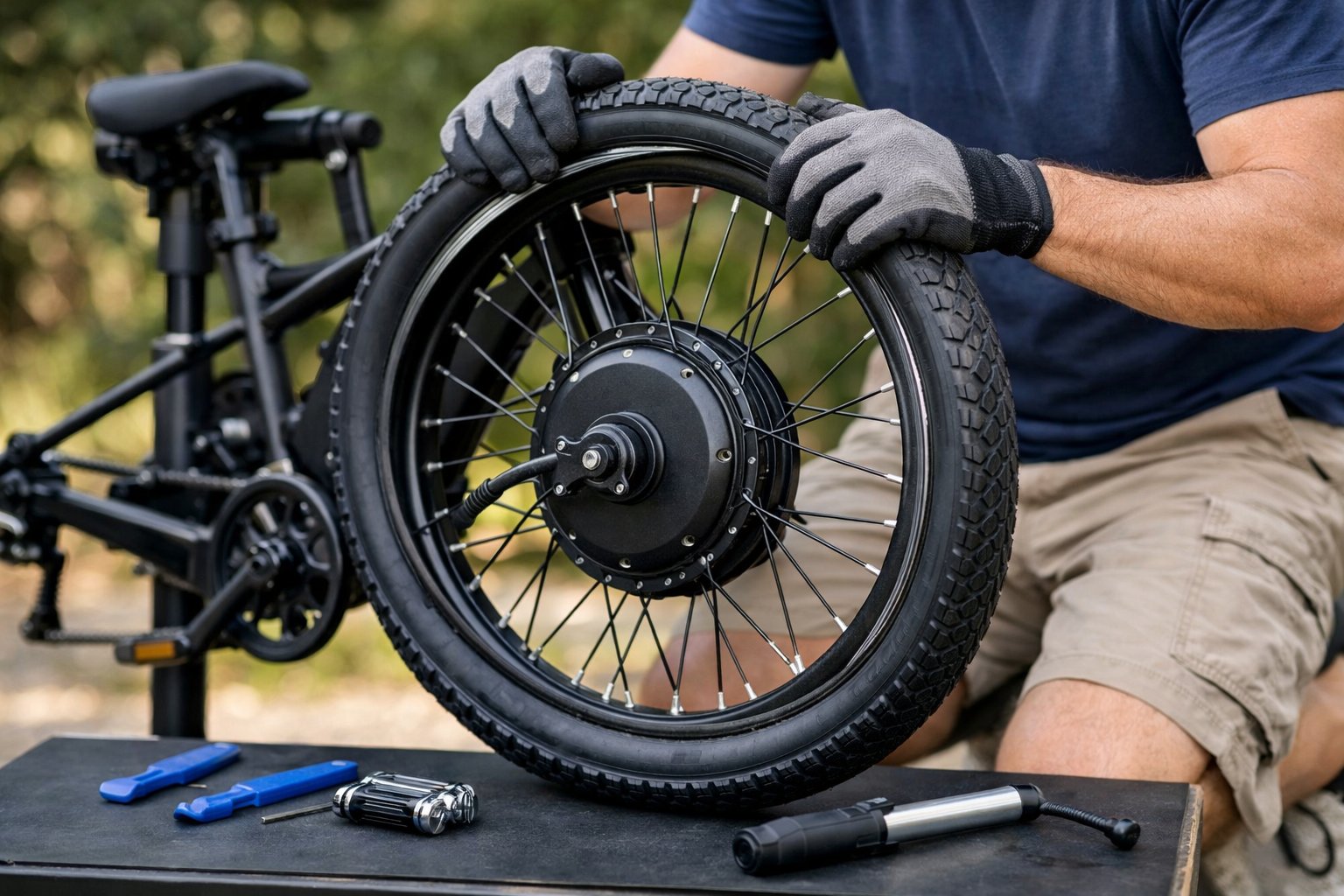
You now put the wheel and tire back together with care. Proper bead seating, correct e-bike tire pressure, and secure motor parts protect the wheel and keep the bike safe to ride.
Start by checking that the inner tube sits fully inside the tire. The tube should not twist or pinch under the bead. Push the tire bead into the rim well by hand, working around both sides.
Keep the valve straight as you seat the bead near it. A tilted valve often signals a trapped tube. If you see or feel resistance, stop and reset that section.
Spin the wheel slowly and look at the bead line on both sides. The line should appear even all the way around. An uneven bead can cause wobble, air loss, or a sudden pop during inflation.
Key checks before inflation:
Inflate the tire in short steps, not all at once. Pause every few pumps and recheck the bead. This method helps the bead seat evenly and prevents blowouts.
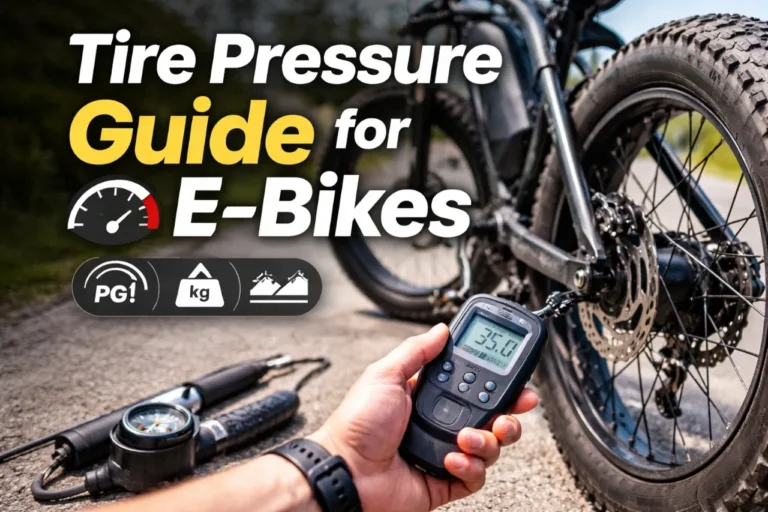
Use a pump with a gauge so you can hit the correct range. Tire type and rider weight matter, but most setups fall within common ranges shared in guides on e-bike tire pressure recommendations.
| Tire type | Typical PSI range |
|---|---|
| Commuter | 40–65 PSI |
| Mountain | 30–50 PSI |
| Fat tire | 5–15 PSI |
Stop at the pressure listed on your tire sidewall or manual. Overinflation reduces grip and stresses the rim.
Place the wheel back into the dropouts and align it square to the frame. On hub-motor bikes, seat the axle flats fully before tightening anything.
Reinstall the torque arm exactly as it was. The arm prevents axle rotation under motor load. Tighten bolts to the bike’s listed torque specification using a torque wrench if possible. If no spec is available, tighten firmly without forcing the bolt.
Reconnect the motor cable with care. Match arrows or marks, then press straight in. Secure all nuts, quick releases, and cable guides. Spin the wheel to confirm it turns freely and does not rub the brake.
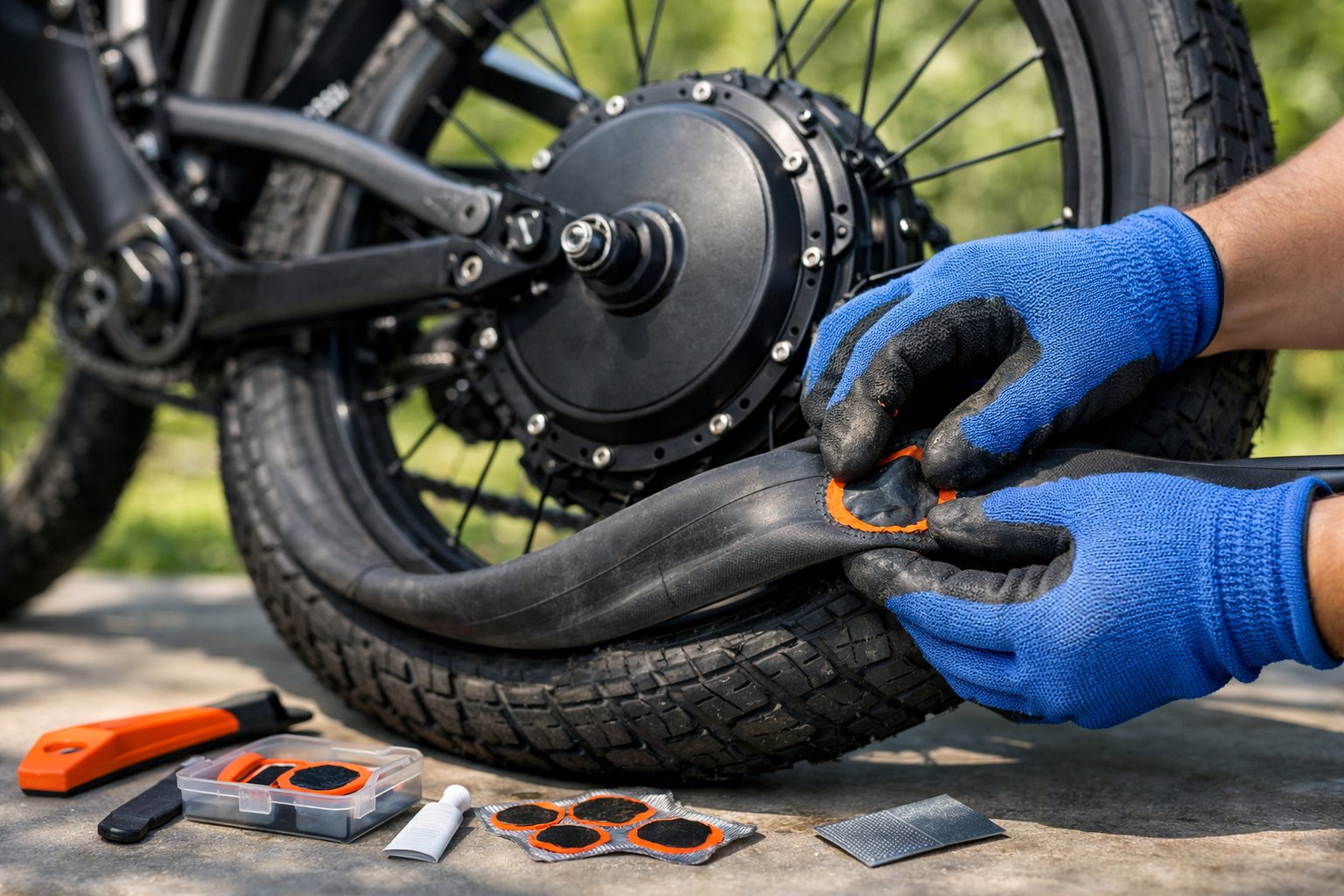
After you finish an e-bike tire repair, a few checks help you ride safely and reduce repeat flats. Ongoing care also protects your wheels, tubes, and motor connections.
Check tire pressure before rides, especially after a repair. E-bikes carry more weight, so low pressure raises the risk of pinch flats. Use the PSI range printed on the tire sidewall and stay within it.
Use a gauge, not your thumb. Small drops matter. Keep pressure higher for pavement and slightly lower for gravel, but never below the minimum.
Quick pressure tips
For detailed guidance on pressure and care, see this e-bike tire maintenance guide.
Spin each wheel and watch the gap between the tire and brake. The wheel should spin straight with no side wobble. A crooked wheel causes uneven wear and poor handling.
Check axle nuts or the quick-release lever. Tighten them to spec. On hub motors, confirm the motor cable sits cleanly and the connector locks fully.
Squeeze the brakes and roll the bike. Listen for rubbing or clicks. If you removed the wheel with tire levers, confirm the tire bead sits evenly all around before riding.
Scan tires after rides. Pull out glass, wire, or thorns before they work deeper. Replace worn tires with thin tread or cracks.
Set habits that lower flat risk:
Carry a spare tube and pump. Practice at home so roadside e-bike tire repair feels routine. This electric bike flat tire repair and prevention guide covers tools and causes in detail.
Tire liners add a tough layer between tire and tube. They block thorns and glass and work well for commuters. Install them carefully so edges do not rub the tube.
Sealants flow inside the tube and plug small holes fast. They reduce downtime from minor punctures but will not fix large cuts. Refresh sealant as directed, since it dries out.
Choose based on riding
Used together, liners and sealants lower flat risk without changing ride feel when installed correctly.
You fixed a flat tire on your electric bike and handled the extra steps that come with motorized wheels. You powered the bike off, removed the battery, and worked safely with the wheel and tube. Those actions protect both you and the bike.
You now know why e-bike flats happen more often and how to deal with them. Heavier weight, higher speed, and rear hub motors all play a role. Taking your time during removal and reinstalling the wheel helped prevent cable damage.
What you completed:
This process matches the steps used in a proper electric bike flat tire repair guide. Following a proven method reduces mistakes and saves time on future repairs.
You can lower the chance of another flat with simple habits. Keep tire pressure within the recommended range. Inspect tires often, and consider sealant or puncture-resistant tires for daily riding.
If you want to build more skills, look into roadside repair kits or basic e-bike maintenance guides. Knowing these steps helps you stay prepared and keep riding with confidence.



![How to Change Gears on a Bike: A Beginner’s Step-by-Step Guide [year]](https://goebikelife.com/wp-content/uploads/2023/12/How-to-Change-Gears-on-a-Bike-for-Beginners-768x512.jpg "How to Change Gears on a Bike: A Beginner’s Step-by-Step Guide [year]")