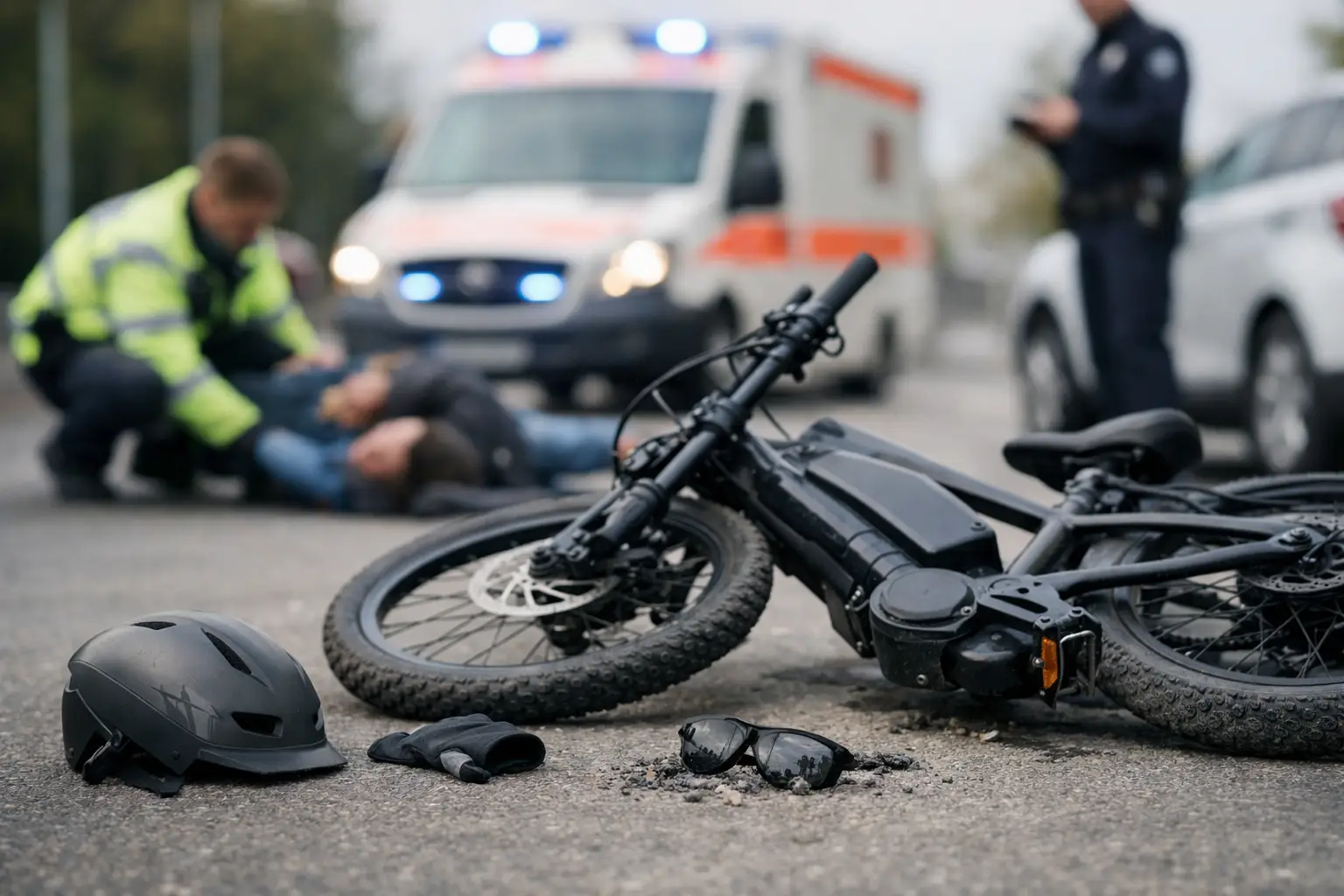
An ebike accident analysis starts with a simple question: what changed in the seconds before the crash? The answer is rarely just “the rider fell.” Speed, road surface, braking, visibility, traffic behavior, bike condition, and pedal-assist response can overlap. Looking at those factors carefully can help you avoid a repeat crash and identify damage that should not be ignored.
Do this only after you are safe and any urgent medical or emergency needs have been addressed. Do not ride a damaged e-bike home just to test it. A bent wheel, damaged brake, cracked frame, loose battery, or exposed wire can turn a minor incident into a more serious one.
Start With the Crash Sequence
Memory fades quickly, especially after a frightening event. Write down what happened as soon as you reasonably can. An effective ebike accident analysis follows the sequence rather than jumping to conclusions.
Start with where you were riding: a street, bike lane, shared path, driveway, parking lot, trail, or intersection. Note the surface condition, lighting, weather, traffic, and any obstruction such as gravel, wet leaves, a pothole, car door, curb, or pedestrian.
Then reconstruct the sequence in plain language. Record your approximate speed, whether pedal assist or throttle was active, the assist level selected, and what you did with the brakes and handlebars. Include what other road users did, but separate what you directly observed from what you assume happened.
A useful distinction is between the immediate event and contributing factors. The immediate event may be that the front tire lost traction while turning. Contributing factors might include wet paint, a sharp steering input, a fast entry speed, worn tire tread, and an assist setting that accelerated the bike sooner than expected. Finding several contributors is not about assigning blame. It is how you find practical corrections.
Document the Scene and the E-Bike
If conditions allow and doing so is safe, take clear photos before moving the bicycle. Photograph the road or path surface, relevant signs or lane markings, the bike’s position, and visible damage. Capture wide photos for context and close photos for details.
Also save information that can disappear later. This can include the date, time, weather, street or trail location, witness contact details, and images from a helmet or handlebar camera. If another vehicle was involved, follow the reporting and insurance procedures that apply to the situation. Requirements vary by state and by local jurisdiction, so do not assume that one reporting rule applies everywhere.
For the e-bike itself, photograph both sides and inspect without disassembling anything. Look for these warning signs:
- A wheel that wobbles, rubs the frame or fork, or will not rotate freely
- A brake lever that pulls to the handlebar, a bent rotor, or a damaged brake hose or cable
- A cracked frame, fork, handlebar, stem, pedal, rack, or mounting point
- A loose battery, cracked battery case, damaged charging port, pinched wire, or error message
- A tire cut, sidewall bulge, bent rim, loose axle, or damaged quick-release or thru-axle
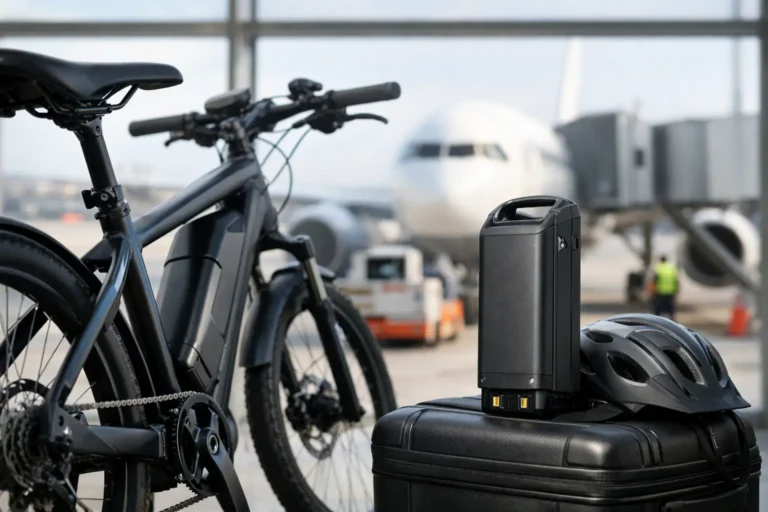
If the battery was struck, dropped, crushed, wet inside its connector area, unusually hot, swollen, leaking, smoking, or making unusual sounds, stop using it. Move away from it if there are signs of overheating or fire, avoid handling a compromised battery unnecessarily, and contact emergency services if there is an immediate fire risk. Do not charge, open, tape, or attempt to repair the battery. Contact the manufacturer or a qualified battery service provider for next steps.
Check Whether E-Bike Speed Changed the Outcome
An e-bike does not need to be traveling at its top assisted speed for speed to matter. A small increase in speed lengthens braking distance, narrows reaction time, and increases the force of a curb strike or fall. Extra bike weight also affects how the bicycle responds when braking or turning.
Review whether your speed matched the environment. A clear bike lane may allow predictable riding, while a driveway, mixed-use path, blind corner, or area with parked cars calls for more margin. On loose or wet surfaces, the safe response is often to reduce speed before the turn, keep the bike more upright, and make smooth steering and braking inputs.
Assist mode deserves attention too. Higher assist can make a bike surge forward with less pedal pressure, particularly when starting from a stop or exiting a tight corner. That does not mean high assist caused the crash. It may mean the setting was not a good match for that location. Many riders benefit from using a lower assist level in crowded areas, near intersections, on unfamiliar paths, and when carrying cargo or a child.
If your e-bike has a throttle, consider whether it was activated accidentally or applied while the front wheel was turned. Practice throttle starts in an open, traffic-free area, using the lowest practical power setting if your bike offers one. Manufacturer controls and settings differ, so your owner’s manual takes priority over general guidance.
Evaluate Braking, Tires, and Handling
Mechanical condition can be a cause, a contributor, or simply crash damage. Treat those as different possibilities until the bike is inspected.
Before riding again, check tire pressure with a gauge and compare it with the pressure range printed on the tire sidewall and any manufacturer guidance. Low pressure can make handling vague and increase pinch-flat risk. Excessively high pressure can reduce grip and make bumps feel harsher. The right pressure depends on tire size, rider weight, cargo, terrain, and the bike maker’s specifications.
Test brake feel only while standing beside the e-bike. Each lever should engage firmly, and the bike should not roll when the corresponding brake is applied. Do not assume squealing is merely an annoyance after a crash. Contaminated pads, a bent rotor, loose caliper hardware, or a damaged hydraulic line can reduce braking performance.
A qualified bicycle mechanic should inspect the e-bike before it returns to service if it had a hard impact, landed on a wheel, struck a curb, slid on its side, or has any steering, braking, drivetrain, or electrical concern. This is especially true for carbon-fiber parts, suspension forks, hydraulic brakes, and hub-motor wheels. Some damage is difficult to see without the right tools.
Look Beyond the E-Bike
Not every crash can be prevented by maintenance or better technique. A driver may turn across a bike lane, a pedestrian may step out unpredictably, or a hidden defect in the pavement may leave little room to react. Still, the analysis should identify the margin available to you.
Ask whether you could see and be seen. At dawn, dusk, and in rain, use lights as required by local law and appropriate for the conditions. Position yourself where turning drivers are more likely to notice you, but do not rely on eye contact as proof that a driver has seen you. Near parked cars, leave room for opening doors when the lane and traffic conditions permit.
Also consider route design. A faster road is not always the safer or more efficient route, especially on an e-bike that can comfortably use lower-stress streets or designated bike facilities. The trade-off may be a few more minutes for fewer conflict points, gentler turns, and better visibility.
Turn Findings Into Specific Changes
The best result of an accident analysis is a short, concrete plan. Avoid vague promises such as “be more careful.” Instead, connect each contributor to an action you can repeat.
For example, if a hard stop exposed weak braking, schedule a brake inspection and begin checking lever feel before each ride. If loose gravel caused a front-wheel slide, slow before loose surfaces and avoid abrupt front-brake use while leaned over. If high assist felt abrupt in a congested area, choose a lower setting until the path opens up. If a vehicle conflict occurred at an intersection, reduce approach speed and assume a turning driver may not yield until their movement is clear.
Keep the notes, photos, and service records together. They can help a mechanic understand what the e-bike experienced and help you notice recurring issues, such as repeated brake fade, tire damage, or unstable handling. A calm, honest review is not about second-guessing yourself. It is about making the next ride more predictable, one specific adjustment at a time.
Frequently Asked Questions
What should I do immediately after an e-bike accident?
Move to a safe location if possible and address any urgent medical or emergency needs first. Do not ride the e-bike until you have checked it for damage that could affect the brakes, wheels, frame, steering, battery, or electrical system.
How can I determine what caused an e-bike crash?
Reconstruct the events in the order they happened. Record your approximate speed, braking actions, assist level, road conditions, visibility, traffic movements, and any obstacles. Separate what you directly observed from assumptions about the crash.
Is it safe to ride an e-bike home after a minor crash?
A crash that appears minor can still damage a wheel, brake rotor, fork, frame, battery mount, or electrical connection. Do not ride the e-bike if anything feels loose, bent, unstable, or different from normal. When in doubt, have the bike transported and inspected.
What e-bike battery damage should I look for after a crash?
Check for a cracked case, loose mounting points, damaged connectors, exposed wires, swelling, leaking, unusual heat, smoke, or unusual sounds. Stop using and charging the battery if any of these warning signs appear. Do not open or attempt to repair a damaged battery.
Can pedal assist or throttle contribute to an e-bike accident?
Pedal assist or throttle can reduce the rider’s reaction margin if the bike accelerates sooner or more strongly than expected. This is especially relevant when starting, turning, or riding in crowded areas. The selected power setting should match the riding environment.
When should an e-bike be inspected by a mechanic after a crash?
A qualified mechanic should inspect the e-bike after a hard impact, curb strike, wheel-first landing, or slide that affects the bike’s controls. An inspection is also recommended if there are concerns involving braking, steering, the frame, suspension, drivetrain, battery, or motor system.
What evidence should I document after an e-bike accident?
Photograph the scene, road surface, signs, lane markings, bicycle position, and visible damage when it is safe to do so. Record the date, time, location, weather, witness details, and relevant camera footage. Keep these records with any inspection or repair documents.
How can an e-bike accident analysis help prevent another crash?
An e-bike accident analysis connects each contributing factor to a specific corrective action. Possible changes include using lower assist in crowded areas, reducing speed before turns, checking tire pressure, servicing the brakes, or choosing a route with fewer traffic conflicts.