A little joy belongs in every day.

Practical ebike rain protection for wet rides: keep the battery, display, brakes, drivetrain, and rider safer before, during, and after rainy weather.
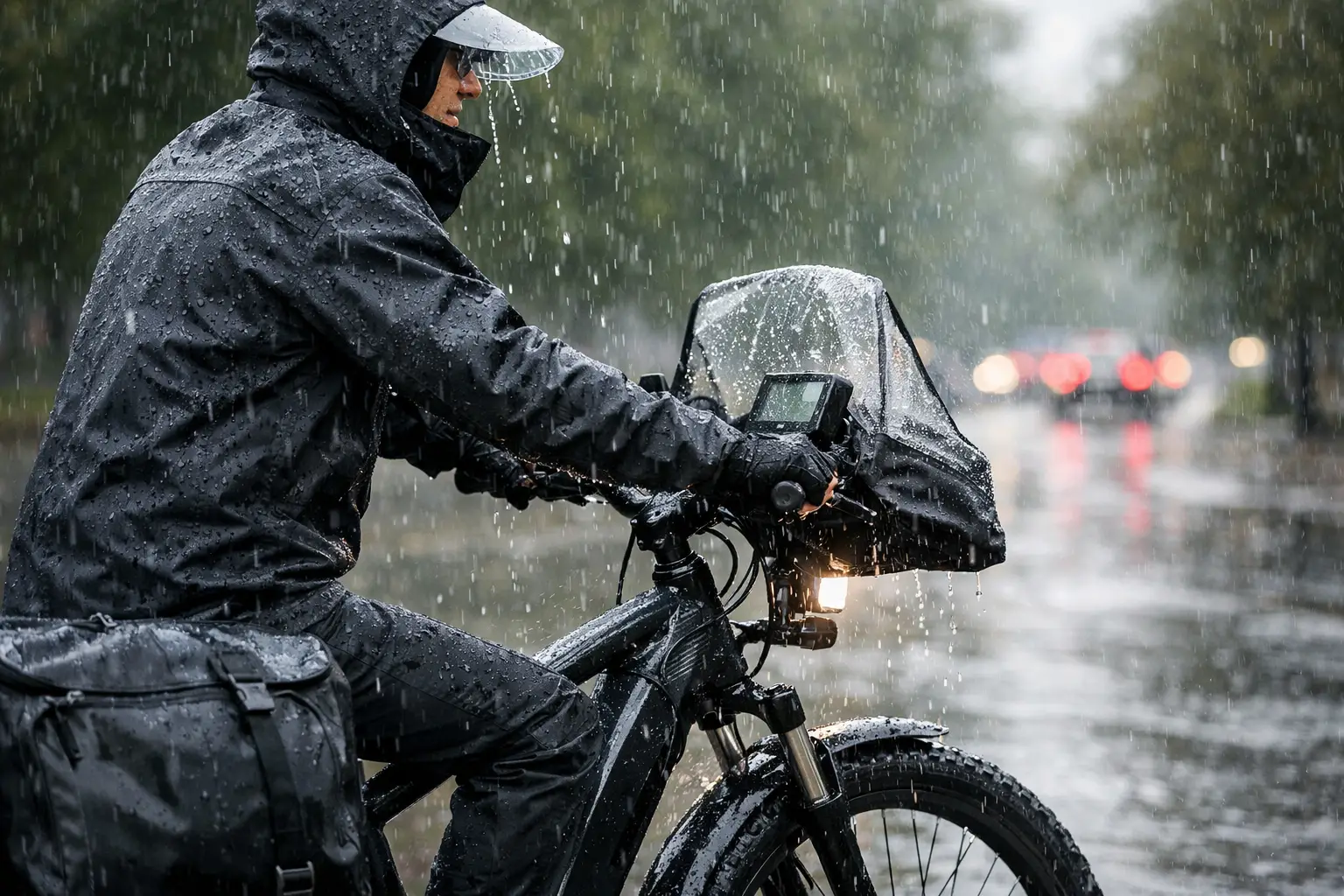
Most e-bikes can handle an unexpected shower, but ebike rain protection is more than keeping yourself dry. It means reducing water exposure, preserving braking control, avoiding unsafe charging, and drying the bike correctly afterward. Rain is usually manageable. Deep water, high-pressure spray, and leaving an e-bike wet for days are where preventable problems begin.
Your owner’s manual comes first. Water-resistance ratings, battery removal instructions, and cleaning limits vary by model. If the manual says a component must stay dry or gives a specific cleaning method, follow that guidance over general advice.
An e-bike is not automatically waterproof because it has sealed connectors or an enclosed battery. Many electrical parts are designed to tolerate road spray and light-to-moderate rain, but that is different from being safe to submerge, hose down, or store outdoors uncovered.
The practical goal is to limit how much water reaches vulnerable areas and how long it stays there. The battery case, display, controller, motor wiring, charging port, and electrical connectors all deserve attention. So do ordinary bicycle parts: wet rims or brake rotors reduce braking performance, while water and grit can wear down the chain, cassette, and brake pads faster.
Rain protection also has a rider-control side. Puddles can hide potholes, painted lane markings become slick, and tires need more distance to grip and stop. A dry battery does not make a wet ride safe if you are braking and cornering as though the pavement were dry.
A few minutes of preparation can make a rainy commute much less stressful. Start by checking that the battery is fully seated and locked, the battery cover or port flap is closed, and the display and control buttons are secure. Do not tape over vents, seams, or ports unless your manufacturer specifically allows it. Trapping moisture or blocking ventilation can create a different problem.
Check your tires before leaving. Tires with worn tread, visible cracking, embedded debris, or low air pressure have less predictable traction in rain. Inflate them within the pressure range printed on the tire sidewall, while considering the bike manufacturer’s recommendation and your load. Riders carrying cargo, a child, or a heavy backpack may need the higher end of the approved range.
Test both brakes at low speed in a safe area. Hydraulic disc brakes, mechanical disc brakes, rim brakes, and drum brakes behave differently when wet, but all can require a longer stopping distance. If a brake lever pulls to the handlebar, feels unusually soft, makes harsh grinding sounds, or provides weak stopping power, postpone the ride and have the bike inspected.
For the rider, prioritize visibility and control. A waterproof outer layer, gloves that still allow a firm grip, and footwear with a non-slip sole make a meaningful difference. Use a properly fitted helmet and turn on required lights. Even in daytime rain, low clouds and spray can make a rider difficult for drivers and other trail users to see.
Ride more slowly than you would on dry pavement, especially through turns, intersections, metal bridge plates, railroad crossings, painted markings, and leaf-covered pavement. Brake earlier and more gradually. Sudden front-brake use on a slick surface can cause a wheel to slide, while abrupt braking of either wheel can upset the bike’s balance.
Avoid standing water whenever possible. You cannot tell from the surface whether a puddle is 1 inch or 12 inches deep (2.5 or 30.5 cm), whether it hides a pothole, or whether it covers debris. Water deep enough to reach the motor, battery mount, bottom bracket area, or electrical connections can exceed what the bike was designed to handle.
If you must cross a shallow puddle, reduce speed before entering it, keep the bike upright, and pedal smoothly without sharp steering or braking inputs. Do not ride through floodwater. Beyond the risk to the e-bike, moving or contaminated water can make the road surface unstable and may conceal hazards.
Use pedal assist thoughtfully. High assist can make it easier to spin the rear wheel on slick pavement, particularly when starting uphill or accelerating out of a turn. Starting in a lower assist level gives you a smoother, more controllable launch. If your e-bike has a throttle, apply it gradually rather than snapping it open.
Never connect a charger to a wet battery, wet charging port, or wet outlet area. Bring the e-bike or removable battery indoors to a dry, temperature-appropriate location, then allow all charging surfaces to dry completely before charging. Do not use a hair dryer, heat gun, space heater, or direct high heat to speed up the process. High heat can damage plastic parts, seals, and battery components.
If water appears inside the charging port, under the display, or inside a battery compartment, do not charge or operate the bike until you have followed the manufacturer’s instructions. A qualified e-bike technician or the manufacturer should assess persistent moisture, corrosion, damaged seals, or electrical faults.
Post-ride care is the part of ebike rain protection that protects reliability over time. Park the bike under cover if possible. Wipe down the frame, battery exterior, display, controls, and visible wiring with a clean, soft cloth. Pay attention to the charging port and the battery mounting contacts, but do not insert tools, swabs, or sprays into electrical connections.
Use a low-pressure rinse only if your manufacturer permits it and the bike is heavily muddy. A garden hose on a strong setting, pressure washer, car wash wand, or compressed-water cleaner can force water past seals and into bearings, electrical housings, and connectors. For routine dirt, a damp cloth and mild bike-safe cleaner are usually sufficient.
Then complete this short check:
If the bike was caught in a heavy downpour, give it extra drying time before charging. For removable batteries, follow the manual on whether to remove the battery before cleaning or storage. In many cases, removing it lets you bring the battery into a dry indoor space, but the correct process depends on the battery mount and connector design.
A cover can protect a parked e-bike from rainfall, but it is not a substitute for dry indoor storage. Choose a cover that fits without pressing tightly against controls or trapping large amounts of moisture. Remove it periodically so the bike can air out, particularly after a wet ride.
Handlebar covers, display covers, and battery covers can add protection on some models, but only when they do not interfere with steering, brake levers, lights, cooling, charging access, or the battery’s secure fit. Do not wrap a battery in plastic while riding or charging. The battery enclosure and its thermal design should be left as the manufacturer intended.
For commuting, fenders are often more useful than a rain cover during the ride. They reduce the spray that reaches your shoes, drivetrain, and the rider behind you. Their effectiveness depends on tire width, fender fit, and road conditions, so they reduce exposure rather than eliminate it.
Stop riding and seek help from the manufacturer or a qualified e-bike mechanic if the bike will not power on after getting wet, displays error codes, cuts power unexpectedly, produces a burning smell, makes unusual electrical noises, or has visible damage to the battery case, wiring, or connectors. Do not open the battery, controller, motor, or display to investigate.
A battery that has been submerged, damaged in a crash, or exposed to floodwater needs manufacturer-directed evaluation. Keep it away from flammable materials, do not charge it, and follow local emergency guidance if there are signs of smoke, heat, leaking fluid, or swelling.
Rain does not have to end your riding season. With conservative riding, dry charging practices, and a few minutes of care after each wet trip, your e-bike can remain a dependable way to get where you need to go when the forecast is less than perfect.
Can You Ride an E-Bike in the Rain?
Most e-bikes can handle light or moderate rain when their electrical components and protective covers are in good condition.
However, water resistance varies by model. Check the owner’s manual, avoid deep puddles and floodwater, reduce speed, and allow extra braking distance.
Are E-Bikes Waterproof?
E-bikes are generally water-resistant, not waterproof. Sealed connectors and enclosed batteries may tolerate rain and road spray, but they are not designed for submersion or high-pressure washing.
Always follow the manufacturer’s stated water-resistance and cleaning guidance.
How Can I Protect My E-Bike Before Riding in the Rain?
Confirm that the battery is fully seated and locked, and close the charging-port cover securely.
Check the tires, brakes, lights, and electrical connections before leaving.
Fenders can also reduce the amount of water and road grit reaching the rider and drivetrain.
Can I Charge an E-Bike After Riding in the Rain?
Do not charge an e-bike while the battery, charging port, plug, or surrounding area is wet.
Move the bike or removable battery to a dry location and wait until all charging surfaces are completely dry.
Follow the manufacturer’s instructions if moisture has entered the battery compartment or charging port.
How Should I Dry an E-Bike After a Wet Ride?
Wipe the frame, battery exterior, display, controls, and visible wiring with a clean, soft cloth.
Dry and lubricate the chain, inspect the charging port and battery contacts, and store the bike in a dry, ventilated location. Do not use a heat gun or other direct high heat.
Can You Wash an E-Bike With a Pressure Washer?
No. A pressure washer can force water past seals and into electrical housings, bearings, connectors, and other vulnerable components.
Use a damp cloth and mild bike-safe cleaner instead. Only use a low-pressure rinse when the manufacturer specifically permits it.
Can an E-Bike Be Left Outside in the Rain?
Leaving an e-bike outdoors in the rain is not recommended, especially for extended periods.
A fitted cover can provide temporary protection, but it may trap condensation if the bike is already wet.
Dry indoor storage is the safer option for protecting electrical and mechanical components.
When Should a Rain-Exposed E-Bike Be Inspected?
Seek professional help if the e-bike will not power on, displays error codes, loses power unexpectedly, produces unusual electrical noises, or shows moisture or corrosion around its connectors.
Do not charge or operate a submerged or visibly damaged battery until the manufacturer or a qualified technician evaluates it.