

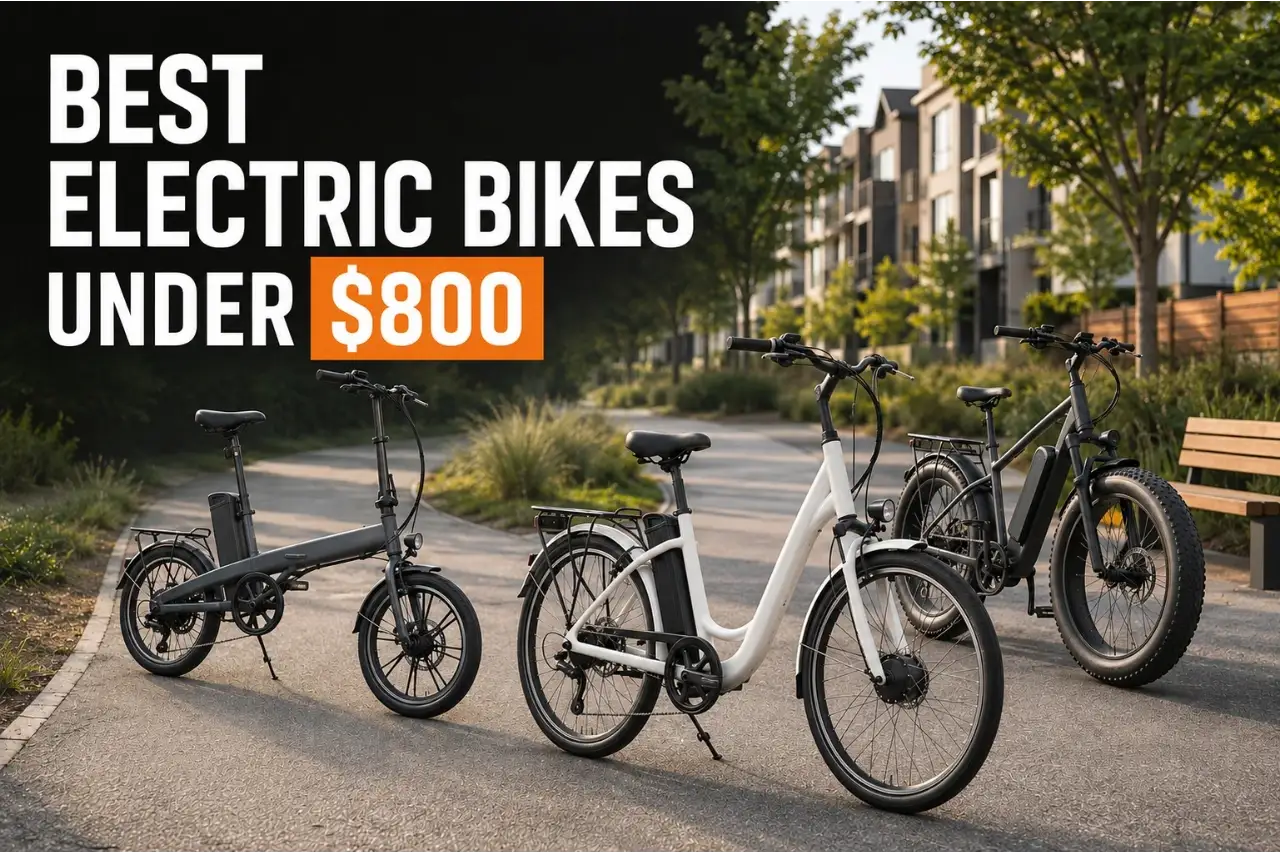
Finding a dependable electric bike for less than $800 means accepting some trade-offs, but it does not mean settling for a bad one. The best overall pick in this comparison is the Sasikeibike C6, and the best performance option is the Jasion Thunder, though both come with the component and support limitations typical of this price range.
Budget e-bikes usually mean heavier frames, mechanical rather than hydraulic brakes, smaller batteries, and support that varies by seller rather than a dedicated bike shop network. Range claims also tend to reflect ideal conditions, not real-world hills or rider weight. Prices on these listings shift often, so treat any figure here as a snapshot rather than a guarantee.
We compared five current listings, all priced under $800 at review, using publicly listed specifications for motor power, battery size, tires, brakes, and weight. GoEBikeLife’s approach, focused on watt-hours, braking confidence, and honest range expectations, shaped how we weighed each model’s trade-offs.
Best overall: Sasikeibike C6
Best performance: Jasion Thunder
Best comfort commuter: Cybervelo EK2
Best for hills: CityRang 2.0
Best compact fat-tire option: EUY A8
Quick Comparison of the Five Picks
Specs below come from each manufacturer’s current Amazon listing. We have not independently verified range or top speed claims, so treat them as seller-reported figures rather than lab-tested results.
| Model | Price Status | Motor Power (Rated/Peak) | Battery | Claimed Range | Top Speed | Tires |
|---|---|---|---|---|---|---|
| Sasikeibike C6 | Under $800 | 500W rated / 750W peak (seller-stated) | 48V 15Ah (720Wh) | Up to 45 miles (seller-stated) | 25 mph | 26×4-inch fat tires |
| Jasion Thunder | Under $800 | 500W rated / 750W peak (seller-stated) | 48V 15Ah (720Wh) | Up to 40 miles (seller-stated) | 25 mph | 20×4-inch fat tires |
| Cybervelo EK2 | Under $800 | 350W rated (seller-stated) | 36V 10Ah (360Wh) | Up to 25 miles (seller-stated) | 20 mph | 27.5-inch standard |
| CityRang 2.0 | Under $800 | 500W rated (seller-stated) | 48V 12Ah (576Wh) | Up to 35 miles (seller-stated) | 22 mph | 26-inch standard |
| EUY A8 | Under $800 | 350W rated (seller-stated) | 36V 10Ah (360Wh) | Up to 28 miles (seller-stated) | 20 mph | 20×4-inch fat tires |
How to Read Price Status, Power, Range, and Certification Claims
“Price status” means each model sat under $800 when we checked, not that the price is fixed. Amazon listings shift with deals and stock, so check the current listing before buying.
Rated power tells you what the motor sustains; peak power is a short burst number that looks bigger in marketing than it feels on a hill. Range figures assume flat ground, a lighter rider, and low assist, so expect less in daily use.
Certification matters most for battery fire safety. Unless a listing links to a verifiable UL 2849 or UL 2271 certificate, treat any safety claim as seller-provided, not confirmed.
What to Expect From a Budget E-Bike and How We Chose
Under $800, expect a heavier aluminum or steel frame, mechanical disc brakes instead of hydraulic ones, and a smaller battery than $1,200-plus competitors. These are informed compromises, not automatic dealbreakers, if the bike matches how you actually plan to ride it.
We chose these five models by comparing published specifications side by side: motor power, battery watt-hours, tire size, brake type, frame weight, and stated payload capacity. We also weighed seller responsiveness signals, like warranty length and parts availability, over marketing language.
The Non-Negotiables: Brakes, Battery Safety, Fit, and Support
Mechanical disc brakes are standard at this price and work fine for most riders, but they need more hand force and more frequent adjustment than hydraulic brakes. Stopping in traffic is where brake quality matters most, so check pad replacement cost before buying.
Battery safety deserves plain talk. Look for listings that mention independent testing rather than just “certified” with no source, and store batteries away from heat when charging at work or at home.
Fit matters more than most first-time buyers expect. A frame that is too tall or too heavy to lift over a curb becomes a bike that stays in the garage.
Why Watt-Hours and Bike Weight Matter More Than Peak-Watt Claims
Watt-hours (Wh), calculated from voltage times amp-hours, tell you how far a battery can actually take you, unlike a peak-watt number that only describes a short burst of power. A 720Wh battery will generally outlast a 360Wh battery on the same route, regardless of motor wattage claims.
Total bike weight affects carrying it upstairs, loading it into a car, or pushing it home if the battery dies. Heavier fat-tire bikes ride more stably but punish riders who need to lift them often.
Best Overall and Performance Picks
Sasikeibike C6: Best Overall

The Sasikeibike C6 earns the best overall award by pairing a large 720Wh battery with fat tires and disc brakes, a combination that is hard to find under $800.
Specifications (seller-stated):
- 500W rated / 750W peak motor
- 48V 15Ah (720Wh) battery
- 26×4-inch fat tires
- Mechanical disc brakes
- Up to 25 mph top speed, up to 45 miles claimed range
The larger battery is the standout here. It suggests longer real-world range than most competitors in this price bracket, even after accounting for hills and rider weight.
Pros:
- Largest battery capacity in this comparison
- Fat tires add stability on gravel and light off-road paths
- Disc brakes on both wheels
Cons:
- Heavier frame makes carrying it upstairs harder
- Mechanical brakes need periodic adjustment
Best for riders who want the longest range in this group and do not need to carry the bike often. Skip it if you need a lightweight bike for apartment stairs.
Jasion Thunder: Best Performance

The Jasion Thunder earns the performance award for matching the C6’s power specs in a smaller-wheel, more maneuverable package.
Specifications (seller-stated):
- 500W rated / 750W peak motor
- 48V 15Ah (720Wh) battery
- 20×4-inch fat tires
- Mechanical disc brakes
- Up to 25 mph top speed, up to 40 miles claimed range
The smaller 20-inch wheels make this bike more agile at low speed, a realistic advantage for stop-and-go city riding.
Pros:
- Strong rated power for hills and quick starts
- Compact wheel size aids maneuverability
- Same battery size as the top overall pick
Cons:
- Smaller wheels feel less stable at higher speeds
- Claimed range is lower than the C6 despite equal battery size
Best for commuters who value quick acceleration over long-distance range. Skip it if you primarily ride long, flat routes where bigger wheels roll more efficiently.
Best Picks for Commuting Comfort and Hills
Cybervelo EK2: Best Comfort Commuter

The Cybervelo EK2 earns the comfort commuter award thanks to standard 27.5-inch wheels that ride closer to a traditional bicycle.
Specifications (seller-stated):
- 350W rated motor
- 36V 10Ah (360Wh) battery
- 27.5-inch standard tires
- Mechanical disc brakes
- Up to 20 mph top speed, up to 25 miles claimed range
The smaller battery and motor mean this bike suits shorter, flatter commutes rather than long hauls or steep climbs.
Pros:
- Familiar upright riding position
- Lighter build than the fat-tire options here
- Standard wheel size simplifies tire replacement
Cons:
- Smallest claimed range in this comparison
- Motor power may feel light on hills
Best for commuters riding mostly flat streets who want a bike that feels close to a regular bicycle. Skip it if hills or long distances are part of your daily route.
CityRang 2.0: Best for Hills

The CityRang 2.0 earns the hill-climbing award by pairing a 500W rated motor with a mid-size 576Wh battery, a stronger combination for grades than the comfort commuter offers.
Specifications (seller-stated):
- 500W rated motor
- 48V 12Ah (576Wh) battery
- 26-inch standard tires
- Mechanical disc brakes
- Up to 22 mph top speed, up to 35 miles claimed range
Rated power here matches the fat-tire picks, suggesting steadier climbing performance than the comfort commuter, without the added weight of 4-inch tires.
Pros:
- Motor power suited to moderate hills
- Mid-size battery balances range and weight
- Standard tires are easier to source locally
Cons:
- Claimed range trails the two fat-tire picks
- Standard tires offer less traction on loose gravel
Best for commuters facing regular hills who do not need fat-tire stability. Skip it if your route is mostly flat, where the extra power goes unused.
A Compact Fat-Tire Choice for Mixed Terrain
EUY A8: Best Compact Fat-Tire Option

The EUY A8 earns this award for combining fat-tire stability with a smaller, more storable frame than the C6 or Thunder.
Specifications (seller-stated):
- 350W rated motor
- 36V 10Ah (360Wh) battery
- 20×4-inch fat tires
- Mechanical disc brakes
- Up to 20 mph top speed, up to 28 miles claimed range
The smaller battery and motor trade some range and power for a frame that is easier to store in a closet or small apartment.
Pros:
- Compact frame fits tight storage spaces
- Fat tires add grip on gravel and uneven pavement
- Lighter than the higher-power fat-tire models
Cons:
- Lower rated power than the C6 and Thunder
- Smaller battery limits range on hilly routes
Best for riders in small apartments who want fat-tire stability without a bulky frame. Skip it if you need strong hill-climbing power or long-range trips.
Buying Guide for the Right Match
Fit, Carrying Weight, and Storage Before You Buy
Check the seller’s listed weight limit before ordering. Most budget e-bikes list payload capacity somewhere in the specifications, and exceeding it affects both handling and battery drain.
Measure your storage space, too. Fat-tire bikes like the C6 and Thunder are heavier and bulkier, so carrying one upstairs regularly can get old fast. A closet, hallway, or covered patio spot works better than a shared bike rack for keeping the battery in a stable temperature range.
Assembly, Warranty, Returns, and Replacement Parts
Most models in this range ship partially assembled, so budget time for basic tools and a video guide. Warranty terms and return windows vary by seller, so read the current listing’s policy before buying rather than assuming a standard period.
Replacement battery availability is worth checking before, not after, purchase. A bike with no listed replacement battery option becomes hard to keep running once the original battery degrades, typically after a few hundred charge cycles.
Final Recommendations by Rider Type
- Longest range, minimal carrying: Sasikeibike C6
- Quick city starts and tight turns: Jasion Thunder
- Flat commutes, familiar bike feel: Cybervelo EK2
- Regular hills without fat-tire bulk: CityRang 2.0
- Small living space, mixed terrain: EUY A8
Match the bike to your actual commute and storage space rather than the highest spec number on the page.
Frequently Asked Questions
What is the best e-bike for under $800?
Among the five models compared here, the Sasikeibike C6 stands out for its larger battery and fat tires, based on seller-listed specifications. It suits riders who want more range and stability without exceeding the $800 mark, though pricing can shift, so check the current listing.
Which electric bike offers the best value for money?
The Sasikeibike C6 offers strong value because it pairs a 720Wh battery with disc brakes and fat tires, features that often cost more on other budget models. Value depends on your priorities, though, so a lighter bike like the EUY A8 may offer better value for small-space riders.
What features should I look for in an electric bike under $800?
Focus on watt-hours rather than peak-watt claims, since watt-hours better predict real range. Also check brake type, tire size, total bike weight, and whether the seller lists a replacement battery option.
Are electric bikes under $800 reliable for daily commuting?
They can handle daily commuting reasonably well if matched to your route and rider weight, though components like mechanical brakes need more frequent maintenance than pricier hydraulic setups. Realistic range expectations, closer to seller claims minus 20 to 30 percent, help avoid running low on battery mid-commute.
Which electric bike brands are most reliable on a budget?
Reliability at this price level depends more on individual listing quality, warranty terms, and parts availability than on brand name alone. Checking for a responsive seller, clear warranty terms, and available replacement batteries matters more than brand recognition.
What e-bike brands and models should I avoid?
Avoid any listing that doesn’t specify battery watt-hours, brake type, or weight limit, since missing specifications often signal weaker manufacturer support. Also be cautious of listings claiming UL certification without a link to a verifiable certificate or independent test result.
GoEBikeLife publishes independent e-bike reviews, comparisons, and practical buying guides. Some links on this page are affiliate links. If you make a purchase through an eligible link, we may earn a commission at no additional cost to you.


Thanks for these reviews. I’m looking to buy my first ebike and really have narrowed it down between the Cybervelo CK2 and the CityRang 2.0. If I look at the specs of each:
– The CityRang has a slightly beefier battery – 15Ah vs. 14Ah
– The CityRang is lighter by about 7 lbs.
– The torque seems about the same – so they should both do hills about the same, correct?
– You show max speed on the CK2 at 25MPH. Their website says 28MPH
– I think I can buy lots of 3rd party addons for each – suspension seat posts, more padded, confortable seats, etc. Does either do a better job in shock absorbtion?
Unless you have more to add, if I consider all specs, it seems to be a coin flip between these two ebikes – where total price and including accessories will decide it for me. Any other thoughts?
Hi Tom, thanks for the thoughtful comment — you’ve clearly done your homework 👍
You’re asking exactly the right questions for a first e-bike.
Let me go point by point and then give you a clear takeaway.
Battery (15Ah vs 14Ah):
In real-world use, the difference between 14Ah and 15Ah is very small — usually just a couple of miles at most, depending on assist level, rider weight, and terrain. Battery capacity alone shouldn’t be the deciding factor here.
Weight difference (~7 lbs):
This actually matters more than many people think. A lighter bike will feel a bit easier to maneuver at low speeds, when lifting it, or if you ever ride with low/no assist. That’s one small advantage for the CityRang.
Hill climbing & torque:
You’re correct — on paper, the torque output is close enough that most riders will not notice a meaningful difference on hills. Rider weight, tire pressure, and gearing will affect hill performance more than the small spec gap between these two.
Top speed (25 mph vs 28 mph claim):
This is a good catch. In practice, both bikes are typically limited by their controller and display settings. Many brands advertise a higher “unlocked” speed, but out of the box, most riders see around 24–25 mph. I wouldn’t choose based on that number alone.
Comfort & shock absorption:
This is where there is a real difference.
The Cybervelo CK2 has a more comfort-focused setup from the start (frame geometry + suspension design). It generally feels smoother on rough pavement without adding upgrades.
The CityRang 2.0 rides a bit firmer, but responds very well to upgrades like a suspension seatpost or a higher-quality saddle.
If comfort is a top priority out of the box, the CK2 has a slight edge.
If you’re open to adding a suspension seatpost (which you mentioned), they become very close.
Accessories & upgrades:
You’re absolutely right — both bikes support common third-party accessories. Neither locks you into proprietary parts, which is a big plus at this price point.
My honest takeaway
You’re not wrong — this is not a bad “coin flip” situation.
If I had to simplify it:
Choose Cybervelo CK2 if you want maximum comfort with minimal tinkering.
Choose CityRang 2.0 if you value lighter weight and don’t mind minor upgrades to dial in comfort.
Either way, you’re looking at a solid first e-bike, and both will handle commuting and hills very well for most riders.
If you want, feel free to share:
your height & weight
typical commute distance
how rough your roads are
That would allow me to give a more personalized recommendation.