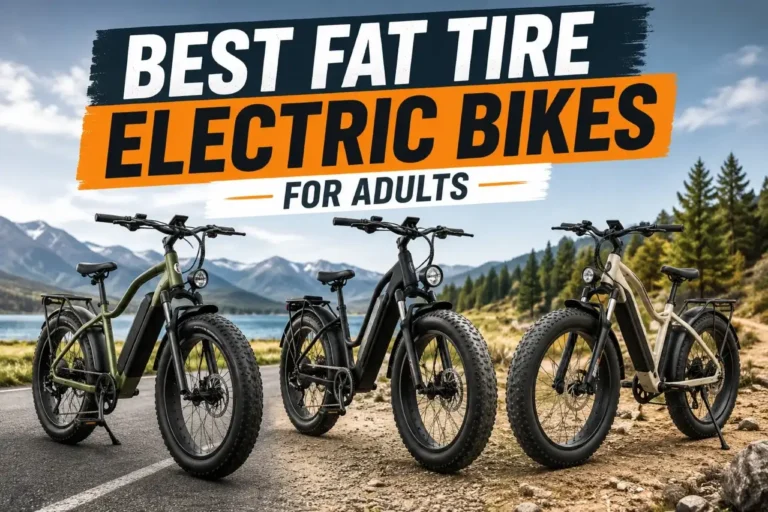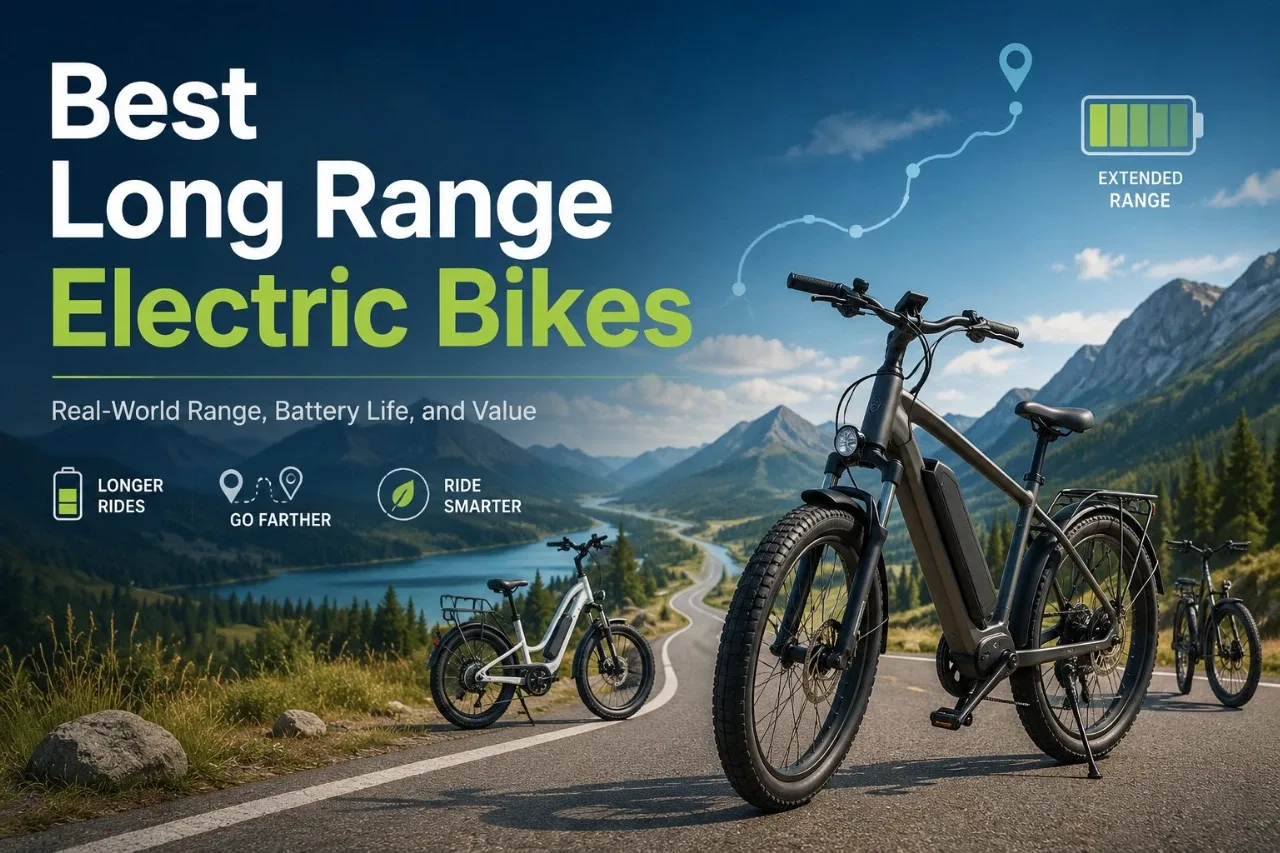
A long-range e-bike changes how far you’re willing to ride. Instead of plotting a route around a single battery charge, a bike with real range lets you commute across town, explore a network of trails, or haul gear on a hunting trip without watching the battery icon drop. The trade-off is weight, cost, and sometimes complexity, since bigger batteries and dual motors add bulk to the frame.
Range numbers on an Amazon listing come from manufacturers, usually tested under favorable conditions: flat ground, moderate speed, light rider weight, and full pedal assist. A 200-mile claim rarely survives a hilly commute with a 220-pound rider using throttle only. For riders who want distance without constant battery anxiety, a bike with a large amp-hour battery and a dependable motor setup, matched to the terrain you actually ride, beats chasing the highest number on the box.
Before buying, pay attention to battery voltage and amp-hours together (that combination gives you watt-hours, the real measure of capacity), motor wattage versus torque, tire size for your terrain, suspension type, and payload capacity. Check whether the battery carries UL 2271 certification, since that affects safety and insurance in some states. GoEBikeLife builds its recommendations around matching these specs to how and where you actually plan to ride, which is the approach we take through the five bikes below.
Best for maximum battery capacity: FREESKY Alaska Pro Dual Battery
Best for daily commuting with range to spare: FREESKY Swift Horse Ultra
Best for high-speed power riding: E·Bycco EB7Pro Dual Motor
Best for budget-conscious long-distance riders: DEEPOWER QS7 Moped Ebike
Best for off-road hunting and rough terrain: PHILODO Falcon Dual Motor
1. FREESKY Alaska Pro Dual Battery Electric Bike

This bike suits riders who want the largest usable battery capacity in this lineup and don’t mind the extra weight that comes with it.
Pros
- Dual 48V 45Ah batteries (2160Wh combined) rated by the seller for 120 to 200+ miles
- UL 2271 battery certification noted by the manufacturer
- 4500W peak motor with 170Nm torque for steep climbs
Cons
- Heavier build from the dual-battery setup
- Only a 250W rated (continuous) wattage listed alongside the peak figure, worth confirming before buying
- Hub drive, not mid-drive, which affects climbing efficiency on technical trails
| Preview | Product | Price | |
|---|---|---|---|

| FREESKY 4000W Dual Battery 48V 45AH Electric Bike 200 Miles | LG Cells, 40MPH, 26″ Fat… | $1,699.00 | View on Amazon |
The dual LG-cell batteries give this bike the highest total watt-hour capacity here, and the seller’s 2.3x range claim over single-battery bikes tracks with the math. The 26-inch fat tires and dual suspension handle mixed terrain reasonably well. Our FREESKY electric bike reviews cover how FREESKY’s range claims compare across its lineup, which is useful context since the gap between peak and continuous motor wattage here deserves a second look before purchase.
2. FREESKY Swift Horse Ultra
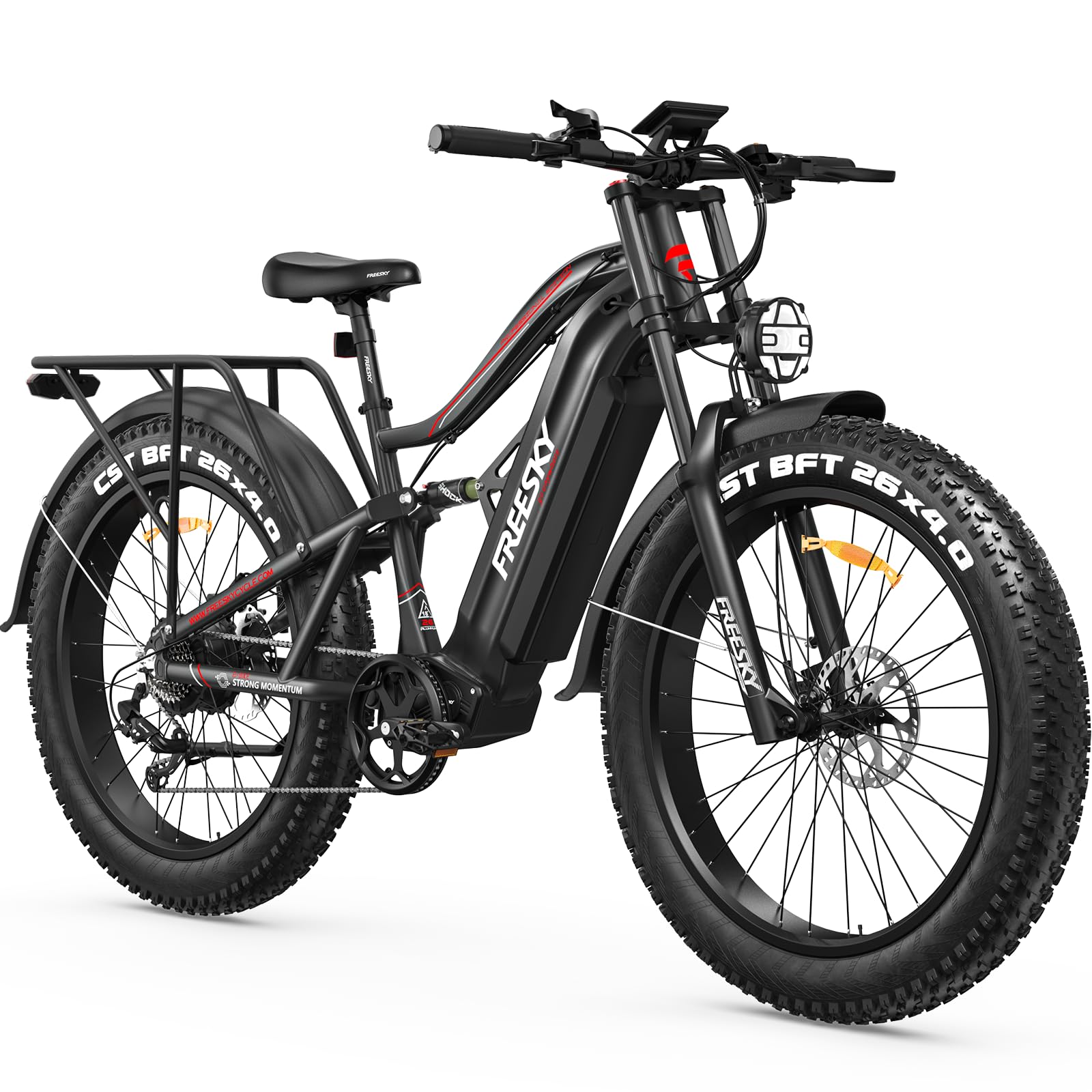
This model fits commuters and weekend riders who want a BAFANG-branded motor and strong range without the bulk of a dual-battery system.
Pros
- 48V 35Ah LG battery (1680Wh) rated for up to 140 miles
- Name-brand BAFANG 4000W motor with 150Nm torque
- Full suspension and 26×4-inch fat tires for a smoother ride
Cons
- Single battery means less total capacity than the dual-battery Alaska Pro
- Hub drive drivetrain
- 400-pound payload claim should be verified against frame specs before loading cargo
| Preview | Product | Price | |
|---|---|---|---|

| FREESKY Electric Bike for Adults, 4000W BAFANG Motor, 48V 35Ah Battery | 38+MPH, 140 Miles… | $1,299.00 | View on Amazon |
BAFANG motors have a long track record in the e-bike industry, which adds some confidence here that FREESKY’s other listings can’t always claim. The 35Ah battery is sizable for a single-pack setup, and the dual-crown fork plus rear air shock should smooth out rough pavement and light trails. Riders curious about how this model stacks up against FREESKY’s other bikes can check our freesky swift horse electric bike review for a closer look at fit and finish.
3. E·Bycco EB7Pro Dual Motor Ebike
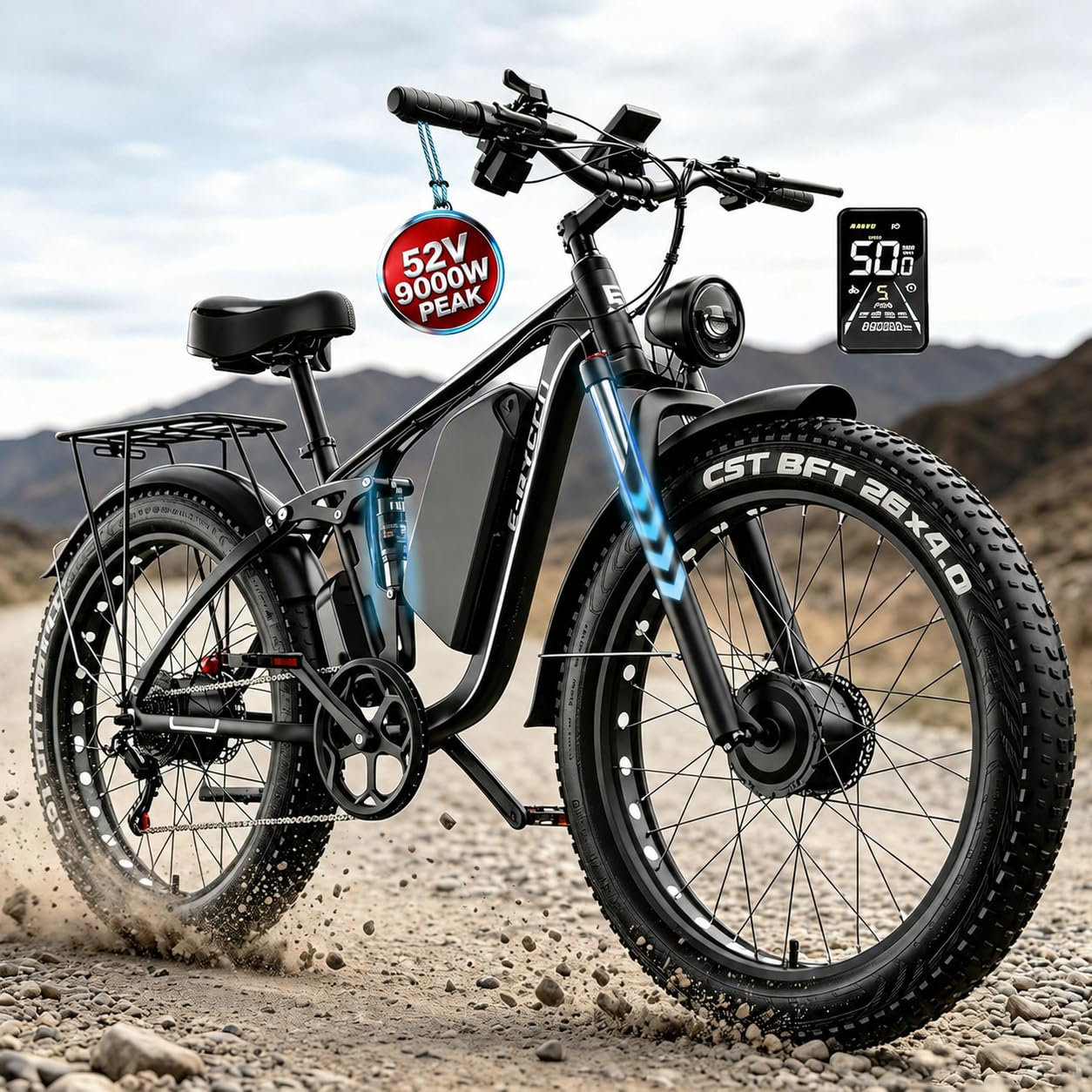
This bike suits riders chasing top speed and power first, with long range as a secondary benefit rather than the headline feature.
Pros
- Dual 4500W motors (9000W combined peak) with 220Nm torque
- 52V 36Ah LG battery (1872Wh) with IP65 water resistance
- Hydraulic disc brakes front and rear, plus six riding modes
Cons
- Rated range (110 miles under pedal assist) is lower than some single-motor competitors here despite the larger motor setup
- Dual motors add weight and draw more power at high speeds
- Listed as chain drive, unlike the hub-drive FREESKY models
| Preview | Product | Price | |
|---|---|---|---|

| E·Bycco 9000W Peak Dual Motor Electric Bike for Adults, 52V 36AH Battery, Max 50MPH… | $1,359.00 | View on Amazon |
Two motors pushing a claimed 47 to 50 mph put this bike in a different category from a typical commuter e-bike, closer to an off-road performance machine. The lockable hydraulic fork and 1000-pound rear shock support that off-road intent. Riders who want to compare top-speed machines against long-range options should see our guide on the best top speed and long range ebike options before deciding which trade-off fits their riding style.
4. DEEPOWER QS7 Moped Ebike
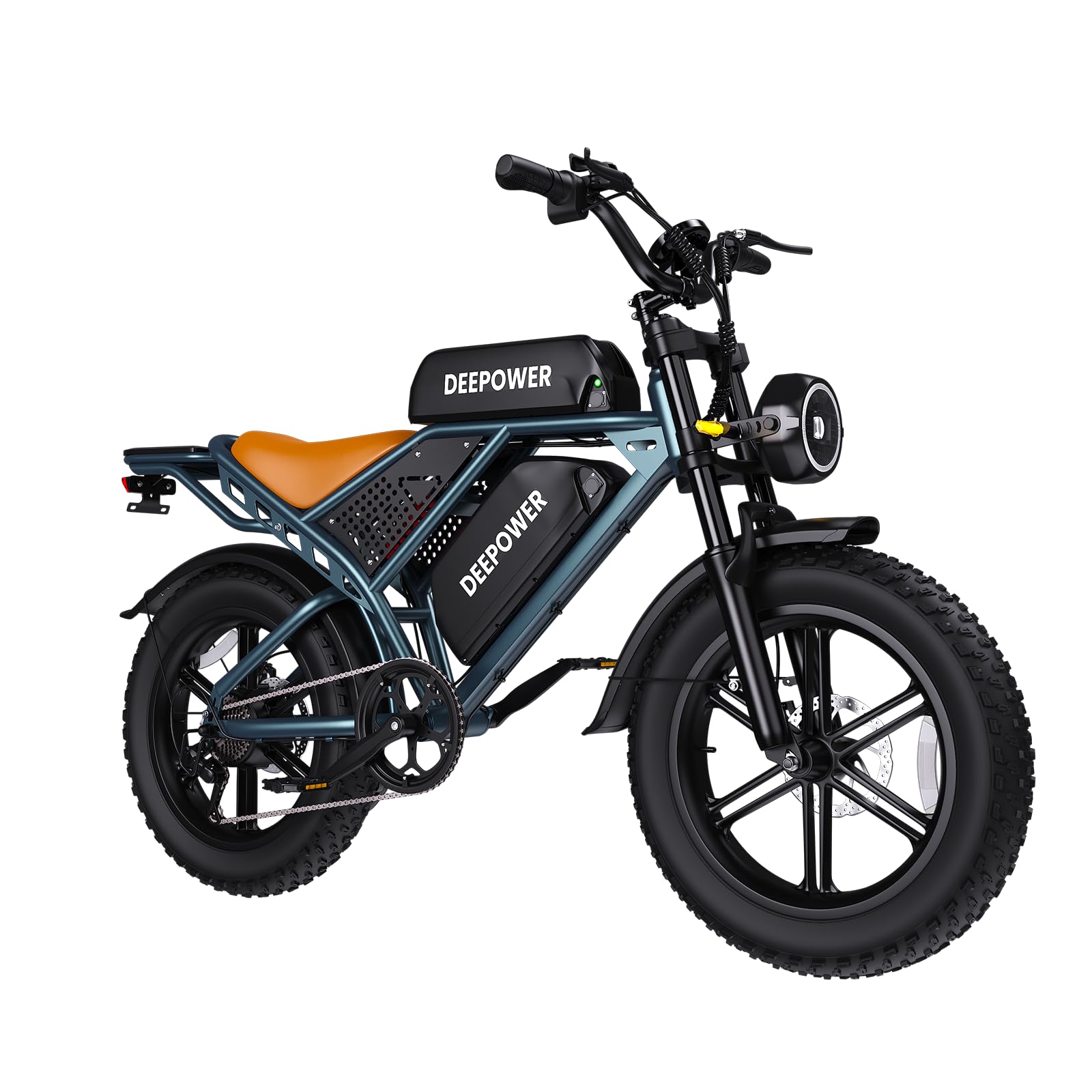
This bike fits budget-minded riders who want a large battery and moped-style comfort without the price tag of dual-motor systems.
Pros
- 48V 60Ah removable battery rated for up to 160 miles in pedal-assist mode
- Dual disc brakes with strong heat dissipation for downhill control
- 20×4-inch tires with front and rear suspension
Cons
- 2000W motor is the lowest-power option in this roundup
- 28 mph top speed limits it for highway-adjacent commuting compared to higher-wattage bikes here
- Heavier frame (73 pounds) makes transport and storage harder
| Preview | Product | Price | |
|---|---|---|---|

| Electric Bike for Adults,2000W Peak Motor,70-140 Mi Range,Moped Ebike | 48V 20/25/50Ah… | $1,039.00 | View on Amazon |
The 60Ah battery is the largest single-pack capacity in this group by amp-hours, which explains the long pedal-assist range claim. The moped-style frame and dual suspension favor comfort over aggressive off-road capability. For riders deciding between this kind of long-range commuter and a true mountain e-bike, our ebike range examples page breaks down how battery size translates to real miles across different bike types.
5. PHILODO Falcon Dual Motor Hunting Ebike
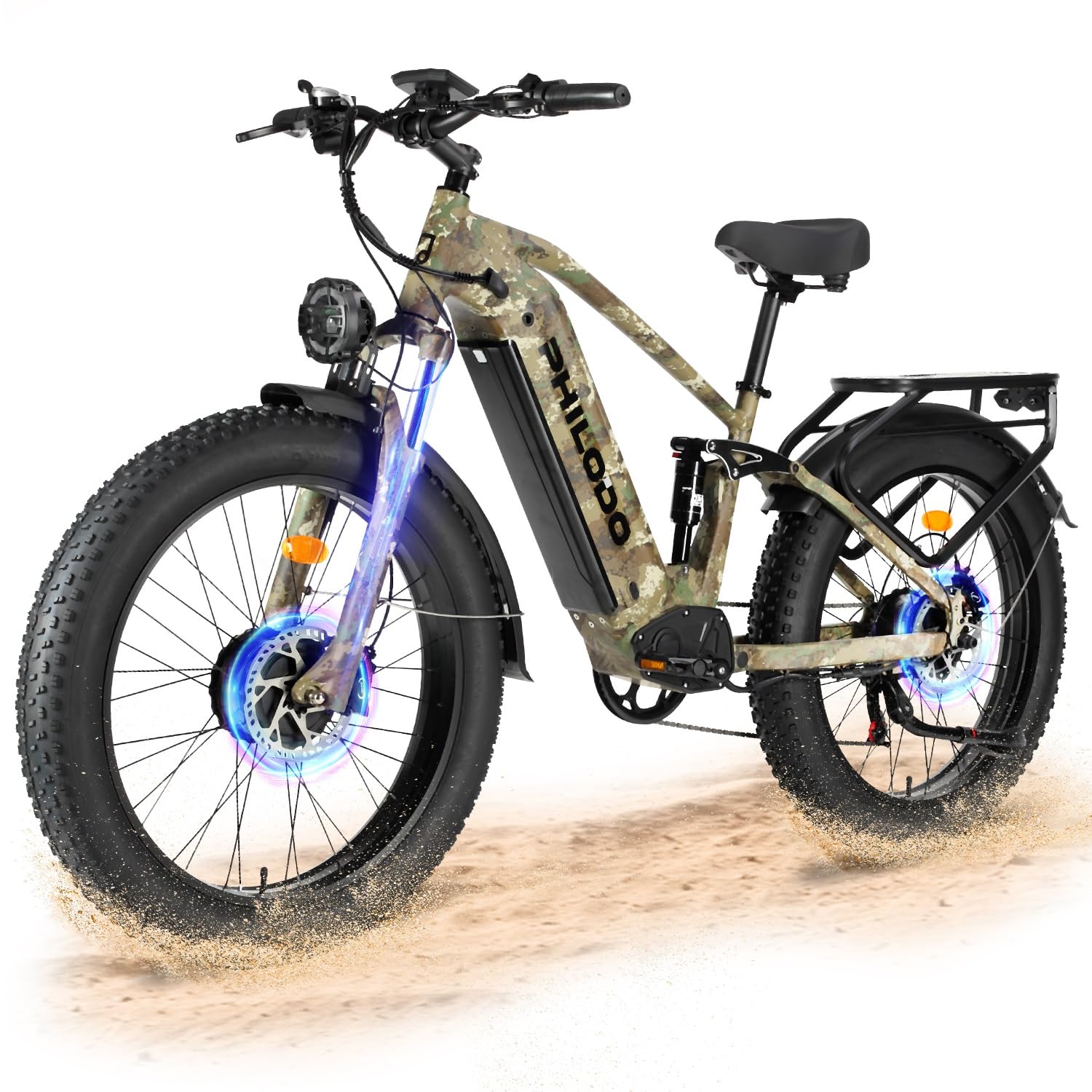
This bike suits hunters and off-road riders who need a camo-finished, full-suspension e-bike that can handle sand, snow, and uneven trails.
Pros
- 60V 32Ah LG battery rated for up to 100 miles in pedal-assist mode
- Full suspension with lockable, adjustable front fork and rear air shock
- Six riding modes, including single and dual motor options
Cons
- 50-mile range in full electric mode is noticeably lower than its pedal-assist figure
- 50-pound bike weight plus gear load affects range and handling
- Shorter 1-year warranty compared to FREESKY’s 2-year coverage
| Preview | Product | Price | |
|---|---|---|---|

| PHILODO Falcon 60V Off-Road Electric Bike – Dual Motor Hunting Ebike, 26″ Fat Tire Full… | $1,299.00 | View on Amazon |
The camo finish and dual-motor setup make this a purpose-built option for hunting and backcountry use rather than daily commuting. The 60V battery system runs at higher voltage than the other bikes here, which can improve efficiency at a given power output. Riders planning hunting trips can compare this model against other options in our best electric bike for hunting guide, and our philodo falcon electric bike review covers the Falcon’s suspension and handling in more detail.
Buying Guide
Match Battery Capacity to Real Riding Distance
Battery capacity is measured in watt-hours, calculated by multiplying voltage by amp-hours. A 48V 20Ah battery holds 960Wh, while a 60V 30Ah battery holds 1800Wh. Compare watt-hours, not just amp-hours, since bikes run at different voltages.
| Battery Spec | Approximate Watt-Hours | Typical Use Case |
|---|---|---|
| 48V 15Ah | 720Wh | Short commutes, light terrain |
| 48V 35Ah | 1680Wh | Daily commuting, moderate trails |
| 52V 36Ah | 1872Wh | High-power riding, mixed terrain |
| 60V 32Ah | 1920Wh | Off-road, hunting, demanding terrain |
| 48V 45Ah (dual) | 2160Wh | Maximum range, heavier frame |
Understand What Changes Real-World Range
Manufacturer range claims assume ideal conditions. A rider’s weight, cargo load, wind, hills, tire pressure, cold weather, and assist level all cut into that number. Throttle-only riding drains a battery far faster than pedal assist.
Motor Power Versus Torque
Watts measure how fast a motor can spin, while torque (measured in Newton-meters, or Nm) measures how much force it can apply at low speed. Higher torque numbers matter more for hill climbing and loaded cargo than raw wattage.
Tires, Suspension, and Terrain Fit
Fat tires (4 inches or wider) add stability on sand, snow, and loose dirt. Full suspension smooths out rough trails but adds weight. Pick tire width and suspension type based on the terrain you ride most, not the terrain you ride occasionally.
Certifications, Payload, and Warranty
Look for UL 2271 battery certification and UL 2849 system certification, which indicate independent safety testing. Check the payload rating against rider weight plus gear, and compare warranty length (commonly 1 to 2 years) across the frame, motor, battery, and controller.
Frequently Asked Questions
Which electric bike has the longest range among the models reviewed?
The FREESKY Alaska Pro’s dual-battery system is rated by the manufacturer for 120 to 200-plus miles, the highest claimed range in this group. That figure assumes favorable conditions like flat terrain and moderate pedal assist, so actual mileage will vary by rider.
What are the best long-range e-bikes for adults in 2026?
The FREESKY Alaska Pro and Swift Horse Ultra lead this group for commuting and recreational range, while the PHILODO Falcon suits off-road and hunting use. Choice depends on whether you prioritize pavement commuting, high speed, or rough terrain.
Which long-range electric bike offers the best value for the money?
The DEEPOWER QS7 pairs a large 60Ah battery with a simpler, lower-wattage motor, making it a reasonable pick for riders who want range without paying for dual motors or peak power. Its lower top speed and heavier frame are trade-offs worth weighing against the price.
Which of these electric bikes can travel at least 70 miles on a single charge?
All five bikes carry manufacturer claims of at least 70 miles under pedal assist, according to their respective listings. The DEEPOWER QS7, FREESKY Swift Horse Ultra, and FREESKY Alaska Pro all claim figures well above that threshold.
Which long-range e-bike is best for long-distance touring?
The FREESKY Swift Horse Ultra balances a sizable 35Ah battery with full suspension and a name-brand BAFANG motor, which suits longer touring rides on mixed pavement and trail. Riders hauling more gear might also consider the Alaska Pro’s dual-battery capacity for extended trips between charging stops.
How do battery capacity, rider weight, terrain, and pedal assist affect an e-bike’s real-world range?
Larger batteries (measured in watt-hours) extend range, but a heavier rider or loaded cargo rack increases the energy needed per mile. Hills, headwinds, and higher assist levels or throttle use all reduce range, while higher pedal-assist use and flat terrain extend it. Our how far can an electric bike go guide walks through these variables in more depth for riders estimating their own expected range.
GoEBikeLife publishes independent e-bike reviews, comparisons, and practical buying guides. Some links on this page are affiliate links. If you make a purchase through an eligible link, we may earn a commission at no additional cost to you.