A little joy belongs in every day.

Fat and narrow e-bike tires offer different advantages. Learn how tire width affects comfort, traction, handling, efficiency, and everyday riding.
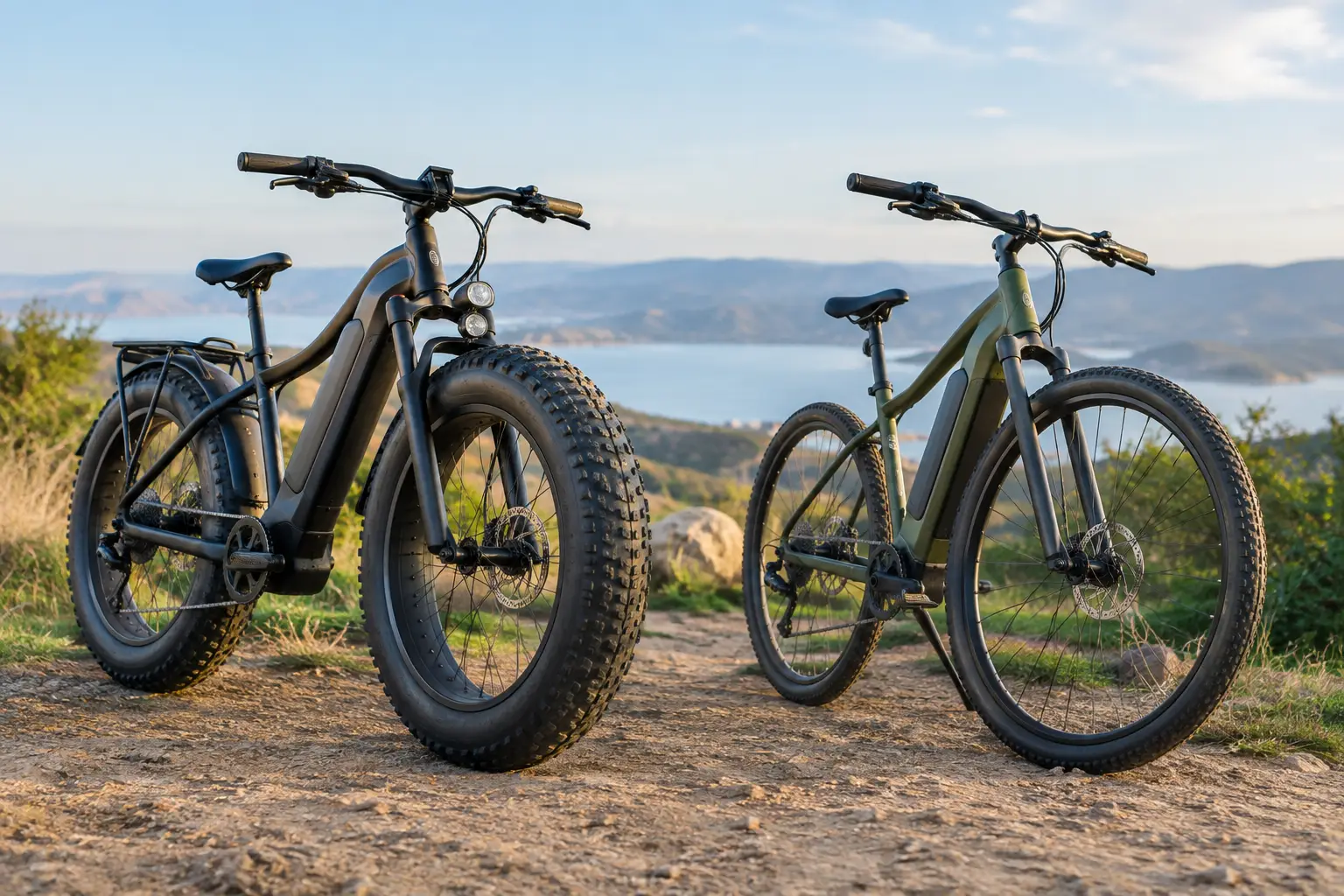
For the ebike fat versus narrow tires decision, fat tires favor traction, cushioning, and confidence on loose or broken surfaces, while narrower tires often feel more responsive and bicycle-like on smooth pavement.
Neither is automatically safer or better. The right tire width depends on where you ride most, how much cargo you carry, your comfort needs, and whether your e-bike is designed for that tire size.
A fat tire is generally around 3.8 to 5 inches wide on many e-bikes. Many fat-tire e-bikes use 4-inch tires on 20-inch or 26-inch wheels. Their large air volume lets the tire deform around bumps, roots, and loose ground rather than transmitting every impact to the rider.
A narrow tire does not necessarily mean a skinny road-bike tire. On many commuter and hybrid e-bikes, tires from roughly 1.75 to 2.4 inches wide are common. Tires around 2.5 to 3 inches sit in the middle: noticeably more cushioned than a traditional city tire, but typically lighter and faster-rolling than a true fat tire.
Width is only one part of the picture. Tire tread, rubber compound, casing construction, wheel diameter, inflation pressure, rider weight, and cargo all affect grip and ride feel. A 2.4-inch tire with a useful tread pattern can be a very capable choice for maintained gravel paths. A 4-inch tire with an aggressive tread is not automatically ideal on wet pavement.
Fat tires create a larger contact patch, especially when run at lower pressure within the tire maker’s approved range. That can help the tire float over soft surfaces and reduce the tendency to sink or wander in sand, loose dirt, snow, and deep gravel.
They also add comfort. The tire itself absorbs small cracks, washboard surfaces, and curb transitions. For riders who are returning to cycling, managing joint discomfort, or riding rough neighborhood streets, that softer feel can make an e-bike less intimidating.
Fat tires can be especially useful when conditions change during one trip. A rider may leave on broken pavement, cross a packed dirt path, and encounter loose gravel near a trailhead. The wide tire gives more margin for error than a narrow, high-pressure tire.
That margin has limits. Fat tires do not make ice safe, and they cannot compensate for excessive speed, hard cornering, or poor braking technique. On wet leaves, painted lines, metal utility covers, and slick pavement, ride smoothly and reduce speed before turns regardless of tire width.
The comfort and traction of a fat tire come with real costs. Wider tires and rims are usually heavier, which can make the bike harder to lift onto a rack, carry up stairs, or maneuver with the motor off. The large tread can also produce more rolling resistance on pavement, so the motor may use more battery energy at the same speed.
Handling can feel slower, too. Some riders like the planted, stable feel. Others find a fat-tire e-bike less precise when weaving through traffic, parking it in a crowded bike room, or making tight turns at low speed.
A wide tire also needs adequate clearance. Mud, small stones, or snow can pack between the tire and frame or fender if clearance is limited. Check the tire regularly after riding in messy conditions, and remove debris with the e-bike powered off.
Narrower e-bike tires generally roll more easily on smooth, hard surfaces. They weigh less than fat tires in many cases and can make a bike feel more responsive when starting, turning, or changing direction. For a commuter whose route is mostly pavement, that can translate to a more natural bicycle-like ride.
Because they often have less rotating mass, narrower tires may help reduce energy use in some paved riding situations. This is not a fixed rule: a tire’s construction, tread pattern, pressure, terrain, rider input, wind, and e-bike power mode all matter. However, tire width alone does not determine efficiency. Tread design, tire pressure, casing construction, wheel weight, terrain, and riding speed all influence energy use.
Narrower tires can also be easier to find in common city and hybrid sizes. That may simplify routine replacement, although the exact tire size and load rating must still match the wheel and the e-bike manufacturer’s requirements.
A narrower tire has less air volume to absorb sharp impacts. On potholes, railroad crossings, and rough gravel, it can feel firmer and may be more vulnerable to pinch flats if it is underinflated. A pinch flat happens when a tire compresses hard enough that the tube is trapped between the rim and an obstacle.
Narrow tires also offer less flotation on soft ground. If your route includes beach sand, loose snow, or deep pea gravel, the front wheel may sink or deflect more easily. Slow down, keep your movements relaxed, and avoid sudden steering corrections on these surfaces.
Do not assume that adding pressure always improves safety or efficiency. Overinflation can reduce comfort and grip on uneven pavement, while underinflation can make steering vague and increase the chance of rim strikes. Use the pressure range printed on the tire sidewall as a starting point, then follow any more specific guidance in your owner’s manual.
The simplest way to think about tire width is to start with the surface you ride most often, not the rare trip you hope to take once a year.
| Riding condition | Tire approach that usually fits | What to keep in mind |
|---|---|---|
| Smooth streets and bike lanes | Narrow to mid-width tires | Efficient, responsive handling is usually the priority. |
| Rough city pavement | Mid-width or fat tires | More air volume can reduce harsh impacts and fatigue. |
| Hard-packed gravel | Mid-width tires with suitable tread | Fat tires are optional unless the surface is consistently loose. |
| Loose gravel, sand, or snow | Fat tires | Lower approved pressures can improve flotation, but steering remains unpredictable. |
| Mixed commuting and light trails | Mid-width tires or moderate fat tires | Choose for the roughest surface you encounter regularly. |
For many riders, a mid-width tire is the practical middle ground. It can handle potholes and occasional gravel without the added bulk of a full 4-inch tire. But if the e-bike was engineered around fat tires, changing to a narrower tire may not improve the ride as much as expected and can introduce fit or handling problems.
Two identical fat-tire e-bikes can feel completely different if one has tires inflated near the upper end of the approved range and the other is set closer to the lower end. Higher pressure usually feels firmer and can roll more efficiently on smooth pavement. Lower pressure can improve comfort and traction on rough or loose surfaces, but too little pressure can make the bike unstable and expose the rim to damage.
Check pressure with a gauge before rides, especially after temperature swings or long storage periods. Tire pressure drops in colder weather, and e-bike weight makes correct inflation more important. Include your body weight, cargo, child seat, or trailer load when deciding where to start within the approved range.
For a new pressure setting, change it gradually and test it in a low-traffic area. Pay attention to how the bike corners, brakes, and reacts to bumps. If the tire feels squirmy, bottoms out on bumps, or allows the rim to strike obstacles, stop riding that surface and increase pressure within the allowed range.
A tire change is not just a tire change on an e-bike. The frame, fork, fenders, rim width, brake setup, wheel strength, and load rating all affect what can be used safely. A tire that physically fits while the bike is stationary may rub under cornering, when the wheel flexes, or when debris builds up.
Before changing width, confirm the approved tire size in the owner’s manual or with the manufacturer. The tire’s bead diameter must match the rim, and the rim must be suitable for the tire width. If your e-bike has fenders, rack supports, a hub motor, or a torque sensor, preserve the manufacturer-specified wheel and tire configuration unless a qualified bicycle mechanic confirms compatibility.
Also verify that the replacement tire meets the e-bike’s required load rating, wheel specifications, and any manufacturer limits. E-bikes are heavier and often travel faster than standard bicycles, particularly when carrying groceries, tools, or a passenger where permitted. An unsuitable tire can wear quickly, handle poorly, or fail to provide enough support.
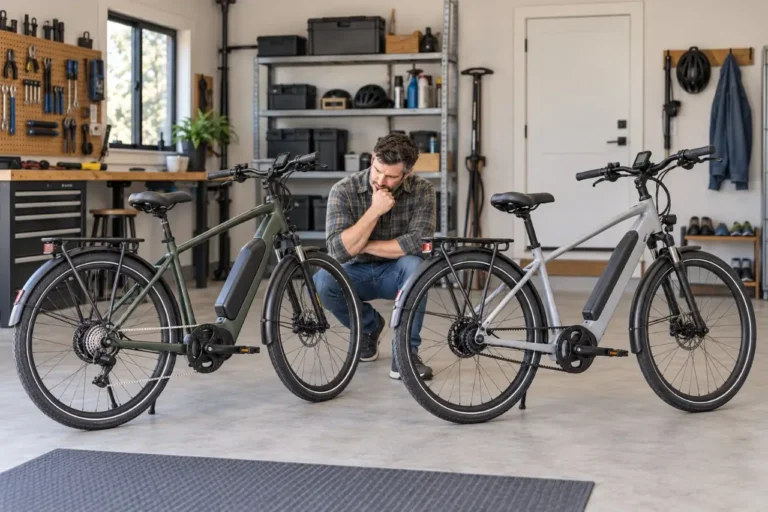
Choose fat tires when your routine includes loose terrain, poor pavement, or a strong need for extra cushioning and stability. Choose narrower tires when most rides happen on maintained roads, bike lanes, and paved paths where efficient rolling and sharper handling matter more. If your riding is evenly mixed, a moderate-width tire may offer the most balanced result.
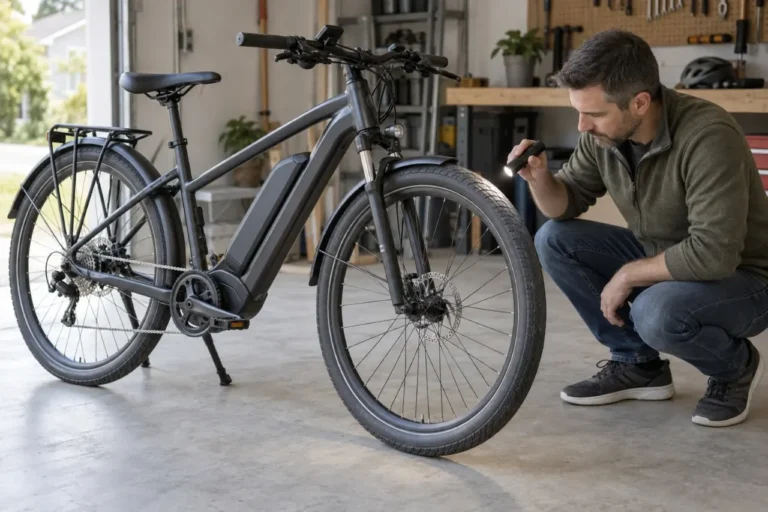
Whichever width you ride, inspect the tires before heading out. Look for low pressure, embedded glass or thorns, sidewall cuts, worn tread, bulges, and rubbing against the frame or fender. Tire width can improve comfort and capability, but a correctly inflated, undamaged tire is what gives you a dependable start to every ride.