A little joy belongs in every day.

A flickering e-bike light may come from battery conditions, loose connections, moisture, or settings. Learn safe checks before your next ride.
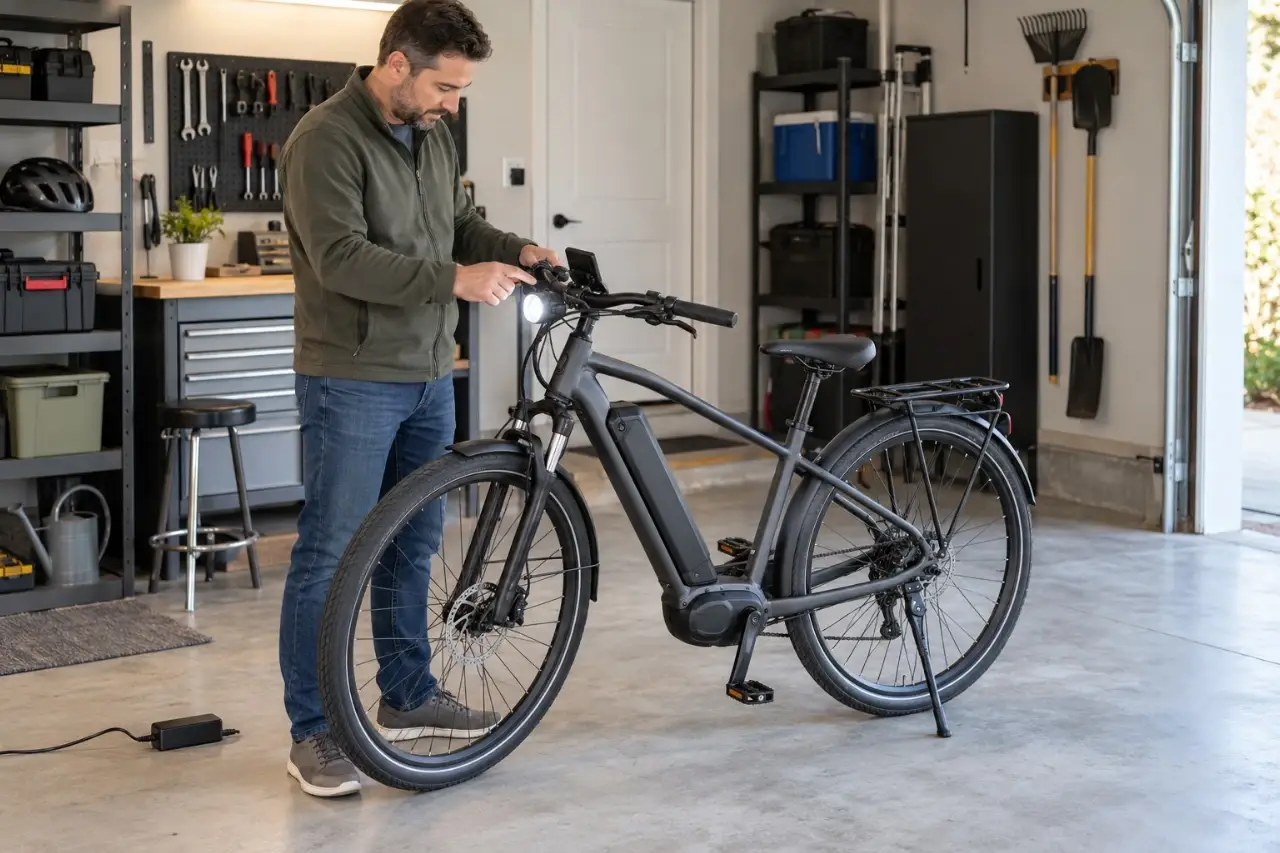
A flickering e-bike light is usually caused by a power issue, loose external connection, damaged cable, moisture exposure, or an intentional flash setting. If you are asking why e-bike lights flicker, start by treating it as a visibility and safety concern rather than just an annoyance. A light that cuts in and out can make you harder for drivers and other trail users to see, especially at dusk, in rain, or after dark.
The good news is that some causes are simple to identify without working on electrical parts. Others need manufacturer support or a qualified e-bike technician. Do not open the battery, controller, display, motor, or integrated light housing to investigate the problem.
An e-bike may have an integrated light powered by the main battery, a removable light powered by its own small battery, or both. The troubleshooting path depends on which type is flickering.
A light with its own rechargeable battery may flicker simply because its charge is low or its battery is nearing the end of its useful life. An integrated light is more likely to be affected by the e-bike’s battery charge, a connection problem, a damaged wire, moisture, or an issue involving the bike’s electrical system.
Many bike lights have a daytime flash, pulse, or strobe setting designed to attract attention. The pattern can look like a fault if it was turned on accidentally. Check the light button, display menu, and owner’s manual before assuming something is broken.
Some LED lights also appear to flicker in a phone video even when they look steady to your eyes. This can happen because the camera and LED light cycle at different rates. If the light appears constant while you ride and only flickers on video, it may not be a lighting failure.
A battery can show some remaining charge and still experience temporary voltage changes when the motor is working hard. You may see the light dim or flicker during steep climbs, hard acceleration, or high pedal-assist levels. Cold weather can make this more noticeable because batteries temporarily deliver power less efficiently in low temperatures.
If the flicker occurs only when the battery is low, recharge with the charger supplied or specifically approved by the e-bike manufacturer. If it continues with a fully charged battery, do not assume the battery itself is the problem. The cause could be elsewhere in the system.
On lights mounted to a fork, handlebar, rack, or fender, normal vibration can loosen a mounting bracket or an accessible connector. A loose light may flicker when you hit cracks, potholes, railroad crossings, or rough pavement.
Look for obvious signs without pulling on wires or disconnecting factory-sealed parts. A cable that is pinched, rubbed through, sharply bent, or dangling near the tire, brake rotor, chain, or suspension can intermittently lose contact. A light that flickers only when the handlebars turn may have a cable-routing issue near the head tube.
E-bike lights are commonly built to handle normal riding weather, but water resistance has limits. A pressure washer, prolonged heavy rain, a flooded connector area, or storage outdoors can contribute to corrosion or moisture-related problems. So can a minor crash that shifts the light mount or strains a wire.
If the issue began after wet riding, let the bike dry in a sheltered, ventilated area at normal indoor temperatures. Do not use a heat gun, place the battery near a heater, or spray electrical areas with lubricants. If you see greenish corrosion, cracked housings, exposed wire, or moisture inside a light lens, stop using that light and arrange service.
Integrated lights depend on more than the bulb itself. Depending on the e-bike, the display, controller, wiring harness, brake-light circuit, and battery-management system may all affect how the light receives power. A flickering headlight paired with display resets, loss of pedal assist, error codes, or an intermittent motor points to a broader electrical issue.
That is not a home repair situation. Record the symptoms, including when the flickering occurs, and contact the manufacturer or a qualified e-bike service provider. The owner’s manual and manufacturer instructions take priority because light circuits vary widely among e-bike systems.
Start with a fully charged main battery and, if applicable, a fully charged standalone light. Then use this simple process in a dry, well-lit place.
Do not repeatedly cycle power, keep riding to “test” an intermittent light after dark, or substitute an unapproved charger in hopes of correcting the issue. Connector shape alone does not establish charger compatibility.
| Preview | Product | Rating | Price | |
|---|---|---|---|---|

| JYFJYF Bike Lights for Night Riding, 8000 Lumens Headlight & Taillight Set | 85 Reviews | $39.99 $37.99 | View on Amazon |
If your only reliable front or rear light flickers, avoid riding after dark or in conditions where visibility is poor. Add a temporary, independently powered bike light only if it can be mounted securely and does not interfere with steering, brakes, cables, suspension movement, or your view of the road. It is a short-term visibility measure, not a repair for the integrated system.
Stop using the e-bike and seek manufacturer or professional guidance if flickering occurs with a burning smell, unusual heat, smoke, swelling, leaking fluid, severe crash damage, repeated error messages, or sudden loss of power. Move away from the bike if there is smoke or fire and contact emergency services. Do not handle or attempt to charge a damaged or overheated battery.
A flickering brake light also deserves prompt attention. Other road users rely on it to recognize when you are slowing down, and some e-bikes use brake-light functions differently from standard bicycles.
| Preview | Product | Price | |
|---|---|---|---|

| Chemical Guys, Workhorse Plush Microfiber Towels, 16 x 16 in, Black, 3 Pack |
$9.99
$8.99 | View on Amazon |
Good cable routing and basic care go a long way. Before rides, include the lights in your quick safety check: confirm that they turn on, shine steadily in the selected mode, and remain securely mounted. After riding in rain, wipe down the bike and allow it to dry before storage.
Avoid directing high-pressure water at the display, battery area, motor, light housings, or cable entry points. When transporting an e-bike on a vehicle rack, protect lights and cables from straps, road debris, and contact with other bikes. Check the light alignment afterward, since a headlight pointed too high can glare for oncoming traffic and one pointed too low may not show road hazards soon enough.
If the problem returns after a charge, setting check, and visual inspection, write down when it occurs and have the system checked before relying on that light for a night ride. A steady light is simple equipment, but it supports one of the most important parts of safer e-bike ownership: being seen when it counts.
GoEBikeLife is reader-supported. We test and review e-bikes, create detailed comparisons, and publish practical buying guides for riders. Some links on this page are affiliate links, which means we may earn a commission at no extra cost to you.