Electric bike fire safety comes down to treating the battery and charger as electrical equipment, not casual accessories. Use the charger supplied or approved by your e-bike manufacturer, charge on a clear hard surface, keep the battery away from heat and exits, and stop using it if it is damaged or behaving unusually. Lithium-ion battery fires are uncommon when equipment is in good condition and used correctly, but they can develop quickly when a battery is damaged, overheated, or charged improperly.
Your owner’s manual takes priority over general guidance. Battery designs, charging limits, storage temperatures, and removal procedures vary by manufacturer.
Why electric bike fire safety deserves attention
An e-bike battery stores a large amount of energy in a compact case. Inside are lithium-ion cells managed by a battery management system, often called a BMS. The BMS helps control charging and discharging, but it cannot reliably make a damaged, wet, altered, or incompatible battery safe.
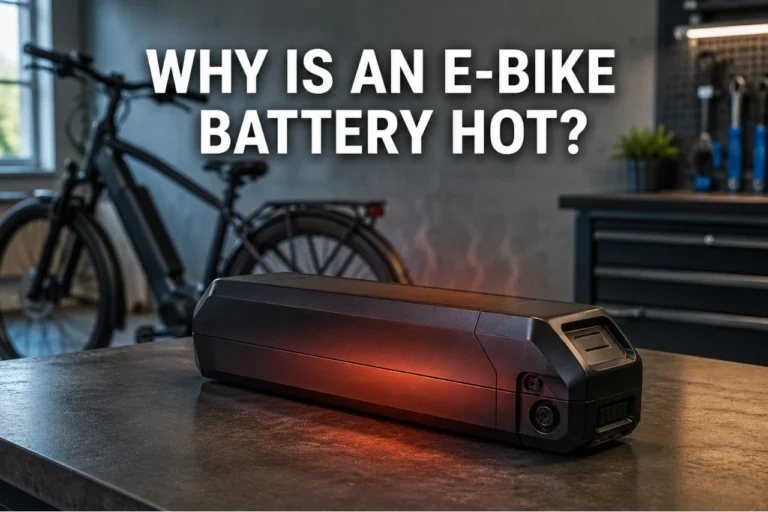
A serious failure can lead to thermal runaway. This is a chain reaction in which battery cells overheat and release heat, smoke, and flammable gases. It may be preceded by a sharp chemical odor, hissing, popping, excessive heat, swelling, leaking, or smoke. Sometimes there are no obvious early signs.
The goal is not to be afraid of your e-bike. It is to build a routine that reduces avoidable risks and gives you time to respond if something is wrong.
Charge your e-bike where a problem is visible
Charging location matters as much as charger choice. A battery should be charged in a dry, open area with a stable, noncombustible floor or surface. Keep the area clear of gasoline, paint, paper, clothing, cardboard, household chemicals, and other items that can burn easily.
Do not charge in a hallway, stairwell, doorway, or near the only exit from a garage or apartment. If a battery fails, smoke and fire can block a fast escape route. Charging in a bedroom or directly beside upholstered furniture also creates unnecessary risk.
A garage can be a practical charging location if it is dry, temperate, and uncluttered. A shed may work if it stays within the battery maker’s allowed temperature range and has dependable electrical service. Avoid charging in direct sun, inside a hot vehicle, or outdoors where the charger or battery could get wet.
Use the right charger and outlet
Use only the charger that came with the e-bike or one the manufacturer specifically identifies as compatible. The plug may fit another battery while the voltage, communication, charging rate, or connector wiring does not. A mismatched charger can damage the battery even if it appears to work.
Plug the charger directly into a properly functioning wall outlet when possible. Do not use a damaged extension cord, overloaded power strip, loose outlet, or adapter of questionable condition. If the outlet feels hot, sparks, smells burnt, or will not hold the plug firmly, stop using it and have a qualified electrician assess it.
Allow a battery that was just ridden hard, left in cold weather, or exposed to summer heat to return to the temperature specified in its manual before charging. A battery may feel normal on the outside while its cells are still too hot or too cold for charging.
A practical charging routine
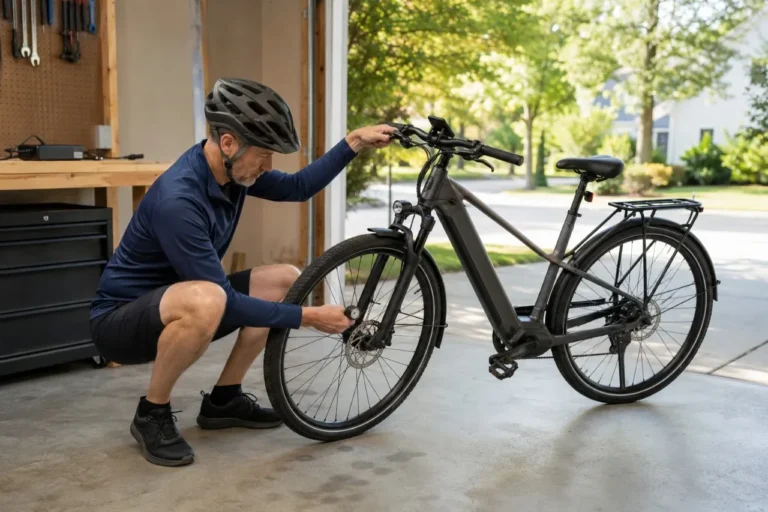
A consistent routine prevents the small mistakes that add up over time. Before connecting the charger, take a quick look at the battery case, charging port, cable, and connectors.
- Park the e-bike or place the removable battery on a stable surface in a dry, clear area.
- Check for cracks, dents, swelling, melted plastic, corrosion, loose connections, or a damaged cable. Do not charge if you find any of these signs.
- Confirm the battery and charger are at an acceptable temperature under the manufacturer’s instructions.
- Connect and charge according to the manual. Stay nearby enough to notice unusual heat, odor, noise, or warning lights.
- Disconnect the charger when charging is complete. Unplug it from the wall when it is not in use.
Avoid charging while you are asleep or when no responsible adult can monitor the area. “Monitoring” does not mean staring at the battery for hours. It means charging at a time when you can notice a problem, stop charging if safe to do so, and leave the area quickly if there is smoke or fire.
Do not cover the charger or battery with a blanket, bag, jacket, or other material. Chargers need airflow, and covering equipment can trap heat.
Store batteries for real-life conditions
For short periods, store the e-bike or battery in a dry indoor area away from heat sources, direct sunlight, and combustible clutter. Keep it out of reach of children and away from metal objects such as loose tools, keys, or screws that could contact terminals on a removed battery.
For longer storage, follow the charge level and temperature guidance in your owner’s manual. Many manufacturers recommend storing a lithium-ion battery partly charged rather than completely full or empty, but the correct range is battery-specific. Check the charge level periodically during long storage because batteries slowly lose charge over time.
Do not leave a battery in a car during hot or freezing weather. Interior temperatures can rise well above outdoor temperatures, and extreme cold can affect charging performance. If you ride in winter, bring a removable battery indoors after the ride when practical, then let it warm gradually before charging.
Apartment residents should also consider building rules. Some properties restrict e-bike battery charging or storage, while local fire codes and housing requirements can vary. Follow applicable rules, but do not assume one city’s policy applies throughout the United States.
Know when a battery is no longer safe to use
Stop using and charging the battery if it has been in a crash, dropped hard, submerged, punctured, crushed, or exposed to a serious impact. Damage may be internal and not visible from the outside. The same applies if the battery overheats, swells, leaks, gives off an unusual odor, makes hissing or popping sounds, or has a melted or discolored connector.
Do not open the battery case, tape over damage, attempt to dry internal components, replace cells, or bypass the battery management system. These are not safe owner repairs. Contact the e-bike manufacturer or a qualified battery service provider for instructions specific to the battery. A qualified bicycle mechanic can help with e-bike inspection and mounting issues, but battery-cell diagnosis and repair require specialized training and equipment.
Never place a damaged lithium-ion battery in household trash or a regular recycling bin. Follow the manufacturer’s disposal instructions and contact an appropriate local hazardous-waste or battery-recycling program for accepted procedures. Call ahead when possible because facilities may have special rules for damaged batteries.
Prepare your home without turning it into a workshop
Working smoke alarms are one of the most useful layers of protection. Test them regularly and make sure everyone in the household knows two ways out of sleeping areas where possible. If you charge in a garage attached to the home, an alarm arrangement that alerts occupants inside the house is especially valuable.
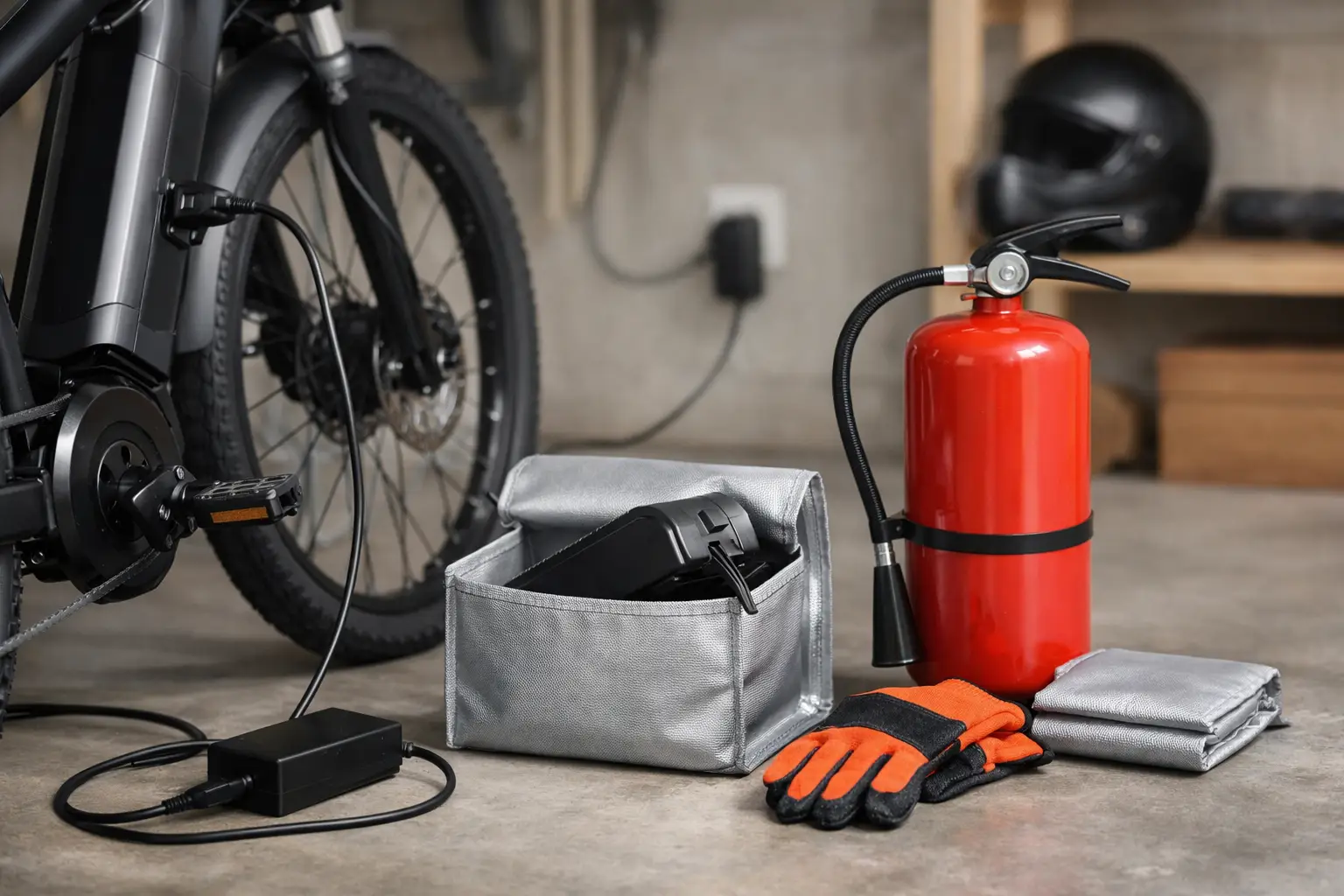
Keep your charging area tidy and do not stack items around the e-bike. The point is to limit nearby fuel and maintain a clear path out, not to create a complicated battery station. If you use a battery cover, tray, cabinet, or other storage equipment, use it only as directed and do not treat it as permission to charge an unsafe battery or leave charging unattended.
If you see smoke, flames, or a swelling battery
Treat smoke, flames, hissing, or rapid swelling as an emergency. Do not touch, move, charge, or attempt to open the battery. Get people and pets away from the area, leave the building, close doors behind you if you can do so safely, and call 911 from a safe location. Tell responders that an e-bike lithium-ion battery is involved.
Do not re-enter to retrieve the e-bike, charger, or personal belongings. Battery fires can reignite after appearing to stop, and smoke may contain harmful gases. After an incident, do not reuse the battery or charger until the manufacturer or a qualified professional has evaluated the equipment.
A safe e-bike routine is usually simple: inspect before charging, use approved equipment, choose a clear location, and take unusual battery behavior seriously. Those habits protect your bike, your home, and the rides you planned for tomorrow.
Frequently Asked Questions
Can I charge an electric bike battery overnight?
No. Do not charge an e-bike battery while sleeping or when no responsible adult is present. Charge it when you can notice unusual heat, odors, sounds, smoke, or warning lights, and disconnect the charger when charging is complete.
What charger should I use for my e-bike battery?
Use the charger supplied with the e-bike or one specifically approved by the manufacturer. A charger may physically fit but still have the wrong voltage, charging rate, wiring, or communication system. Avoid generic or “universal” chargers unless the manufacturer confirms compatibility.
Where is the safest place to charge an e-bike battery?
Charge the battery in a dry, open area on a stable, noncombustible surface. Keep it away from paper, clothing, furniture, chemicals, and other flammable materials. Do not charge in a hallway, stairwell, doorway, bedroom, or anywhere that could block an exit.
What are the warning signs of a failing e-bike battery?
Warning signs include excessive heat, swelling, leaking, unusual odors, hissing, popping, smoke, melted plastic, discoloration, or damaged connectors. Stop using and charging the battery if any of these signs appear. Contact the manufacturer or a qualified battery service provider.
Can I charge an e-bike battery after it gets wet or damaged?
Do not charge a battery that has been submerged, punctured, crushed, dropped hard, or involved in a crash until it has been professionally evaluated. Internal damage may not be visible. Do not open the case, attempt an internal repair, or try to dry the battery yourself.
How should I store an e-bike battery for several months?
Follow the battery manufacturer’s recommended storage temperature and charge level. Store the battery in a dry place away from direct sunlight, heat sources, combustible materials, children, and exposed metal objects. Check its charge periodically because batteries slowly discharge during storage.
What should I do if an e-bike battery starts smoking or swelling?
Do not touch, move, open, or continue charging the battery. Move everyone away, leave the building, close doors behind you if it is safe, and call 911 from a safe location. Tell emergency responders that a lithium-ion e-bike battery is involved.