A little joy belongs in every day.

Can ebikes climb steep hills? Learn how grade, motor torque, battery charge, gearing, traction, and riding technique affect a safe uphill ride safely.
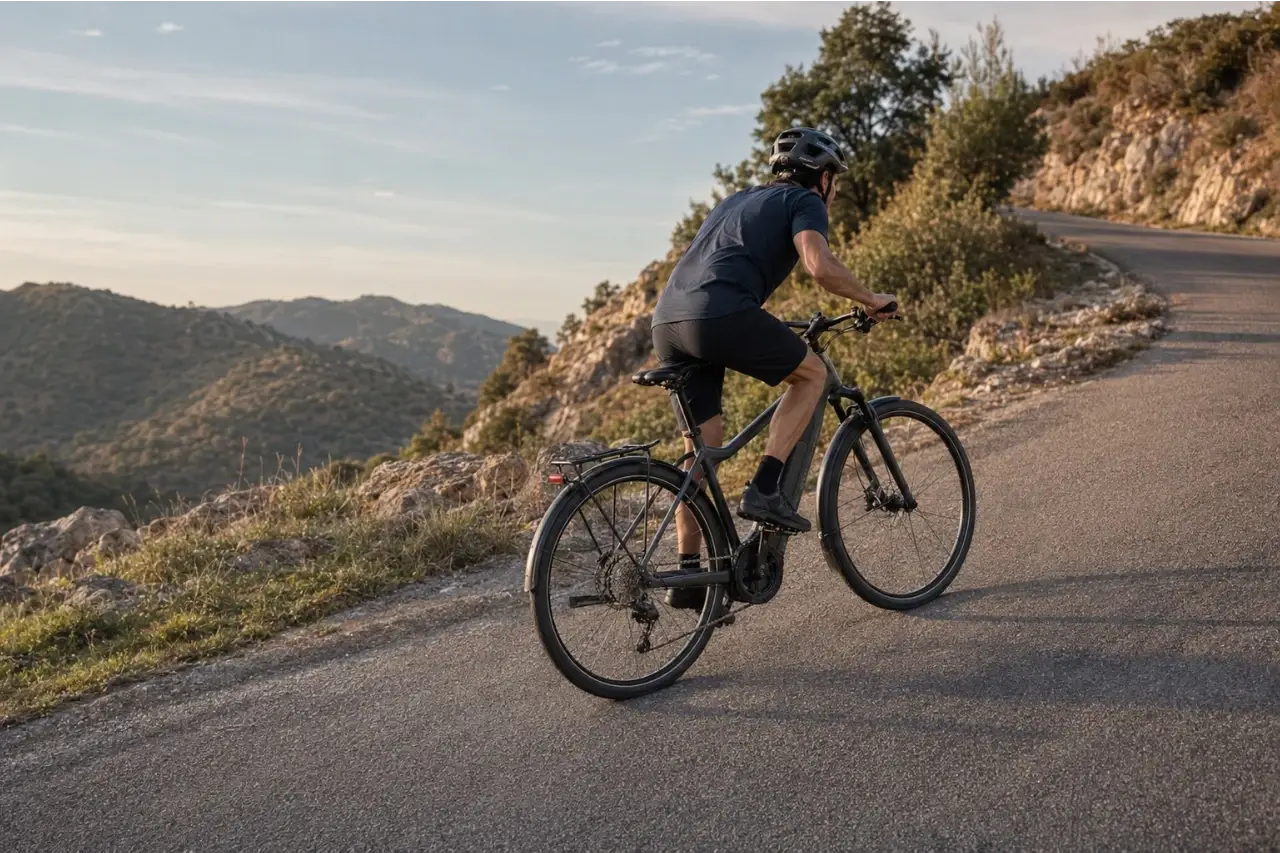
Can Ebikes Climb Steep Hills? Yes, many e-bikes can climb steep hills. Their actual climbing ability depends on the hill’s grade and length, motor torque, gearing, battery charge, total weight, surface conditions, and rider input. A moderate paved climb may be manageable with steady pedal assist, while a long, loose, or very steep grade can push an e-bike beyond its practical limits.
Safe hill climbing involves more than reaching the top. The rider must maintain traction and control, avoid excessive strain on the motor and battery, and preserve enough braking performance for the descent.
They can, provided the hill is within the bike’s practical limits and the rider uses the bike correctly. There is no single hill angle that every e-bike can handle. A 6% grade is noticeably uphill but common on paved roads. A 10% grade is steep for many riders. Grades above 15% can be very demanding, particularly when the climb is long or the surface is wet, sandy, gravelly, or covered with leaves.
Hill performance also changes with the rider’s weight, cargo, tire pressure, wind, temperature, and the condition of the drivetrain. A short 15% paved ramp may be easier than a two-mile climb at 8% because the longer climb gives heat and battery demand time to build.
If the bike slows to a near stop, the motor may be working hard without moving efficiently. That is a sign to shift to an easier gear, add more pedal power if you can do so safely, or stop and walk the bike before losing balance.
Hill steepness is usually expressed as a percentage. A 10% grade rises 10 feet for every 100 feet of horizontal distance. The grade matters, but so does the total elevation gained. A 500-foot (152-meter) climb asks much more of the battery than a brief rise of 50 feet (15 meters), even if both use the same steep section.
Torque is the turning force that helps get the wheel moving uphill. It matters most when starting on an incline and when climbing at lower speeds. Motor wattage can provide useful context, but it does not tell the whole story. The motor’s design, controller settings, battery voltage, rider input, gearing, and heat management all affect real climbing performance.
A mid-drive motor sends power through the bike’s chain and gears, so selecting a low gear can make it more effective on a climb. A hub motor drives the wheel directly. It can climb well too, but it does not benefit from the bike’s gears in the same way. For either type, maintaining a steady pedaling rhythm is usually easier on the system than trying to power up a hill from a standstill in a hard gear.
A battery can deliver less usable power as its charge drops. On a steep hill, that may show up as reduced assistance, a lower displayed battery level, or a sudden loss of power under load. Cold weather can also reduce available battery performance temporarily.
Start a hilly ride with adequate charge, especially if the route has a long climb late in the trip. Do not assume the battery gauge will behave the same way on flat ground and on a steep grade. If the display drops sharply during a hard climb and recovers after you ease off, that can be a normal response to heavy demand. Repeated warning messages, shutdowns, unusual heat, or power loss under ordinary use should be checked by the manufacturer or a qualified e-bike technician.
Cadence means how quickly you turn the pedals. On a hill, most riders do better in an easier gear with a quicker, comfortable pedal rhythm than in a hard gear that requires slow, forceful pushes.
For mid-drive e-bikes, shifting down before the hill gets steep is especially helpful. Reduce pedal pressure briefly while shifting, then resume smooth pedaling. Forcing a shift while pressing hard on the pedals can wear the chain and gears and may cause rough shifting. Follow your owner’s manual for any model-specific shifting instructions.
Power does not help if the rear wheel slips. Loose gravel, wet painted lines, leaves, mud, and metal utility covers can all reduce traction. Tire tread, tire pressure, and surface conditions matter more as the grade increases.
Use gradual pedal pressure and avoid abrupt throttle or assist changes on slick surfaces. If the rear tire repeatedly spins, stop rather than continuing to apply power. Walking the bike through a short unstable section is often the safer option.
Use these steps to set up the climb and stay in control.
Getting uphill is only half the job. A heavy e-bike, rider, and cargo can build speed quickly downhill. Before riding a route with major climbs, confirm that both brakes feel firm, the rotors are clean, and the brake pads have useful material remaining. If you hear grinding, feel pulsing, or need unusually long stopping distance, have the bike inspected before tackling steep terrain.
Use both brakes progressively rather than grabbing one brake hard. Shift your body slightly back, keep your knees and elbows relaxed, and control speed before tight turns. On a long descent, avoid dragging the brakes continuously when possible. Alternate controlled braking with short releases when conditions allow, so the braking system has brief opportunities to shed heat.
Cargo deserves special attention. Extra weight affects both uphill traction and downhill stopping distance. Secure loads so they cannot shift, and give yourself more room and time to brake.
Choosing not to ride a hill is good judgment, not a failure. Walk the e-bike if the grade is beyond your comfort level, the surface is slippery, traffic leaves no safe space, or the bike cannot maintain forward progress without wobbling. It is also wise to stop if the battery is very low and the route home includes more climbing.
If you must walk, turn the bike around only where you can do so safely. Keep it on the uphill side of your body when practical, use the walk-assist feature only if your manual permits it and you can control the bike, and keep fingers clear of moving wheels and pedals.
For repeated hill riding, inspect the chain, tires, brakes, and battery charge more often. Steep routes reveal small maintenance problems quickly. The right hill-climbing habit is simple: use a low gear early, apply power smoothly, and save enough control for the way back down.
Can e-bikes climb steep hills?
Yes. Many e-bikes can climb steep hills, but performance depends on the grade, motor torque, gearing, battery charge, total weight, traction, and rider input. Long or loose climbs are usually more demanding than short paved hills.
How steep a hill can an e-bike climb?
There is no universal maximum grade for every e-bike. A 6% grade is moderately uphill, while a 10% grade is steep for many riders. Grades above 15% may require strong motor assistance, low gearing, steady pedaling, and good traction.
Is a mid-drive or hub motor better for steep hills?
A mid-drive motor is often more effective on long or steep climbs because it uses the bike’s gears. A hub motor can also climb well, but its performance depends more heavily on motor design, controller settings, battery output, and total load.
How much motor power does an e-bike need for hills?
Motor wattage alone does not determine hill-climbing ability. Torque, gearing, controller settings, battery voltage, heat management, rider weight, and pedaling effort also affect performance. Compare the complete drive system rather than wattage alone.
Does climbing hills reduce an e-bike’s range?
Yes. Steep and extended climbs require more energy than level riding. High assist settings, added cargo, low tire pressure, cold temperatures, and frequent starts on inclines can further reduce battery range.
What gear should I use when riding an e-bike uphill?
Shift into an easier gear before the hill becomes steep. Maintain a smooth, comfortable pedaling cadence instead of pushing slowly in a hard gear. On a mid-drive e-bike, reducing pedal pressure briefly while shifting can help protect the drivetrain.
Can using the throttle damage an e-bike on a steep hill?
Brief, controlled throttle use may be appropriate if the manufacturer permits it. However, relying on full throttle at very low speed can increase heat and battery demand. Stop or walk the bike if the motor sounds strained, assistance fades, or the bike cannot maintain stable forward movement.
Is it safe to ride an e-bike downhill after a steep climb?
It can be safe when the brakes, tires, and surface conditions are suitable. Use both brakes progressively, control speed before turns, and allow additional stopping distance for a heavy bike or cargo. Avoid continuously dragging the brakes during a long descent when conditions allow.