A little joy belongs in every day.

Learn how to maintain an electric bike with a practical routine for tires, brakes, chain, battery care, cleaning, storage, and qualified help when needed.
An e-bike stays safer, quieter, and more reliable when you give it a short check before rides and a more thorough inspection each month. Learning how to maintain an electric bike is mostly about consistent basics: keep the tires inflated, brakes responsive, drivetrain clean, fasteners secure, and battery treated according to its manual. You do not need advanced mechanical skills for these jobs, but you do need to know when to stop and call a qualified mechanic or battery technician.
Your owner’s manual takes priority over general guidance. It may specify tire-pressure ranges, lubrication points, charging limits, torque values, cleaning restrictions, and service intervals that differ from another e-bike.
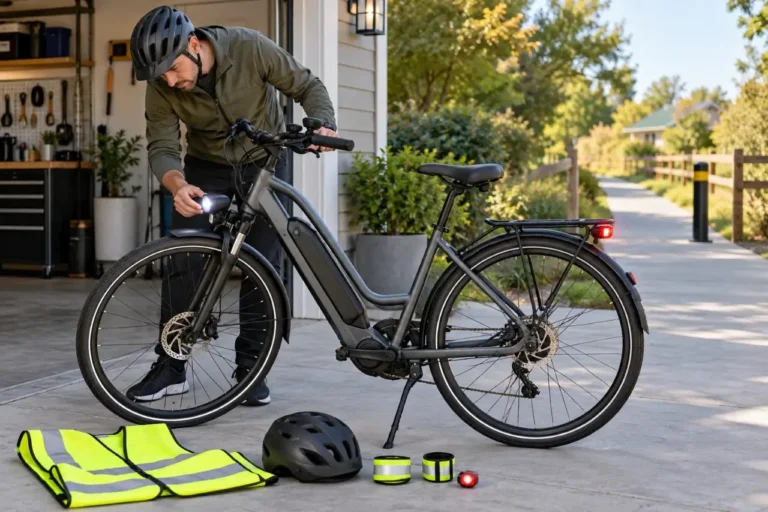
A two-minute check can catch problems before they become a missed commute or a hazardous ride. With the e-bike turned off, look over the bike in good light. Make sure the battery is locked in place and its case has no cracks, swelling, unusual odor, or moisture around the terminals. Do not ride or charge a battery with any of those warning signs. Move it away from combustible materials if it can be done safely, and contact the manufacturer or a qualified battery service provider for next steps.
Squeeze both brake levers. They should feel firm and should not pull all the way to the handlebar. Spin each wheel and listen for rubbing, wobbling, or a loose axle. Then check that the tires are firm and free of embedded glass, nails, deep cuts, or sidewall bulges.
Turn the bike on only after this visual check. Confirm that the display, lights, and pedal assist respond normally. If the bike shows a persistent error code, use the manual’s troubleshooting instructions rather than repeatedly cycling the power or taking electrical parts apart.
Tires affect range, comfort, handling, and flat resistance. Underinflated tires create more rolling resistance and can make the bike feel slow or unstable in corners. They also increase the chance of pinch flats, especially on potholes and curbs. Check pressure with a gauge at least weekly and before long rides.
Use the pressure range printed on the tire sidewall unless your e-bike manufacturer provides a different range. Pressure needs can vary with rider weight, cargo, tire width, and terrain. A rider on smooth pavement may prefer a higher pressure within the approved range, while a lower pressure can add comfort and traction on rough paths. Never exceed the marked maximum pressure.
Inspect the wheels monthly. Loose or broken spokes, a side-to-side wobble, or a wheel that rubs the brake rotor needs attention from a bicycle mechanic. Wheel truing is possible as a home skill, but it is not an ideal first repair on a heavy e-bike because wheel loads and motor wiring can complicate the job.
E-bikes carry more weight and can reach higher average speeds than many conventional bicycles, so brake wear deserves regular attention. Look through the caliper, if visible, to check that disc brake pads still have usable friction material. If you hear persistent metal-on-metal scraping, stop riding and have the pads inspected immediately.
Brake rotors should be clean and free of oil, chain lubricant, and cleaning spray. Contamination can reduce stopping power and cause noise. If the brake lever feels spongy, braking becomes weak, or hydraulic fluid is visible near a lever, hose, or caliper, arrange professional service. Hydraulic brake bleeding is generally best left to a qualified bicycle mechanic.
The chain, gears, derailleur, and cassette are called the drivetrain. On a pedal-assist bike, they still transfer your pedaling power, and a neglected drivetrain can shift poorly, wear quickly, and make unpleasant grinding sounds.
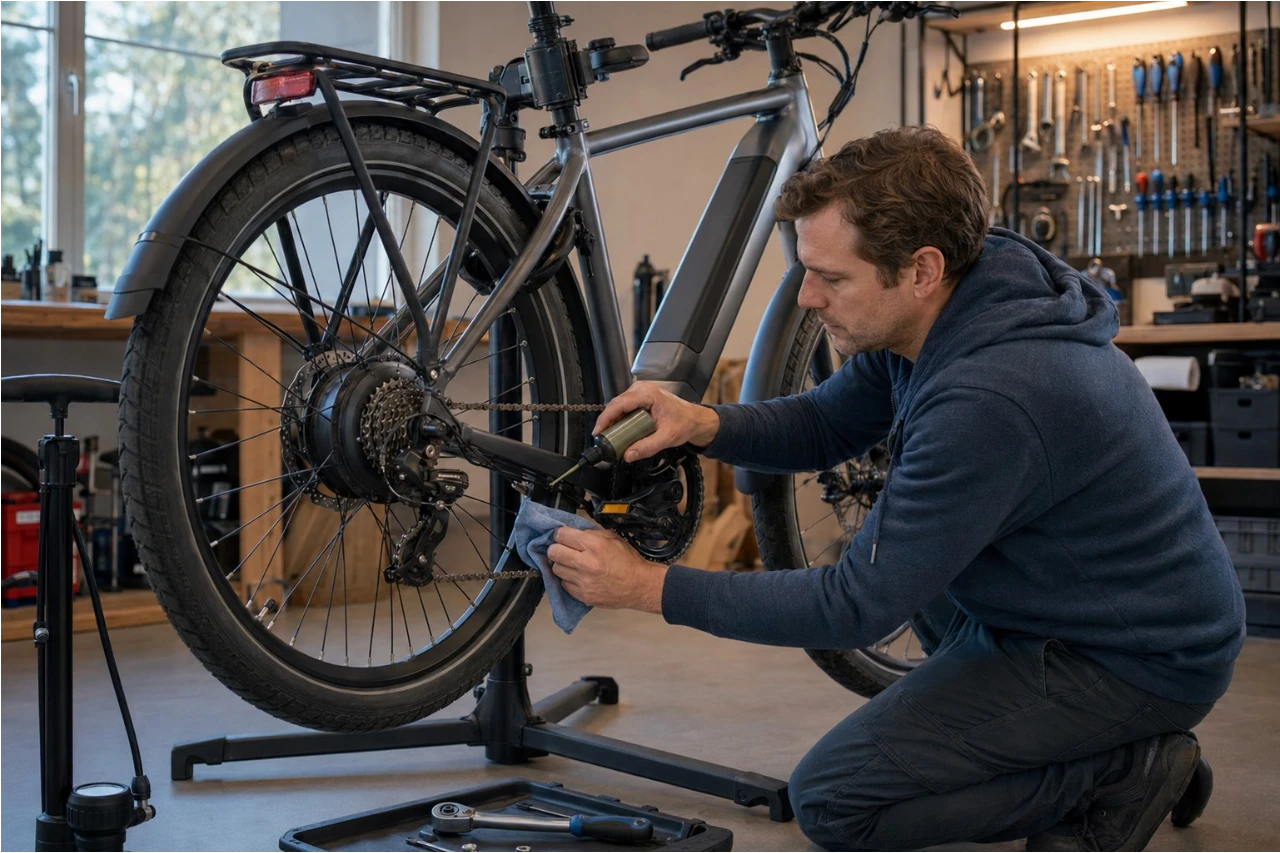
Wipe the chain after wet, dusty, or gritty rides. For routine cleaning, turn the bike off, remove the battery if the manual permits, and use a brush or rag with a bicycle-safe cleaner. Keep spray away from the motor, display, wiring connectors, brake rotors, and battery contacts. Avoid pressure washers and high-pressure hoses. Water forced past seals can damage bearings and electrical components.
After the chain is dry, apply a small amount of bicycle chain lubricant to the rollers, then wipe off the excess. A heavily lubricated chain attracts grit. Use wet-condition lube for frequent rainy rides and a dry-condition lube for dusty conditions, following the product directions.
If the chain skips under load, shifts inconsistently, or has visible rust that does not wipe away, have the drivetrain assessed. Chain wear can be measured with an inexpensive gauge, but a mechanic can also check whether the chain, cassette, and chainring are wearing together.
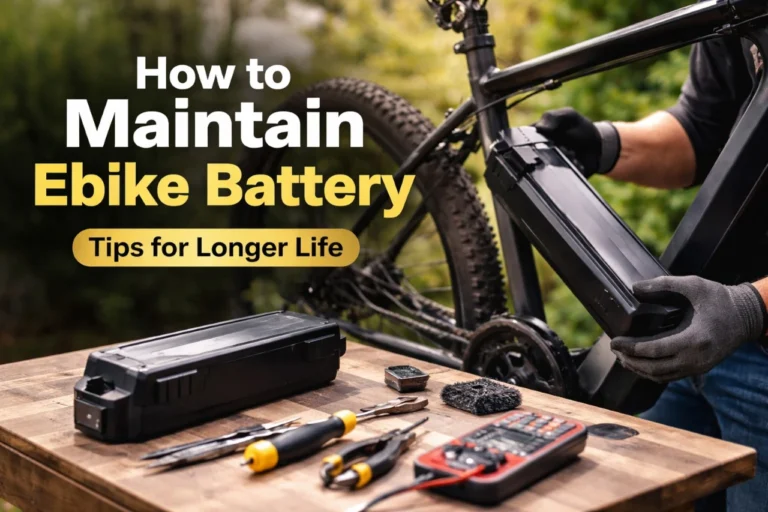
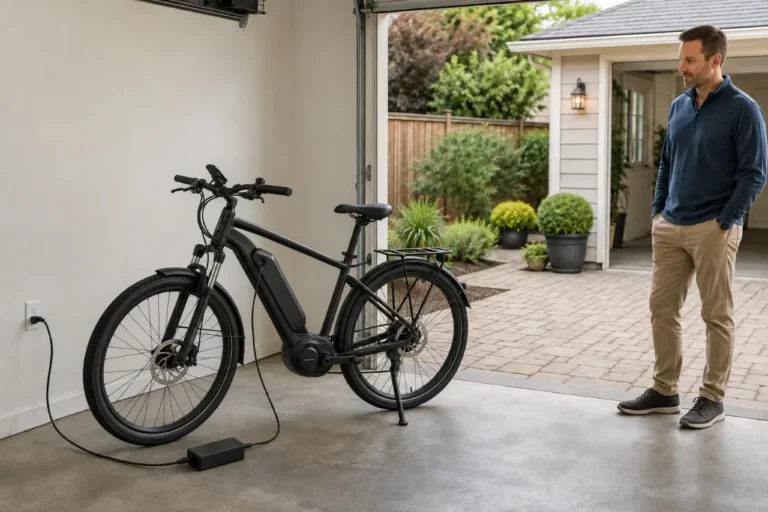
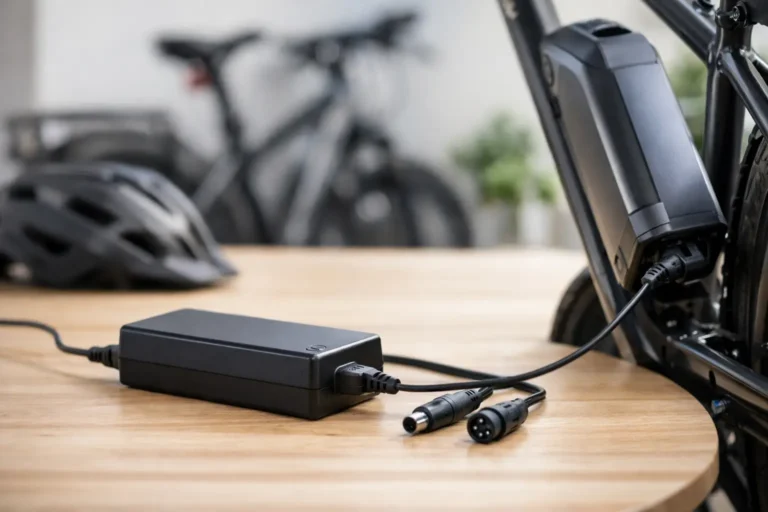
Battery care is not complicated, but it is different from ordinary bike maintenance. Use only the charger specified or approved by the e-bike manufacturer. Charge on a stable, nonflammable surface in a dry area, away from direct sun, heat sources, exits, and combustible clutter. Do not charge a battery that is damaged, unusually hot, wet, swollen, leaking, or behaving abnormally.
Let a battery cool after a hard ride before charging, especially in hot weather. In cold conditions, follow the manual closely. Many lithium-ion batteries should not be charged when the battery cells are near or below freezing, even if the battery will power the bike in cold weather.
For daily use, follow the manufacturer guidance on charge level and timing. Some brands permit routine full charging, while others provide storage or charge-limit settings. If you will not ride for several weeks, many manufacturers recommend storing the battery partly charged rather than fully charged or empty. Store it indoors in a dry, temperature-stable location, not in a hot car, freezing shed, or direct sunlight. Check its charge periodically according to the manual.
Keep battery terminals clean and dry. If you see light surface dirt, wipe the contacts gently with a dry, lint-free cloth while the battery is disconnected. Do not scrape terminals with metal tools or apply unapproved chemicals. Never open, rebuild, modify, or attempt to repair a lithium-ion battery pack yourself.
A monthly check is a practical rhythm for most recreational and commuting riders. Delivery riders, all-weather commuters, and riders on rough terrain may need to inspect the bike more often.
Do not guess at torque on critical fasteners, particularly stem bolts, handlebar clamps, suspension hardware, axle hardware, and rack mounts. Over-tightening can damage components; under-tightening can let them move. A torque wrench and the manufacturer’s specifications are the right approach, or a bike shop can perform a safety check.
Cleaning is easier when dirt has not had months to build up. Use a damp sponge or soft brush, mild bike-safe soap, and a low-pressure rinse or damp cloth. Keep the charging port closed, and avoid soaking the display, motor area, battery mount, and connectors. Dry the bike before reinstalling the battery or charging it.
For storage, choose a dry place protected from rain, high heat, and freezing temperatures. If possible, keep the bike off the ground or rotate the wheels occasionally to help prevent tire flat spots. Long-term storage also calls for a clean, lubricated chain and a battery stored separately if the manual directs it.
Stop using the e-bike and seek qualified help for damaged battery cases, exposed wiring, recurring electrical errors, motor grinding, smoke, overheating, a burning smell, or loss of braking power. Call emergency services if there is an active fire or immediate danger. Do not try to move a burning battery or extinguish an electrical fire beyond what is safe for your situation.
Schedule professional service when brakes need hydraulic work, wheels are badly out of true, bearings feel rough, the frame has a crack, or the bike has been in a crash. An annual inspection is also worthwhile for many riders, particularly if the e-bike is used for regular commuting or carrying cargo.
A maintained e-bike asks for attention in small doses, not constant tinkering. Make the pre-ride check part of your routine, address small changes in sound or feel early, and your bike will be ready for more of the rides you bought it to enjoy.
How often should I maintain an electric bike?
Perform a quick safety check before each ride and inspect the tires, brakes, drivetrain, fasteners, and electrical components every month. Frequent commuters, delivery riders, and people who ride in wet or dusty conditions may need maintenance more often.
How often should an electric bike receive professional service?
Most electric bikes should receive a professional inspection at least once a year. Arrange service sooner if the bike develops weak braking, rough bearings, wheel wobble, recurring electrical errors, unusual motor noise, or inconsistent shifting.
Can I wash an electric bike with water?
You can clean an electric bike with a damp cloth, soft brush, mild bike-safe soap, and a low-pressure rinse. Do not use a pressure washer or direct water at the battery contacts, charging port, display, motor, or electrical connectors.
How often should I lubricate an e-bike chain?
Lubricate the chain whenever it becomes dry or noisy and after riding in wet, dusty, or gritty conditions. Apply bicycle-specific lubricant to the chain rollers, allow it to settle, and wipe away the excess so it does not attract dirt.
What tire pressure should I use on an electric bike?
Use the pressure range printed on the tire sidewall unless the e-bike manufacturer specifies a different range. Rider weight, cargo, tire width, and terrain can affect the appropriate pressure. Check both tires with a gauge at least once a week.
How should I maintain an electric bike battery?
Use only a manufacturer-approved charger and keep the battery clean, dry, and protected from extreme heat or freezing temperatures. For long-term storage, follow the manufacturer’s recommended charge level and check the battery periodically. Never open or repair the battery pack yourself.
Which e-bike maintenance tasks require a professional?
Professional service is recommended for damaged batteries, exposed wiring, recurring electrical faults, hydraulic brake work, badly misaligned wheels, rough bearings, frame cracks, and motor problems. Stop riding immediately if the bike has weak brakes, overheating, smoke, or a burning smell.