Real rides. Real notes. No hype.

Torque sensor vs cadence sensor—what’s the real difference? Compare ride feel, hills, stop-and-go commuting, and range to choose the right assist style.
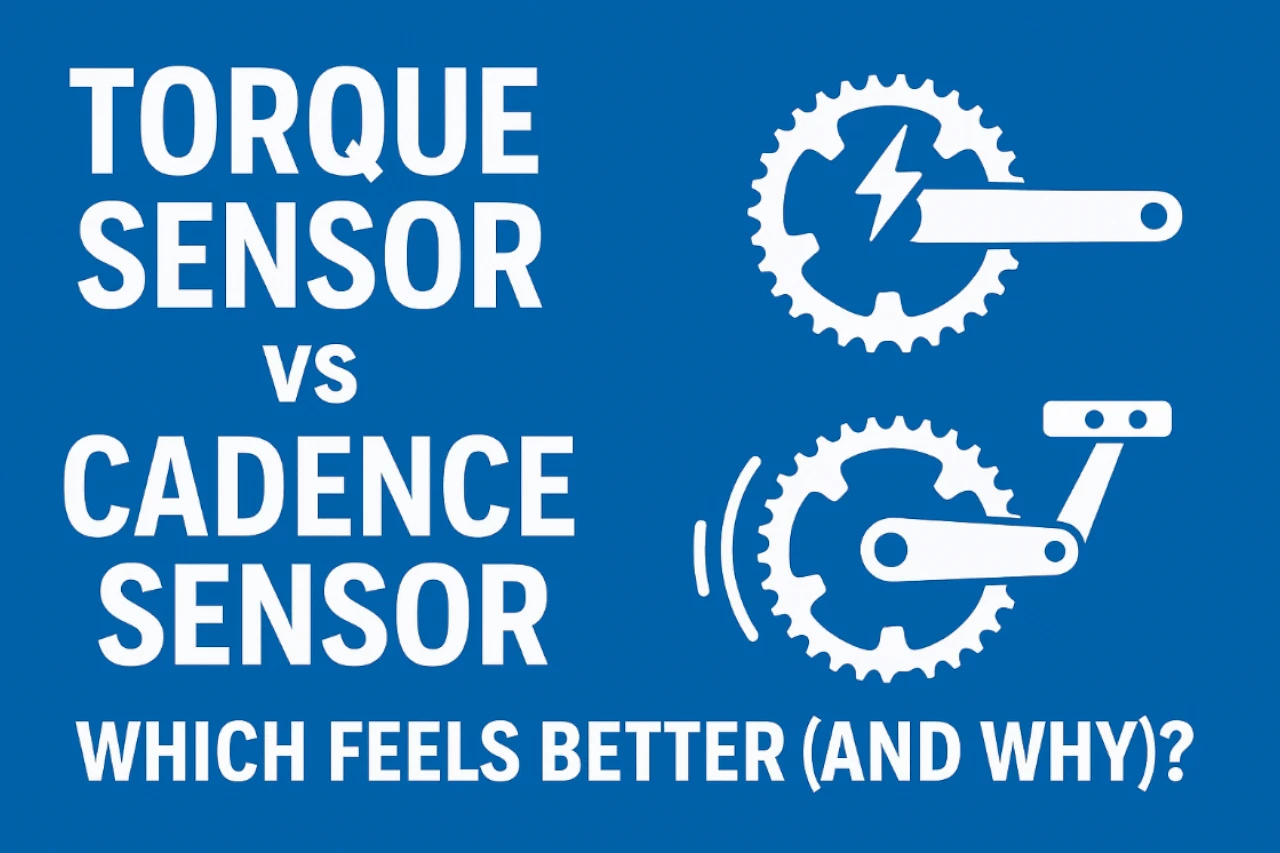
If you’re comparing e-bikes, you’ll quickly see two terms everywhere: torque sensor and cadence sensor. They both control pedal assist—but they make the bike feel very different. This guide explains torque sensor vs cadence sensor in plain English, so you can pick the one that fits your riding style, avoid buyer’s remorse, and get a bike you’ll actually enjoy.
Related hub: Find your perfect electric bike
Cadence sensor: The bike helps you when it detects that the pedals are turning. Think of it like an “on/off” switch. You start pedaling, the motor turns on (often after a short delay), and it keeps helping until you stop pedaling.
Torque sensor: The bike helps you based on how hard you’re pedaling. It measures your pedaling force and matches motor power to your effort. Think of it like a “dimmer switch.” Push harder → you get more help. Pedal lightly → it gives lighter assistance.
The practical takeaway: If you want an e-bike that feels more like a regular bike—just stronger—torque sensors usually feel better. If you want simple, consistent “get me moving” assistance (especially with minimal effort), cadence sensors can be the better match.
Cadence: Many cadence systems deliver power in steps. You pedal a fraction of a turn and then the motor “wakes up,” sometimes with a noticeable surge. That can feel fun and punchy, but it can also feel jerky in tight spaces or when you’re trying to creep forward slowly.
Torque: Power usually ramps up smoothly and predictably. Because the bike is reacting to your pressure—not just pedal rotation—it’s easier to control at low speeds, in crowded paths, and when weaving through stop signs or driveways.
Cadence: You can climb hills by “ghost pedaling” (spinning lightly) while the motor does most of the work. That’s great if your goal is low effort. But on steep hills, the power delivery can feel less natural—either not enough at the moment you need it, or too much when traction is limited.
Torque: Torque sensors tend to shine on hills because they reward real pedaling effort. When you stand up or push harder, the motor responds instantly. Many riders describe it as “the bike reading my mind.” If you often ride slopes, you’ll probably prefer the torque feel—and it’s one reason many “hill-friendly” bikes highlight torque sensors.
Want hill-focused picks? See our hill guides here: Best E-Bike for Hills and Best Electric Bikes for Hills Under $1,000.
Cadence: In city traffic, cadence assist can feel like a small delay followed by a push. Some riders like that because it makes starts easy. Others dislike the “lag then surge” effect—especially when timing gaps in traffic or rolling slowly behind pedestrians.
Torque: Stop-and-go usually feels more fluid. The motor helps as you push, not after the bike decides your pedals have spun enough. If your commute involves lots of intersections, torque sensors often feel more refined and confidence-inspiring.
Commuter guides: Best Electric Bike for Commute and Best Commuter E-Bikes.
Cadence: Because it can provide strong assist even with very light pedaling, cadence systems are great for casual rides and riders who want maximum help. But if you’re trying to get exercise, it’s easier to accidentally do less work than you think.
Torque: Torque sensors encourage you to pedal with intention. Many riders find it more enjoyable and “sporty,” and it’s easier to moderate effort—light assist on flat roads, stronger assist on hills—without changing assist levels constantly.
Range depends on battery size, rider weight, terrain, wind, tire pressure, and more. But the sensor type still matters because it influences how often the motor delivers high power.
Important nuance: A well-tuned cadence system can still deliver great range, and a torque system can still drain a battery fast if you ride at high assist and push for speed. So consider sensor type as a “behavior shaper,” not a magic range guarantee.
If you’re shopping value-focused models where torque sensors are more common, start here: Best Electric Bike Under $1,000 and Best Electric Bikes Under $2,000.
A torque sensor is usually the best choice if you want the bike to feel natural, smooth, and “connected” to your legs.
Typical tradeoffs: Torque-sensor bikes can cost a bit more. They may feel less “boosty” if you’re used to cadence surge. And to get the best results, you generally need to pedal with at least modest effort.
A cadence sensor is often the better choice if your priority is easy riding with minimal effort and simple behavior.
Typical tradeoffs: Cadence systems can feel less natural and less precise at very low speeds. Some have a noticeable engagement delay. And it can be easier to “accidentally” use more battery than needed if you rely on higher assist levels.
Use this checklist to choose confidently—without getting lost in specs.
Where torque sensors show up most often: Many value-oriented “step-up” bikes (often around the under $2,000 tier) highlight torque sensors. For budget-focused comparisons, see: Best Electric Bikes Under $1,000.
Is a torque sensor always better than cadence?
Not always. Torque sensors usually feel more natural and controlled, but cadence sensors can be better if you want consistent, low-effort help. “Better” depends on what you want the bike to do.
Do torque sensors give more range?
They can for many riders because assistance often matches your effort. But range still depends heavily on battery size (Wh), speed, hills, weight, wind, and tire pressure. A cadence bike ridden gently can still have excellent range.
Do cadence sensors feel jerky?
Some do—especially cheaper systems or bikes with aggressive power tuning. Others feel surprisingly smooth. If you can’t test ride, look for mentions of smooth engagement, gradual ramp-up, and good low-speed control in reviews.
What about “torque simulation”?
Some bikes market cadence systems that imitate torque-like behavior using programming. They can feel better than basic cadence, but they’re usually not as responsive and natural as a true torque sensor under changing effort.
Which is better for beginners?
If you’re nervous about control in traffic, torque sensors can feel easier to manage because power follows your input. If you simply want easy help without thinking, cadence is beginner-friendly too—just start in a lower assist level until you’re comfortable.
Should I prioritize the sensor over battery size and brakes?
No. A great sensor can’t fix weak brakes or too small a battery. If you’re choosing between two bikes, prioritize safety and usability first: brakes, battery size (Wh), fit, and reliability—then choose the sensor style that matches your preference.
We’re reader-supported. Some links may be affiliate links, which may earn us a commission at no extra cost to you. As an Amazon Associate, we earn from qualifying purchases.